



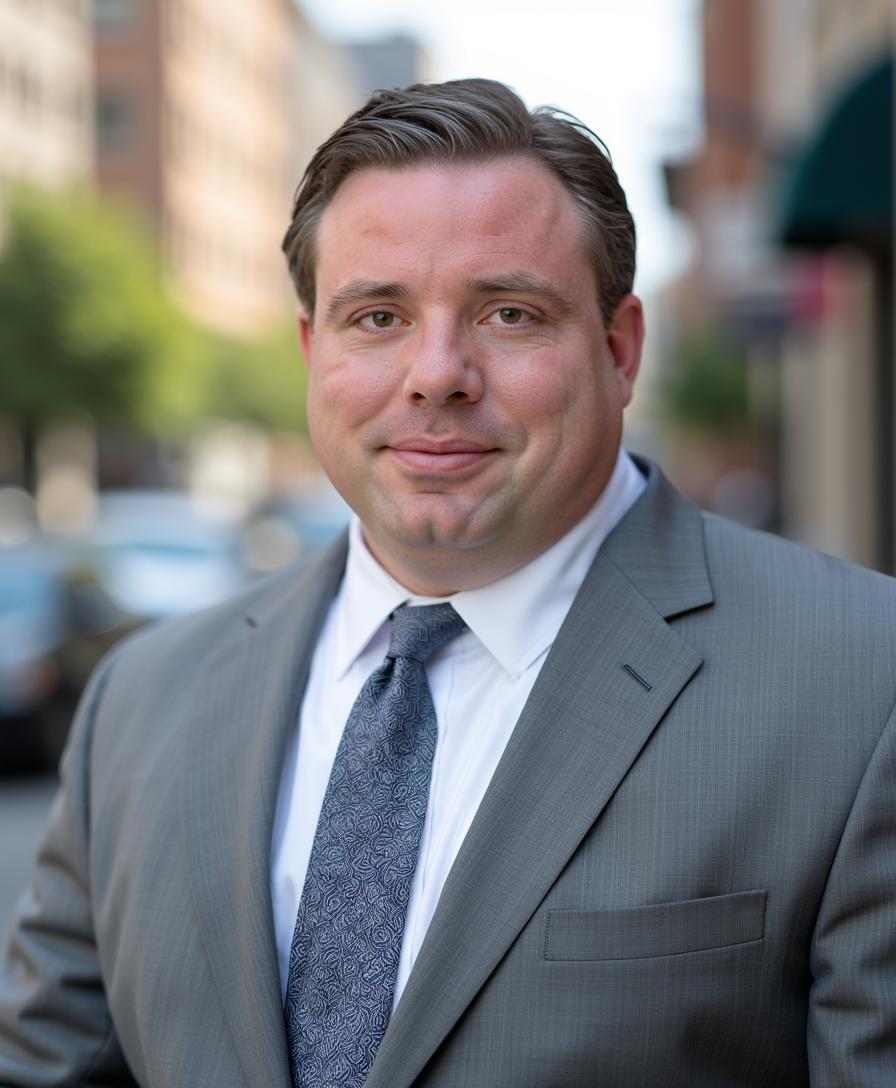
Today we’d like to introduce you to Robert (Rob) Schmansky.
Hi Robert (Rob), we’d love for you to start by introducing yourself.
I knew in high school I wanted to help people with their finances, in more of a counseling than sale-oriented career. What I didn’t know was how to achieve that goal, as most personal finance roles are still very much sales-oriented.
I loved sports – both playing and coaching. The idea that every team had individualistic strategies based on their makeup was something that easily transferred over to personal financial planning. People have their own strengths, weaknesses, goals and opportunities.
Not knowing how to realize my goal of an independent career, I chose a school based on where I could play lacrosse at a D1 level.
Luckily for me, my school (Ohio State… I don’t always mention this!), had one of a very few “financial planning” degrees in the 1990s. It was a perfect fit, though during my last semester I also chose to attend Monday evening graduate CFP courses at Oakland University in Michigan and traveled from Ohio back to Michigan once a week to start that program. I felt I needed more education, even though my degree qualified me for the CFP exam.
I also love coaching and educating, and continued my own education at Walsh College after finishing the Oakland courses and passing the CFP exam. I was again lucky to find another perfect educational fit with one of just a few masters degree programs in the nation with an economics program that emphasized Austrian Economics. Austrian Economics studies “why people act,” that helped develop my thoughts for personal investors. Just about every other school focuses on modeling and placing graduates in institutional jobs.
My first job out of school was with Ameriprise. I chose them because I thought it would be a good place for experience and to obtain sales licenses. My first client with them had a substantial nest egg, and I was very bothered by the realization that I could not be very personalized with their investments. A manager at the time revealed that he felt there was criticism about a “happy meal” menu of products that were offered, and I immediately realized this wasn’t the sort of advice I wanted to give.
Afterwards, I worked mostly at independent firms, that started out either in the tax, brokerage, or insurance industries, and that experience provided a lot. In 2011 I decided to strike out on my own and serve clients in the ways I thought they were looking for advice that I serve based on their needs, without having to justify the goals of a broker, insurance company, etc.
Along the way I’ve had a lot of help from having an online presence. I’ve been a writer for the national FPA, NAPFA, Forbes, Yahoo!Finance, and Dow Jones/IAC.
Having the opportunity to attend fiduciary training with Don Trone and 3ethos further helped me develop more as a fiduciary.
Would you say it’s been a smooth road, and if not what are some of the biggest challenges you’ve faced along the way?
Comprehensive planning. Money is just a tool to meet our goals and it should be invested with those goals in mind. Many firms only invest based on a questionnaire. We get to know our clients and invest based on their goals.
Fiduciary financial services. “Fiduciary” has become a buzzword that has less practical meaning than it did 10 years ago, but some firms do try to improve their services to fully fit the role of a fiduciary advisor. My favorite career moment was training at Wake Forest with Don Trone, who is considered to be the father of the fiduciary movement in financial services. I learned a lot how being a fiduciary is about having processes and procedures that can be relied upon to serve the client interest. Far too many in our industry will look a client in the eye and say they are a fiduciary in the legal sense, but that’s where it ends.
Teaching and learning. Having an interest in economics and history I think helps avoid short-term thinking. While the tools and investment products change, my overall philosophy has stayed the same.
Thanks for sharing that. So, maybe next you can tell us a bit more about your work?
Independence. Every advisory firm who accepts payments from a financial product provider has two masters to serve – the client and the product company. That advice is conflicted, and those conflicts are rarely discussed. My income comes directly from my clients and it isn’t hidden. Pathworks, as an independent firm, has that philosophy as well.
An investment philosophy that hasn’t wavered. I saw many firms change their beliefs during the 2008 crisis, and others that jump into every new financial fad. Our firm beliefs are grounded in a philosophy that hasn’t changed. We do analyze new opportunities, but I appreciate the skepticism and due diligence that Scott and Bryan bring to the investment process to not introduce changes without evidence.
Holistic advice. There is more to personal finance than saving for retirement. We annually review the structure of our accounts, tax opportunities, and our clients long term goals. Our CEO Scott Smith says we play dozens of different roles for clients, even if they mainly think of us as an investment advisor.
As Dave Ramsey says, “Having the heart of a teacher.” Teaching and coaching are very closely aligned for me and it’s important that a client understands the ‘why’ behind our plans, even if they may not want PhD-level education in the implementation of it.
Is there a quality that you most attribute to your success?
Prior to joining Pathworks, wearing all of the hats of running a business eventually limited growth. Having the professional administrative, back-office, and additional research and business development support has been a game changer for me.
Differentiation. When I struck out on my own, it was enough to declare that you were a fiduciary, as firms did not want that responsibility. For about the last 10 years, even the most conflicted advisor will now tell a prospect they will serve as a fiduciary. Learning more about what it means to be a fiduciary advisor from Don Trone and my other experiences with fiduciary certification, including becoming an Accredited Investment Fiduciary, eventually helped get me back to differentiating myself from other advisors.
Pricing:
- Fee-only investment management
- Flat-fee financial planning
Contact Info:
- Website: https://pathworksfinancial.com/
- Facebook: https://www.facebook.com/PathworksFinancialInc
- LinkedIn: https://www.linkedin.com/company/pathworks-financial/
- Twitter: https://x.com/OurPathWorks
- Other: https://www.detroitsmartvestor.pro/