





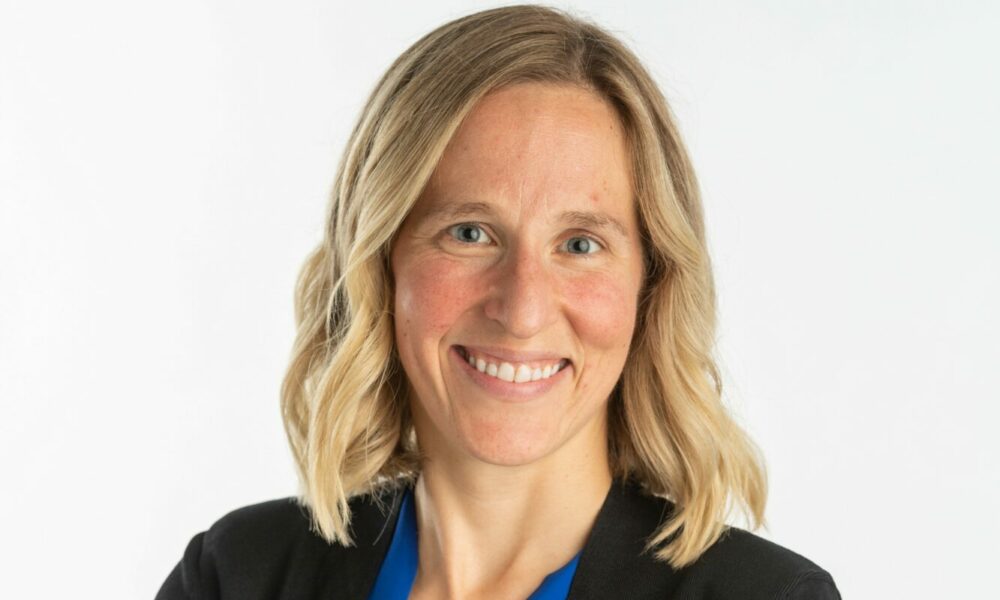
Today we’d like to introduce you to Leah Litman.
Hi Leah, we’d love for you to start by introducing yourself.
After I graduated from law school, I clerked for two federal judges, practiced for a little at a law firm, and then entered academia. I began teaching as a tenure-track professor in fall 2016 and began teaching constitutional law for the first time in January 2017, just as Donald Trump was being inaugurated. Seeing so much about the constitutional system & legal system being thrown into doubt as I was just starting to teach people about it made me rethink how I think about the system, how I should teach people about it, and how I should talk about it and try to educate people about it in other areas of my law (besides just being in the classroom).
Can you talk to us a bit about the challenges and lessons you’ve learned along the way? Looking back would you say it’s been easy or smooth in retrospect?
There have always been challenging. There is a strong norm in the legal profession (or just segments of the legal profession, including the legal academy) of trying to appear non-partisan and not really into politics. But as democracy itself became a partisan/political issue, that didn’t seem right to me. There have certainly been people who question the choices I’ve made to be more vocal about the state of our political system.
As you know, we’re big fans of you and your work. For our readers who might not be as familiar what can you tell them about what you do?
I teach and write about constitutional law and the federal courts at the University of Michigan Law School. I also co-host and co-created Strict Scrutiny, a podcast about the Supreme Court and the legal culture that surrounds it, which became part of Crooked Media in January 2022. I also co-created Women Also Know Law, a device to promote the work of women and nonbinary academics. I also maintain an active pro bono practice — working on cases including the challenge to Pres. Trump’s rescission of the DACA program; the 2016 challenge to a pair of Texas abortion restrictions; a case about whether Michigan civil rights law prohibits discrimination on the basis of sexual orientation; and cases to get the reproductive freedom for all ballot initiative on the ballot for this upcoming election.
If we knew you growing up, how would we have described you?
I read a ton growing up – my favorite thing to do was recreationally read all different kinds of books. I also liked school — particularly math, but also history and government. I’ve always been something of an introvert (and enjoyed reading by myself just fine), but with strong views about what’s right and wrong. I remember growing up seeing in high school how some students with queer family members were pretty severely teased, which horrified me enough to speak up about it; my sisters and I were also sometimes picked on or discriminated against because we lived in a very Christian community that wasn’t historically open to Jewish families (our neighborhood had refused to sell homes to Jewish families up until shortly before we moved in; my parents switched my sister and I to a different (public) elementary school after a teacher recommended I not be placed in the gifted program because I was “just another Jewish girl who could read well”).
Contact Info:
- Website: https://michigan.law.umich.edu/faculty-and-scholarship/our-faculty/leah-litman
- Twitter: https://twitter.com/LeahLitman
- Other: https://crooked.com/podcast-series/strict-scrutiny/
Image Credits
Michigan Law