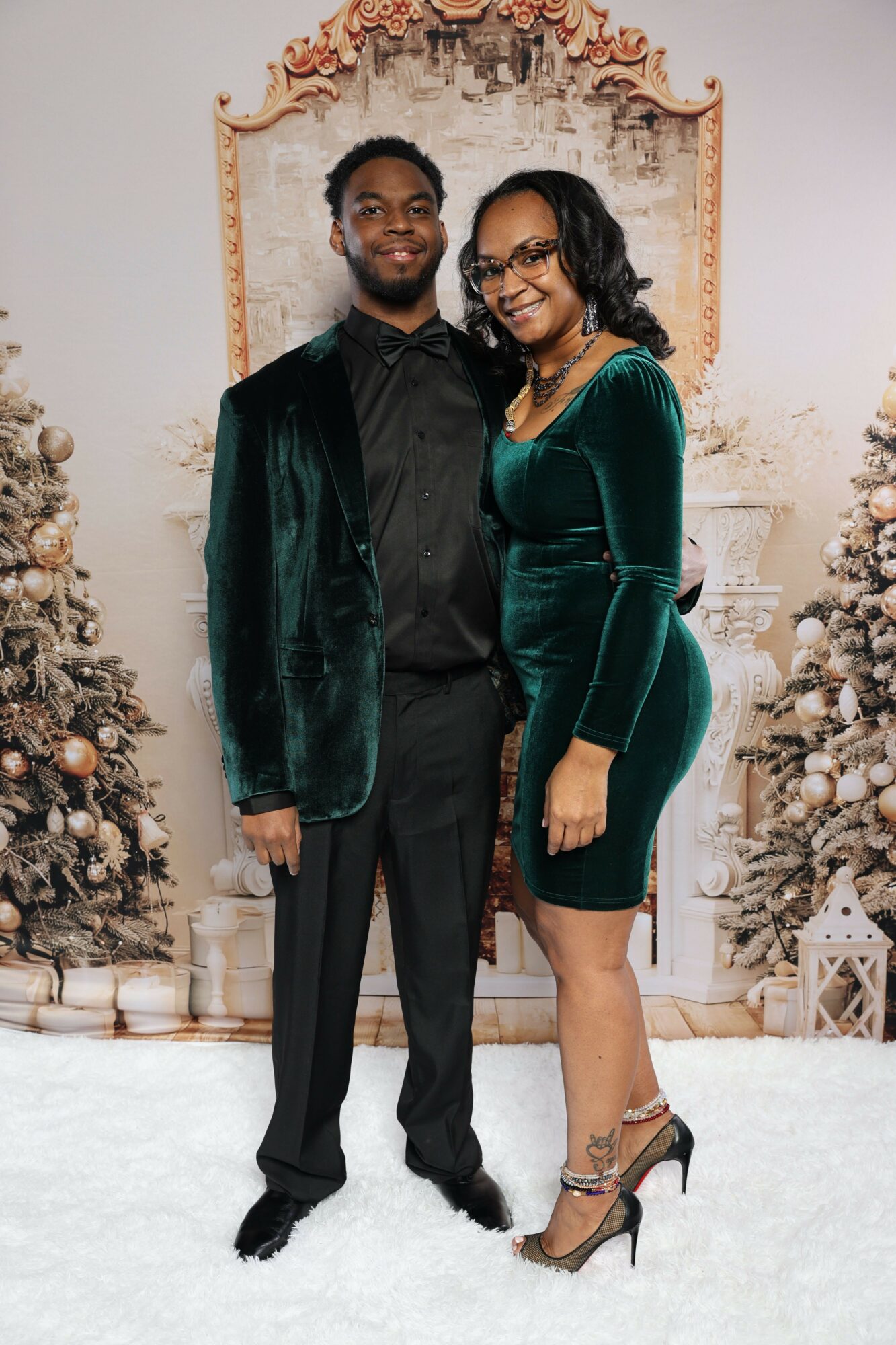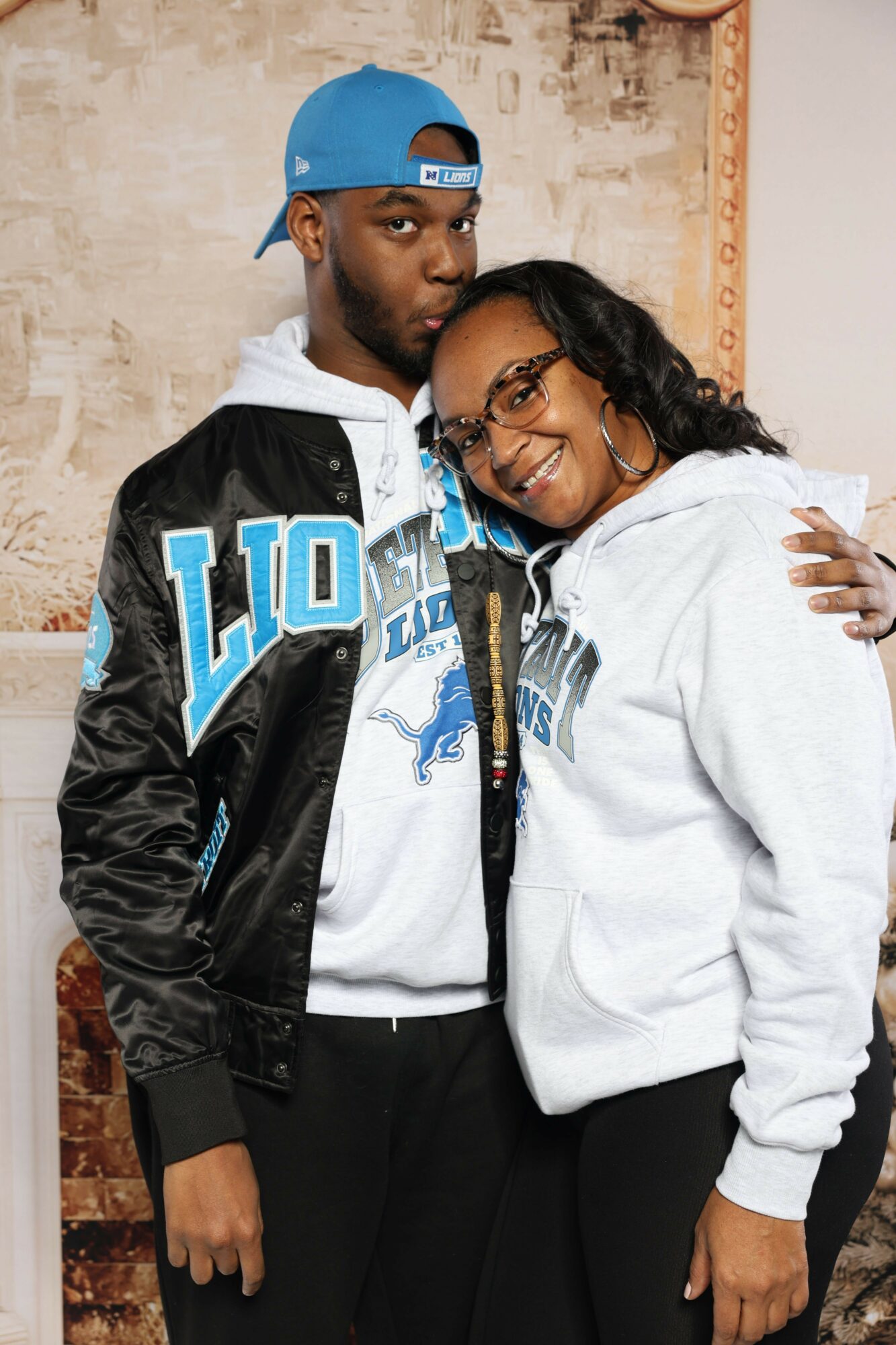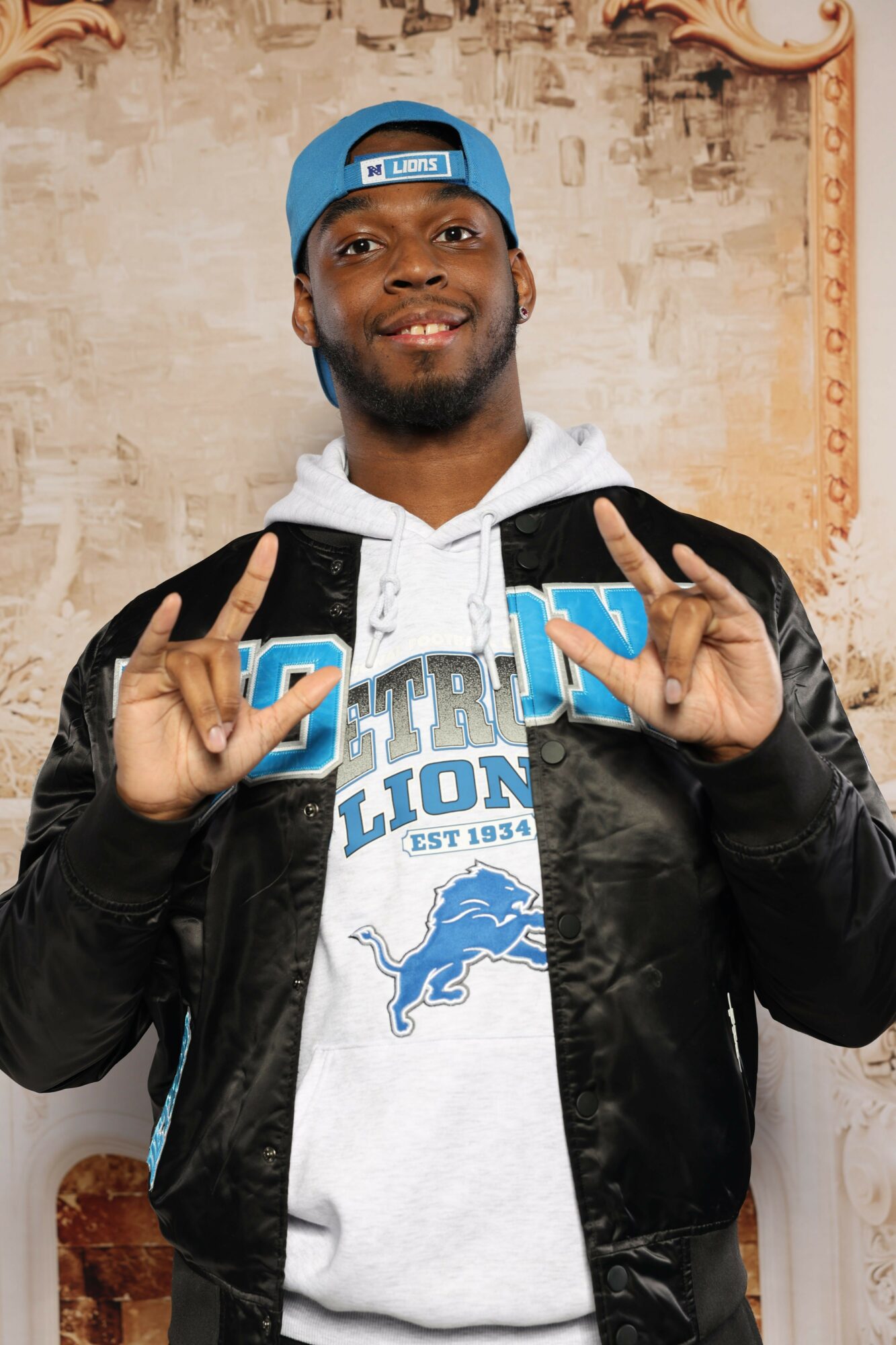



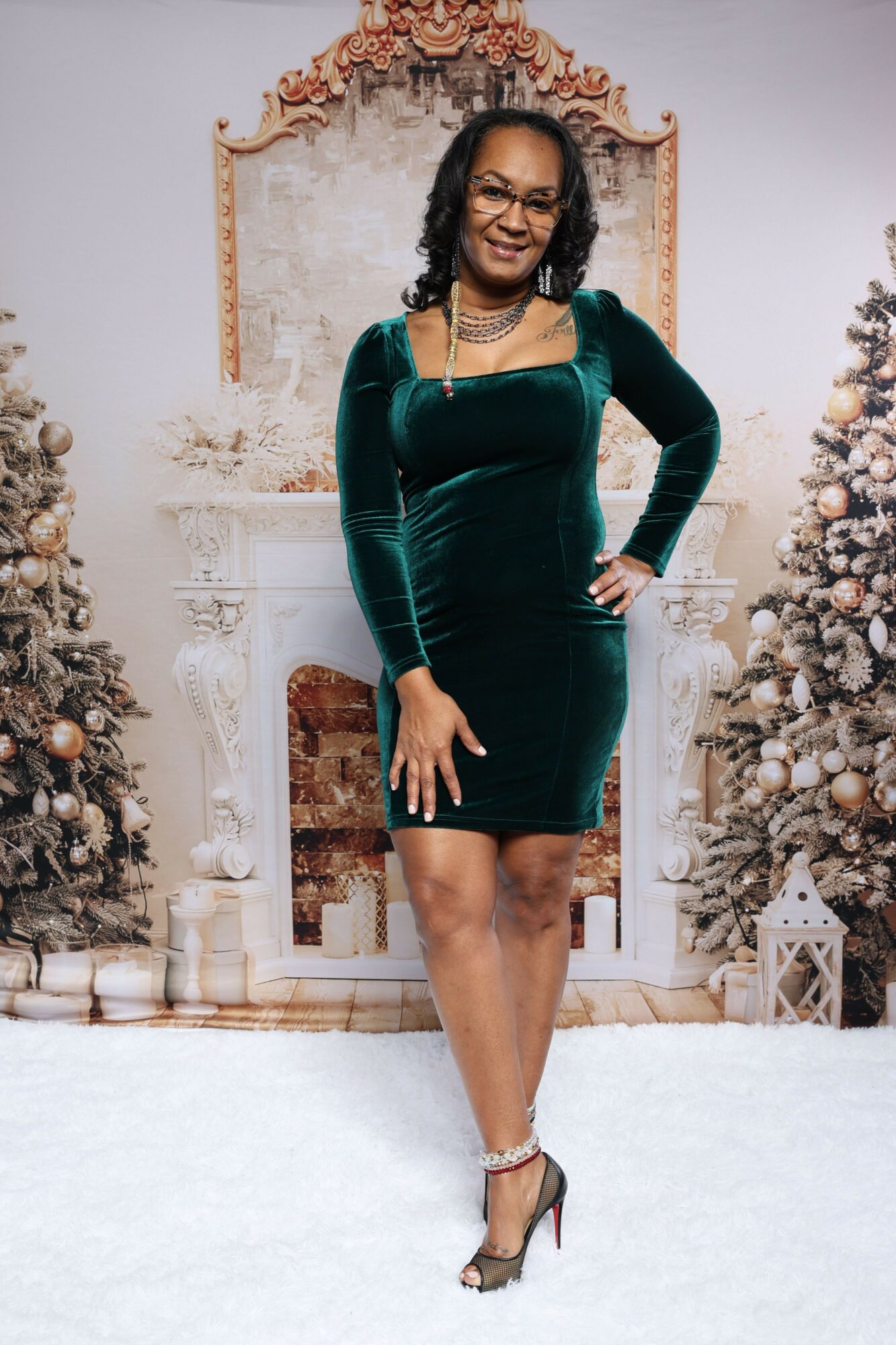
Today we’d like to introduce you to KeanaMonique Smith.
Hi KeanaMonique, so excited to have you on the platform. So before we get into questions about your work-life, maybe you can bring our readers up to speed on your story and how you got to where you are today?
If you ask me who Keana is underneath all the hats I wear, I’m still figuring that out. I’ve spent so much of my adult life being somebody to somebody that somewhere along the way, I got used to putting myself in the background.
I was 20 when I became a mother, so in a lot of ways my son Jayce and I grew up together. But my story didn’t begin when I became his mother. There was a Keana before motherhood, and I think part of where I am in life now is getting reacquainted with her while also discovering the woman she became.
Before I had my son, I was someone who loved life. Don’t get me wrong, I still do—I just love it differently now. Back then, life wasn’t always carefree, but I definitely had moments when I was free of care. There’s a difference.
I’m my mother’s only daughter and I have one older brother. I graduated from Pontiac Northern High School in 1997, which is now Pontiac High School. I had a short-lived college experience, but I’ve never believed there was only one route to figuring out who you are or where you’re supposed to end up.
I can still remember my first real job. I worked concessions at Showcase Cinemas 6-12 on Telegraph. I actually liked that job, and getting to see all the movies I wanted for free wasn’t a bad perk either.
I loved skating, hanging out with my friends, shopping and doing all the things teenagers did. I enjoyed people. I enjoyed experiences. I enjoyed having fun.
The funny thing is, a lot of that girl is still here.
I still love hanging out with my friends. I still love shopping. I still love going places and trying things. I love concerts, but I also love operas and plays. I love traveling, and some of my favorite trips have been about the experience rather than just the destination. For Jayce’s 25th birthday, I took him to Scotland and Ireland because, apparently, my son had built himself a social-media following and had friends overseas he wanted to meet. So we went. That experience reminded me that life can become as big as you’re willing to let it.
I love nature, especially water, and I’ve learned how much simply grounding myself can do for me. I love creating with my hands, and I love words.
Writing has become a major part of who I am. What started as something I loved eventually became something tangible. I’ve written six published books, with two more unpublished works currently in progress. Writing gives me a place to tell stories, express myself and sometimes say the things that are easier for me to put on paper than to say out loud.
My life has also taken me places I never could have planned.
At one point, I registered as a bone marrow donor. A lot of people register and never receive that call.
I did.
I had the opportunity to donate my bone marrow to someone I didn’t know. Eventually, I was able to meet her and her family, and what began with two strangers connected through a donation became a relationship that we still maintain today.
I’ve also experienced moments when there wasn’t time to think—only react. My mother once suffered a massive heart attack while she was in my car. Every traffic law I knew became a suggestion that day because my only thought was getting my mother to the hospital. Thankfully, she survived and is still here today.
Experiences like those have taught me something about myself: when life puts something in front of me, I may not always know exactly what I’m doing, but I’m going to do something. Some of the most important parts of my life weren’t things I planned. They were things I responded to, things I said yes to, or moments when I simply did what needed to be done.
Motherhood was another life-changing chapter. Becoming Jayce’s mother at 20 changed the direction of my life and required me to grow in ways I couldn’t have anticipated. A lot of the things I once did without thinking now required thought, planning and sometimes adaptation.
But I didn’t stop being Keana when I became his mother.
If anything, I’ve spent years learning how to let the different versions of me exist together.
I’m a mother, but I’m also a woman who loves her friends and enjoys a good time. I’m an advocate, but I’m also a creative. I’m an entrepreneur, but I’m also someone who can sit near the water and do absolutely nothing. I’m responsible, but there’s still a part of me that wants to skate, shop, travel, laugh and experience something I’ve never experienced before.
Over the years, I also discovered the power of my voice. I’ve learned that words can entertain, encourage, educate, advocate and sometimes make somebody uncomfortable enough to actually listen. That ability became especially important while advocating for my son, and eventually it became part of the foundation for We Have A Voice Foundation.
Some of the paths in my life I chose. Others I found myself on because life put me there and I had to figure out how to walk them.
And somewhere along the way, I became very good at wearing hats.
I knew how to be who I needed to be for the person or situation in front of me. I knew how to show up. I knew how to handle business. I knew how to create, encourage, advocate and keep going.
What I didn’t always stop to ask was: **Who is Keana when nobody needs anything from her?**
That’s a question I’m exploring now.
These days, I’m consistently finding different ways to see what peace looks like for me. Sometimes peace is water. Sometimes it’s creating something with my hands. Sometimes it’s writing. Sometimes it’s traveling, going to a concert or play, laughing with my friends, or simply having time where I’m not required to be anything for anybody.
I know what discomfort feels like, and I know what it feels like to be humiliated. Those experiences have made me conscious of how I treat people. I try not to make someone else feel small just so I can feel big. I enjoy encouraging people, even when my way of doing it isn’t necessarily the most conventional or practical.
When I was younger, I didn’t have a blueprint for what my life was supposed to become. I just lived it. Looking back, maybe that’s been one of the most consistent things about me.
I’ve lived.
I’ve tried things. I’ve changed directions. I’ve created things. I’ve loved people. I’ve made mistakes. I’ve written books. I’ve been a bone marrow donor. I’ve built businesses. I’ve traveled across the world. I’ve become a mother and an advocate. I’ve been scared and still acted. I’ve learned, grown and become a lot of different versions of myself along the way.
But underneath every title, **I’m still Keana.**
And at this stage of my life, I’m finally making the time to discover what that means for me.
I’m sure it wasn’t obstacle-free, but would you say the journey has been fairly smooth so far?
One of the biggest challenges I’ve faced in life has been learning how to navigate things I wasn’t prepared for, especially when I didn’t even know what questions I was supposed to be asking.
When my son Jayce was one week old, I took him to the doctor for a routine checkup. At the end of the appointment, I was handed a pamphlet about infant deafness and a piece of paper telling me to contact another doctor because he had failed his hearing test.
Nothing more. Nothing less.
I went home and told my mother. She prayed, and I prayed. I prayed and prayed and prayed, but nothing changed. I’m not knocking faith, but I can say that experience caused my faith to develop differently than it does for some people.
This was 1999. At the time, having a child with special needs wasn’t something I saw often in my circle. Two of my friends had been pregnant at the same time as me, and in my mind, they had the “normal” babies and I had the special one.
I did more judging of myself than anyone else could have done.
I went back through my entire pregnancy in my mind trying to figure out where I went left instead of right. What did I do? What didn’t I do? Why my baby?
All I had been told was that his cochlea wasn’t completely formed, and that still didn’t answer the question I really wanted answered.
For about four years, embarrassment, depression and a “woe is me” attitude followed me. That’s uncomfortable for me to admit because I never want it confused with being embarrassed of my son. I wasn’t. I was struggling with accepting that our life looked different from what I saw around me, and I blamed myself for something I didn’t understand.
The turning point came when I met a woman whose parents were deaf. She told me, essentially, “Be bold. This is who you are.”
I needed that.
Acceptance didn’t suddenly make everything easy. What it did was allow me to stop waiting for our circumstances to change before I started living in them. Until then, life felt like watching paint dry.
As Jayce grew, there was always something else to navigate. I discovered that our school district wasn’t the right fit, so I moved to Flint and enrolled him in the Michigan School for the Deaf. Through testing we learned he was cognitively impaired and developmentally delayed. Around age eight, autism entered the picture.
At times, it felt like one hit after another.
But somewhere along the way, my question began changing from “Why my baby?” to “What does my child need, and what do I need to do to make sure he gets it?”
One of my biggest challenges came much later when Jayce transitioned into adulthood.
I assumed he would remain in school until age 26 and participate in transitional learning. At his graduation ceremony, I received his certificate of completion and said he would be returning for the transition program.
That’s when I learned he had signed himself out of school.
No one had explained to me that I needed to become his legal guardian. In my mind, I was his mother and had spent his entire life making decisions and advocating for him. Legally, however, he was an adult. Because I wasn’t his guardian, I couldn’t argue the decision.
I was livid.
Not just because of what happened, but because I wasn’t prepared. Once again, I was learning something important after the moment when I needed to know it.
So I had to figure out what came next.
By then we had moved back to Pontiac, and I found a program in Oakland County that provided job-skills training and a job coach to help determine what Jayce could do in the workforce. The process took about a year and a half, but in 2020 he landed his first job and remains employed today.
Those experiences taught me one of the hardest lessons of my life: **you don’t know what you don’t know.**
I’ve had to learn how to ask better questions, research, speak up and sometimes challenge systems that I originally assumed would tell me what I needed to know.
I’ve also had to learn that advocacy doesn’t always mean coming into a room ready to fight. Sometimes being effective means knowing how to use your words so the other person actually hears you. I’ve learned to explain the difference between how someone is being treated and how they could or should be treated. I’ve learned when to push, when to ask another question and when to find another door.
The obstacles didn’t make me fearless. There have been plenty of times when I’ve been scared, angry, embarrassed, confused or completely unprepared.
They taught me that I can still move while feeling all of those things.
That’s probably one of the biggest lessons I carry with me today. I don’t have to know everything before I take the next step. Sometimes I just need enough information to ask the next question, make the next decision or find the next resource.
And when I learn something that might make the road a little easier for somebody coming behind me, I believe in sharing it.
Because sometimes the difference between feeling completely lost and feeling like you can handle what’s next is simply having someone say, **”I’ve been here. Here’s what I wish somebody had told me.”**
Thanks – so what else should our readers know about We Have A Voice Foundation ?
My work is probably the clearest example of how the different parts of my life eventually found a way to connect.
I am the Founder and Executive Director of We Have A Voice Foundation, an organization created to support individuals with disabilities and their families through advocacy, education, resources, awareness and community.
We Have A Voice wasn’t created because I studied disability advocacy in a classroom or because I had some perfectly mapped-out plan to start a nonprofit. It came from lived experience.
For years, I was figuring things out as I went while raising my son. I learned how to advocate because I had to. I learned how to research because I didn’t always know where to find the answers. I learned how important communication is because sometimes the difference between someone being included and excluded is simply whether the people around them understand.
One of my earliest lessons in that came when Jayce was little.
He was playing basketball inside one day and stopped to look out the window at the neighborhood kids playing outside. I signed “outside” to him, and he smiled. I knew what that smile meant, but allowing him to go outside and interact with other children meant I had to get past some of my own fears.
I took his basketball hoop outside.
A little boy came over and said hello. I got down to his eye level, pointed to my ears and asked, “What are these?”
He said, “Ears.”
I asked him what ears do, and he said, “They help you hear.”
I told him, “His ears don’t work, so when you talk to him, you have to look at him.”
The little boy looked at me strangely and walked away.
For a minute, I felt defeated.
Then he came back with three or four other boys and explained to them exactly what I had explained to him. They started playing with Jayce, and from that point on, my son had neighborhood friends.
That experience stayed with me because it taught me that sometimes people aren’t trying to exclude someone. Sometimes they simply don’t understand yet.
That’s one of the principles behind We Have A Voice Foundation. Education doesn’t always have to be complicated. Sometimes you have to meet people where they are, explain something in a way they can understand, and give them the opportunity to do better once they know better.
Our work is centered around helping families navigate life with disabilities while also helping the larger community understand that inclusion is more than simply allowing someone into a space. It’s making sure they can communicate, participate, learn, grow and be treated with dignity once they’re there.
Our focus includes education and awareness, parent support, advocacy and inclusion, life skills and the transition from high school into adulthood, and communication for individuals who are nonverbal or communicate differently, including American Sign Language and other alternatives.
One area that is especially important to me is the transition into adulthood.
Families spend years learning how to navigate childhood services, schools, IEPs and different systems, and then their child becomes an adult and suddenly there is an entirely different set of rules. I know what it feels like to discover important information after I needed it. I don’t want another parent to have to learn everything the hard way simply because nobody thought to tell them.
I also want We Have A Voice to be a place where families don’t feel judged for what they don’t know.
There were things I didn’t know.
There were questions I didn’t know I was supposed to ask.
There were resources I didn’t know existed.
Not knowing didn’t mean I didn’t love my child or wasn’t doing my job as his mother. It meant I needed information.
That’s the kind of environment I want us to create for other families: one where you can ask the question without feeling embarrassed that you don’t already know the answer.
The name We Have A Voice is intentional. Having a voice isn’t limited to speaking verbally. A voice can be spoken, signed, communicated through a device, expressed through behavior or represented by someone who knows how to advocate without taking away the individual’s dignity.
That belief also inspired one of our initiatives, **HIM — Humanity Includes Me**. The message is simple but important: disability does not make someone less human, less valuable or less deserving of access, opportunity, friendship, employment, joy or community.
And the word “humanity” matters to me because inclusion isn’t charity. People with disabilities aren’t asking the world to feel sorry for them. They’re part of the world.
Alongside my nonprofit work, entrepreneurship and creativity have always been part of me. I am an author, and I’ve created businesses that allow me to work with my hands, connect with people and express different sides of myself. I don’t necessarily see those things as separate lives anymore. Whether I’m writing, creating, building a business or advocating, there is usually some form of connection at the center of it.
With We Have A Voice Foundation, I don’t want to build an organization that simply hands someone a list of resources and sends them on their way.
I want to build the kind of support I wish I had at different stages of my own journey.
Sometimes that means advocacy.
Sometimes it means education.
Sometimes it means connecting a family to a resource.
Sometimes it means helping a parent understand what questions they should be asking before they’re standing in the same situation I once stood in saying, “Why didn’t anybody tell me this?”
And sometimes it may be as simple as teaching a child, “His ears don’t work, so when you talk to him, you have to look at him.”
Because I’ve seen firsthand how one simple piece of information can turn a child standing on the outside looking at everybody else play into a child surrounded by friends.
As We Have A Voice Foundation grows, my vision is for it to become a place families know they can turn to throughout the different stages of raising and supporting a person with a disability. I want families to have access to information before they desperately need it, not after the fact when they’re already standing in the middle of a situation trying to figure out what happened.
I want us to help bridge some of those gaps—from childhood and education to communication, life skills, adulthood, employment and independence—while also creating experiences where individuals with disabilities are included simply because they belong there.
Ultimately, I want We Have A Voice Foundation to become the kind of resource I wish someone had handed me when I was 20 years old and trying to figure out what came next.
We won’t always have every answer, and I don’t believe we have to pretend that we do. Sometimes support simply means having someone willing to search for the answer with you.
That’s part of the heart of our mission:
**We may not know the answer yet either, but let’s figure it out together—because you shouldn’t have to figure it out alone.**
Any advice for finding a mentor or networking in general?
I don’t know that I can honestly say I’ve ever had a traditional mentor.
There hasn’t been one person I can point to and say, “This person took me under their wing and showed me how to navigate life, motherhood, business, writing or advocacy.” A lot of what I’ve learned, I’ve learned by living it, making mistakes, asking questions, watching other people and figuring things out along the way.
But I have had what I would call mentoring moments.
There have been people who entered my life at the right time and gave me something I needed, even if they didn’t stay for the entire journey.
One of those moments came from a woman whose parents were deaf. At the time, I was still learning how to accept and navigate having a deaf child, and I had fears about how the world would receive Jayce. She told me, in so many words, to be bold about it: This is who we are.
She also taught me not to make everything so complicated. If a child wanted to understand why Jayce didn’t respond when they spoke to him, explain it in a way that child could understand: his ears don’t work, so you have to look at him when you talk to him.
That conversation may have seemed small to her, but I carried it with me. It changed the way I approached other people and eventually influenced the way I think about education and advocacy. Sometimes people don’t need a lecture. They just need someone willing to meet them where they are and give them information they can understand.
I’ve had other people throughout my life who have given me advice, encouraged me, shared information, opened a door or simply allowed me to watch how they moved. I take pieces from those experiences and carry the parts that fit me.
I think that’s why I view mentorship differently now.
A mentor doesn’t necessarily have to be someone who has everything figured out or someone who walks beside you for years. Sometimes mentorship happens in a conversation. Sometimes it’s watching someone do something you didn’t know was possible. Sometimes it’s someone telling you something you don’t necessarily want to hear but later realize you needed. And sometimes it’s simply having access to someone who says, “I don’t know either, but let’s figure it out.”
Looking back, I probably could have benefited from having more mentorship at different stages of my life. There were a lot of times when I was trying to figure things out on my own simply because I didn’t know who to ask.
Maybe that’s also why I’m intentional about sharing what I know now.
I don’t want to position myself as someone who has all the answers, because I don’t. I’m still learning too. But if I’ve already walked through something that someone else is just approaching, I can at least turn around and tell them what I learned.
And if neither one of us knows the answer, we can figure it out together.
For me, that’s what mentorship has come to mean: **you don’t necessarily need someone to give you the entire roadmap. Sometimes you just need someone willing to help you find the next turn.**
Contact Info: