



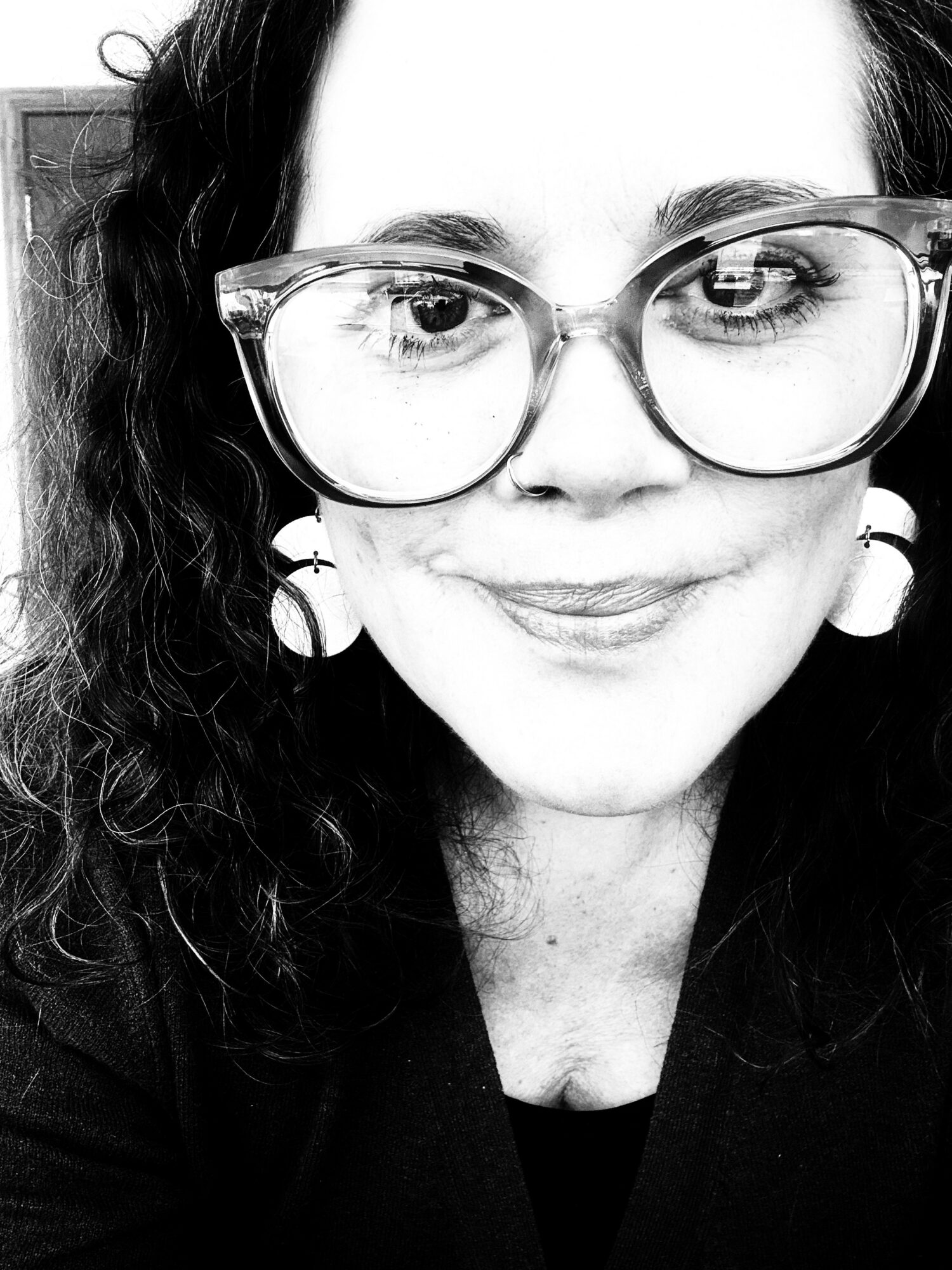
Today we’d like to introduce you to Christina Ryan-Stoltz.
Hi Christina, it’s an honor to have you on the platform. Thanks for taking the time to share your story with us – to start maybe you can share some of your backstory with our readers?
I’ve been working with bodies since 2001. I began in traditional bodywork, drawn to the quiet intelligence of touch and the way the body is always seeking balance. I loved my work and my clients, but over time I sensed there was something ‘missing’ I couldn’t yet name. I expanded my lens in search of more healing methods, following my intuition and instinct more than trends or certainty, because I trust that the body innately holds more wisdom than technique alone could teach or reach.
Then the death of my only child rearranged my life. I did not have the internal resources to navigate that level of devastation. Talk therapy helped until I plateaued—I could articulate my grief, but I could not metabolize it. The questions I had been circling professionally became urgent and emergent personally. I knew there had to be a more body based way to live inside what had happened.
Discovering somatic practices gave me a way to stay with my sensations rather than override them. The impact was so profound that I chose to train in this field and step into it fully as a practitioner myself.
Today, I call myself an Embodiment Reclamation Guide specializing in Nervous System Sovereignty — exploring the weight of what we carry, how to interrupt patterns of self abandonment, people pleasing and chronic bracing, how to walk with grief, loss and change, and how to find safety and belonging from within. I work with women longing to belong to themselves, and increasingly with teens and community organizations, building nervous system literacy & capacity as a foundational life skill that fosters connection and collaboration.
Alright, so let’s dig a little deeper into the story – has it been an easy path overall and if not, what were the challenges you’ve had to overcome?
It has not been a smooth road, but it is well worn with devotion. The nervous system will resist and defend against too much or sudden change, so somatic work is very slow by design, and we live in a society that rewards urgency and visible output. I have had to learn to embrace— and truly embody— steadiness, with myself, with others, and with the pace at which lasting change unfolds.
Embodiment asks people to feel & sense what they have spent years avoiding or narrating (and storing the story). It asks them to examine patterns and habits that once kept them safe. That kind of noticing cannot be rushed. It requires trust & embodied resonance and it is slow medicine.
There are moments where I wonder whether a ‘depth over direction’ orientation can survive in a marketplace built on quick fixes — but the evidence has always been in the bodies I serve. When someone feels their sense of safety or capacity shift for the first time, when a teenager understands their nervous system is adaptive rather than broken, when conflict softens instead of escalates, the impact is tangible. That is what keeps me devoted to this field.
Thanks for sharing that. So, maybe next you can tell us a bit more about your work?
I believe in the base of my being, that our stories and our bodies hold maps for healing, and my work is devoted to helping people learn how to read them. I am a practitioner, teacher, and writer whose work lives at the intersection of nervous system education, embodiment practice, and cultural reflection. I work through the body and the nervous system to help people understand how their internal patterns formed and how they can begin to shift.
Much of my work centers around helping people recognize and soften the chronic bracing patterns the body develops in response to stress, grief, and prolonged overwhelm. Bracing is not a flaw in the system, it’s an intelligent survival response. Most people spend their lives trying to override these patterns through willpower or mindset. My work helps them understand the body’s language so those patterns can unwind in a sustainable way.
When people learn to meet their patterns with awareness, breath, movement, and sound, the body can begin to reorganize toward safety and choice again.
I work with grieving families, overwhelmed mothers, anxious teens, and teams navigating conflict or transition. The contexts vary, but the work is the same at its core. Helping people come back into relationship with their own bodies so they have more options than the survival strategies they once needed.
Alongside my in person work, I am also a writer. I often say that I “write to touch the supple center of unguarded ache”. Writing allows me to translate nervous system concepts into human experience and to explore grief, belonging, growth, and self agency in ways that feel accessible and real. What happens in a session continues on the page, extending the work beyond the individual and into the culture around us.
What sets my work apart is that I hold both the intimate and the structural at the same time. Individual nervous systems do not exist in isolation. The nervous system of a child, a parent, a classroom, or a workplace constantly influence one another. I hold that broader lens while staying rooted in the immediacy of the body.
I am most proud of the environments I have helped cultivate where someone feels safe enough to soften and honest enough to tell the truth. Spaces where women remember they belong to themselves.
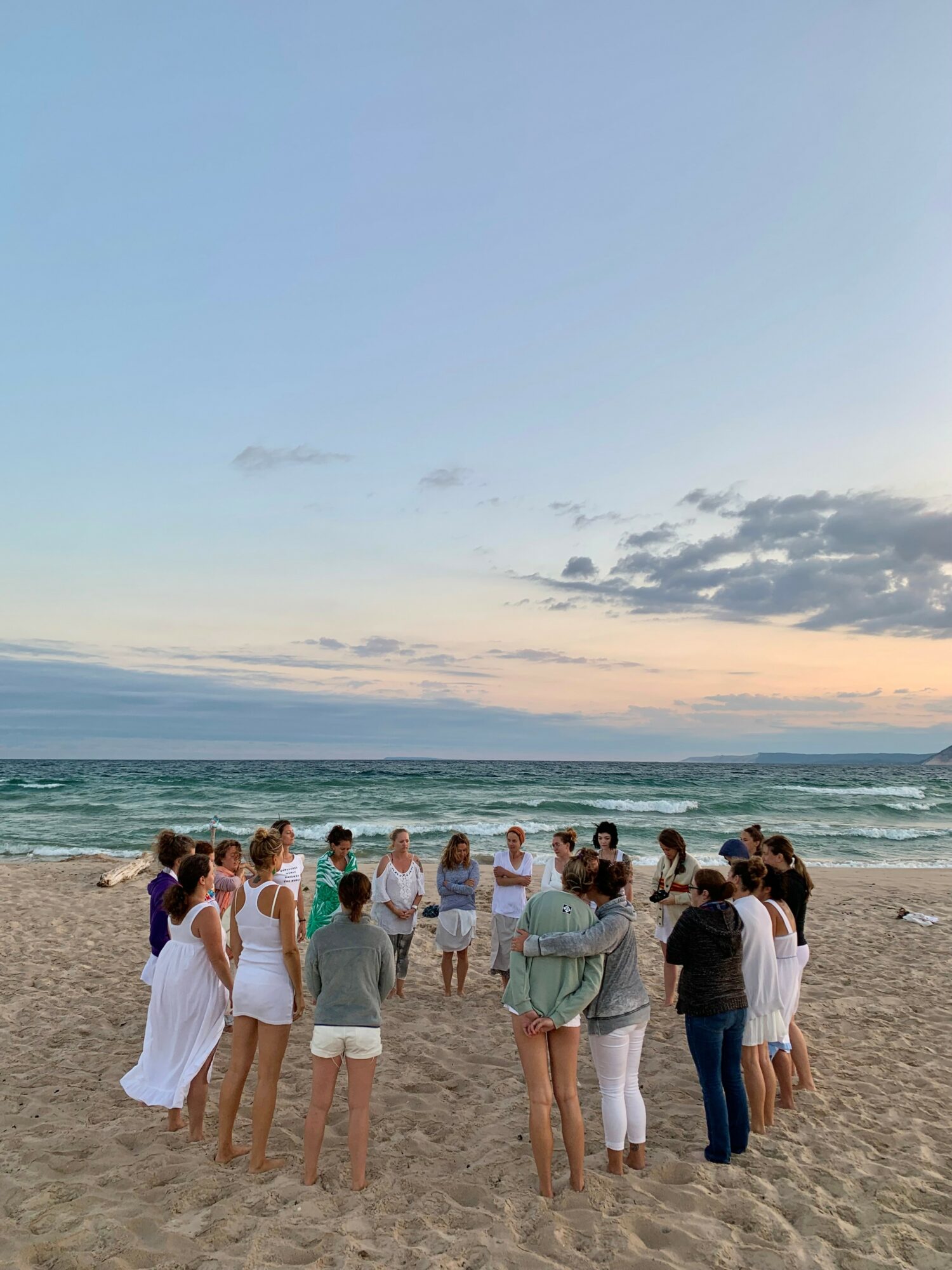
My monthly women’s embodiment circle, Howl and Shake, is one example. It is a place where women gather to move, breathe, vocalize, and reconnect with their animal body. Through 4 pillars of embodiment (awareness, breath, movement, and sound), we create safety for the body to release held tension and suppressed emotion. When the body is allowed to complete or discharge what it has been holding, patterns and systems shift. When one nervous system reorganizes toward safety and coherence, that change ripples outward into their families, workplaces, and communities.
In this way, my work is both simple and profound. Helping people return to themselves and inhabit their lives more fully, one body at a time.
What matters most to you? Why?
What matters most to me is equipping people — especially young people and the adults who influence, support & help shape them — with the capacity to stay with big feelings.
When my son died by suicide as a teenager, I was forced to confront how unequipped most of us are to navigate emotional overwhelm. Adolescence is already a neurologically vulnerable time. The frontal lobe is still developing, impulse control is incomplete, and emotions can feel absolute. In the aftermath of his death, I made it my mission to help “someone else’s Isaac” develop the skills to move through crisis rather than be consumed by it.
Over time, carrying this loss also led me to a deeper realization: it is not only about teenagers. It is about the environments they are shaped within. Our children learn regulation from us long before they can name it. As parents, we are their first co regulators — even in utero. I began to recognize that my own nervous system had been shaped by adversity, that I often reacted to life rather than responded, and that modeling regulation is as critical as teaching it.
What matters most to me now is interrupting that cycle; helping young people build crisis skills, helping mamas feel resourced rather than overwhelmed, helping families and communities understand that nervous system literacy is protective, generative & restorative.
Pricing:
- I am committed to accessibility in wellbeing spaces, therefore I offer sliding fee scale for my 1:1 services.
- At the time of publication, my base rate is $150/hr (sliding scale available)
Contact Info:
- Website: sheskool.com
- Instagram: she_skool
- Other: https://christinaryanstoltz.square.site/