




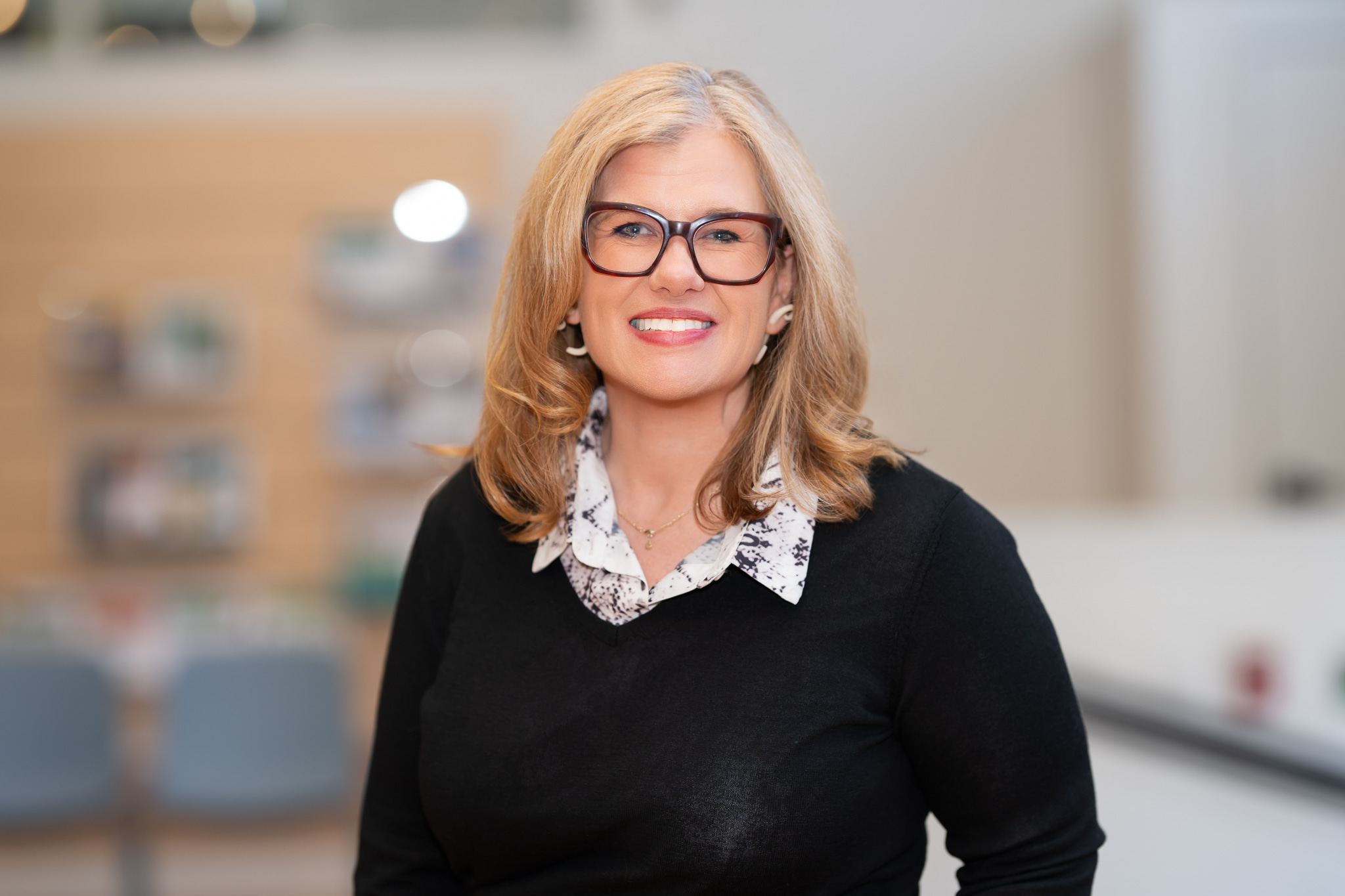
Today we’d like to introduce you to Christie Baer.
Hi Christie, thanks for sharing your story with us. To start, maybe you can tell our readers some of your backstory.
I have been an attorney, a mediator, a political strategist, a fundraiser, and 48 other things—but I have always been an entrepreneur. It’s a curse, really. If I see a lot of people waiting in line for something, like a concert or a sporting event—I don’t wonder what they are in line for. I wonder where the closest Costco is because now it feels absolutely imperative that I go buy cases of drinks immediately to sell to the people in line.
If I stop in at a new coffee shop—and I always stop when I see a new coffee shop — and the owner seems not busy? I can’t help it. I’ll spend 20 minutes learning about them, and their vision, and which products are selling the best so far. Meanwhile, my youngest has already finished their drink and is like, “Mom, can we please go???”
I grew up in rural Maine, the oldest of six kids, in an old mill town that was so small it didn’t have a stop light. My mother was an entrepreneur by necessity. Many of my family members were. When you live in a harsh climate where everything is far apart, the roads are deteriorating, it’s expensive, and the schools are only fine, then you don’t get large employers flocking to the region, bringing high-paying jobs with them. If you stay, you know that no one is coming to save you. You know you have to build the community you want for yourself.
In high school, I was accepted into the Upward Bound program, a federally-funded summer program for first-generation college students, and it altered the trajectory of my life. I loved living on a college campus, taking classes, and getting paid to intern in local nonprofits.
I attended Smith College, which I loved, but didn’t get to fully enjoy because I was working 35 hours per week, both on- and off-campus—waiting tables, doing telemarketing, washing dishes, and generally anything someone would pay me to do—to cover my tuition balance and living expenses.
My Smith network helped me land my first post-graduation jobs in Atlanta, which became my hometown. I spent my 20s and early 30s doing political advocacy and fundraising in and for the LGBTQ community, writing, flipping houses with the person who would become my spouse, and doing freelance work for small businesses. I became a mom to an eight year old.
I was 30 when I entered law school at Emory University. The next year, the 2008 financial crisis hit, and law firm jobs disappeared. I was luckier than some because Emory is a practitioner’s school, meaning that it prepares students to appear in court right away. After graduation, I re-joined the firm where I had worked before and during law school, and became one of only 12 attorneys in Atlanta who knew how to do same-sex divorces in the pre-marriage equality era. A year later, I started my own firm.
Fast-forward six years, and I was living in Savannah. I had hired an associate attorney and doubled my revenue—but I also had a new baby I was madly in love with, who cried when I left for business trips. My business had been my baby and I loved it. But I loved my real baby more. So, when my spouse was recruited for a job at Michigan Law, I gave it up to join U-M’s Center on Finance, Law & Policy.
That is how I met an extraordinary person named Michael Barr. He had a vision for an interdisciplinary clinic for Detroit entrepreneurs, powered by U-M students. I became his co-founder, and entered the world of economic development, not as a customer this time, but as a program designer.
Alright, so let’s dig a little deeper into the story – has it been an easy path overall and if not, what were the challenges you’ve had to overcome?
I think everyone’s life is harder than it looks, no matter who you are. The thing that has always bitten me hardest is the thing I never saw coming—systemic, external forces that are invisible, usually within the financial system. For instance, when I was deciding whether to borrow hundreds of thousands of dollars to go to law school— knowing that I had a kid, four pets, a mortgage with a 5-year balloon payment, and a good paying job I would be giving up—I always believed I would emerge making way more money, working for someone else. I was completely blindsided when the financial crisis wiped out attorney jobs, and reduced starting salaries to paralegal rates.
What I have learned since then about the financial system, financial products, and regulation makes me especially protective of the small businesses my organization works with today at the University of Michigan, particularly as we think about access to capital.
Appreciate you sharing that. What should we know about Detroit Neighborhood Entrepreneurs Project at University of Michigan?
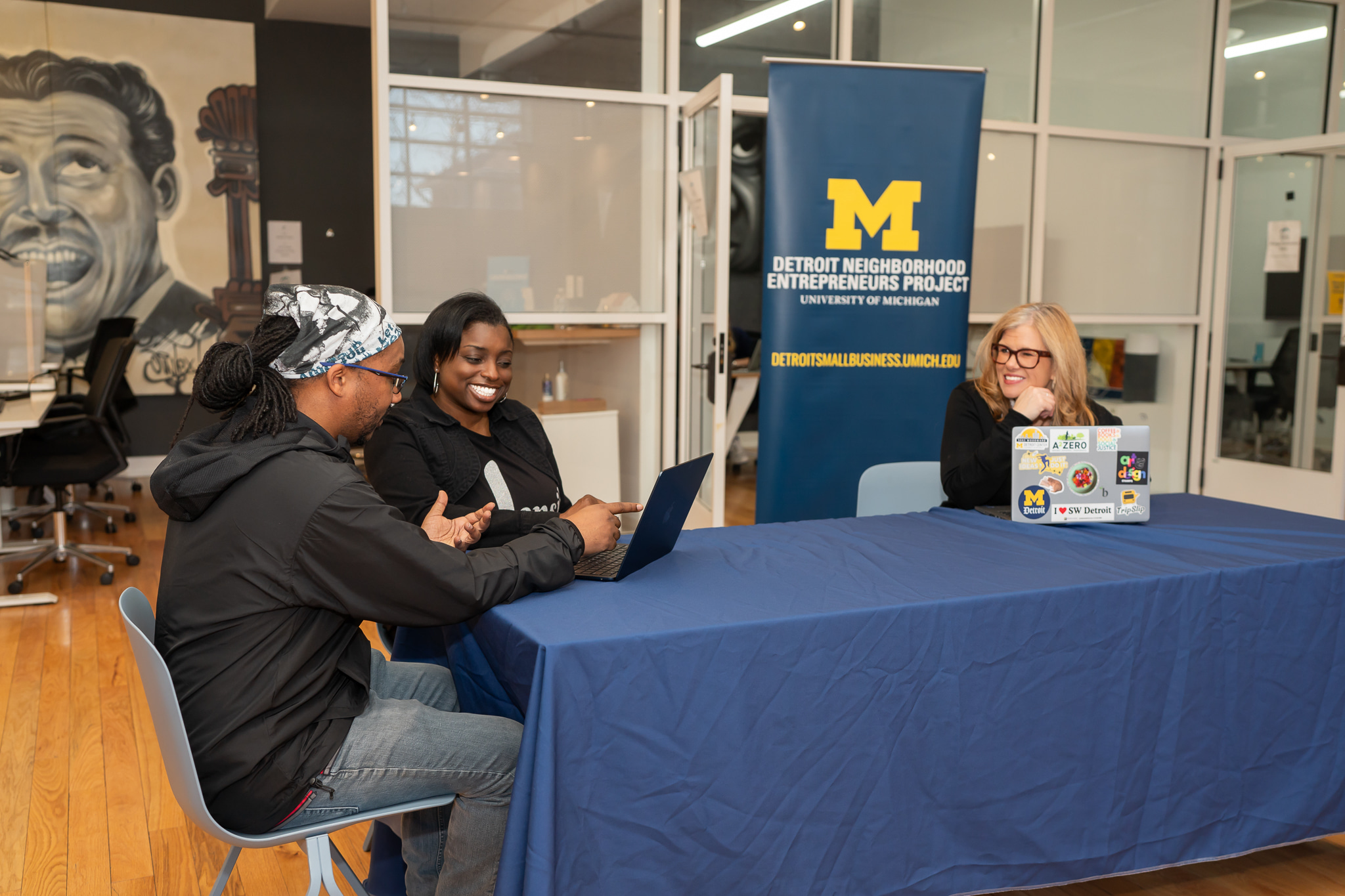
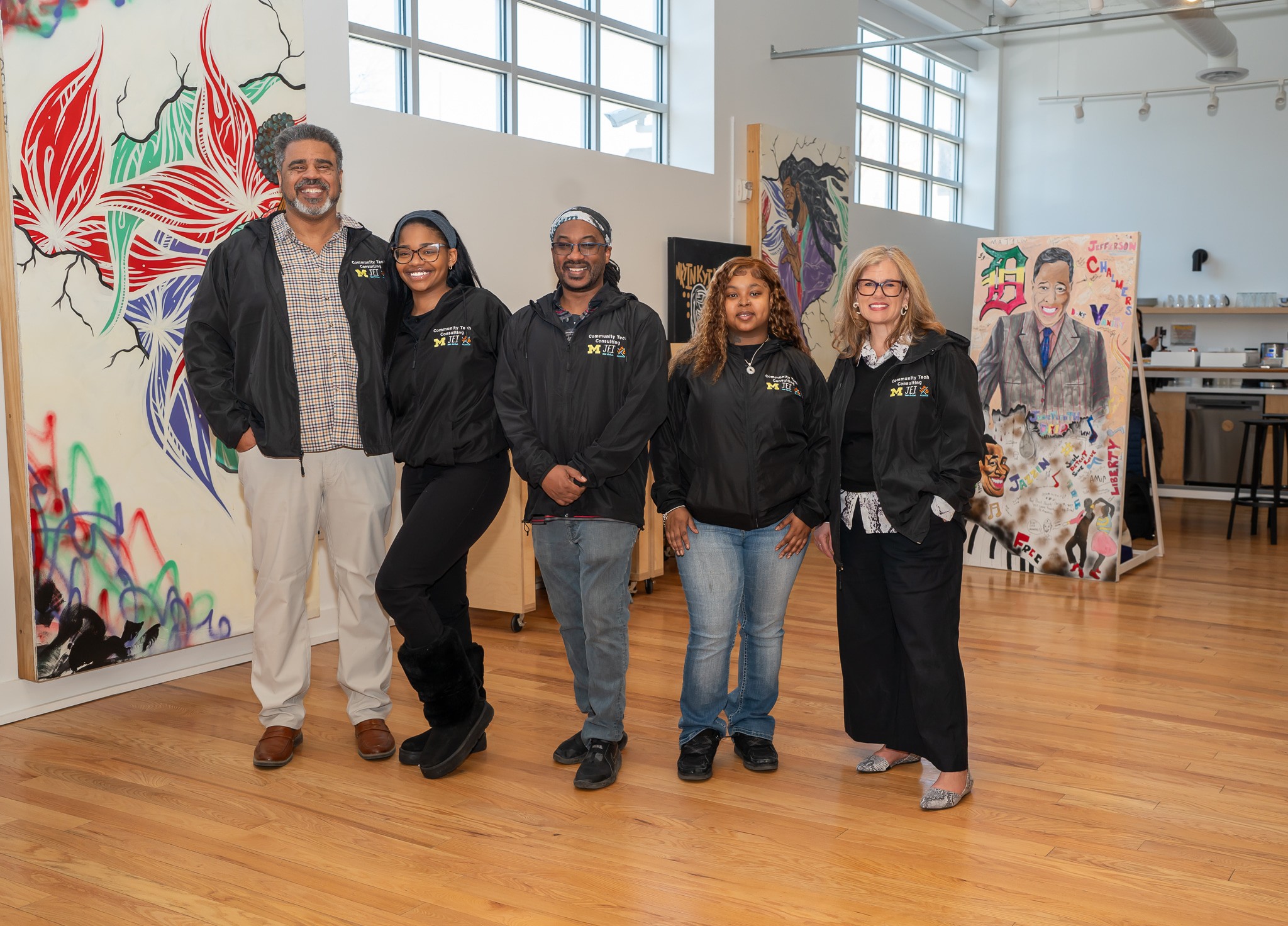
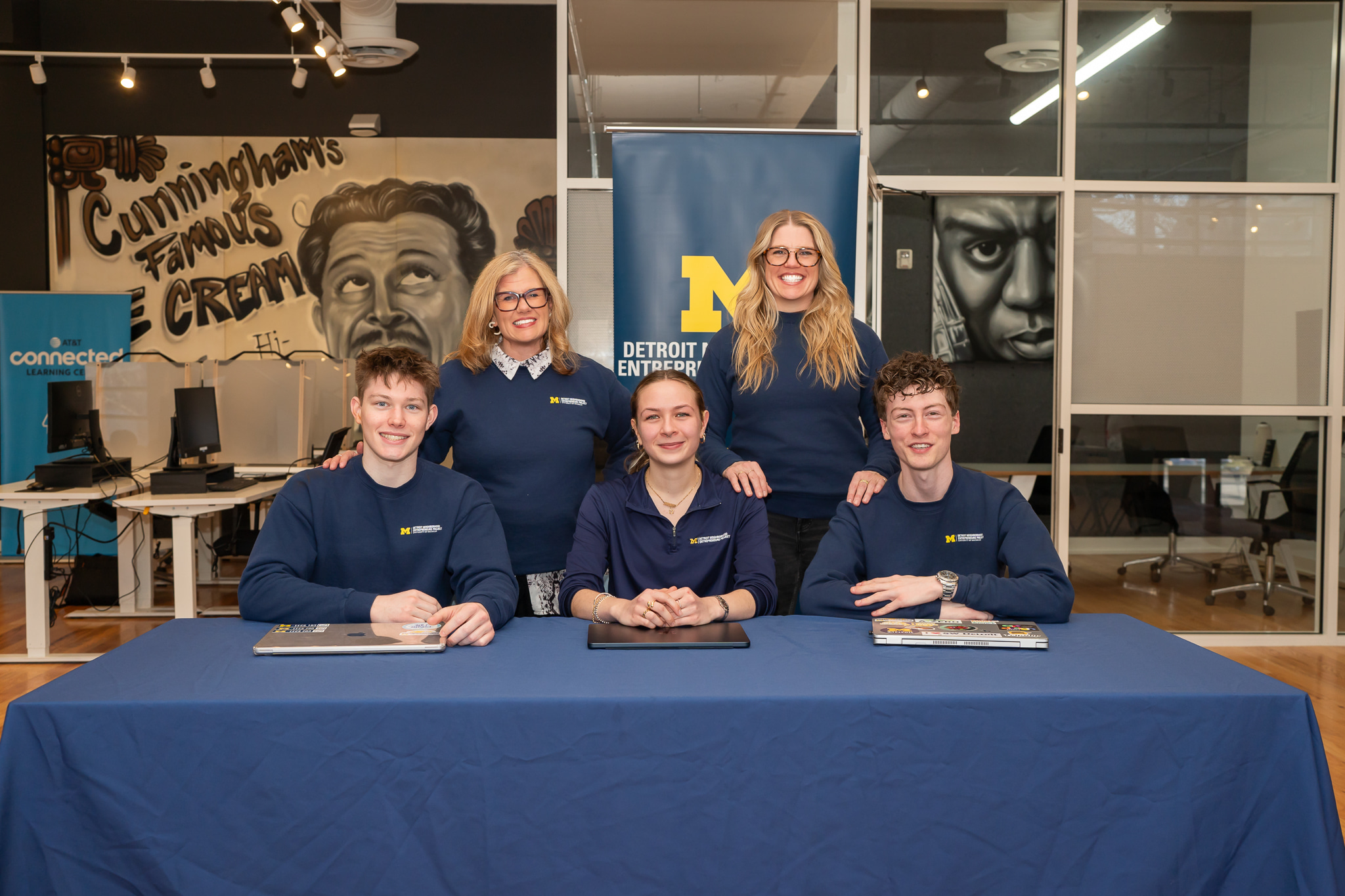
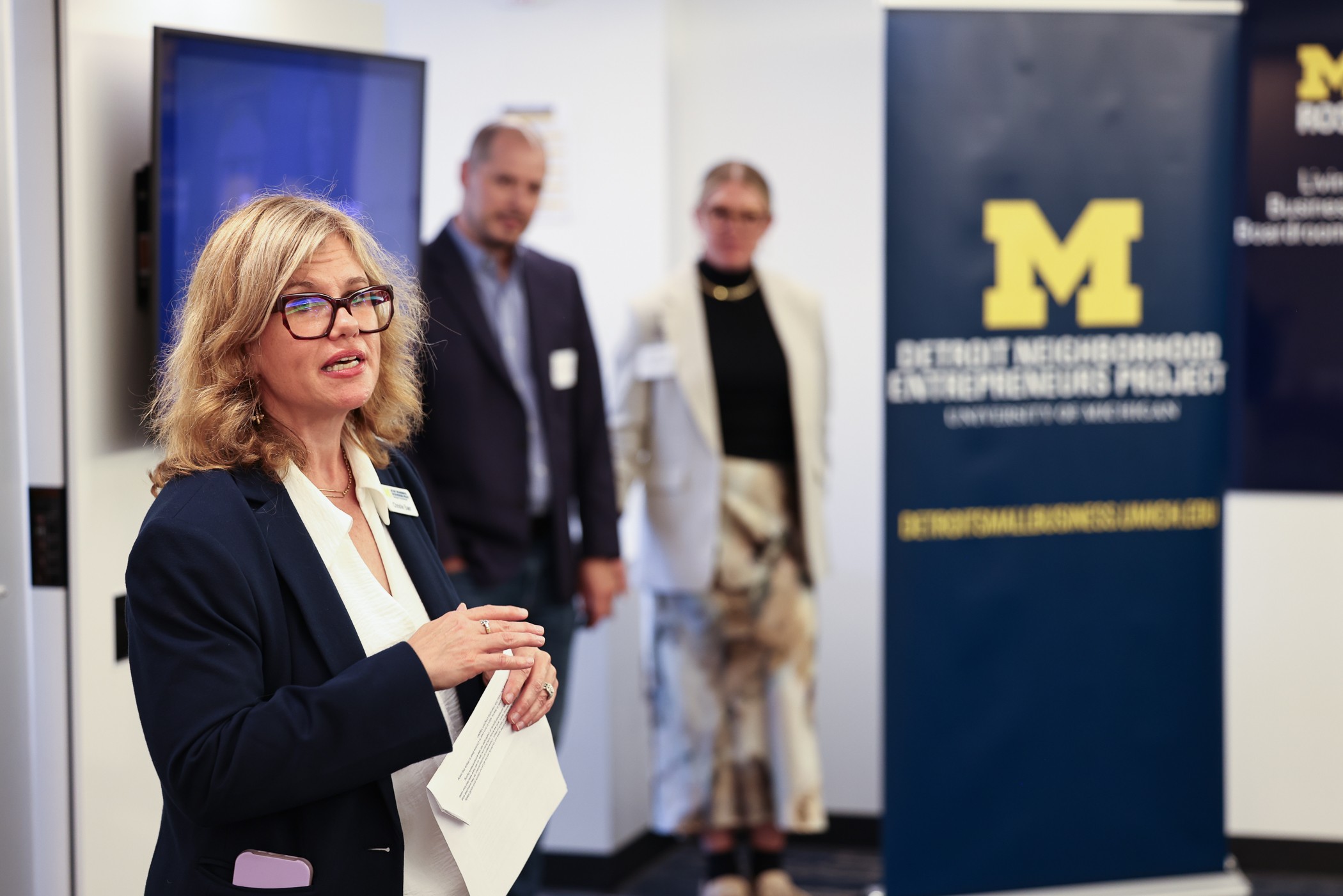
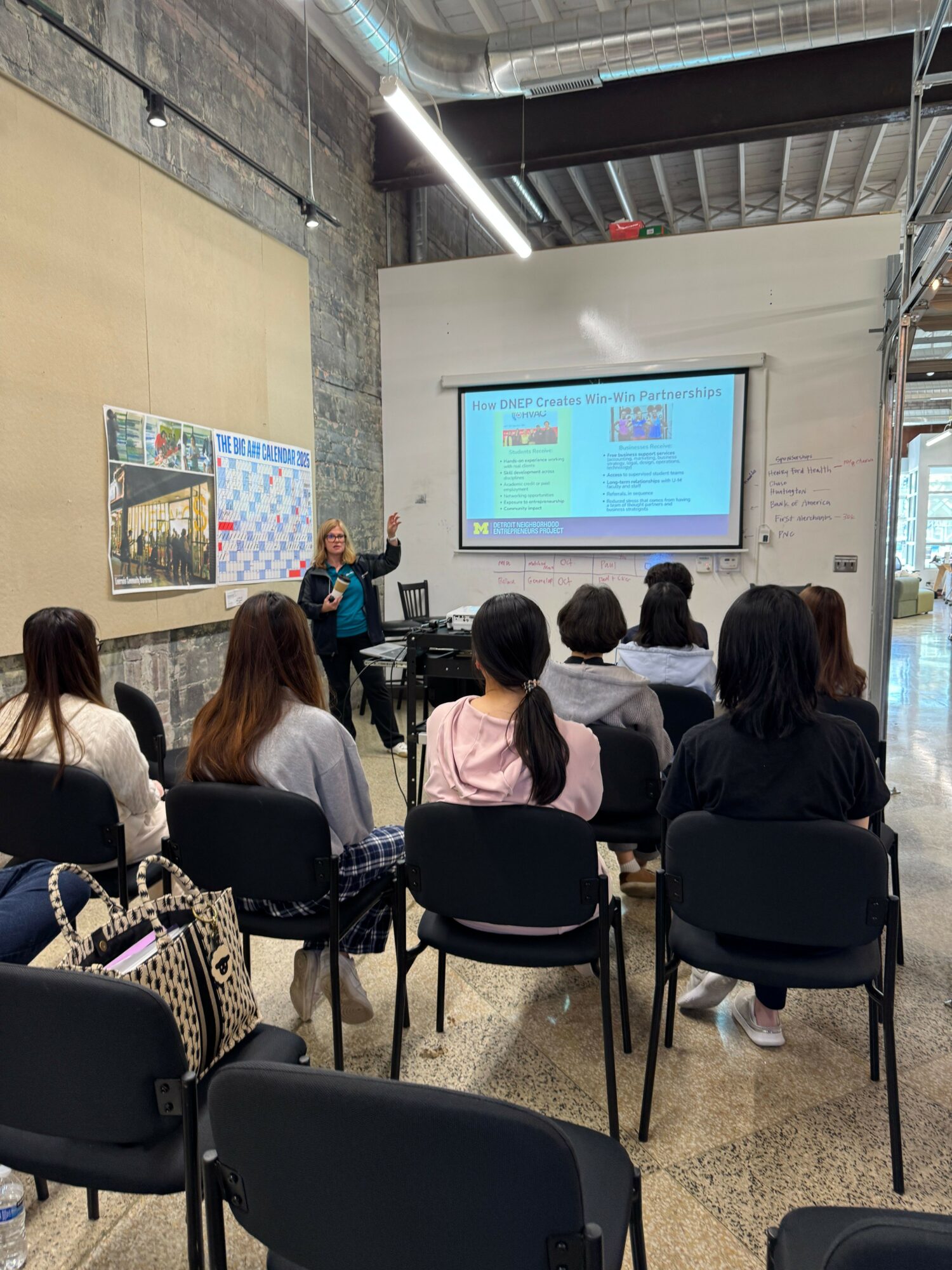
The Detroit Neighborhood Entrepreneurs Project, or “DNEP” as it’s more commonly known, is the University of Michigan’s small business hub for Detroit small businesses. We are based at the Ross School of Business. We give students the experience of being professional service providers for Detroit small businesses—at no cost to the businesses—to build students’ skills and to create self-reliant anchor businesses in Detroit neighborhoods.
Under supervision, University of Michigan students use their academic training to build the organizational spine of a business—that means providing businesses with professional accounting, technology, legal, and data services. The idea is to provide the kind of support that larger corporations can afford to second-stage businesses that might otherwise get stuck in the middle.
We do that through our CFO Boot Camp, which is a nine-hour financial capability training; through 1-on-1 accounting or technology appointments offered in neighborhood community partner locations; by matching entrepreneurs with teams of marketing or information students to address a specific challenge, like developing a Go-to-market strategy, or improving the user experience on a website.
And finally, we develop tools that businesses can use on their own. We just released Bambini, for example, an AI legal bot for childcare businesses. Later this year, we hope to complete something that has been in development for two years, which is our CFO Dashboard.
DNEP has supported more than 1700 businesses over the last 10 years, usually multiple times. We have only two permanent staff, and with that, have leveraged more than 400 students per year, to support about 300 businesses per year. The majority of these businesses are women-owned. More than 90% of them are minority-owned. On average, they are seven years old, and were founded by a Detroit resident.
DNEP is the only university-based program like this in the country. There are many law schools, business schools, or art and design schools that offer clinics, or practicums, or hands-on learning experiences—but those schools do not typically work together to provide wrap-around support. And the reality is, managing and scaling a business requires owners to know a little bit about many topics— business models, finance, marketing, law, design, human resources—to name a few.
With DNEP, businesses can come back to the permanent staff (who are all serial entrepreneurs) at the end of the semester, and we can help businesses figure out what should be next. This means we have long-term relationships that go back years. Our goal is to walk alongside business owners as advisors until they are profitable enough to hire professional consultants.
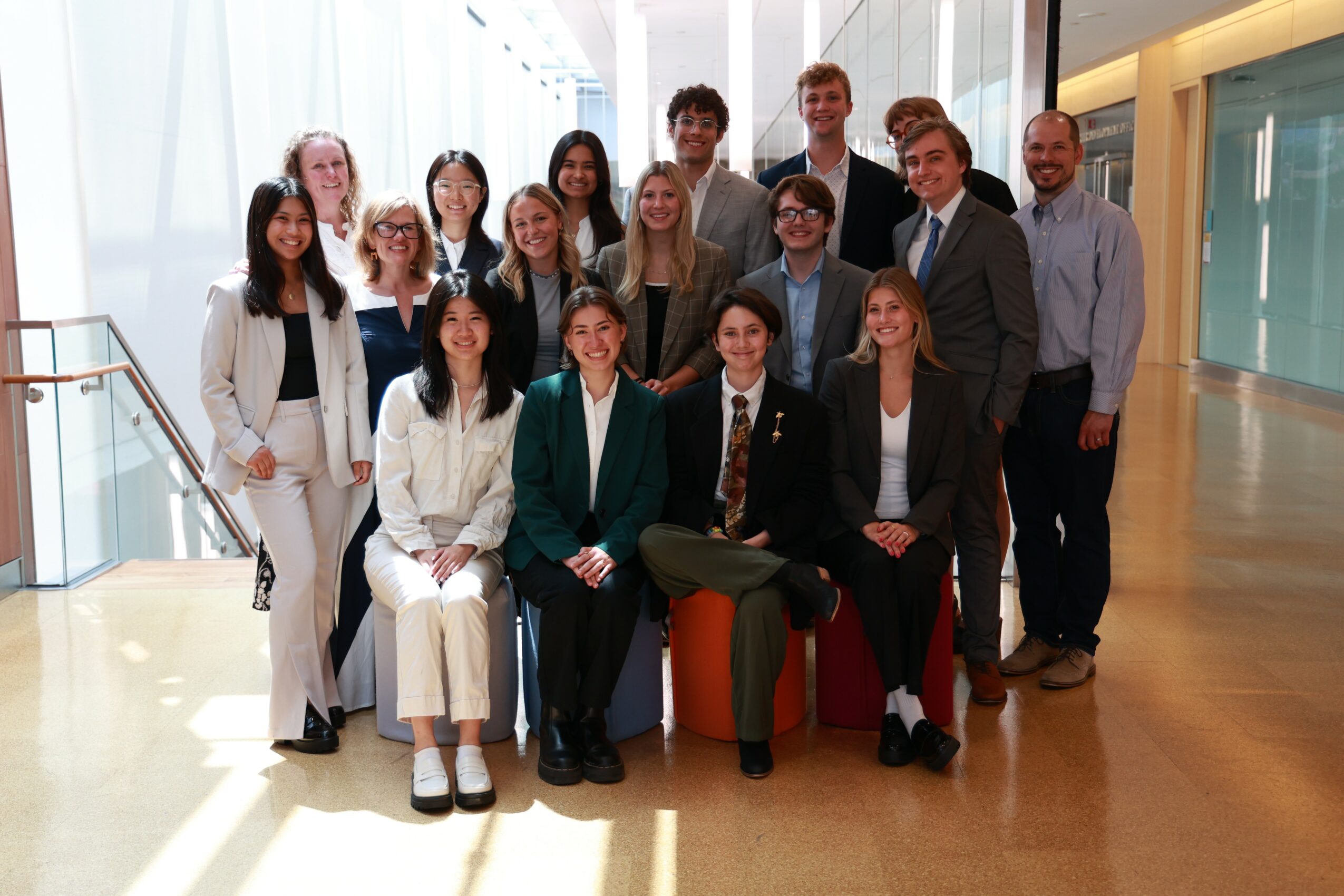
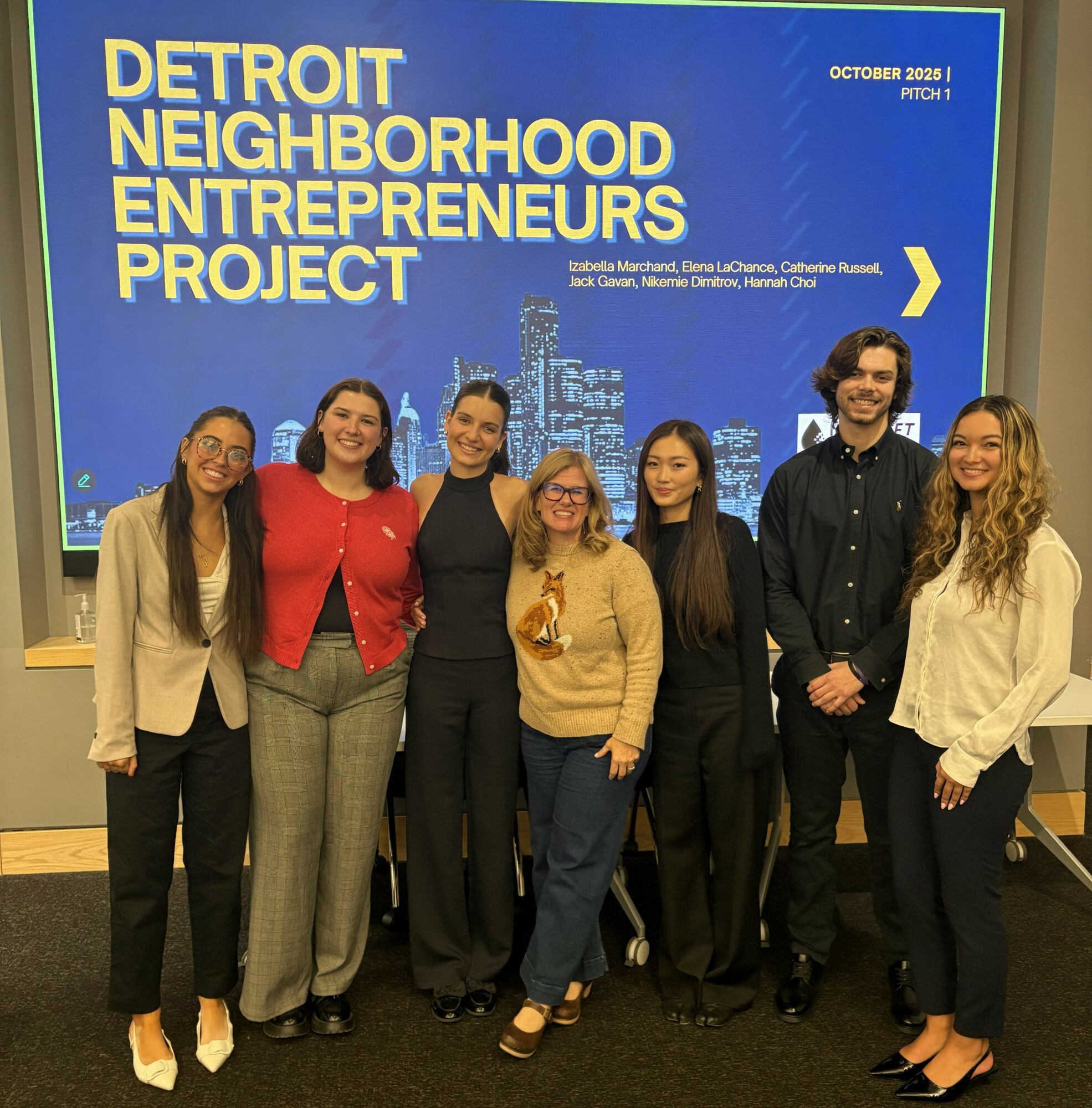
By doing this real work with real clients, students gain transformative professional experience. They get a chance to see Detroit as not just a fun place to attend a concert or a game, but also a complex network of neighborhoods, where they might want to stay after graduation.
We’d be interested to hear your thoughts on luck and what role, if any, you feel it’s played for you?
I am extraordinarily lucky that I met the love of my life at 23. Virtually every experience that I value most has been a result of his influence and our partnership—the decision to go to law school, to have children, to start and end various businesses, to move to Michigan, to go on various trips, to take in more than a dozen rescue animals (though not all at once!).
I am lucky to have spent my 20s in the pre-surveillance era: we all had flip phones but we had to pay per text or per minute, so we were forced to leave our houses if we wanted to make friends in real life, and we could take risks without having it captured on video and posted on the internet.
Pricing:
- DNEP’s services are FREE to Metro Detroit businesses, thanks to our philanthropic, corporate, and university partners!
Contact Info:
- Website: https://www.DNEP.umich.edu
- Instagram: um.dnep
- LinkedIn: https://www.linkedin.com/showcase/dnep/