



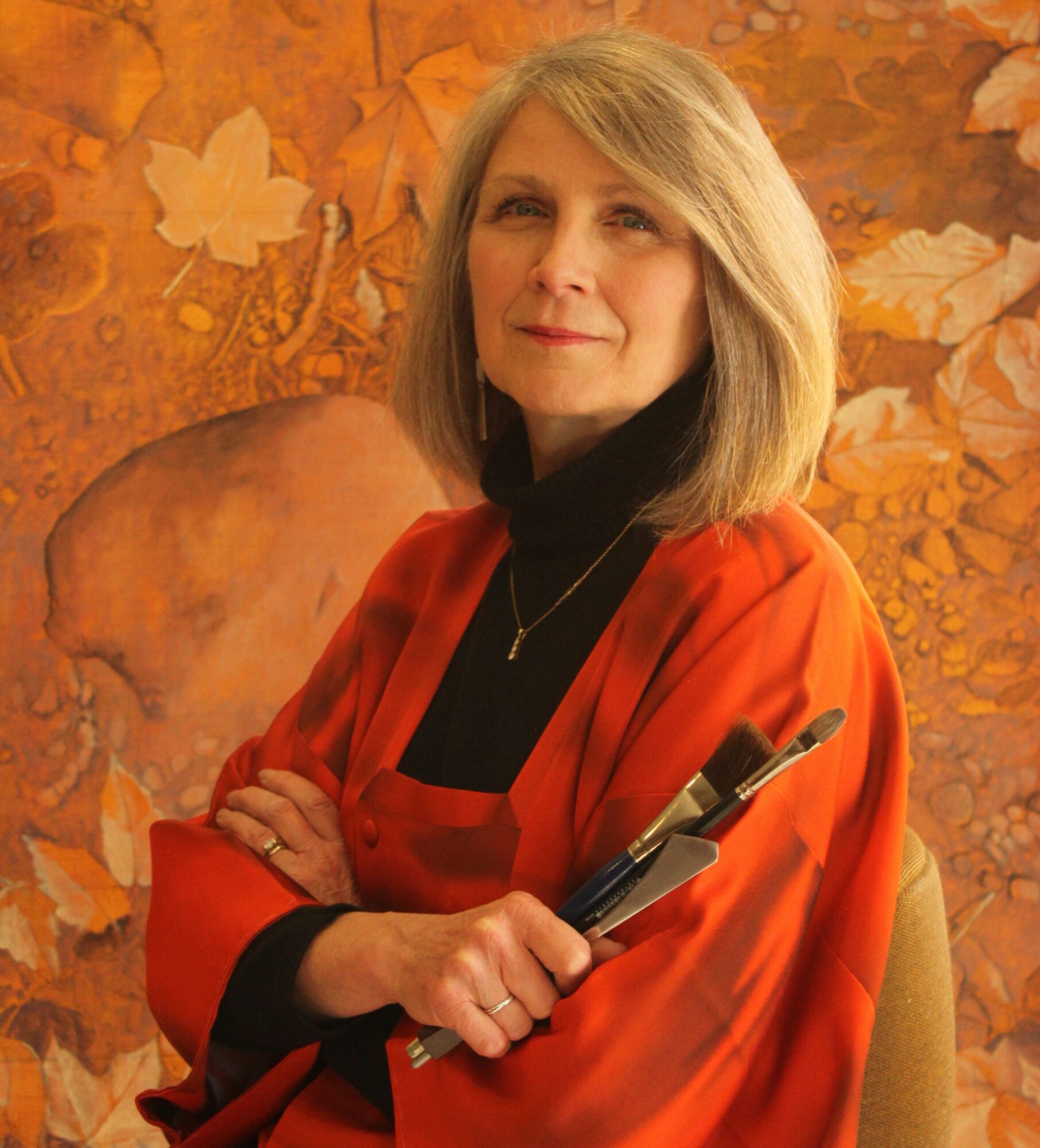
Today we’d like to introduce you to Mary Reusch.
Hi Mary, it’s an honor to have you on the platform. Thanks for taking the time to share your story with us – to start maybe you can share some of your backstory with our readers?
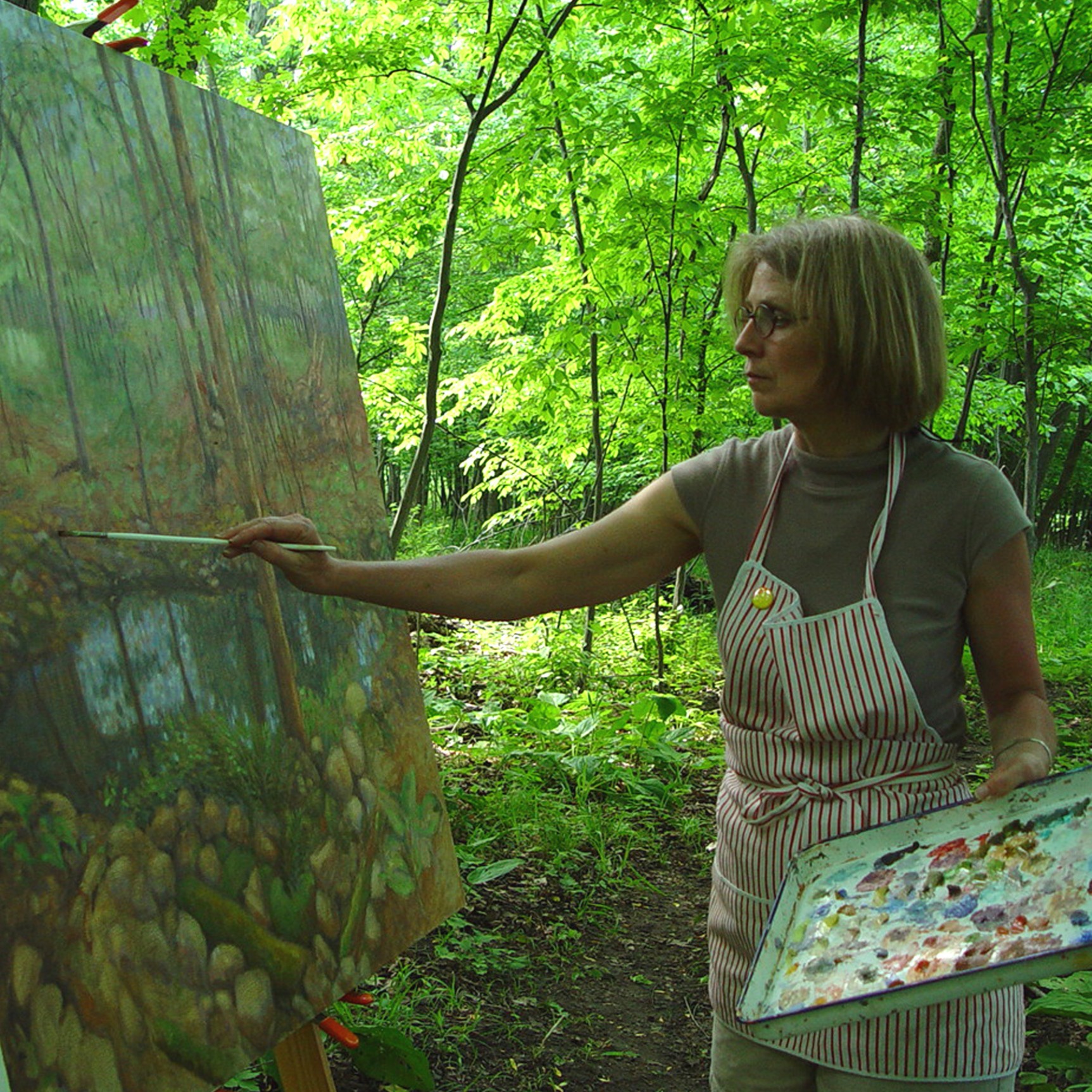
From my childhood, I felt that art was my foremost interest in life. I finally got the chance to follow my dream when I re-entered college as a 27 year old mother. At that time, I needed to get a degree in Graphic Art so that I could support my family. I did work in the commercial art field for a number of years and was therefore able to support my family. Fortunately, after I remarried, I was able to return to school where I obtained a bachelor of Fine Arts degree from Aquinas College. While I was at Aquinas I had the good fortune of having many wonderful instructors including Sharon Sandberg for painting. Towards the end of my time there, I was asked to be an intern at the Grand Rapids Art Museum during the time they were exceptionally busy with the exhibition Perugino, which was from Italy.
After graduating from Aquinas, my internship at the Grand Rapids Art Museum turned into a part time job working as an assistant to the Curatorial Department. At this time, I was able to assist the Exhibitions Designer in hanging exhibitions, aid the Curator with research, and assist the Registrar in dealing with the permanent collection and artwork on loan. I felt that this was an invaluable second part of my art education. At this time, I learned about current art as well as art history. I was not just looking at art in a book, but instead was able to experience what was happening in the current art world. I found this exciting and learned so much from being there, but eventually I was inspired to find more time to paint.I subsequently left this position to delve more deeply into my own art.
I began to work one day a week with my mentor and friend, Rick Stevens, a rising star in the West Michigan art world. I did a lot of the basic work for him. This involved getting his canvases ready, framing his paintings, readying work for shipping, and documenting his work. A big perk of working for Rick was that we got out in the country and painted in plein air together. I was able to show him my nearly finished work for him to critique and make suggestions. I was able to learn not just the nuts and bolts of my profession, but I also got to observe a successful artist make his way in the art world.
In the following years, I was able to enter exhibitions, find galleries, work with other artists, and enjoy my life as a painter. One of most interesting adventures was a month long Artist in Residence stay at Indiana Dunes National Park. I also was invited to show my work at the Governors Residence in Lansing. Grand Rapids Festival chose me as a jurist for 2-dimensional art at Festival 2019. Later I was asked to be a part of the Grand Rapids Art Museum’s 2010 ArtPrize event. Not only was I able to enjoy the crowds coming through the museum to see my paintings, but also my work was chosen to be part of the GRAM permanent collection.
Not only have I been commissioned to paint for individuals, but my work has been bought by private collectors and Institutions. I have won awards and enjoyed showing my work in a number of venues. I am very happy that I chose to walk down this path.
Can you talk to us a bit about the challenges and lessons you’ve learned along the way. Looking back would you say it’s been easy or smooth in retrospect?
No, the road has not been smooth. Anyone in the art business will tell you that actually making the art is only part of the equation—navigating the business side is a constant challenge. Galleries open and sometimes close their doors, and shifting economic landscapes can make it difficult to sell work. Like many artists, I was hit hard during the economic downturn in 2008, as well as during the recent pandemic, which brought its own unique uncertainties to the art world.
Can you tell our readers more about what you do and what you think sets you apart from others?
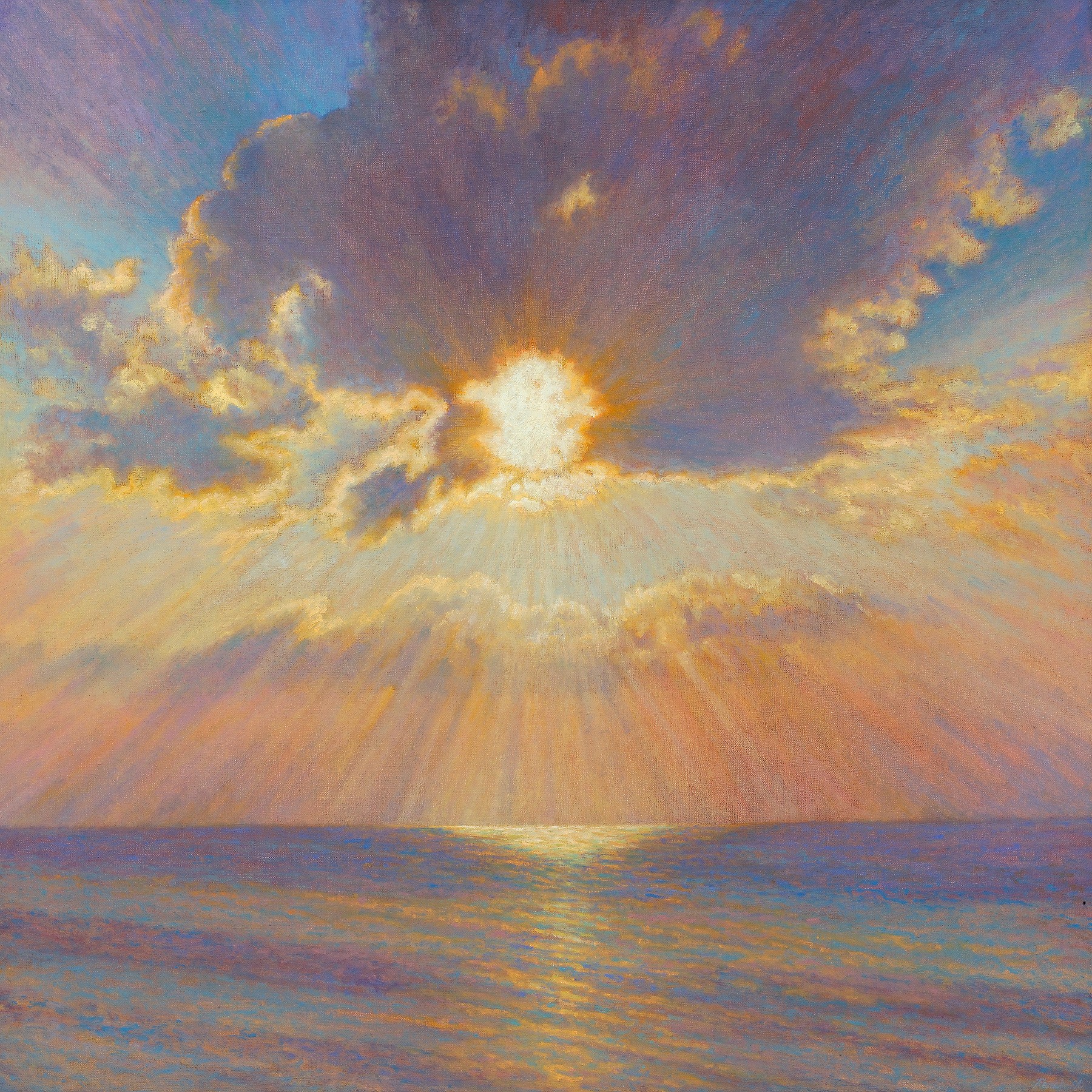
Since 1997, I have worked primarily in oils. I began by painting en plein air, wandering the state game area behind my home and visiting various lakes to capture the shifting beauty of the seasons. I cherished the chance to study the landscape intently and drink in the natural beauty of Michigan. Looking back, I suppose I was primarily known for my trees—which is evident in my work, as I truly love them. During this time, I experimented with numerous substrates, including linen on stretchers, gessoed boards, and heavy paper prepared for oils. Each substrate creates a distinct look, allowing me to play with textures between smooth and rough, and to tint base colors beneath the surface to accentuate my subjects.
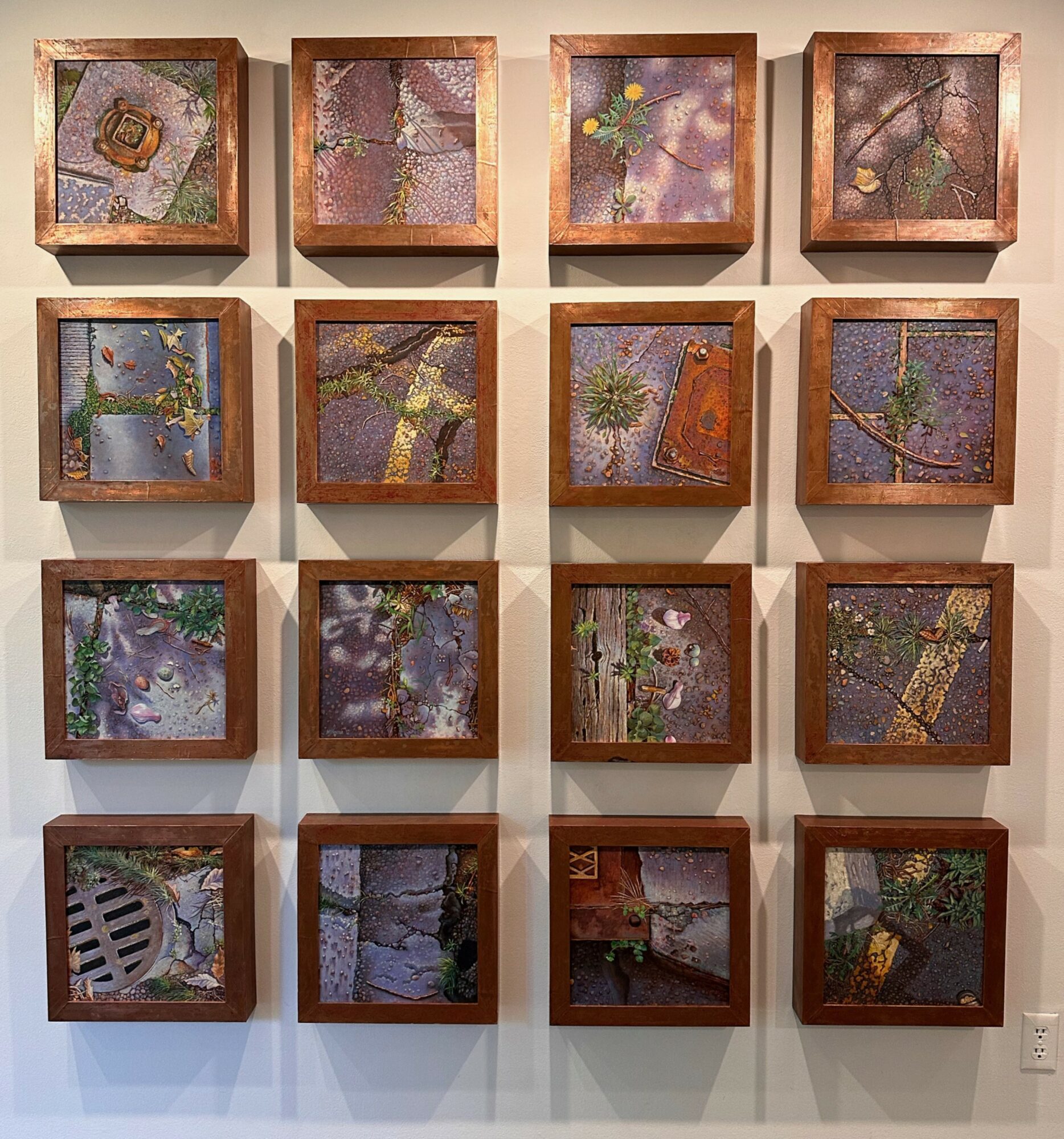
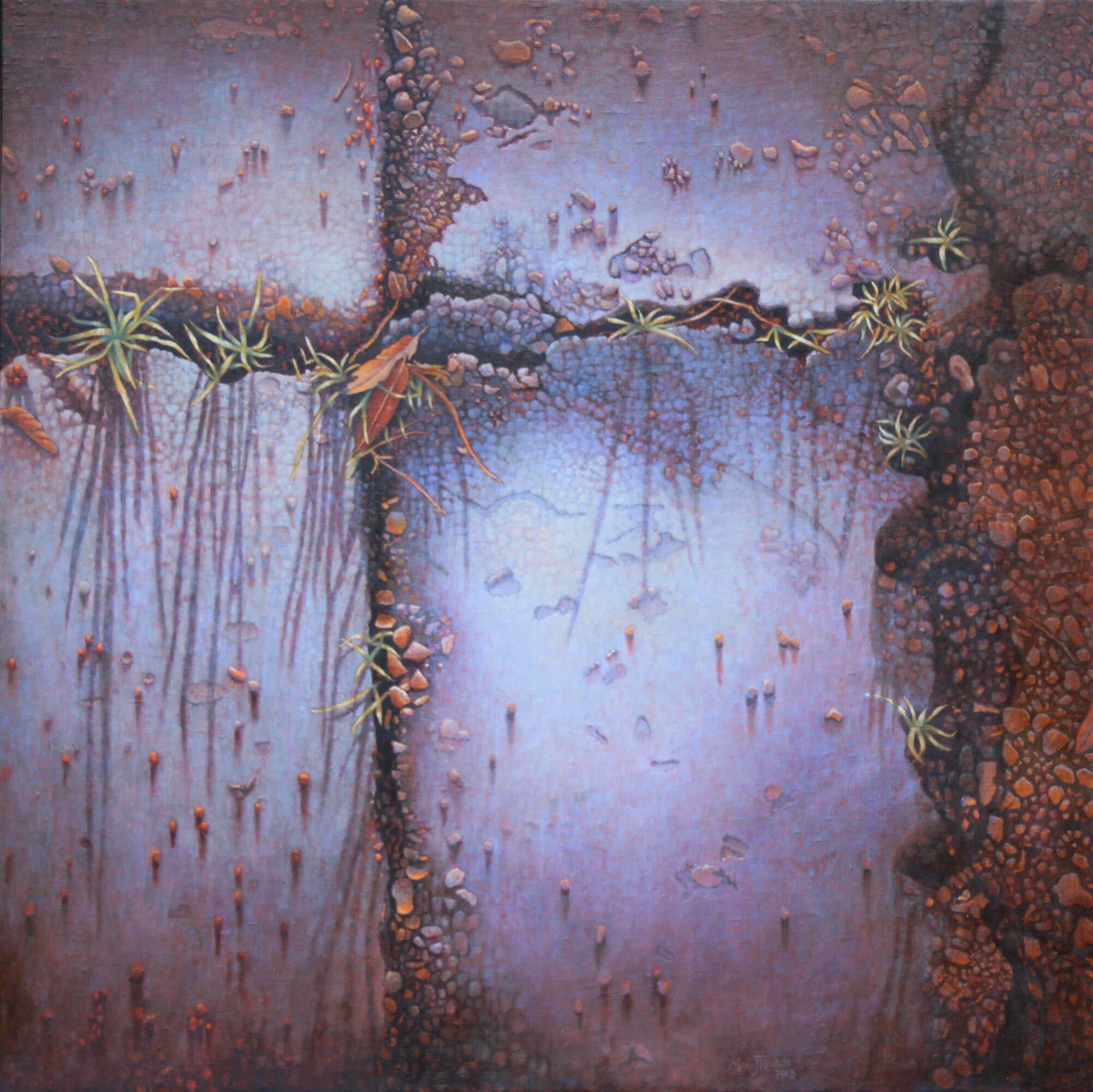
Over the years, my work has evolved through a continuous discovery of nature and metaphor. About fifteen years ago, while out for a walk, I looked down and focused on the weeds pushing through sidewalk cracks. This sparked a fascination with the sheer force and persistence of nature. No matter how we try to pave over the earth with driveways and parking lots, nature strives to reassert itself.
To explore this, I began creating 12-by-12-inch square vignettes of weeds and pavement. For the framing, I wanted something that reflected the same element of growth, so I commissioned custom wood-box frames and wrapped them in real copper, which I distressed, treated, and patinated by hand. I designed these individual pieces to be displayed as a large grid of 16, working together as a unified installation that I called The Persistence of Nature.
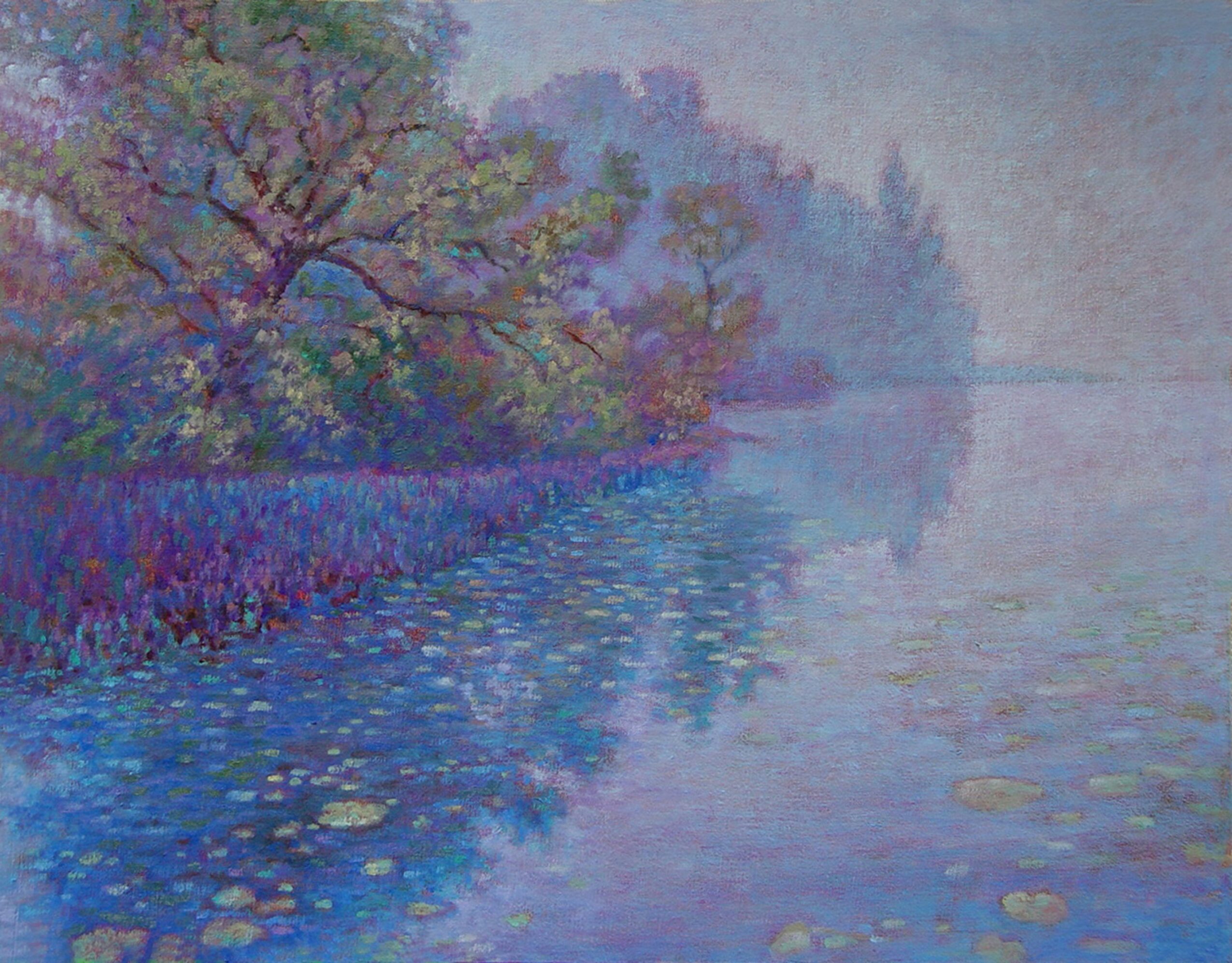
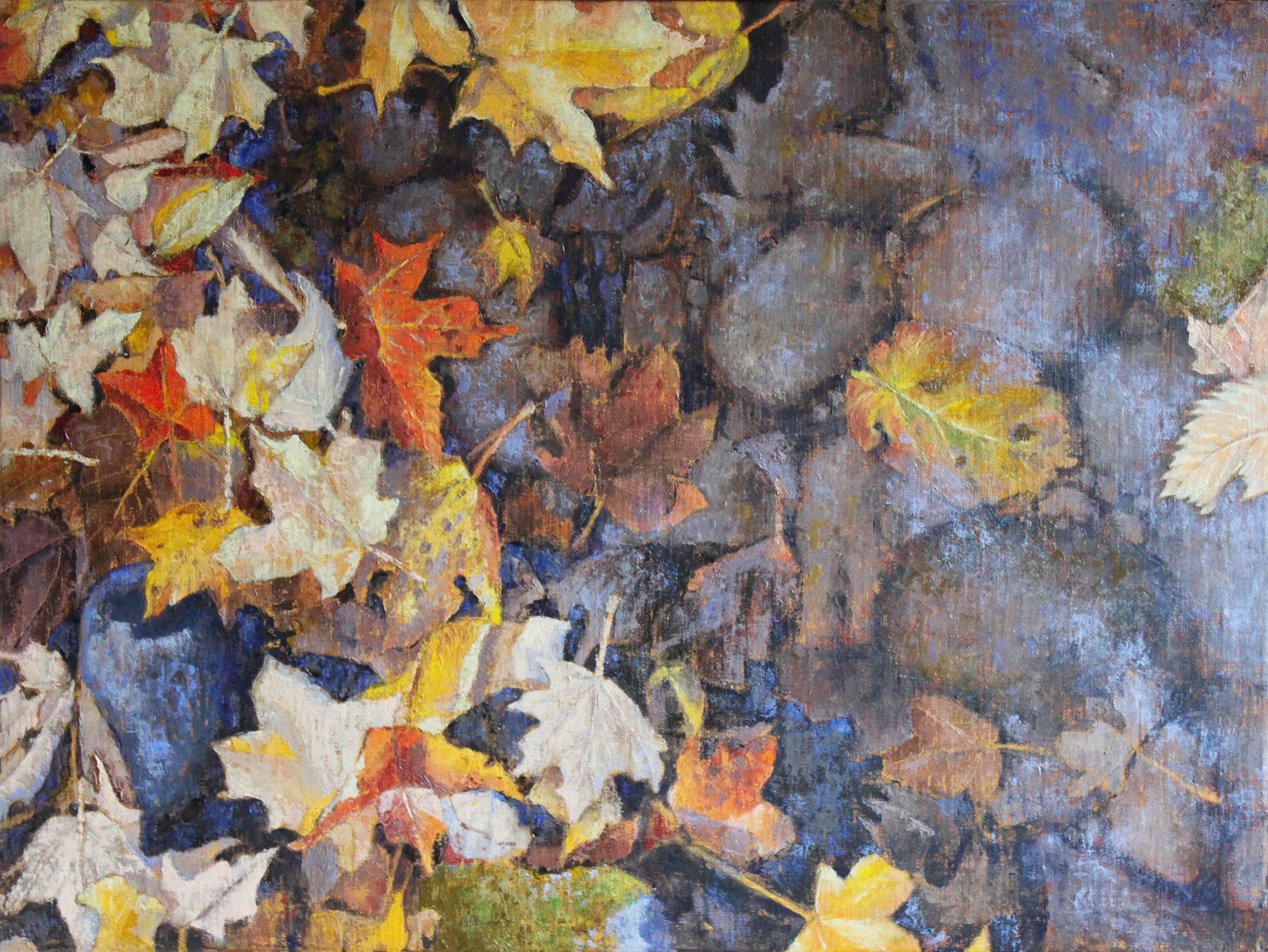
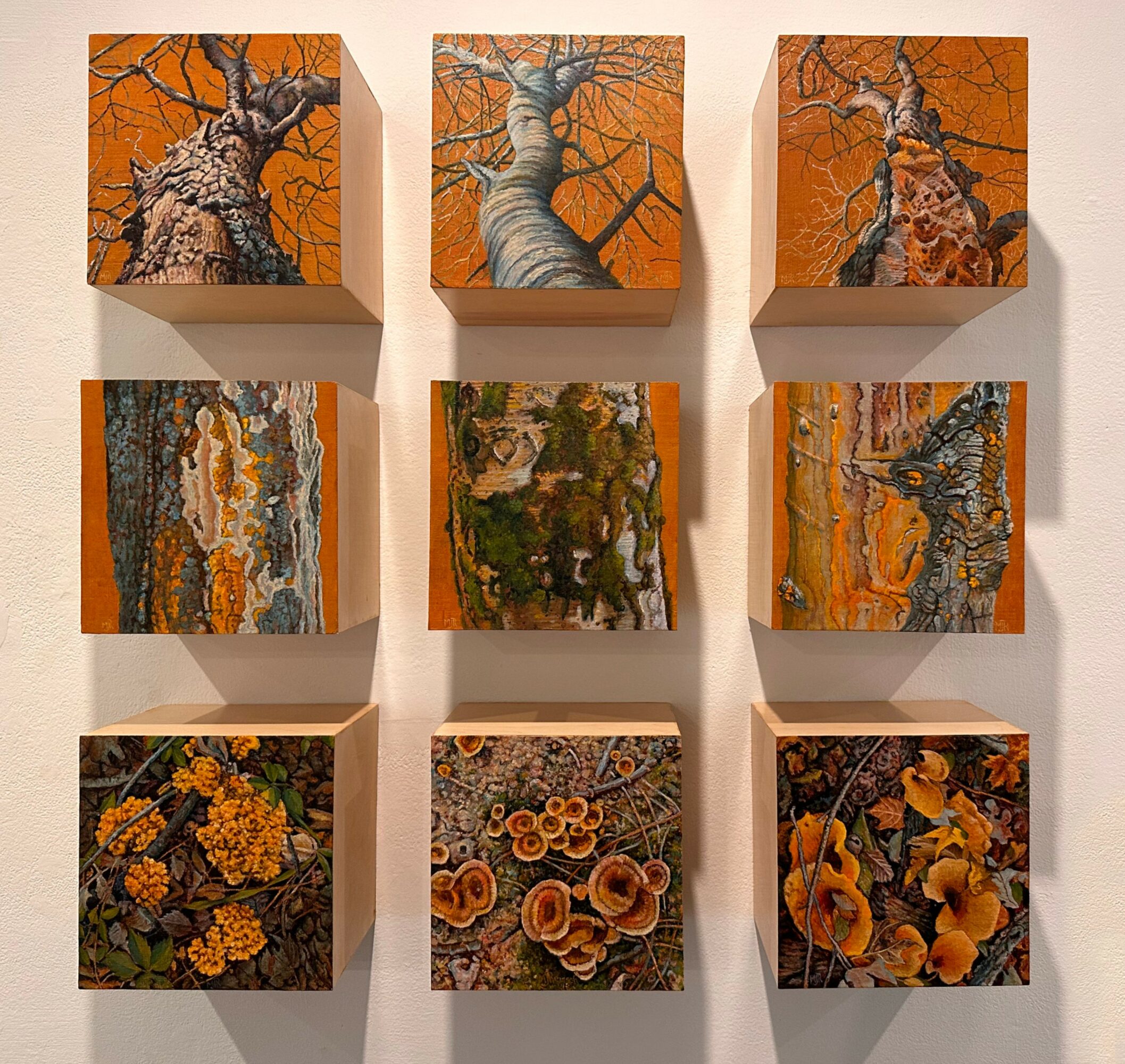
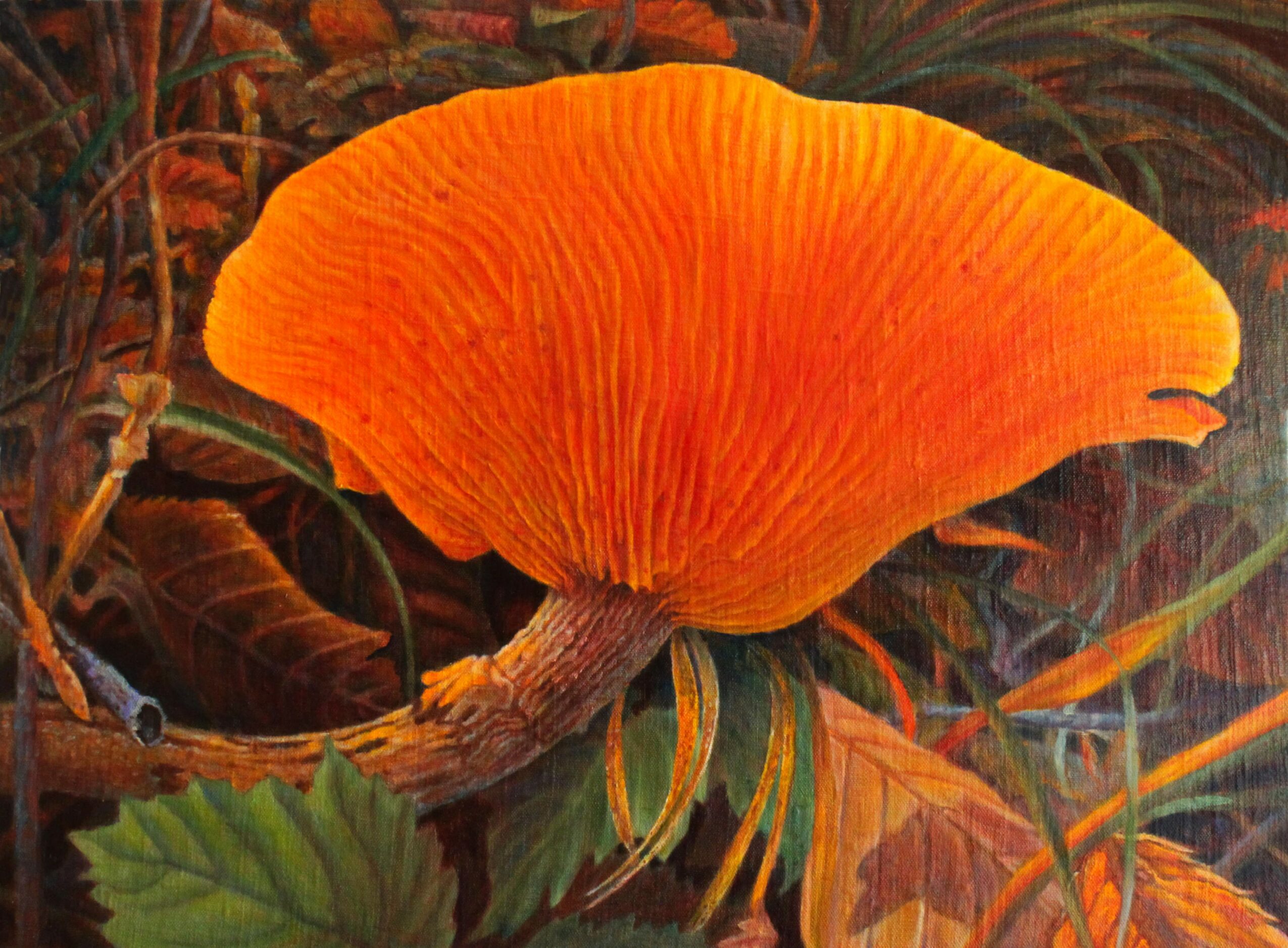
Eventually, my focus shifted to water—observing a nearby creek rushing over mossy stones, or the depth and tangle of lily pads at a local lake. To me, the phases of water serve as metaphors for human emotion: active or meditative, deep or confused. More recently, my love of trees led me to read about forest ecology, particularly the underground fungal networks—the “Wood Wide Web”—connecting the forest. This inspired a deep fascination with mushrooms and the abstract, intricate beauty of bark patterns up close.
What sets my work apart is this constant evolution and my deep experimentation with materials. I eventually started using copper not just for frames, but as a painting substrate itself. By preparing the copper and applying transparent oil paints, the metal shimmers from underneath. I also incorporate patinas, metal leaf, and scored textures directly into the soft copper.
What I am most proud of is that my art is an ongoing journey of discovery. It is an evolutionary process that started with grand landscapes and trees, and grew progressively closer—moving inward to examine the small, often overlooked wonders of the natural world. By pairing these profound metaphors of resilience with innovative materials, I continually push to find the “new” in my work, offering viewers a fresh perspective on the beauty of the natural world.
Risk taking is a topic that people have widely differing views on – we’d love to hear your thoughts.
For an artist, every day is a risk-taking adventure. When I start a painting and stare at a blank canvas or a fresh sheet of copper, I always wonder: Will this successfully capture my vision? If it doesn’t work out, I have to be willing to scrape it away or set it aside and try again. An artist has to be deeply honest with themselves about the viability of their work and trust their instincts.
There is also a profound emotional risk every time I have an exhibition. It feels like putting my heart on the wall and baring my soul, hoping the work will stand up to public scrutiny and criticism.
Beyond the creative and emotional aspects, there are very practical risks. For instance, finishing and framing a piece represents a real financial investment. Framing is expensive, but it’s a gamble we take because we believe in what we’ve created and want to present it at its absolute best. Entering competitions is another recurring gamble: you pay entry fees, transport your work, and wait to see if it is accepted or rejected. Over the years, I’ve learned not to get too crushed by rejection or overly carried away by acceptance. Maintaining that emotional equilibrium keeps you from losing heart and encourages you to keep trying.
One of the biggest professional risks I took recently was organizing a group exhibition. I brought a group of 18 artists together, gathered information, filled out complex forms, and pitched the concept to multiple venues. It was a massive undertaking with a lot of uncertainty, and we faced both successes and rejections along the way. Looking back, it was quite an ordeal, but I learned a tremendous amount from it and would do it again in a heartbeat.
Ultimately, risk can be difficult and daunting, but it is essential. It provides the growth necessary to hone our artistic voices and find new ways to connect our work with the wider world.
Pricing:
- When determining pricing, I strive to keep my work within a range that feels accessible and fair for art buyers. A major factor every artist must navigate is gallery commission; galleries typically take a 50% cut of a painting’s sale price, which heavily influences how we price our pieces. To maintain professional integrity and clarity for collectors, I adhere to a few guiding principles:
- Consistent Pricing: I keep my pricing consistent across the board, ensuring that whether a buyer purchases a piece directly from me, through a gallery, or at an exhibition, the price remains the same. Galleries prefer this consistency, and it builds trust with collectors.
- Size-Based Structure: I maintain a consistent pricing structure tied to the dimensions of the artwork (such as my 12-by-12-inch copper pieces), reflecting the time, materials, and scale of the work.
- Value Balance: I balance the high costs of framing and specialized materials (like custom copper substrates and hand-patinas) with the goal of keeping original art approachable for those who connect with it.
Contact Info:
- Website: http://www.maryreusch.com/
- Facebook: https://www.facebook.com/mary.reusch