





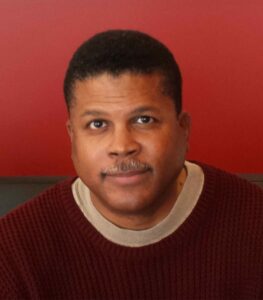
 Today we’d like to introduce you to Eric B. Willis.
Hi Eric, we’re thrilled to have a chance to learn your story today. So, before we get into specifics, maybe you can briefly walk us through how you got to where you are today.
As a native of Detroit, Michigan, and a child around the age of eleven, my love for reading books regarding history began while I immersed myself in my family’s home library. I was further inspired after learning from my dad about my great-grandfather Richard Willis’ role as the family griot or storyteller and his sharing of an early oral ancestral family history account.
One day in 2000, I had a destiny intersection or an epiphany while visiting my favorite bookstore—Boarders, which is now defunct. After browsing the bookshelves for several hours, I noticed a discounted book rack. A beginner’s guidebook to researching your family history stood out from among the rest. Other than the previously mentioned inspiration, I was unaware that the cheaply priced $3.95 paperback book would have an invaluable impact on me and for the unforeseeable future. Since then, I have come to realize one of my callings—to continue my great grandfather’s legacy and share my genealogy and family history, and related Black history—both orally and in written form—with my family, my future generations, my community, and the public. Therefore, for over 23 years, I have been working as a genealogist, historian, author, and book publisher.
We all face challenges, but looking back, would you describe it as a relatively smooth road?
While working as a genealogist, writer, historian of Black history, and book publisher, you will encounter many obstacles or challenges in those various areas. As a genealogist, I have encountered many “brick walls” or temporary dead ends during my research process. The challenges of being a writer can be numerous, including procrastination or consistency in writing, what to write, and when to write. An often-cited obstacle by many writers is having “writer’s block.” However, I learned long ago from one of my mentors that it does not exist. If there is an appearance of a lull when I am writing, I will research. You can let your mind rejuvenate. Momentarily step away from the project for a few hours or a day. Listen to soothing music. Go for a walk. I also rely on my faith in God to help me to overcome these obstacles or challenges with new and refreshing ideas whenever they do occur. But you must do the work and write, rewrite, and write.
Alright, so let’s switch gears a bit and talk business. What should we know about your work?
I create literary works of published books and articles that intersects genealogy, memoirs, and American history, including Black History and the histories of other ethnicities. My works exists throughout the United States in private and noted public collections, including the Library of Congress, Mississippi Department of Archives and History, Museum of Mississippi History and Mississippi Civil Rights Museum Store, Library of Michigan, Harvard University, Stanford University, Robert W. Woodruff Library, Detroit Public Library (Main), and the Bloomfield Hills Public School District. In 2014, my first book The Willis Handbook: An Intersection of Genealogy and Memoirs and History of a Black American Family – 1835-2003, was recognized by Writers Digest as “a unique and important project, impeccably produced and fascinating.”
My new book, A Black Man’s Existence as a White Jew, is about my maternal cousin who decided to become involved in racial passing. Racial passing is when people of African Ancestry have strong Caucasian features and pass as white. During the Jim Crow era of segregation in American, it was very advantageous to be white than black, but family and communal relationships were lost. My writing style for this book is consistent with my previous work. It is more than a memoir and family history. It serves as a historical document regarding racial passing and racism within and outside of the black community; interviews with black legendary jazz musicians, Jewish educators and a rabbi, and other black historians; race relations in Detroit and other cities; Detroit mobsters; Jimmy Hoffa, his disappearance, and the Teamsters union; and other historical events that relate only to my family yet are of great significance.
I enjoy the intensive genealogical and history research phase of my writing process and the results it yields. My works includes newly researched and not-so-widely known information about Black Americans, their culture, and histories. My works also include personal documents, photographs, historical records, newspaper clippings, charts, and maps. These literary components assist in producing a visual reconstruction of my subjects’ lives while also increasing the level of connection with my readers.
Another calling of mine is to provide my community and people of other ethnicities with the multifaceted expressions of my creativity to induce enduring conversations, connections, and inspiration. I teach the importance of learning Black history, which contributes to the destruction of racial barriers while building racial reconciliation in the United States. When you go to visit a new doctor for the first time, you must complete multiple forms before he sees you. He wants to know your medical history, your mother and father’s history, and possibly your grandparents. To diagnose and resolve the problem, you must know the history of the problem.
As a visual artist, I explore the connections between people, forms, histories, and narratives. My graphite drawings and acrylic paintings draw the viewer into the subject matter and the forms are periodically influenced by my genealogical studies—taking on the appearance of quilts which symbolically convey my writings of family histories.
Through the writing of books and articles, my visual art, lectures, interviews, social media, and casual conversations, I encourage people to become family historians by teaching them the importance of researching, documenting their family histories, and to pass these invaluable legacies onto their families and future generations. I believe by learning from the past, one builds self-esteem and makes you more resilient in the face of challenges. To know our heritage is like a tree with roots.
Are there any books, apps, podcasts, or blogs that help you do your best?
The Holy Bible, which also consist of numerous genealogies, From Slavery to Freedom: A History of African Americans by John Hope Franklin; The African Americans: Many Rivers to Cross by Henry Louis Gates Jr; Black Roots by Tony Burroughs. I also consider these individuals as mentors, including Darlene Dickson, the founder of Manifold Grace Publishing Company, who has recently made her heavenly transition, and Sylvia Hubbard, the founder of the Motown Writers Network.
Fred Hart Williams African American Genealogical Society (Detroit)
Motown Writers & Michigan Literary Network (Blog and workshop)
Film Courage (Twitter)
BookTV, American History Television (CSPAN2)
Contact Info:
- Website: www.panoplyhouseofpublishing.com
- Facebook: www.facebook.com/eric.willis.735
- Linkedin: www.linkedin.com/in/ericbwillis341
- Twitter: twitter.com/EricBWillis
- Other: https://www.facebook.com/panoplyhouseofpublishing


Image Credits
Eric B. Willis