



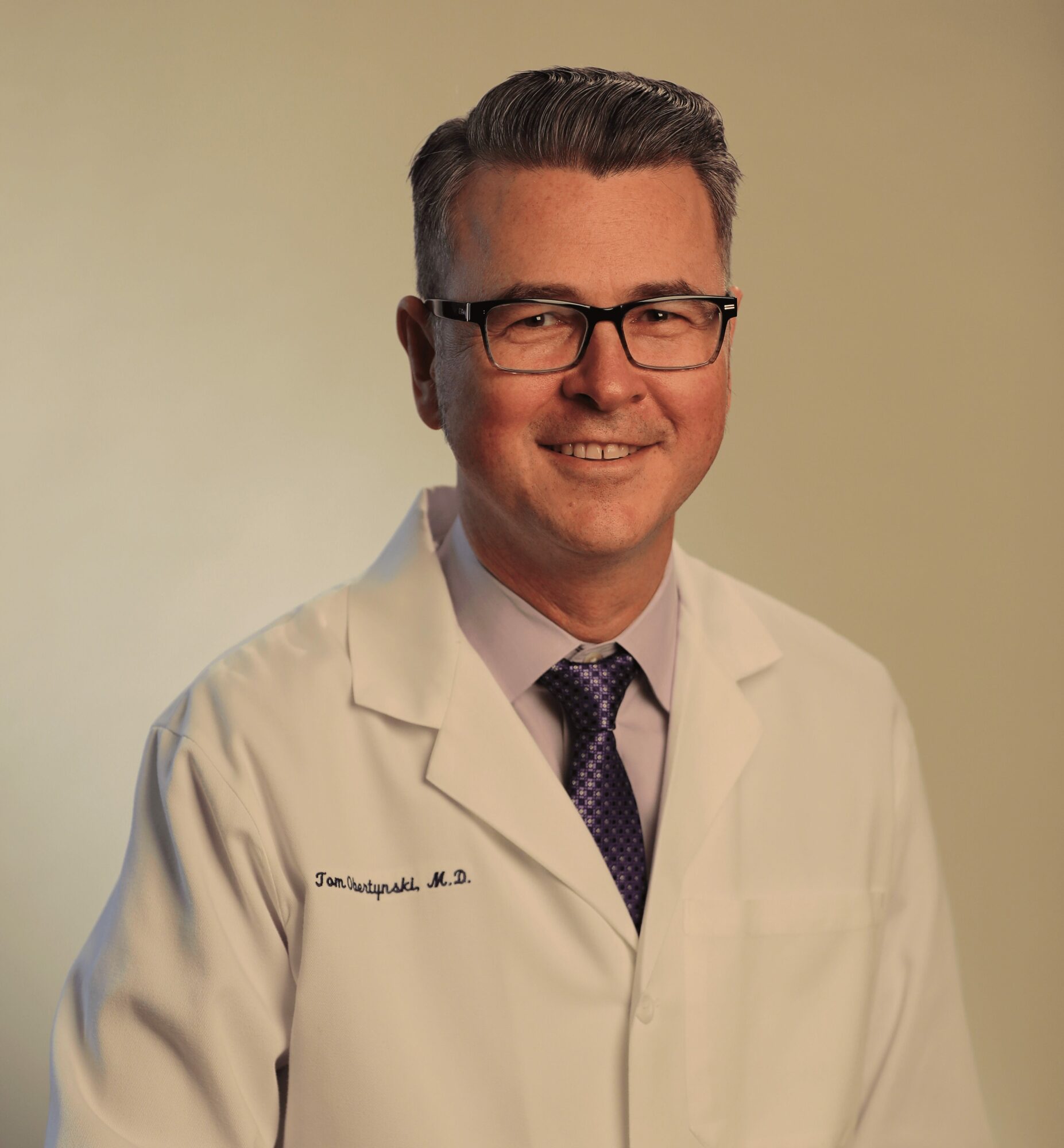
Today we’d like to introduce you to Tom Obertynski.
Hi Tom, it’s an honor to have you on the platform. Thanks for taking the time to share your story with us – to start maybe you can share some of your backstory with our readers?
I originally learned about ophthalmology through my mother, who was also an ophthalmologist.. She immigrated to the U.S. from Poland to pursue her dream of becoming an eye doctor. She was somewhat of a pioneer when she started in the field as few women were in it during the late 70’s.
I remember visiting patients at the hospital the day after my mother performed cataract surgery. Patient were admitted for the night after cataract surgery back then. After my mother removed the eye bandage, the patients were so elated to see so much better after the procedure. I thought to myself, “How cool would that be if I could also do surgeries like my mom and help people see better.”
These days, such visits are unheard of because cataract surgery and eye surgery, in general, is done on an outpatient basis. Nonetheless, the outcomes are even more profound, I can help people see better overnight and their smiles, thankfulness, and appreciation are very rewarding. I can’t think of another field in medicine where one surgery can so profoundly change someone’s vision and life, it is why I pursued it.
The apple didn’t fall from the tree so to speak. I followed in my mom’s footsteps. I received my undergraduate training at the University of Michigan, then went on to Medial School at Wayne State University, ultimately my residency in ophthalmology at the prestigious Kresge Eye Institute. After residency, I furthered my training with fellowship training in glaucoma and complex cataract surgery. I joined my mother and sister (who is also an ophthalmologist) for a year and then went on to join my current practice where I have been for the past 17 years. I also serve as an Assistant Professor in the Department of Ophthalmology at the Oakland University School of Medicine and Co-Director of the Glaucoma service at Corewell Health Beaumont University Hospital
We all face challenges, but looking back would you describe it as a relatively smooth road?
I think one of the biggest struggles in medicine is the delayed gratification and countless hours of studying and training that go into becoming a physician. Patients just see the finished product) When you decide to become a physician, one really doesn’t enter the work force until their early 30’s, at the earliest. By the time I entered my practice, most of my friends already had families. Basically your 20’s are dedicated to studying your craft. You really put your life on hold in many ways to become a physician, not to mention you really have to have a understanding family to support you. Luckily i did.
Great, so let’s talk business. Can you tell our readers more about what you do and what you think sets you apart from others?
Ophthalmology is very rewarding in so many ways. It is where modern medical science and technology intersect, and I am privileged to apply it to my patients. As the name of our practice suggests, (Michigan Glaucoma and Cataract) we focus on glaucoma management and treatments along with advanced cataract surgery. Our practice serves the entire South East Michigan region, and we have earned the respect of both our peers and patients for managing the most challenging cases. We treat the patients that others either can’t or don’t want to.
Our practice was originally formed nearly 40 years ago by Dr. Robert Lesser and Dr. Watnick as Michigan Glaucoma Specialists as the premier location for glaucoma treatment. I am happy and honored to continue their legacy, by offering caring and compassionate care along with my partner Dr. Stephen Walters.
Dr. Walter’s and myself tweaked a few things along the way. We changed the name to Michigan Glaucoma and Cataract to emphasize that we offer state of the art cataract surgery in addition to cutting edge glaucoma care. We offer custom cataract solutions from advanced technology lenses to laser assisted surgery, the choice is yours. Additionally we offer comprehensive eye exams, diabetic checks and dry eye treatments to name a few. Most recently we consolidated our practice locations to one comprehensive eye center. Our office is conveniently located off of I-696, in Pleasant Ridge, 20 minutes from anywhere in the metropolitan area.
What really sets us apart is our dedication to our patients. Both Dr. Walter’s and myself want to educate, answer your questions and take the necessary time to make you feel comfortable with your treatment plan. Our office is privately owned by myself and Dr. Walters, the only people we work for is you.
Teaching is another important aspect of what we do at Michigan Glaucoma and Cataract. Both Dr. Walters and myself teach as Assistant Professors at the Oakland University School of Medicine. I also serve as Co-Director of the Glaucoma service at the Corewell Health William Beaumont University Hospital Eye Institute. I thoroughly enjoy actively training future ophthalmologists in both clinical and surgical settings. In fact, the residents of the Beaumont Eye Institute honored me in the past as the “Teacher of the Year” and awarded me the distinguished Raymond R. Margherio, MD Teaching Award. Dr. Walters also has been honored with the teaching award.
Our mission at Michigan Glaucoma & Cataract revolves on high efficiency, patient centered care, with a paramount focus on patient education and understanding. Ophthalmology has shifted more and more to a high volume, rapid fire specialty, and although we are busy (as there is A LOT of glaucoma) we pride ourselves in thorough/thoughtful patient workups, detailed clinical exams, and sufficient chair time to achieve the highest possible patient knowledge regarding their issues and engagement in their own care. This is the recipe for the best outcomes. Our carefully designed and state of the art facility helps to achieve these goals, while maintaining the most pleasant patient experience possible.
What would you say have been one of the most important lessons you’ve learned?
The most profound realization I have gathered on this journey is that medicine is, at its core, an act of service. I have learned that the most important lesson one can carry is to always put the patient first; when you lead with that intention, everything else truly falls into place. This wasn’t a solo discovery, but a philosophy deeply instilled in me by my mentor, Dr. Lesser. He consistently reminded me that our primary mandate is to serve for the betterment of humanity. By keeping the individual in the exam room as the center of my practice, the administrative noise and daily pressures seem to fade, leaving a clear path forward.
Choosing to focus your energy entirely on helping the patient creates a natural alignment in your professional and personal life. We are here to help people through their most vulnerable moments, and that responsibility requires a singular focus. When you do your absolute best to advocate for and help to improve or preserve the patient’ sight, you find yourself in a good place, both ethically and spiritually. Ultimately, the technical skills and clinical knowledge are just tools; it is the commitment to the patient’s well-being that provides the real meaning behind the work.
Pricing:
- available upon request
Contact Info:
- Website: https://www.miglaucoma.com
- Facebook: https://www.facebook.com/p/Michigan-Glaucoma-Cataract-100088906698048/
- LinkedIn: https://www.linkedin.com/in/tom-obertynski-1338b714/