




Today we’d like to introduce you to Maurizio Dominguez.
Hi Maurizio, so excited to have you on the platform. So before we get into questions about your work-life, maybe you can bring our readers up to speed on your story and how you got to where you are today?
I grew up fascinated by film. Back in Mexico, I remember going to see movies like Jurassic Park, E.T., and Independence Day with my parents and my sister, enthralled by the way stories could be told through film. The more movies and TV shows I saw, the more ideas of my own began to take shape — I’d daydream about the movies I wanted to make. Every now and then there’d be something specific I wished I could see, or a choice I wanted a character to make. I remember very distinctly, at eleven years old, realizing that if I wanted certain stories told, I’d have to tell them myself.
That’s what sparked the creative impulse in me. It started with drawing and writing in elementary school — just trying to get my thoughts into some visual or written form. Then, after my family migrated to the U.S. and I began I middle school, I was introduced to an afterschool program called KLICK! (Kids Learning in Computer Klubhouses). Joining KLICK! felt like the beginning of a dream come true; I finally had the chance to learn the basics of animation and video editing. My first clay animation I made was four clay puppets — meant to represent The Beatles — playing along to a short song. Bringing that idea to life pushed me to keep asking: What can I improve? How do I make this bigger, more engaging?
My earliest film work began in 2012 with Matrix Theatre Company in Southwest Detroit. At the time, Matrix ran a robust playwriting and acting program for kids and teens throughout the year. I became close with the staff at Matrix, and since they knew how passionate I was about film and how eager I was for experience, they asked me to make a few videos for them. Over the years, I recorded and edited several short pieces documenting Matrix’s theatre classes and artistic programs, capturing the impact those programs had on the youth involved. I was very grateful for the opportunity and glad to do the work. It taught me how to conduct interviews and how to make sure my videos supported the stories and lived experiences the youth were sharing. Those projects were where I really developed my skills — and they also helped Matrix apply for and win grants to keep their work going in Southwest Detroit.
My access to education was limited after high school, mainly because of my immigration status. But over the course of about a decade, I made it to Henry Ford Community College, and later to Specs Howard School of Media Arts, to get more training and hands-on production experience. At times it felt slow — we can’t always progress as much or as quickly as we’d like — but I learned the importance of continuing to move forward however I could.
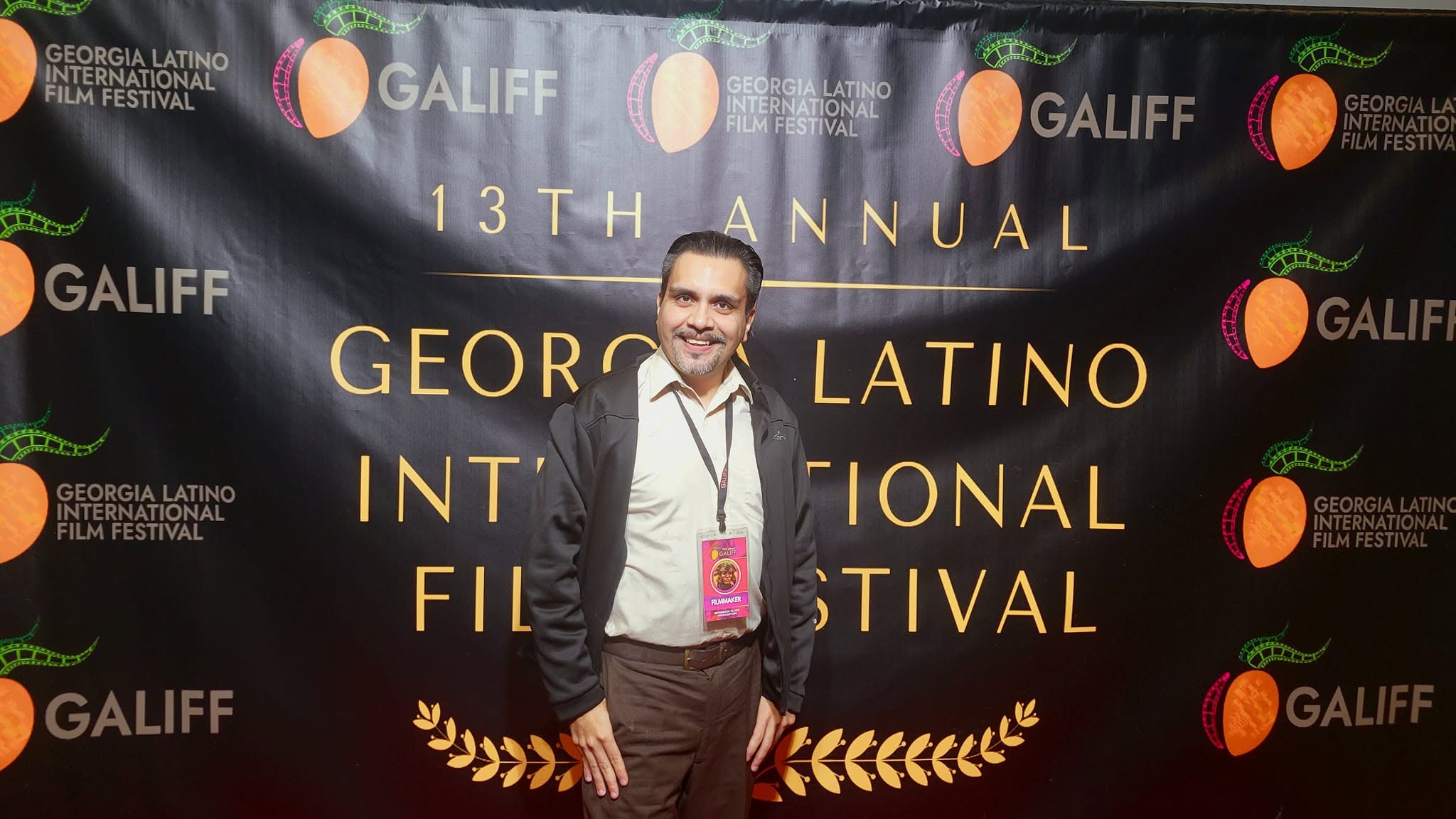
That perseverance eventually brought me here: collaborating with other filmmakers, slowly building a network, and finally taking on the challenge of producing my first independent short film, Un Día Normal. Un Día Normal is a 30-minute short based on a real experience that my family lived through in 2017 with immigration enforcement. To this day, it’s the most ambitious and challenging project I’ve taken on — one I’m deeply proud of, and one that continues to reach and move people 3 years later. I’ve had the opportunity to show Un Día Normal in multiple film festivals nationwide, where it has received several awards, and it has even screened at film festivals in Mexico. Looking back at that eleven-year-old boy who dreamed of making movies but couldn’t yet see a path to get there, I can see just how far I’ve come, despite challenges and limitations that were often out of my control.
I’m sure it wasn’t obstacle-free, but would you say the journey has been fairly smooth so far?
Being raised in a single-parent household presented a few challenges My mother did everything she could, and then some, to support my sister and me — to provide for us and make sure we weren’t lacking. She worked and worked until her health no longer allowed her to keep up that pace. As soon as I graduated out of high school, I knew I needed to go into work and lend a hand to support our family.
But I have to say the biggest challenge I faced over the year in finding my way into film, was limited access to film programs because of my immigration status. While there were some courses available through community colleges, even those became restricted as campuses changed their policies and began requiring certain documentation to enroll. I was halfway through an Associate’s program in Telecommunications when the college announced a change to its enrollment policies. Since I could not provide the documentation they requested due to my immigration status, I couldn’t continue taking classes. That brought the progress I’d made — and any future plans — to a halt.
The Deferred Action for Childhood Arrivals program, which began in 2012 (and is actually a key topic ofmy short film Un Día Normal), allowed me and many others in my situation to be able resume taking college classes and complete the Associate’s Degree program. But even that came with limitations — as a DACA recipient, I did not qualify for federal financial aid, so unless a scholarship was available through the college, all tuition and book costs had to come out of my own pocket.
That was a real limitation for me, since I could only afford one or two classes per semester. It was discouraging at times, especially hearing about friends or classmates who were already starting their careers or were well on their way, while I felt stuck — doing what was necessary to make ends meet, and taking whatever small steps toward my career I could manage.
At the same time, I realized it was just a matter of continuing to move — and sometimes finding different ways to do that. Even when I couldn’t take classes, I’d ask myself: what can I do instead? College classes weren’t the only option. So I started volunteering for a couple of low-budget independent film projects happening in Detroit. There was no pay, but it was still good experience — meeting other creative people and taking note of how they worked, of what was effective and what wasn’t. In a way, because of the obstacle of being temporarily unable to continue a college education, I made sure I wasn’t sitting still — that I kept moving toward the career I wanted, even if it was through small steps.
I also began acting in a few plays, taking some acting classes, and making my way into community theatre and later professional theatre. Acting was a big help — growing up I was a very shy person, and theatre helped me to open up, find more confidence in speaking, and find my voice. Working with other actors has also shaped how I approach directing. I definitely feel that learning how actors work has made me a better director and videographer.
Alright, so let’s switch gears a bit and talk business. What should we know?
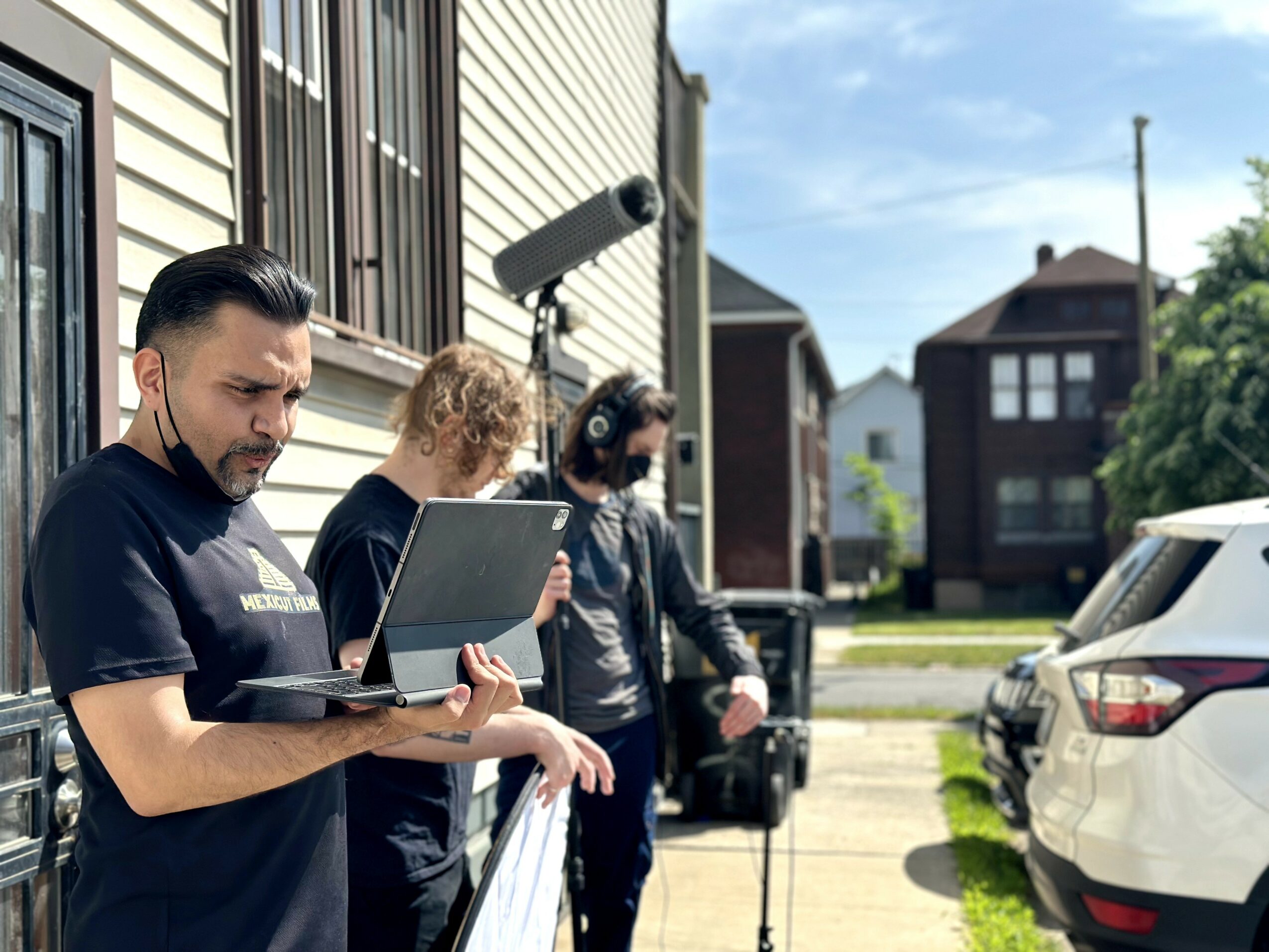
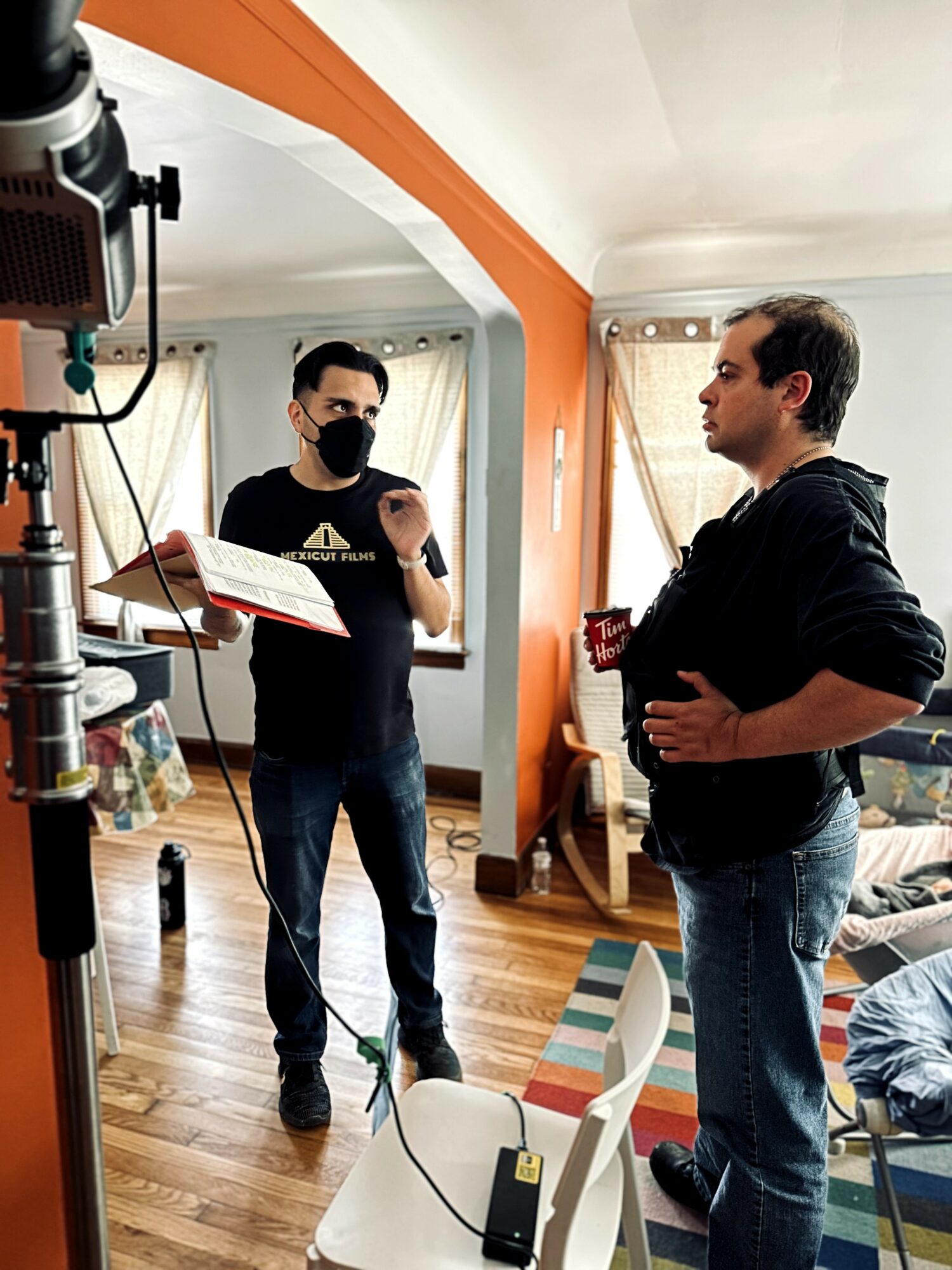
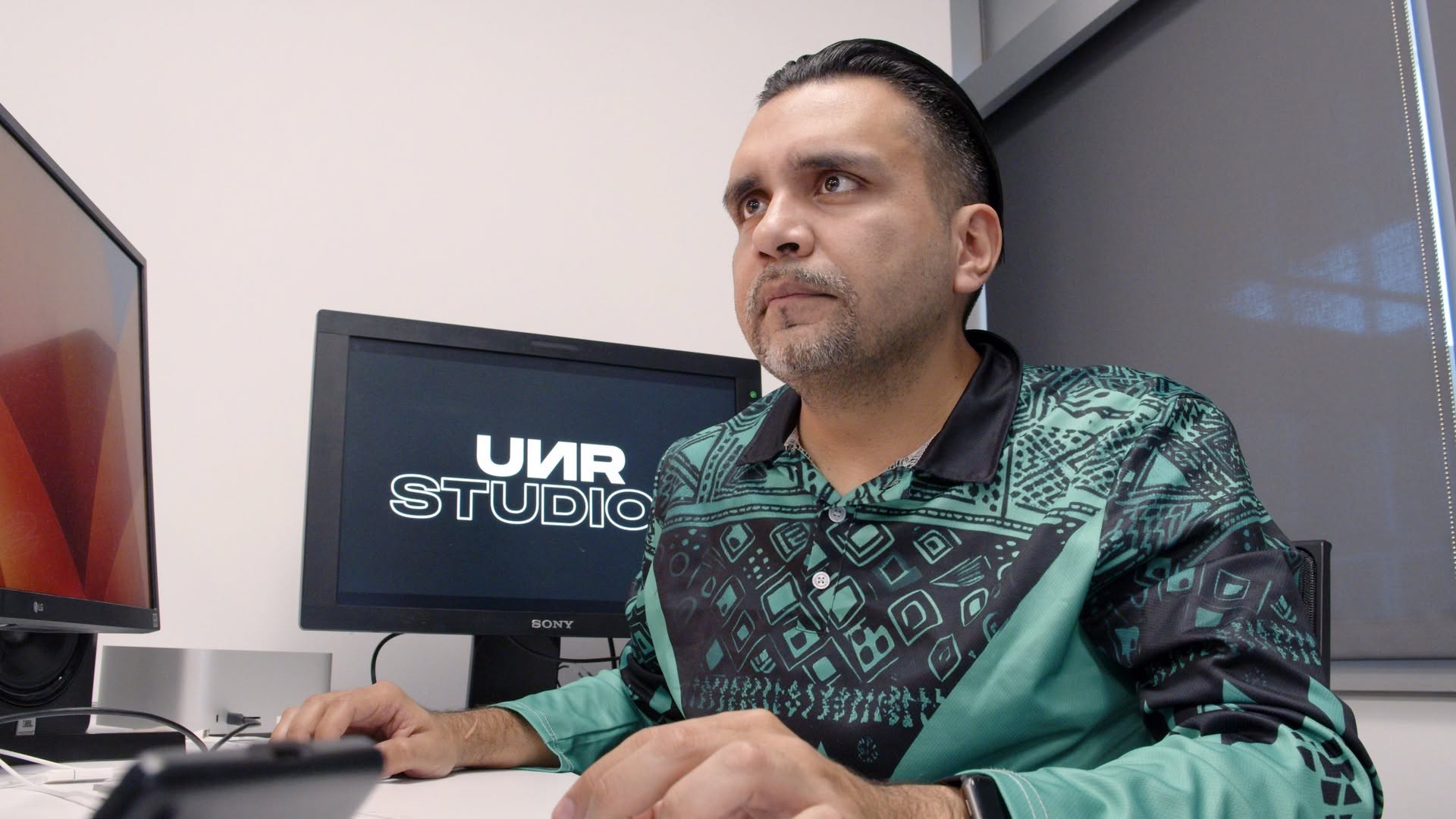
I am a video editor and filmmaker. I currently work as a full-time editor with Unreasonable Studios, a post-production house with multiple branches across the US and abroad. I also produce and edit video through my own company, Mexicut Films, which is how I produced my short film Un Día Normal.
Un Día Normal is the most known of my works. It’s a short film that explories the impact of immigration enforcement on young adults and their families — specifically families of mixed immigration status. I’ve best heard it described as a docu-drama, in the sense that the characters are fictional, but the story is based on real events. The film draws on my family’s lived experience, when one of our relatives was detained by immigration enforcement during the first Trump administration. As a recipient of the Deferred Action for Childhood Arrivals program (DACA), I was among many who felt a sense of relief and gratitude that DACA provided some temporary protection from deportation and gave us the opportunity to work and pursue our careers. So, when DACA recipients started being detained in 2017, it truly came as a shock — it shattered the reality we thought we were living in, and was a painful reminder that the threat of deportation is always present. That’s what drove me to tell our story through film, especially at a time when immigration enforcement began to use more aggressive, escalating tactics — often targeting communities with a strong immigrant presence like Southwest Detroit.
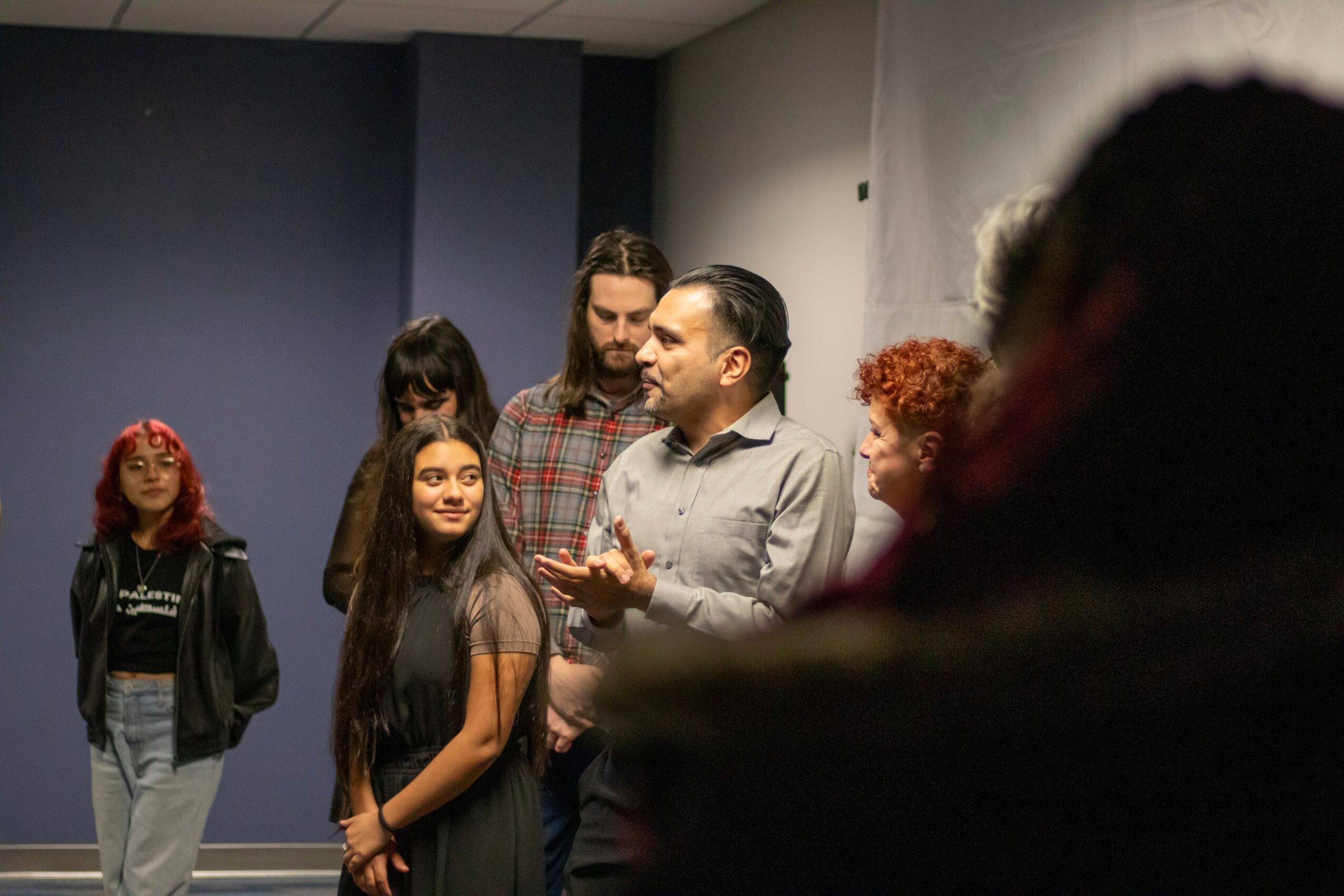
Continuing the path I started with Matrix Theatre, I’ve stayed involved in documentary work. I filmed and edited a documentary with La Carpa Theatre, also based in Detroit, covering the launch of the program from its early beginnings through its first onstage production — working with a team of young adults from the neighborhood and guiding them through writing and performing their own 90-minute play.
Most recently, I joined the Detroit VOCES Southwest Oral History Project, a long-term effort led by local historians, educators, and entrepreneurs aiming to document and preserve the history of Latinos in Southwest Detroit. Since 2023, Detroit VOCES has conducted interviews with community elders, activists, and artists who grew up, worked, and have made an impact in Detroit. These interviews are publicly accessibly on the Detroit VOCES YouTube page. Our long-term goal is to create and maintain space that is dedicated to Latin American history in Michigan.
I take pride in illustrating people’s story through my video work. Especially in my documentary work, I see my role as illustrator, to help represent the story being shared by the people telling it. Since starting Mexicut Films in 2020, I’ve filmed and edited videos for multiple arts and non-profit organizations in the Metro Detroit area, ranging from promotional videos, to event and performance recordings, and short documentaries.
What was your favorite childhood memory?
In addition to making multiple Beatles-inspired clay animations in middle school, one particular childhood memory stands out — a project for English class with two of my good friends in Mexico. We were in sixth grade, and toward the end of the school year, we had to give a class presentation. Our group of three liked to work on everything together, and for some reason, the topic we’d been assigned to talk about was ships.
The ringleader of our group had the idea to build a scale model ship inspired by the Titanic. We made it out of popsicle sticks and poster board — fairly intricate and time-consuming for three sixth graders. We used the popsicle sticks to build the wireframe, and poster board for the different decks. We worked on it over an entire weekend. That memory has stuck with me: it was a fun time, took hours of work, and was the talk of the classroom when we presented the final piece.
Looking back, I realize that was probably the first time I experienced a creative team process. And it feels great to recognize how many times that same cycle has repeated since — pulling a group together for an ambitious project, building a plan around the resources we have, figuring out how to divide the work, pushing through the long hours, managing the stress, troubleshooting the challenges as they come. And realizing that even when the work is long and difficult, the result can be something we’re all proud of — something that can even move people.
That was possibly the first of many creative cycles in my life since then, and hopefully one of many still to come.
Contact Info:
- Website: https://www.mexicutfilms.com
- Instagram: https://instagram.com/mexicutfilms
- Facebook: https://facebook.com/mexicutfilms