




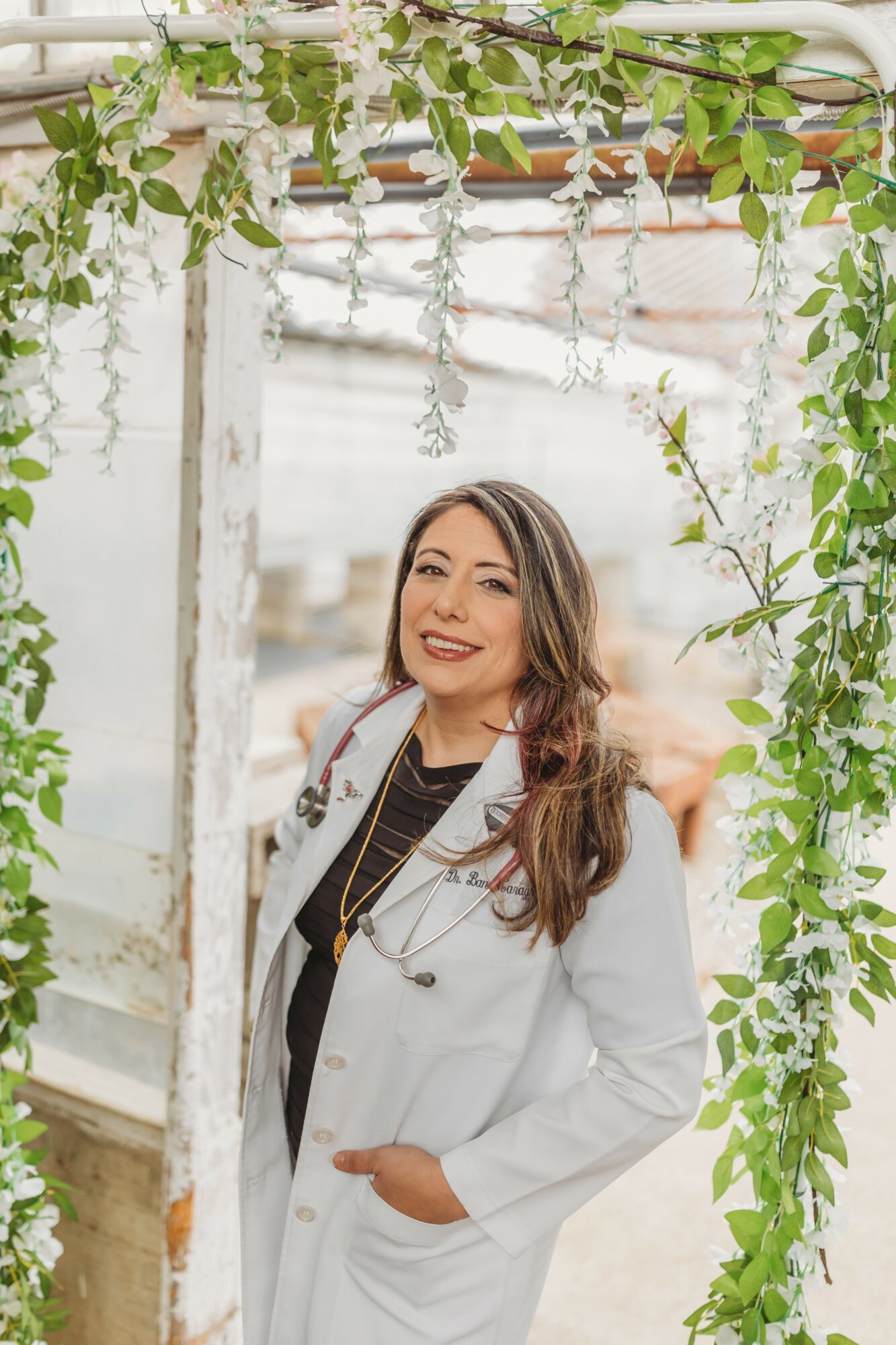
Today we’d like to introduce you to Dr. Ban Al-Karaghouli.
Alright, so thank you so much for sharing your story and insight with our readers. To kick things off, can you tell us a bit about how you got started?
My journey has really been shaped by two things: my love of medicine and my desire to create a life that allowed me to be present for my family.
As a physician and a mother of four, I was always searching for a better balance between meaningful work and being available for my children. I never lost my passion for caring for patients, but I also knew that the traditional model of medicine often made it difficult to maintain the kind of balance I wanted for my family and myself.
That desire ultimately led me to create Flourish and Bloom, a practice focused on women’s health, particularly during the menopause transition. Over the years, I began to notice how many women felt confused, dismissed, or unsupported when it came to hormonal changes in midlife. I realized there was a real opportunity to provide better education, deeper conversations, and more personalized care.
Telemedicine became an important part of that vision. It allowed me to stay connected with women in a very meaningful way while also creating flexibility in my life as a mother. I found that many patients actually feel more comfortable opening up from their own homes, and those conversations often become incredibly impactful.
As my work evolved, I wanted to deepen my expertise even further. I became certified as a menopause specialist and also pursued certification as an intimacy coach, because sexual health and intimacy are such important—but often overlooked—parts of women’s well-being during midlife.
More recently, I expanded my training into functional medicine, which allows me to explore health from a deeper perspective by looking at root causes rather than just symptoms. This approach has added another layer to how I support my patients, especially when addressing complex hormonal changes.
At its heart, Flourish and Bloom is about helping women understand their bodies, reclaim their vitality, and feel confident navigating the next chapter of their lives. Supporting women through menopause is incredibly meaningful work, and I feel fortunate every day to be part of those journeys.
Can you talk to us a bit about the challenges and lessons you’ve learned along the way. Looking back would you say it’s been easy or smooth in retrospect?
It definitely has not been a perfectly smooth road. Like many women trying to build something meaningful while raising a family, there were moments when I felt pulled in many directions at once.
Balancing my role as a physician with being a mother of four has been one of the biggest challenges. Medicine can be incredibly demanding, and there were times when I had to rethink how I wanted my career to look in order to be present for my children while still doing the work I love.
Another challenge has been stepping outside of the traditional medical model. When I began focusing more deeply on menopause care, intimacy coaching, and later functional medicine, I was moving into areas that are sometimes overlooked in conventional practice. That meant investing additional time in training, certification, and education while also building a practice that reflects a more comprehensive way of caring for women.
There is also the emotional side of this work. Many women I see have felt dismissed or unheard for years when it comes to their hormonal health. Hearing their stories can be powerful, but it also reinforces how important it is to continue advocating for better education and care in this space.
At the same time, those challenges are what have made the journey so meaningful. Each step pushed me to grow, deepen my knowledge, and shape Flourish and Bloom into a practice where women feel truly supported and understood.
Looking back, the road may not have been perfectly smooth, but it has been incredibly purposeful.
As you know, we’re big fans of Flourish and Bloom withDr.Ban. For our readers who might not be as familiar what can you tell them about the brand?
I created Flourish and Bloom somewhat organically while working in telemedicine for another company. What I discovered during that time surprised me.
I found that I connected deeply with my patients, often in ways that traditional in-person visits didn’t always allow. Women were speaking openly about their symptoms, their frustrations, and how confused they felt about what was happening to their bodies during perimenopause and menopause.
In my practice, I work primarily with perimenopausal women transitioning into menopause, many of whom come in describing symptoms like brain fog, poor sleep, fatigue, and memory changes. These are incredibly common experiences, yet many women feel they are happening “out of nowhere.” One of the things I focus on is helping women understand the hormonal shifts behind these symptoms so they can feel more in control of their health.
One of the things I’m most proud of from a brand perspective is a concept I created called The Royal Hormone Kingdom. I realized that while medicine often explains hormones through complex charts and pathways, most women understand things better through stories. So I started describing hormones as characters in a kingdom.
In the Royal Hormone Kingdom, Progesterone is the King and Estrogen is the Queen. When King Progesterone begins to leave during perimenopause, the entire kingdom starts to feel the shift. Queen Estrogen, not particularly happy about the King leaving, starts fluctuating dramatically before eventually stepping away from the throne as well. These hormonal changes ripple through the entire kingdom, affecting sleep, mood, memory, metabolism, and many other systems.
Women often ask about testosterone as well, so I introduced Prince Testosterone into the kingdom and wrote a blog explaining his role in energy, motivation, and desire. I’ve also written stories about desire and intimacy during menopause using this same kingdom metaphor. The goal is to make hormone science memorable, approachable, and even a little fun.
I write weekly Royal Hormone Kingdom blogs, translating complex medical concepts into stories women can understand and remember later when they start experiencing these changes themselves. It’s something I’m incredibly proud of because women often tell me that these stories finally make hormones “click” in a way traditional explanations never did.
Here is a link to my blog :
https://www.flourishwithdrban.com/the-royal-hormone-kingdom-with-dr-ban
At the end of the day, what I really love doing is translating complicated hormone science into stories women can actually understand and sometimes even laugh about. That’s exactly how the Royal Hormone Kingdom was born. I realized women don’t need more confusing hormone charts; they need a story that helps them understand what’s happening in their bodies. In my version, menopause doesn’t mean the kingdom is collapsing, it just means Queen Estrogen has stepped away from the throne and the Royal Council needs a new strategy. And if your hormones ever feel like they’re staging a full royal rebellion, the Royal Hormone Kingdom is there to help you figure out who’s really in charge.
More recently, I’ve also been investing time in expanding my training in functional medicine, because I want to go deeper than simply managing symptoms. Hormone therapy can be incredibly helpful, but I’m also interested in understanding the root causes of health issues and helping women support their bodies from within through lifestyle, metabolism, nutrition, and overall wellness.
Ultimately, the goal of Flourish and Bloom is exactly what the name suggests: helping women not just get through midlife, but truly flourish and bloom, living healthier, longer, and more vibrant lives.
In terms of your work and the industry, what are some of the changes you are expecting to see over the next five to ten years?
I think we’re at the beginning of a major shift in how menopause and women’s midlife health are understood. For a long time, menopause was treated as a short event rather than a transition that affects many systems in the body. Over the next decade, I believe we’ll see much more education, research, and specialized care focused on this stage of life.
Women are becoming more proactive about their health and are looking for clinicians who truly understand hormonal changes. At the same time, there’s growing interest in combining hormone therapy with functional and lifestyle medicine to address root causes of symptoms.
Telemedicine will also continue expanding access, allowing more women to connect with menopause specialists regardless of where they live. Overall, I think the future of women’s health will be more informed, more personalized, and far more open than it has been in the past.
Contact Info:
- Website: https://flourishwithdrbanfunctionalwellness.com/
- Instagram: https://www.instagram.com/flourishandbloomwithdrban/
- Facebook: https://www.facebook.com/profile.php?id=61574546333382
- LinkedIn: https://www.linkedin.com/in/dr-ban-al-karaghouli/
- Youtube: https://www.youtube.com/@DrBanAlKaraghouli