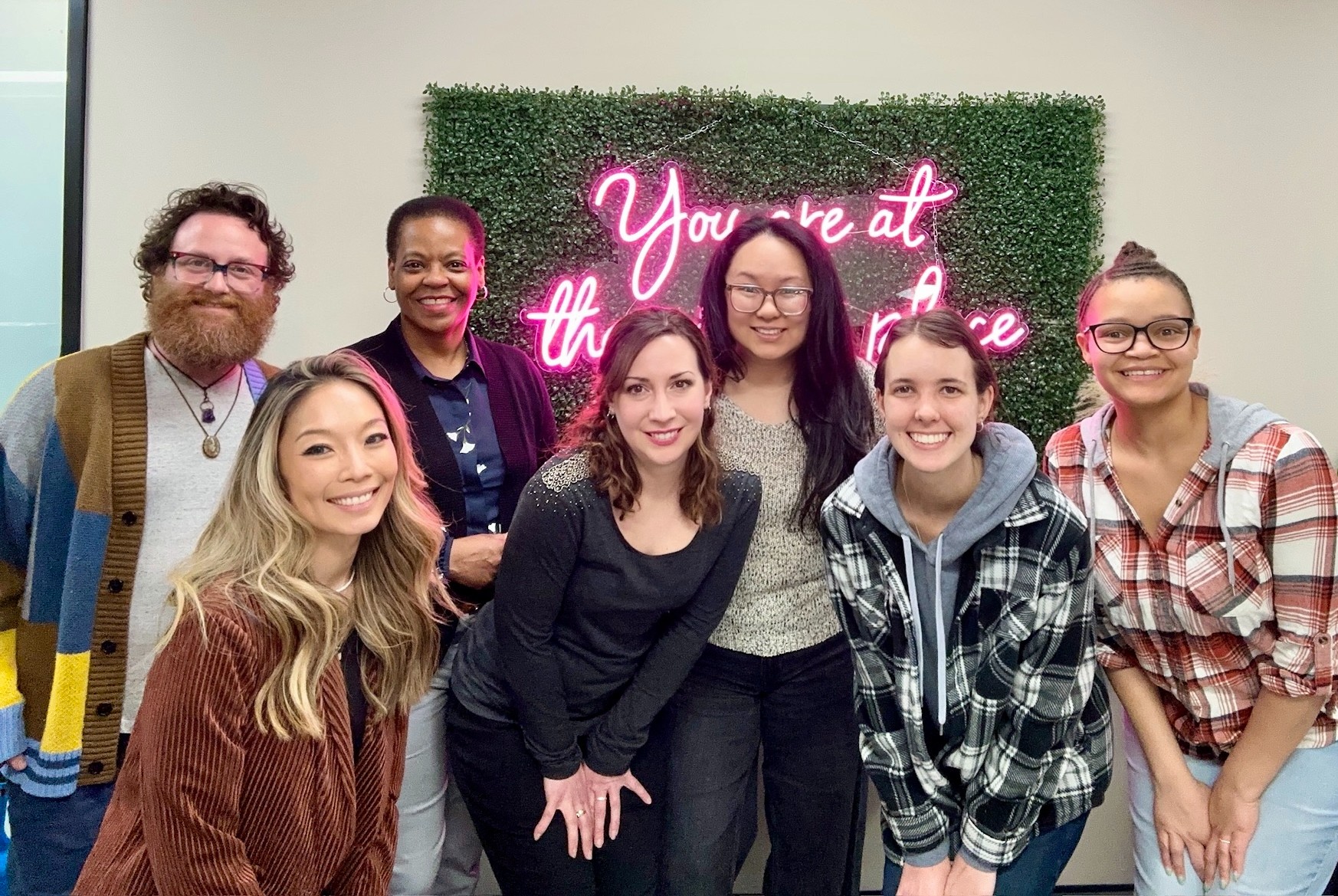




Today we’d like to introduce you to Dennielle McIver.
Hi Dennielle, thanks for sharing your story with us. To start, maybe you can tell our readers some of your backstory.
I usually tell people I spent the first part of my career learning how to fix broken networks and build programs, only to realize that the most complex “operating systems” aren’t made of silicon, they’re sitting right in front of me.
Growing up as a middle child in a household where emotions were silenced, I rebelled telling my parents that if they didn’t make rules, I wouldn’t break them. Looking back, I was also an undiagnosed, highly oppositional, ADHD kid that ended up with court ordered therapy by the age of 17. Like most teens, I didn’t want to go and managed to manipulate four therapists before meeting the one who finally saw me. Not as a problem to be solved, but as a person. He didn’t tell me how to feel; he just helped me figure out my own path. He was the reason I knew in my heart that I wanted to help others as he helped me. Unfortunately, for the first time ever, I listened to the adults encouraging me to chase the “financial stability” of IT. But, then in 2008, I became pregnant and a recession hit. My entry level career was outsourced with zero financial stability in the forecast. I decided then that if I was going to be broke, I might as well be broke doing what I actually loved. I launched an online marketing company, Geek Girl Web Design, enrolled in Graduate school and began chasing my dream.
In 2012, I opened Pediatric and Adult Behavioral Counseling (PABCounseling). What started as a solo venture evolved into a group practice by 2018. A scary, exciting leap that I never planned to take. Then, the 2020 pandemic hit, and everything changed. In a world of closed doors, I felt like an imposter. I had to ask, “how do you provide human connection when the world is told to avoid it?” I realized I had to strip away the stiff, clinical barriers of “traditional” therapy, leaning into trauma-informed care and a healthy dose of wit. Whether I was conducting telehealth sessions or utilizing social media such as TikTok to help educate others; I set out to prove that healing doesn’t have to be heavy; it just has to be human.
Managing a busy practice while navigating the world of entrepreneurship with ADHD has taught me that my “dual-brain” is actually my greatest asset against burnout. I’ve learned to embrace the ebb and flow of my energy. When I begin to feel the weight of clinical work, I utilize my tech and business skills to take a step back and build. I pivot into “business mode,” hiring new clinicians, bringing on interns, networking, and leaning into the creative chaos of social media. This variety keeps my ADHD brain engaged and prevents the stagnation that often leads to fatigue and burnout. By the time I’ve reached my business goals, I feel refreshed and ready to step back into the room with my clients, fully present and energized.
I believe the best way to support my clients is to never stop learning. To support that mission, I’ve committed to a rigorous path of professional development. I am a National Certified Counselor (NCC) with specialized certifications in ADHD (ADHD-CCSP) and Trauma (CCTP). My work is grounded in evidence-based modalities like Acceptance and Commitment Therapy (ACT) and the cutting-edge field of psychedelic integration for Ketamine, Spravato (esketamine), and Psilocybin.
Lately, I’ve been immersed in Accelerated Experiential Dynamic Psychotherapy (AEDP), a healing-oriented, experiential therapy model designed to treat trauma, anxiety, and depression by fostering a secure therapist-client attachment. Developed by Dr. Diana Fosha, it uses moment-to-moment tracking to process difficult emotions, aiming to move clients from distress to core healing, freeing oneself from hyper vigilance, anxiety, guilt and shame; moving into resilience, and emotional transformation. I respect how it honors how deeply healing a strong therapeutic relationship can be. When I grow my team, I look for practitioners who bring that same level of intentionality. I look for clinicians with deep-bench expertise in niches like First Responder, Veteran and Men’s Mental Health Care, Marriage Counseling, Children and Teens, ART, EMDR, and Somatic Interventions. We aren’t a ‘one size fits all’ practice; we are a collective of specialists offering a truly holistic, innovative approach to healing. It’s about building a diverse toolkit to meet our community’s unique needs.
As an Approved Clinical Supervisor (ACS), I am dedicated to mentoring my team, interns, and the next generation of aspiring counselors. While I’ve invested in this level of leadership to elevate the field, my heart as a clinician remains rooted in a very personal mission: to be the adult I needed when I was a child. I strive to be that person who doesn’t dictate how to feel, who to be, or what to do; but instead help you trust your own intuition and find success even within your failures.
My practice is built on the belief that genuine connection is the ultimate ‘hack’ for a better life. I embrace the ‘creative chaos’ of the journey, recognizing that mental health is simply a core part of our shared human experience—and we are here to help you optimize it.
Most people think of work as just a job, something that isn’t necessarily meant to be fulfilling or fun. I see it differently. I look at my career almost like a hobby; it’s a space where I’m constantly curious, learning, and genuinely excited to be. I approach with the same enthusiasm and dedication most people reserve for a hobby. It’s a pursuit that fuels me rather than draining me. By rejecting the idea that mental health work must be heavy or joyless, I’m able to show up more fully for my clinicians and my clients. At the end of the day, if we aren’t finding fulfillment in the journey, we’re missing the point. I’m here to prove that you can be professional, rigorous, and deeply successful—all while actually enjoying the process. It can be the catalyst for a better life and with 15 years experience, I’m just getting started.
I’m sure it wasn’t obstacle-free, but would you say the journey has been fairly smooth so far?
When people ask if the journey into the mental health and science field has been a smooth road, the honest answer is a resounding “no.” To work in this space is to walk through a persistent gauntlet of systemic, professional, and deeply personal hurdles. While the goal is to provide a sanctuary for others, the reality for the provider is often a landscape of shifting sands and high-stakes pressure. In grad school, we were CONSTANTLY being told, “Don’t go into this field for the money.” If you look into the average income for a mental health professional, most cannot survive on this career alone. Burnout is high, pay can be low, and the supervision / training to get to your license is expensive and requires extensive clinical hours. The average cost for a Master’s Degree ranges from $80k to $120 pending University. The last year of your program is spent on a full time, non-paid practicum and internship, while still taking some classes, working for a living, and doing whatever else life needs you to do. Then post graduation, you are faced with the next challenge of completing 3,000 clinical hours at very low pay, overcoming burnout, all while paying for supervision that was once $30 an hour and now averages $100-200 weekly for a total of 100 hours.
Once you complete your state requirements, you apply for your full license. Costs don’t necessary end there. If you were able to overcome burnout, low pay, pass your NCE exam and land your dream job; in order to become a luxury in the mental health field, then hundreds and thousands of dollars is spent on conferences, ongoing non-mandatory supervision, your own personal counseling, and training for high level interventions. Each population served comes with it’s own challenges. I’ve enjoyed every industry I have worked in regarding mental health: crisis center, PHP, community mental health, and private practice.
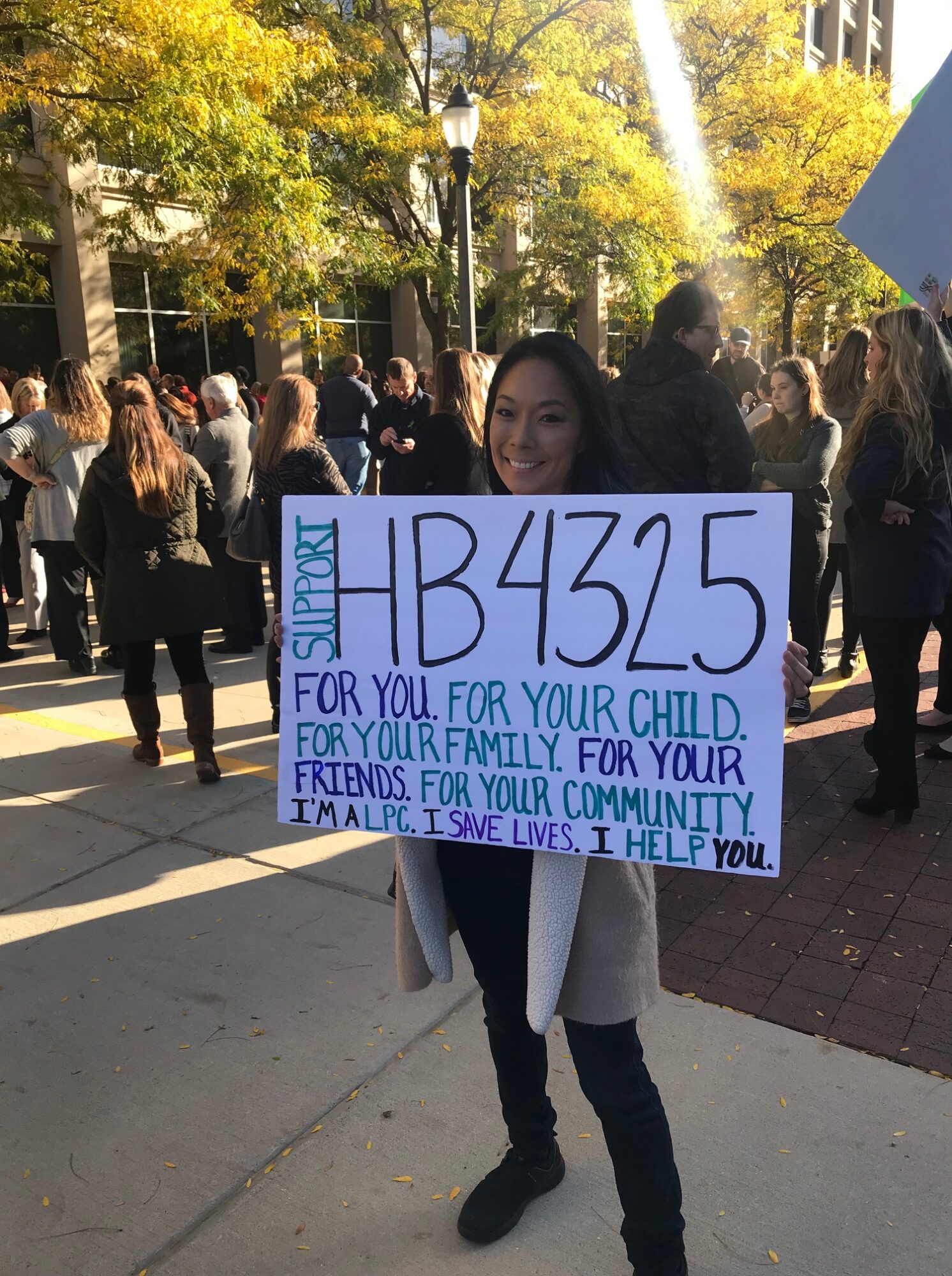
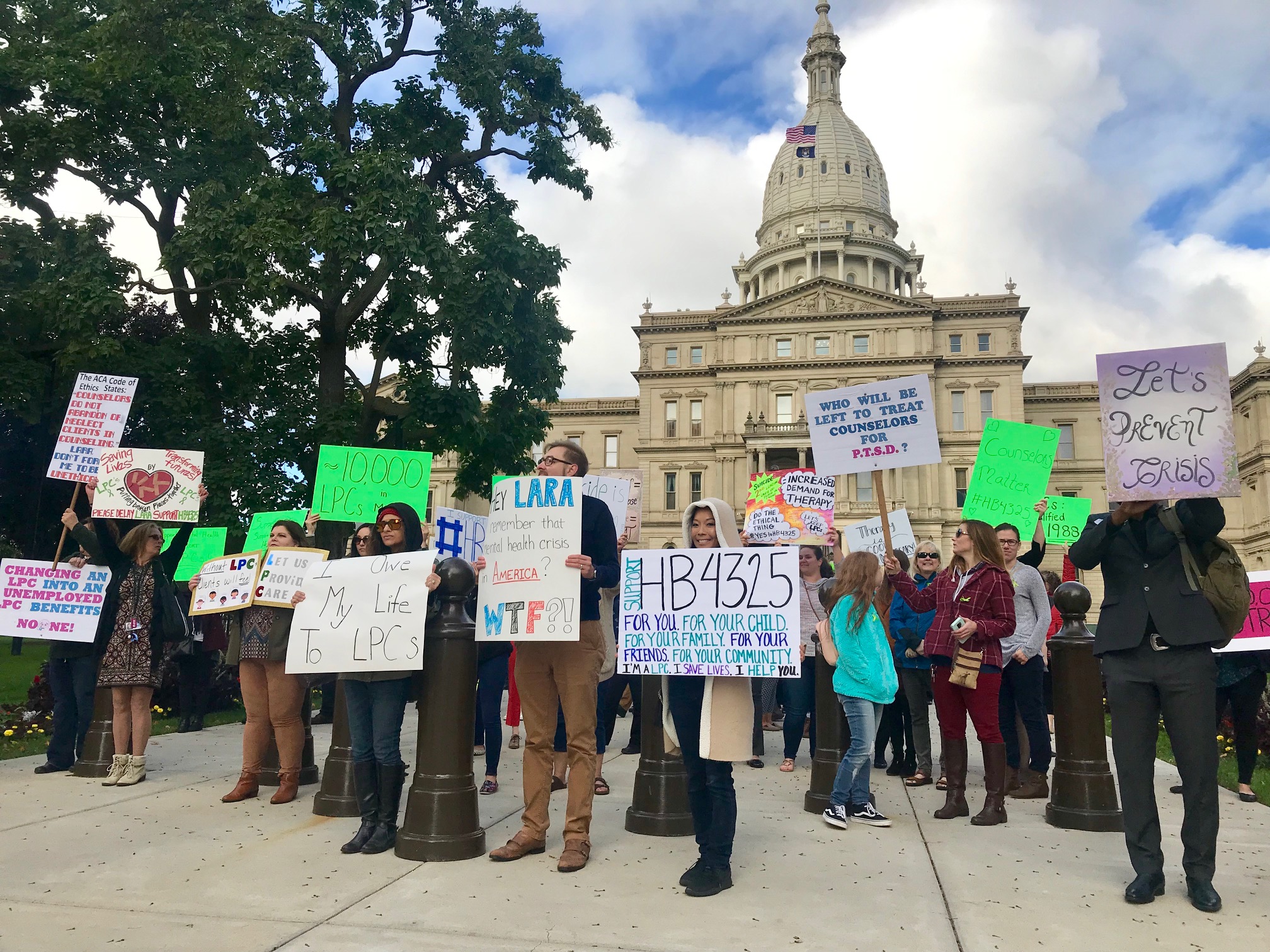
Education, training, and ongoing professional support services aren’t the only hurdle. The foundation of the “road” is often cracked by legislation and a volatile political climate. Legislative hurdles, such as Michigan’s House Bill 4325 of 2019, serve as a stark reminder of how quickly a professional’s scope of practice, their very ability to diagnose and treat can be threatened by regulatory overreach.
We currently navigate a world where healthcare and science are frequently pitted against political ideology. This creates a friction that trickles down into every session, making it harder to advocate for evidence-based care when the public’s trust in institutions has been systematically eroded. The constant fear of insurance take-backs (clawbacks) looms over every billing cycle, where companies can recoup payments years after services are rendered. Coupled with rising rent, high competition, and a volatile hiring market, financial stability often feels like a mirage.
The struggles aren’t just administrative; they are woven into the fabric of our current cultural moment. As an ADHD specialist, I’ve noticed a SIGNIFICANT increase in children that struggle from emotion dysregulation. Many ADHD children struggle with emotion regulation and we are able to provide clinically proven interventions, however we are witnessing an era where children see live homicides and graphic violence on social media as easily as Saturday morning cartoons once were. This constant exposure, combined with the “electronics-induced” struggle of ADHD versus shortened attention spans, has created a new breed of emotional dysregulation. ADHD is a born neurological disorder, whereas screen time “conditions” the brain to only retain the ability to focus for short periods of time. Constant screen time isn’t the only hurdle, it is also the quick access to information on the Internet and constant dopamine hits from electronic use that imposes challenges for critical thinking, memory retention, emotion regulation and the ability to form human connections.
As a trauma specialist, I am now faced with the challenge of “The Epstein Effect.” The recent release of the Epstein files with the glaring lack of subsequent arrests or consequences has sent shockwaves through the survivor community. For all aged trauma victims, seeing absolute power bypass accountability isn’t just news; it is a profound “institutional gaslighting” that re-traumatizes those we are trying to heal. Children and teens are living with the epidemic of school shootings and the perceived limitations on schools to deal with bullies have turned educational environments into high-stress zones, leaving both students and providers in a state of constant hyper-vigilance.
Perhaps the most difficult stretch of the road is the internal one. In a field with a chronic lack of mentors, severe shortage of psychiatrists, and huge bias against medicine and psychiatric hospitals; it can be very isolating, a breeding ground for imposter syndrome, especially when facing an increased prevalence of narcissistic abuse and complex cases that the system is ill-equipped to handle. For many, the “lack of family support” isn’t just about logistics; it’s about a cultural divide. Coming from a family that “is not a feelings type” means fighting the battle for mental health awareness both at work and at the dinner table. We still battle biased beliefs within the very walls meant to provide safe mental health counseling centers and psychiatric hospitals where outdated views on certain demographics or diagnoses can hinder true progress.
The road hasn’t been smooth because I wasn’t educated and trained for the weight of a global pandemic, a digital revolution, AI, political challenges, epidemic of mass homicides whether in school or the community, recessions, war, natural disasters, the rising costs of living and a mental health crisis all at once. The “struggles along the way” are not just setbacks; they are the symptoms of a system that needs as much healing as the patients it serves.
Do you have recommendations for books, apps, blogs, etc?
Huberman Lab
It’s Not Always Depression: Hilary Jacobs Hendel
The Mountain is You: Brianna Wiest
Unmasking Autism: Devon Price, PhD
Codependent No More: Melody Beattie
The Body Keeps the Score: Bessel van der Kolk
Emotional Intelligence: Daniel Goleman
Social Skills for Kids: Sue Mongredien
ADHD for Dummies
Brain on Fire: Susannah Cahalan
Contact Info:
- Website: https://www.pabcounseling.com
- Instagram: https://www.instagram.com/pabcounseling
- Facebook: https://www.facebook.com/pabcounseling