




Today we’d like to introduce you to Michelle Sider.
Hi Michelle, so excited to have you on the platform. So before we get into questions about your work-life, maybe you can bring our readers up to speed on your story and how you got to where you are today?
My journey as an artist has been anything but linear, and I think that is an important part of my story. I earned my BFA from the University of Michigan in 1982, but my path soon expanded beyond the studio. I went on to earn a Master’s and Ph.D. in Clinical Psychology and spent many years teaching art, working as a clinical psychologist, and exploring the ways creativity can help people process, connect, and heal.
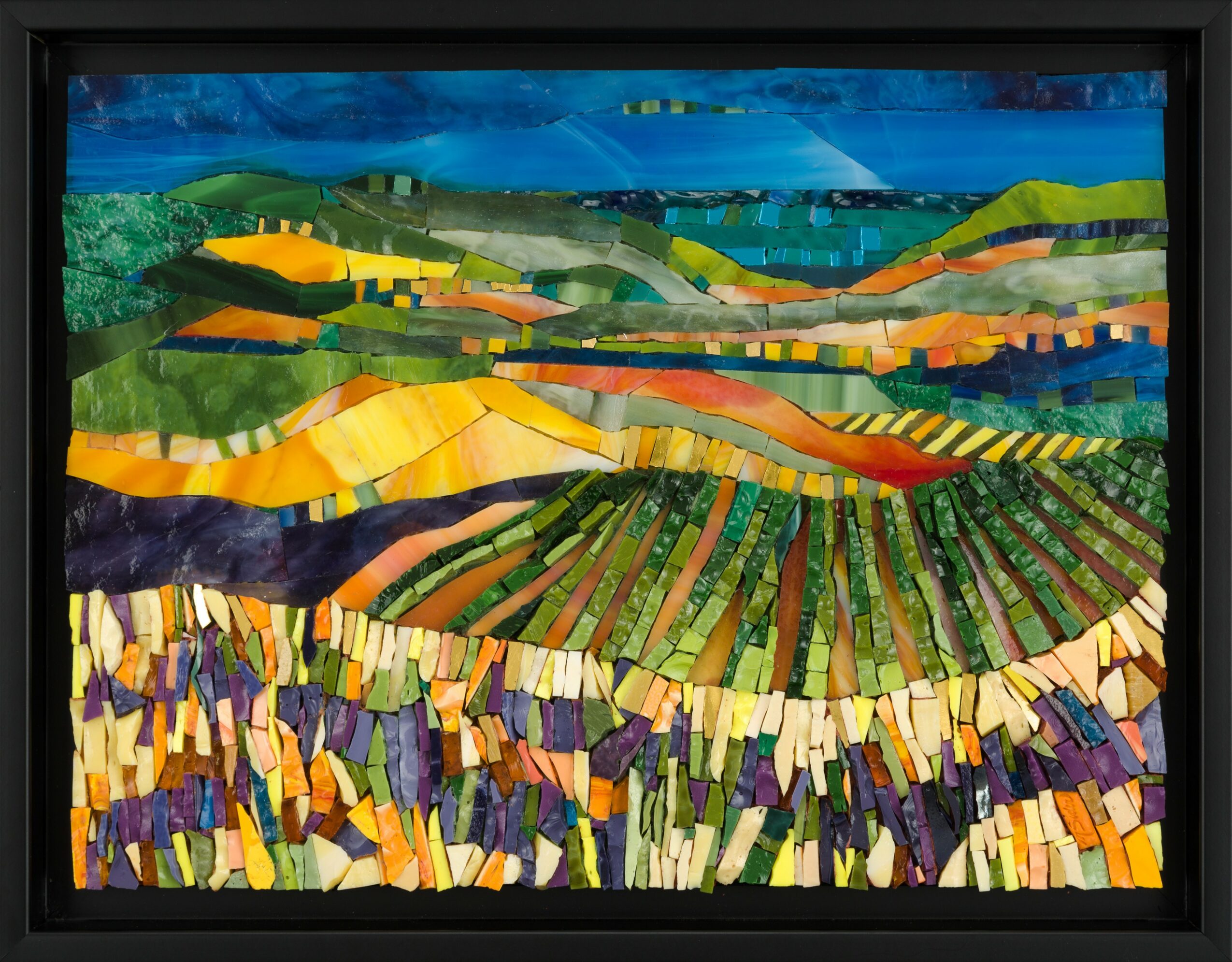
Art, however, was always at the center of my life. I began as a painter and gradually moved into mixed media and, ultimately, glass mosaic. My earliest relationship with light was rooted in wonder—watching it shift, dance, and transform the world around me. Over time, that fascination deepened, shaped by memory, spirituality, heritage, and lived experience. Glass became a natural medium for me because it doesn’t simply depict light; it reflects it, refracts it, holds it, and transforms as the viewer moves around it. I studied with master mosaic artists internationally and developed a distinctly painterly approach to mosaic.
Along the way, I also coauthored Never Long Enough: Finding Comfort and Hope Amidst Grief and Loss with clergyman Joseph Krakoff, combining our perspectives as a psychologist and clergyman to create a compassionate and practical book about loss, healing, love, and finding meaning after loss. The experience reinforced my belief in the power of creativity and storytelling to help us process difficult experiences and connect with one another.
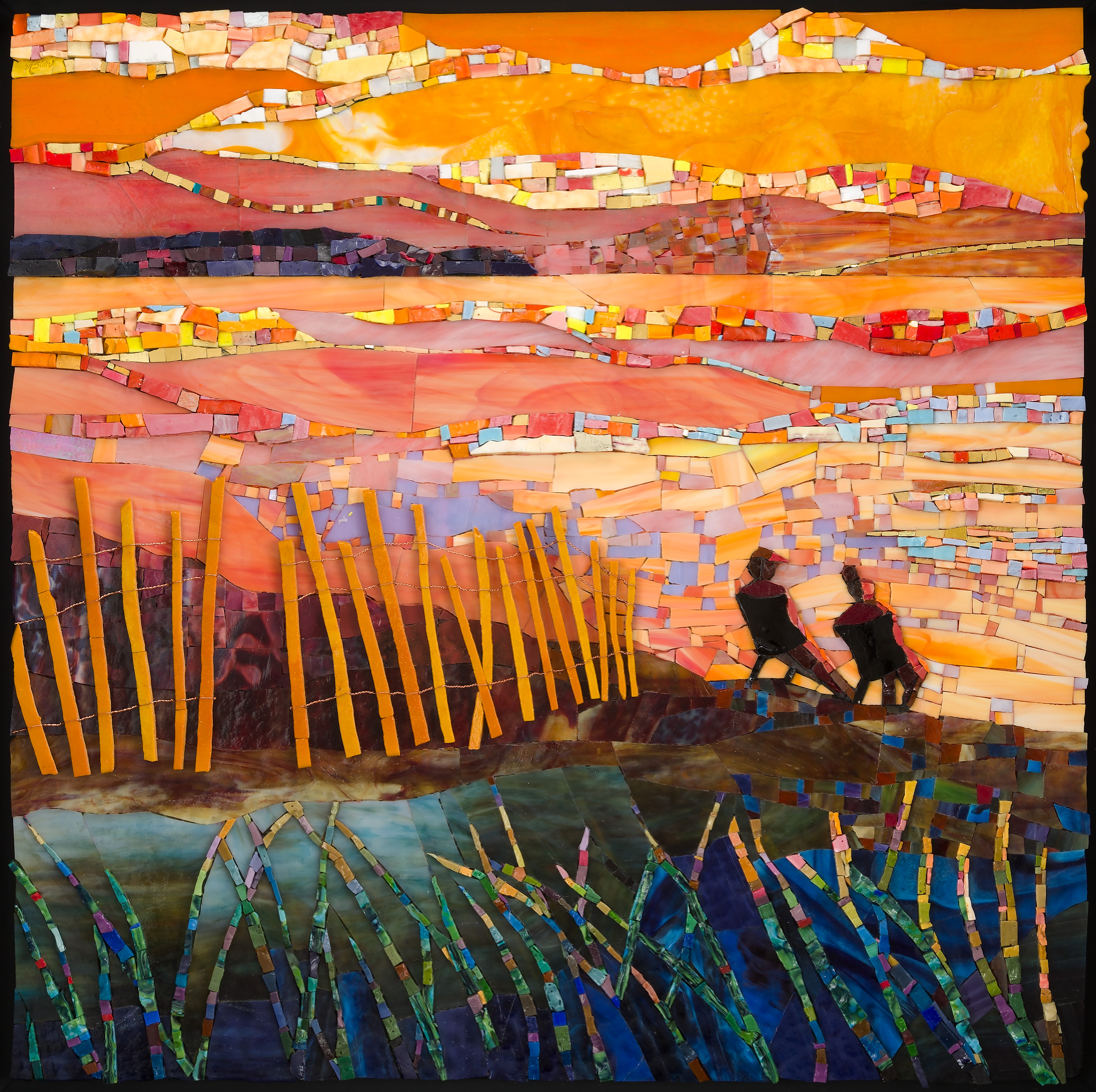
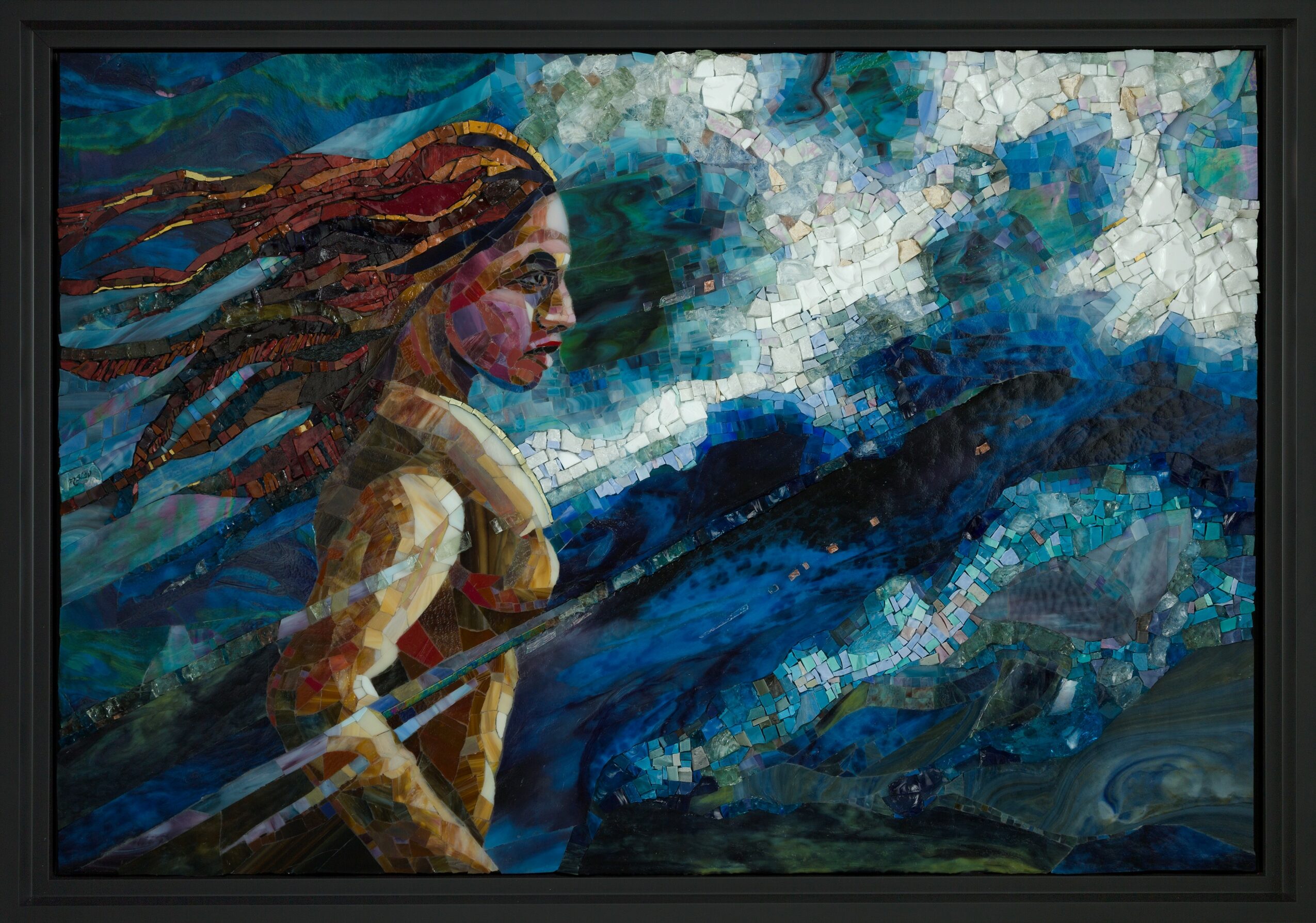
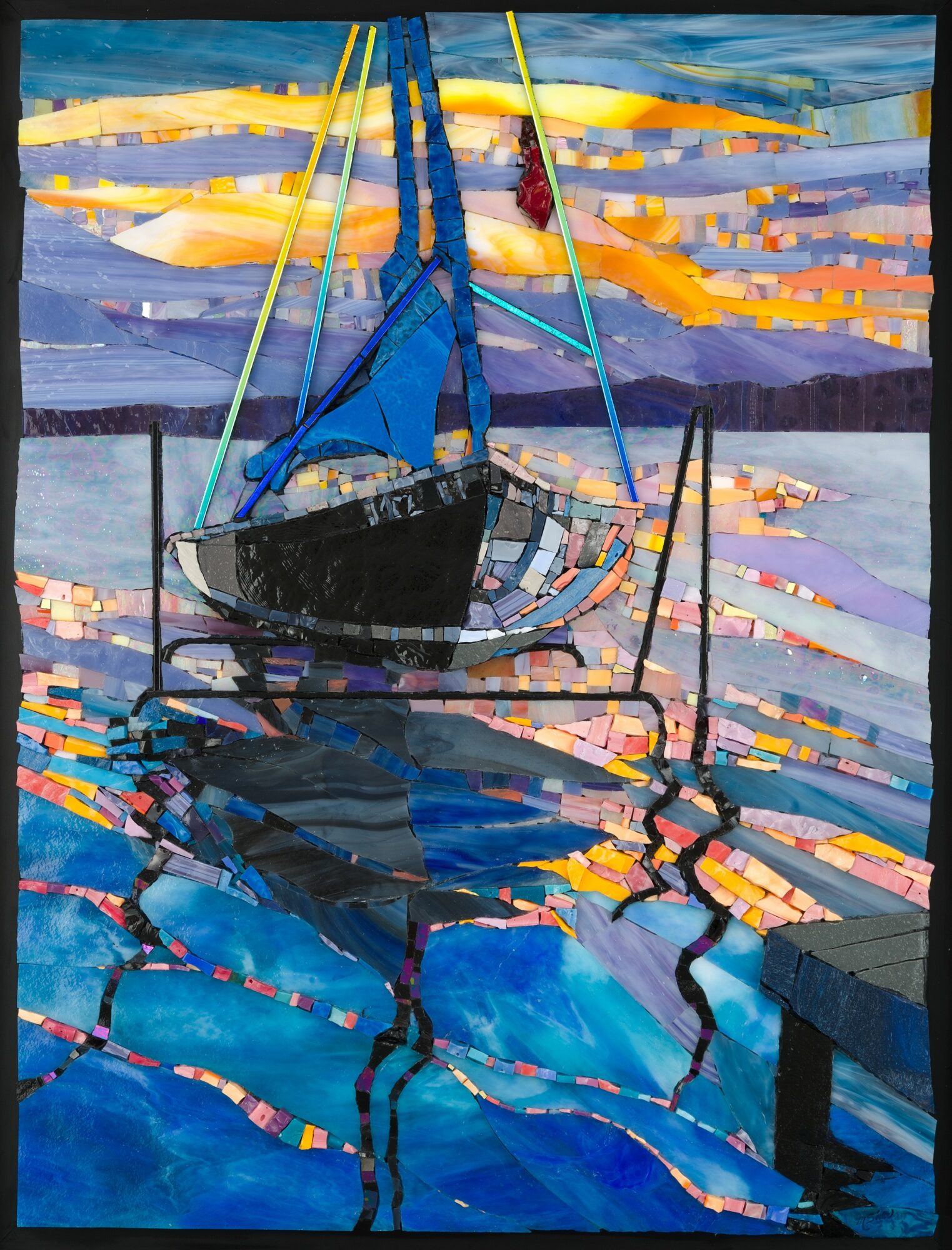
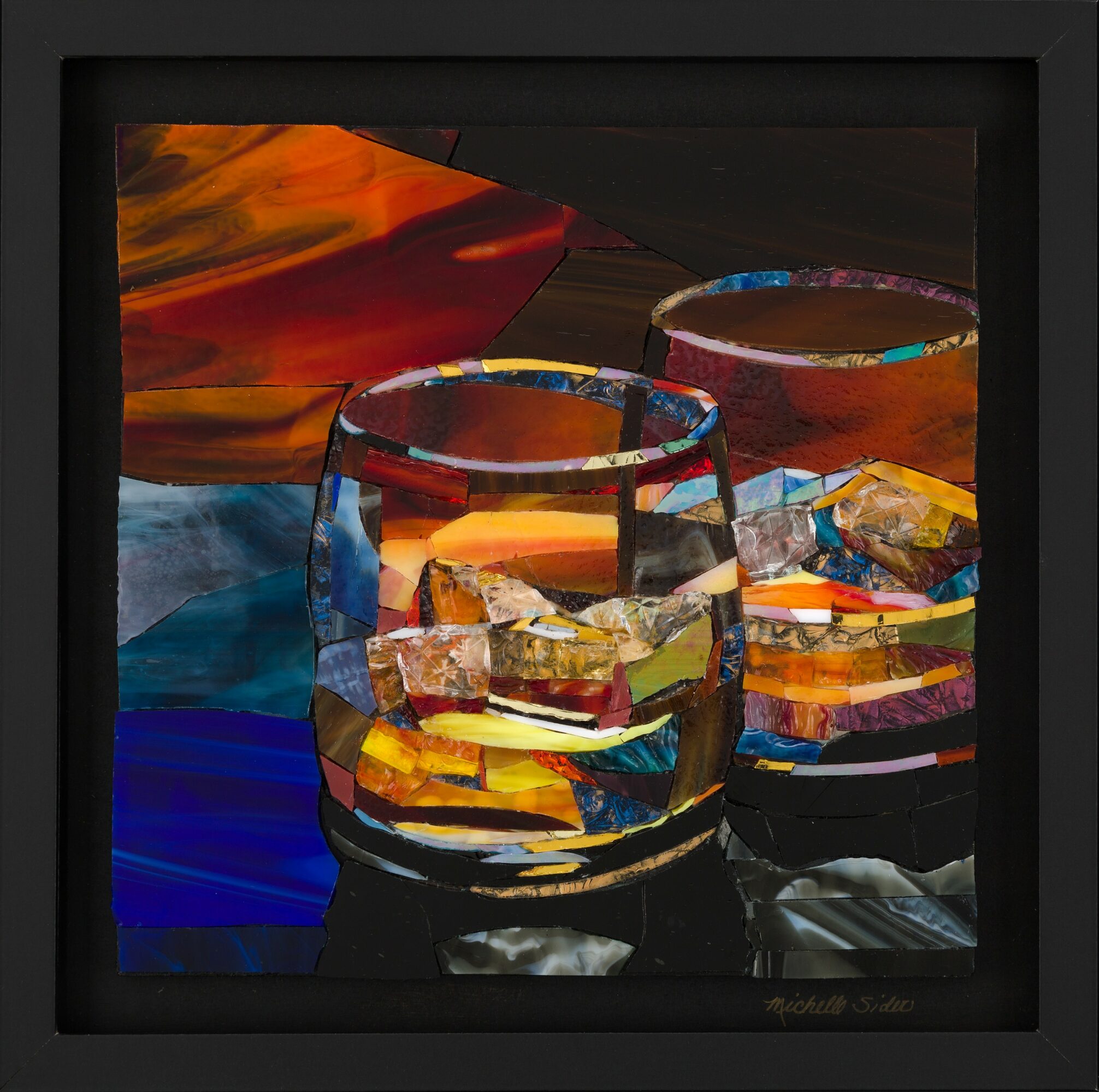
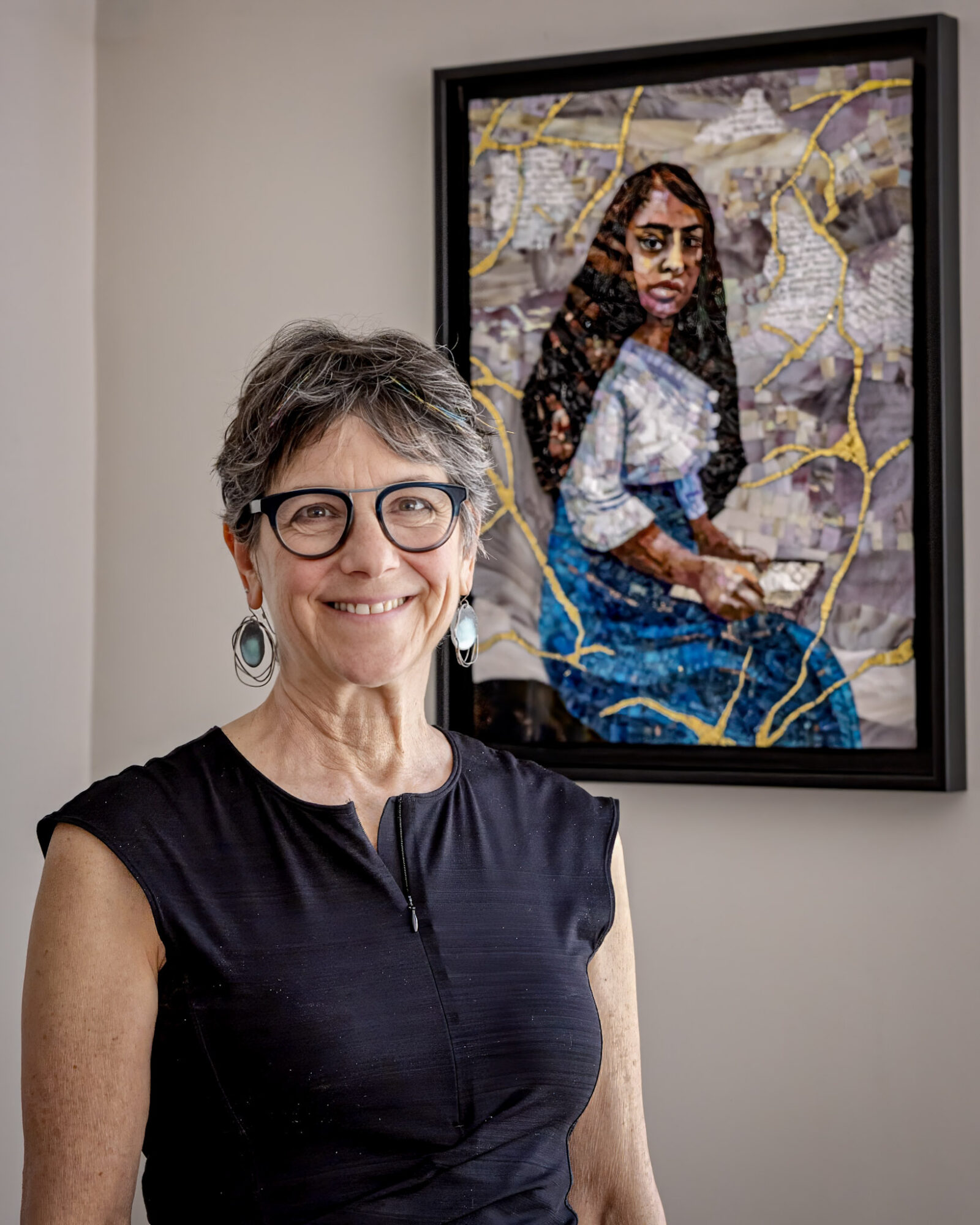
In 2016, I made the decision to return to art full-time. Since then, my practice has grown into a national and international career as an artist, teacher, speaker, and workshop instructor. Each mosaic begins as a painting, which I translate into a dimensional experience through glass, smalti, reflective materials, meaningful objects, texture, and movement. Increasingly, I use undulating surfaces and layered textures to create evocative, almost immersive scenes that invite the viewer to experience the work from different perspectives.
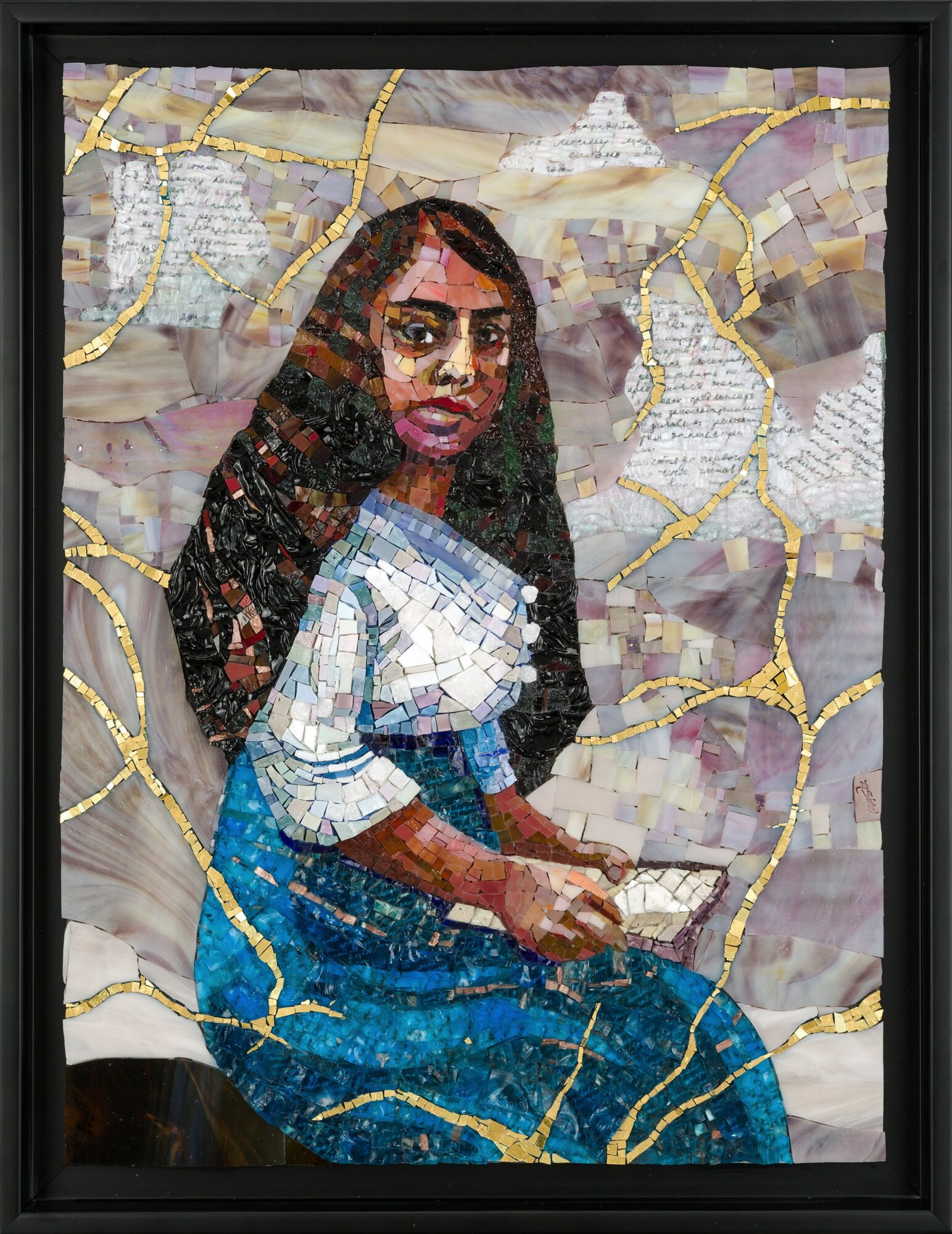
In recent years, my work has taken on a deeper and more personal focus: seeking light amidst darkness. This has become increasingly important to me both psychologically and spiritually, as well as to the way I hope my work is experienced by others. We all encounter darkness, and if we are fortunate, we learn to move through it—sometimes haltingly, often changed. I have come to see light not as the absence of darkness, but as something we actively seek, create, and share. In my mosaics, bringing light to fractured surfaces and uniting individual pieces becomes both an artistic process and a metaphor for repair, resilience, and transformation.
My background in psychology continues to profoundly influence my work. Through psychology, teaching, writing, and art, I have seen how creating and experiencing art can provide opportunities for connection, reflection, and healing. Mosaic itself has become a powerful metaphor for me: taking individual, sometimes fractured pieces and bringing them together to create something whole, meaningful, and beautiful.
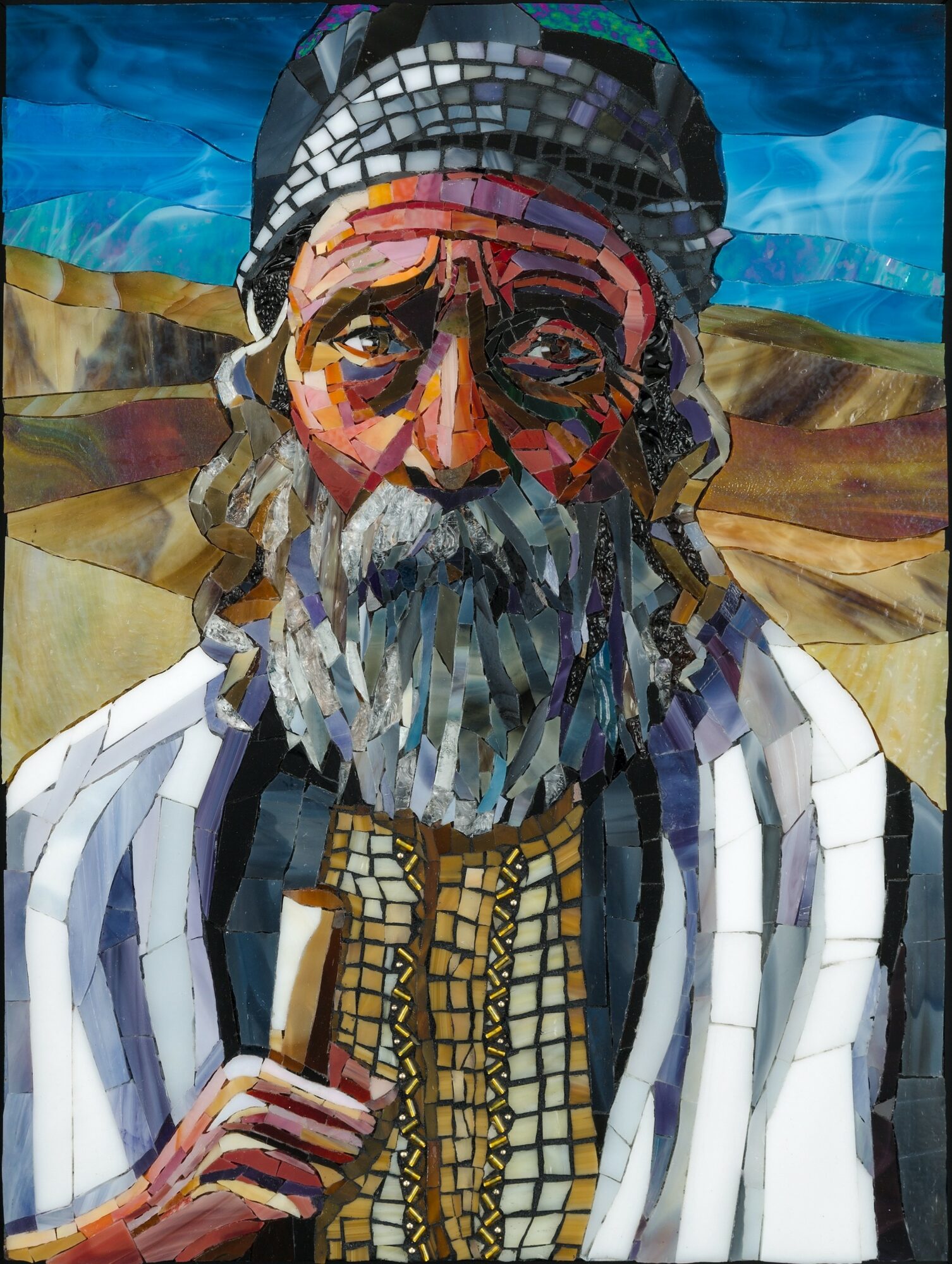
At the same time, I have been leaning more deeply into my own heritage and the stories that have shaped who I am. My I Am Yemenite series explores the history and identity of Yemenite Jews who made their way to Israel, while my portraits of ancestors connect me to the generations that came before me. These works have opened a more personal exploration of identity, memory, belonging, displacement, loss, and resilience. Incorporating meaningful objects and materials into these pieces allows me to bring fragments of history and memory into the physical work itself.
Today, I divide my time between my Michigan studio, exhibitions and commissions, and teaching and speaking nationally and internationally. I feel incredibly fortunate that the seemingly separate threads of my life—painting, psychology, teaching, writing, heritage, and mosaic—have ultimately come together. I believe that both creating and experiencing art can be sources of healing, connection, and transformation. My goal is not simply to create beautiful objects, but to make work that invites people to pause, reflect, feel connected, and perhaps find a little light of their own—even in difficult times.
We all face challenges, but looking back would you describe it as a relatively smooth road?
Pursuing a career as an artist has been both deeply rewarding and challenging. The biggest challenge for me was not simply building a career, but overcoming the belief that being an artist was somehow less worthy or practical than other professions.
In the United States, artists are often not valued or compensated in the same way as people in more traditional careers. I was discouraged from pursuing art as a profession and instead followed a more practical path, becoming a clinical psychologist and teacher. I continued making and teaching art throughout those years. Still, it wasn’t until 2016, after I had established successful careers in both fields, that I finally permitted myself to become a full-time professional artist. Even then, I struggled with whether I had made the “right” choice.
With time, I came to understand that being an artist requires far more than artistic talent. It demands intelligence, perseverance, discipline, business skills, continual learning, and years of developing one’s craft. More importantly, I realized that all of those earlier experiences had prepared me for the artist I was becoming. My training in psychology, my years as a teacher, and my experiences as a mother and as a sensitive, thoughtful human being have all given greater depth and meaning to my work. My experiences as a member of a historically persecuted minority have also shaped my understanding of identity, belonging, vulnerability, loss, resilience, and the human need to find light in difficult circumstances.
Those experiences have influenced not only what I make, but how I connect with others through art. They have taught me that art can be a means of healing—for the person who creates it, by transforming experiences and emotions into something tangible, and for the viewer who allows the work to affect them emotionally and intellectually. This understanding has become central to my work and has given me a deeper sense of purpose as an artist. It is one of the reasons I continue to believe that the difficult experiences we encounter can, when given expression, become sources of meaning, connection, and even light.
There are also very practical challenges to being a professional artist. Learning how to market and sell my work while remaining authentic has been an ongoing process. An artist has to learn to advocate for their work and build a sustainable business without allowing the marketplace to dictate what they create or compromise the meaning behind it. Finding that balance continues to be one of the challenges I navigate.
Looking back, I no longer see the different chapters of my life as detours from becoming an artist. They were part of the journey. The challenges of taking the less conventional path ultimately gave me the perspective, depth, and life experience that I now bring to my work—and I believe those qualities are just as important to my art as the technical skills I have developed over many years.
Alright, so let’s switch gears a bit and talk business. What should we know about your work?
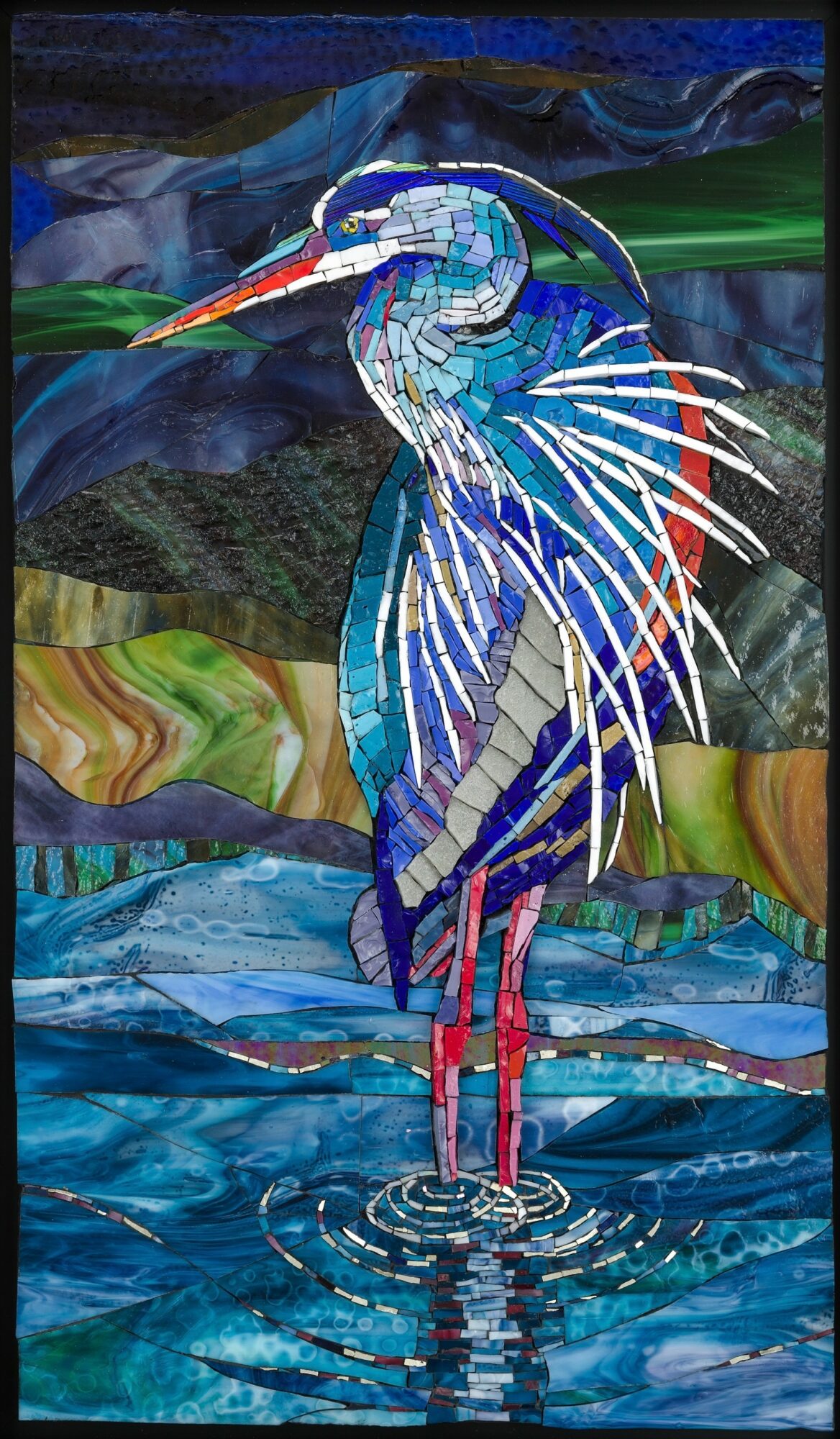
I am a Michigan-based mixed-media artist best known for my painterly glass mosaics exploring identity, spirituality, heritage, resilience, and the search for light—both literally and metaphorically. Although glass mosaic is my primary medium, I think of myself first as a painter who works with glass. Each mosaic begins as a fully realized painting, which I translate into glass, smalti, stone, metal, reflective materials, and meaningful objects.
Light is the foundation of my work. I am fascinated by the way glass reflects, refracts, captures, and transforms light, and I increasingly use texture, undulating surfaces, and layered materials to create evocative, almost immersive scenes. The work changes as the viewer moves around it, making light an active part of the experience rather than simply a subject.
My recent work has become increasingly focused on seeking light amidst darkness, a theme that has taken on deep psychological and spiritual meaning for me. I see mosaic itself as a metaphor: individual fragments—even broken ones—can be brought together to create something whole, meaningful, and beautiful. I also incorporate my heritage into my work, particularly through my I Am Yemenite series and portraits of my ancestors, exploring identity, memory, belonging, displacement, and resilience.
What sets me apart is the convergence of experiences I bring to my work. I have been an artist and teacher for decades, but I also hold a Ph.D. in Clinical Psychology and spent many years working as a psychologist. My experiences as a psychologist, teacher, mother, and human being have given me a deep interest in how people experience the world, and in the ability of art to communicate what words sometimes cannot. I believe art can be healing for both the person who creates it and the person who experiences it.
I am most proud of developing a visual language that feels authentically my own. I am not interested in simply reproducing traditional mosaic techniques; I want to push the medium toward something more painterly, dimensional, tactile, and emotionally expressive. Ultimately, I hope my work draws people in through its beauty and then gives them a reason to pause, look more closely, and find something of their own experience within it—a moment of connection, reflection, or perhaps even light.
Do you have recommendations for books, apps, blogs, etc?
I am constantly learning, and I find inspiration in places that are sometimes completely unexpected. I don’t have one favorite book, podcast, or resource that I rely on; instead, I enjoy following my curiosity wherever it leads me.
I listen to podcasts about economics, history, science, inventions, and the lives of interesting people. I particularly enjoy “The Economics of Everyday Things” because it takes ordinary things we encounter every day and explores the surprising stories and systems behind them. I also love taking courses and reading books about art, history, and different cultures. I am especially interested in seeing what other artists and makers are creating and learning new techniques that I can bring into my own work.
I think this constant curiosity is an important part of being an artist. Inspiration doesn’t always come from another artist or even from the art world. It can come from history, science, technology, nature, a person’s life story, or simply understanding how something works. I try to remain open to all of those influences.
And while I don’t have a single favorite book, I am a particular fan of well-written historical fiction. I love being transported into another time and place while also gaining a deeper understanding of the history, people and circumstances that shaped it. For me, continuing to learn is not separate from my art—it is part of what keeps my work evolving.
Pricing:
- For artwork and classes pricing, inquire @ Michellesider.com
Contact Info:
- Website: https://Michellesider.com
- Instagram: @Michellesider
- Facebook: Michelle Sider-Artist
- LinkedIn: https://www.linkedin.com/in/michelle-y-sider-b0179a97