



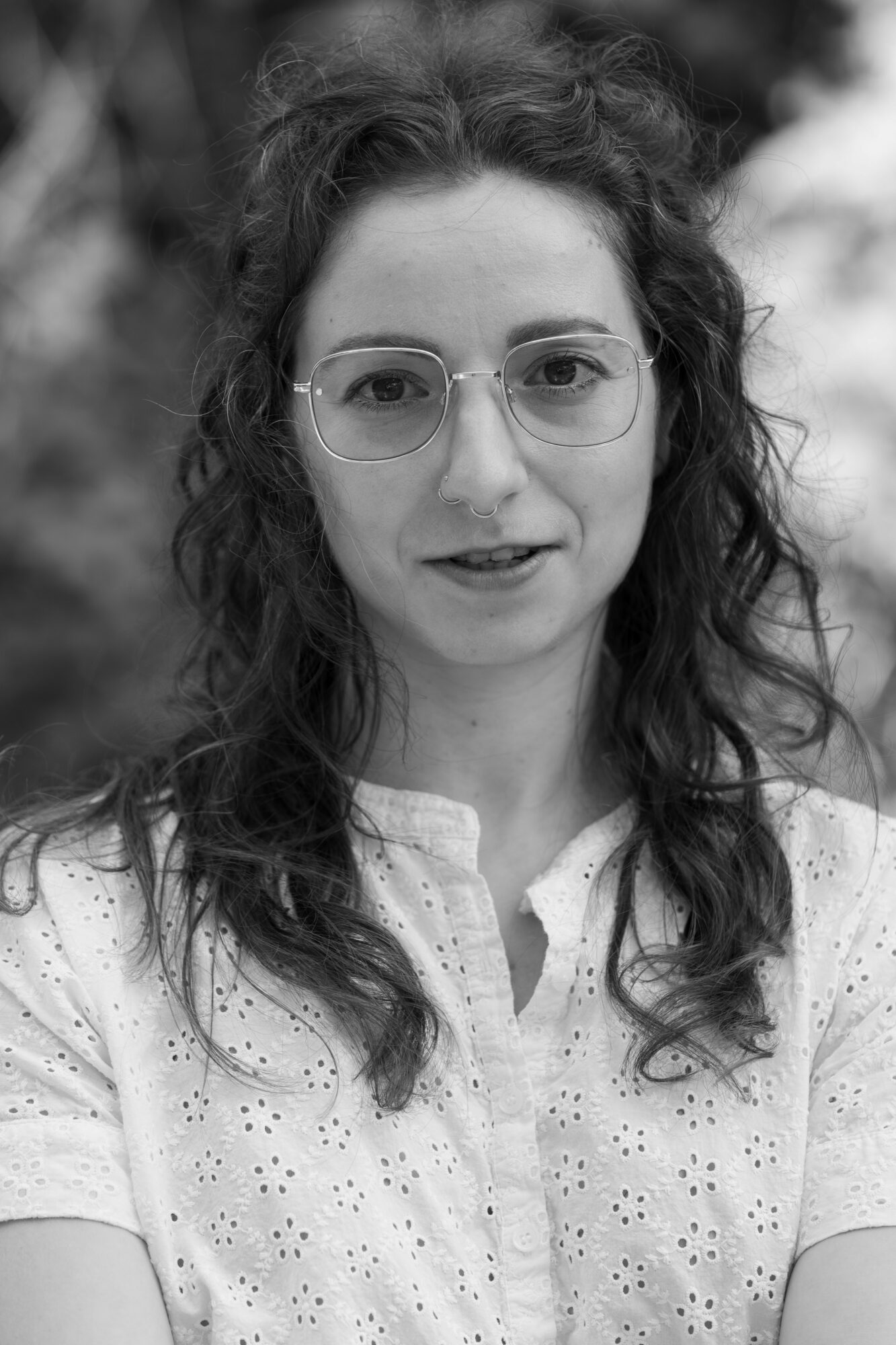
Today we’d like to introduce you to Leigh Sugar.
Hi Leigh, we’d love for you to start by introducing yourself.
I spent the majority of my first 24 years in Ann Arbor, with brief stints in California and Boston (does Boston count if I was one when we left?). I attended Ann Arbor public schools and always assumed I would be a medical doctor, like my parents and all the “adults” I grew up around. I was also very committed to various extracurricular activities, particularly dance and music (I’m an oboist). I considered auditioning for music and dance conservatories for college, but decided to go the more “traditional” academic route.
I entered Pomona College in Claremont, CA as a pre-med major, but left after a semester, feeling like I needed more time to try different things and explore my identity. I moved back to Ann Arbor, where I began practicing yoga and started taking classes at the University of Michigan. Over the course of several years, I became a yoga teacher, and taught yoga while studying at Michign’s Taubman School of Architecture. I left the architecture school (very indecisive!) and ended up graduating with a degree in “General Studies” (look it up! It’s a real degree!).
While at Michigan, I took classes spanning a range of subjects, but focused mostly on mass incarceration, the built environment, and the arts. I took a couple of English and poetry classes, but never fancied myself a poet. I began to write more poetry as a volunteer through the Prison Creative Arts Project (PCAP), a UofM-based organization that brings arts opportunities to incarcerated individuals. I credit PCAP with instilling in me my passion for poetry.
I moved to Seattle after graduating to pursue a dance career. I trained and performed there for a year, but found that my body was not built for the demands of a full-time dancer. I was still involved with prison work, specifically teaching yoga to incarcerated youth, and I also created and began editing an anthology project – a collection of writing by artists who’ve taught art in prisons. Some soul-searching led me to apply to MFA programs in poetry, and I accepted an offer from NYU’s Creative Writing Program.
I attended NYU from 2016-2018, during which time I taught undergraduate creative writing and held a fellowship facilitating writing workshops for war veterans. I graduated with an MFA in poetry and sought work with organizations and programs working to end mass incarceration. The job market was (is!) very competitive, and I decided to pursue a second Master’s degree while job hunting, so I entered the Master’s in Public Administration (MPA) program at John Jay College of Criminal Justice (part of the City University of New York system). While pursuing my MPA, I found a job at John Jay teaching writing to previously incarcerated individuals looking to re-enter college.
When COVID-19 hit, all work and school programs moved online. The transition was very difficult for my students especially, as many of them had been in prison for years to decades and were not familiar with the technology required to succeed in school remotely. I slowly worked through my degree while continuing to teach, until some health challenges began interfering and I had to stop working. I re-directed my attention to my own poetry, and ended up moving back to Ann Arbor in 2023, and finished my MPA remotely soon after.
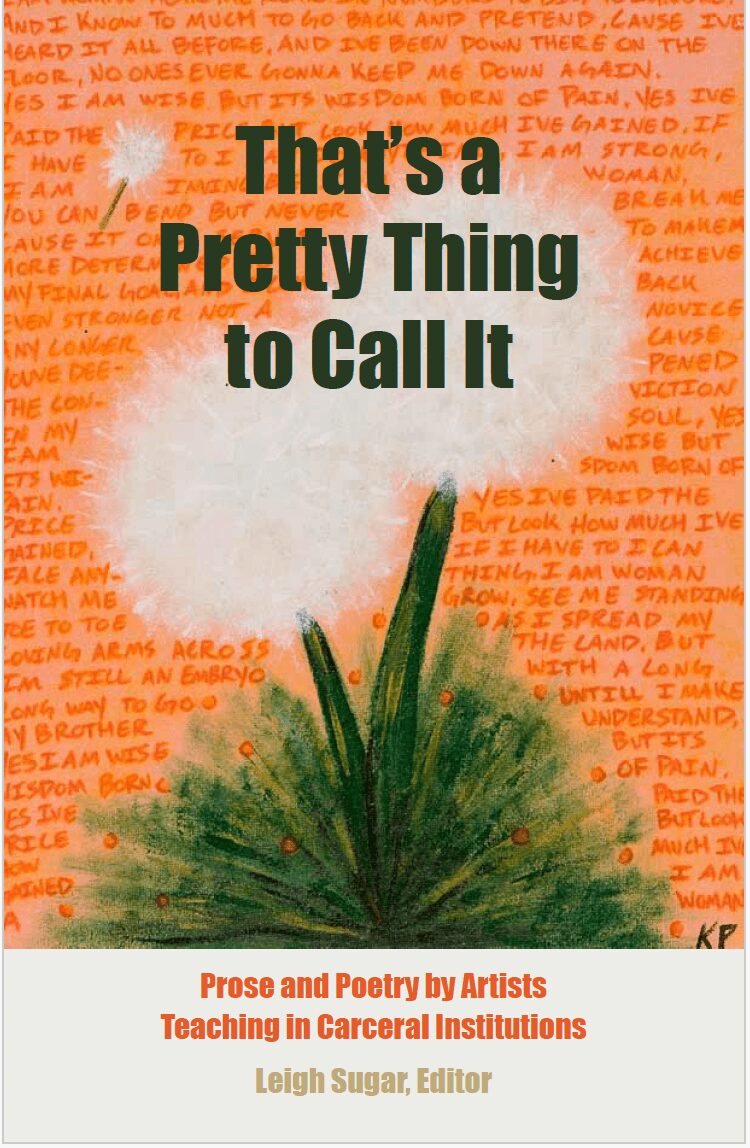
The anthology of prison writing was published by New Village Press in 2023 – “That’s a Pretty Thing to Call It: Poetry and Prose by Artists Teaching in Carceral Settings.” Around the same time, I signed with a literary agency and my incredible agent, Ayla Zuraw-Friedland, successfully placed my debut poetry collection with Alice James Books, an amazing small press that solely publishes poetry and markets/distributes nationally. With the anthology done and my MPA complete, I finally had time to usher my own book into the world – a book I’d started even before my move to New York.
The publication cycle is long, so in the years between manuscript acceptance and publication, I’ve been teaching poetry online through various organizations, and working for Rachel Zucker on her poetry podcast Commonplace, Conversations with Poets and Other People. I’ve also been spending plenty of time with family and my adorable pup, Elmo.
We all face challenges, but looking back would you describe it as a relatively smooth road?
I joke, when asked about “roadblocks,” that I myself was a roadblock, as I was hit by a car as a pedestrian in NYC in 2018, right after finishing my MFA (it’s ok, you can laugh). This was not the only challenge I faced throughout the years, but the most dramatic, and the one that’s affected my life most intensely. The accident itself wasn’t “gruesome,” but the trauma and subsequent attempts to recover revealed many latent conditions that had previously been self-managed. Meaning, I likely always had underlying conditions, but they didn’t interfere with my life, nor did I have diagnoses, until many months after the accident, when regular physical therapy failed to support my recovery as we expected.
I’ve since been diagnosed with a genetic connective tissue disease called Ehlers Danlos Syndrome, which is often accompanied by several comorbidities that I also have, most notably, autonomic dysfunction. In 2021 I had a series of cerebrospinal fluid leaks (CSF leaks). These severely impacted my mobility, and I began using mobility aids. I also have a rare neurologic disorder that has so far stumped the medical community, but we’re calling it a “Stiff Person Spectrum Disorder.” Yep, the one Celine Dion has!
Becoming disabled and chronically ill at 29 dramatically changed the course of my life. I could no longer work full time, and even part-time proved extremely difficult, hence my current very piece-meal work situation. I am, however, extremely lucky to have access to medical care, a supportive family, and the larger online disability community which has provided invaluable education and care. Without these resources, I believe I would be institutionalized or dead, and that’s not an overstatement.
Disability has affected my creative career beyond the obvious “Sometimes I don’t feel well enough to write.” Writers, like people in many other professions, often benefit from participating in various workshops, conventions, and other professional development opportunities. Those of us who are disabled or have access needs that can’t be met at these large gatherings are at a very palpable disadvantage, as we cannot form connections with others in the writing community; we literally can’t be “in the room” where people meet each other and form bonds. This prevents me from meeting potential friends and colleagues with whom I could collaborate or mutually support.
Finally, the reality is that we DON’T all have “the same 24 hours.” For example, I need far more rest now than before I was disabled, and also must receive medical care at a clinic 3 times a week, for half-to full-day treatments. I also no longer drive. This reality, coupled with the unpredictability of chronic illness, means I really can’t create an expectation or timeline for my work. I write and edit when I can, and try to rest when I can’t. The same idea applies to so many people in other situations – parents, single-parents, care-givers, people with multiple jobs… the list goes on and on. I resist common writing “rules” that demand all writers must accomplish a certain amount of work every day. This is just incompatible with the reality in which many – perhaps most – writers live.
Alright, so let’s switch gears a bit and talk business. What should we know about your work?
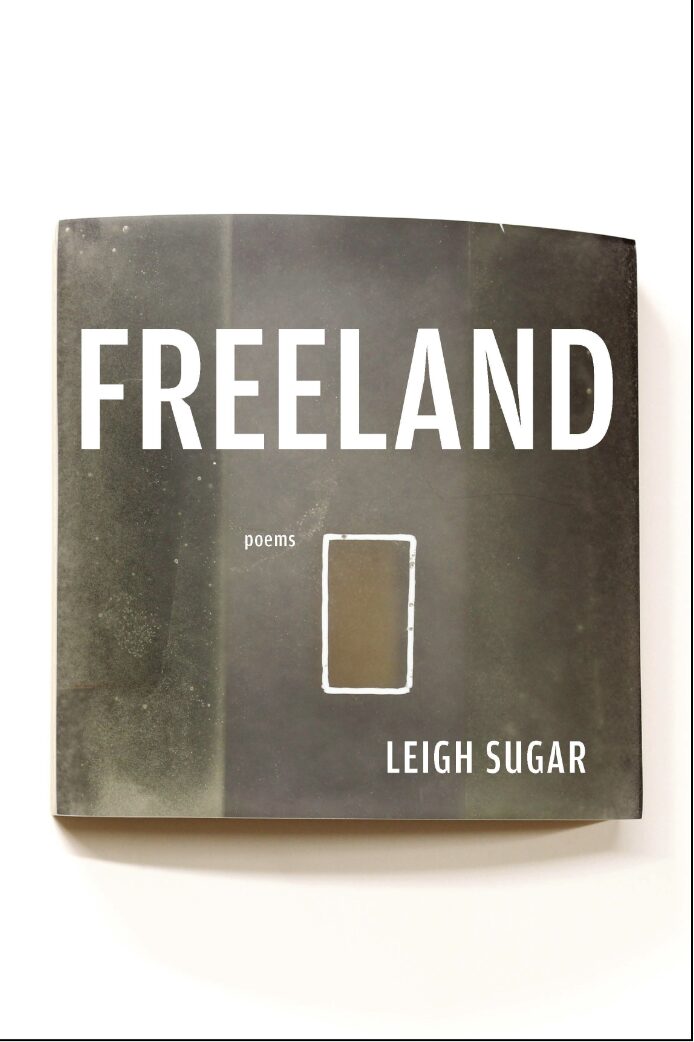
My primary field is poetry, though I consider myself multi-disciplinary, as I’ve extensively studied movement art and music, and I do hope to explore multi-media projects in the future. My written work is varied, spanning from “formal” (think sonnets, etc.) to much more “experimental.” My debut collection, FREELAND (Alice James Books 2025), shows my fascination with a range of forms, and asks urgent questions about the mass incarceration system in the United States. I’m not sure if I’m “known” for anything, but one will find that much of my work centers around abolition and carcerality.
I am most proud of my persistence. Both my anthology and FREELAND took roughly 10 years, from conception to publication. I appreciate that I pushed through the tough parts – times I wanted to jump ship, abandon projects, or stop trying to get my work out there. I am also proud of my commitment to working at the pace of life, meaning, I do not ascribe to external expectations of “productivity.” It might be another 10 years before my next book; who knows!
So, before we go, how can our readers or others connect or collaborate with you? How can they support you?
I love to converse with and hear from folks, whether about collaborations or otherwise! The most supportive thing someone could do is buy my books! Also helpful is checking out my website and signing up for my (very occasional!) newsletter, so you can stay abreast of my work and any upcoming publications or events.
I am also always seeking accessible work opportunities, and have extensive experience with remote teaching and tutoring, as well as organization and project-management tasks. If you ever need a transcriptionist, a tutor for your college-bound child, or anything that can be done remotely & by someone with varied skills, keep me in mind!
Pricing:
- Tutoring – K-12, College Essays, College writing, creative writing, academic writing, poetry review
- $60+ /hr, depending
Contact Info:
- Website: https://www.leighksugar.com
- Instagram: @lekasugar
- Facebook: https://www.facebook.com/leigh.sugar/
- LinkedIn: https://www.linkedin.com/in/leigh-sugar-109087a4
- Other: Book: https://www.alicejamesbooks.org/bookstore/freeland ; Anthology: https://nyupress.org/9781613322116/thats-a-pretty-thing-to-call-it/