



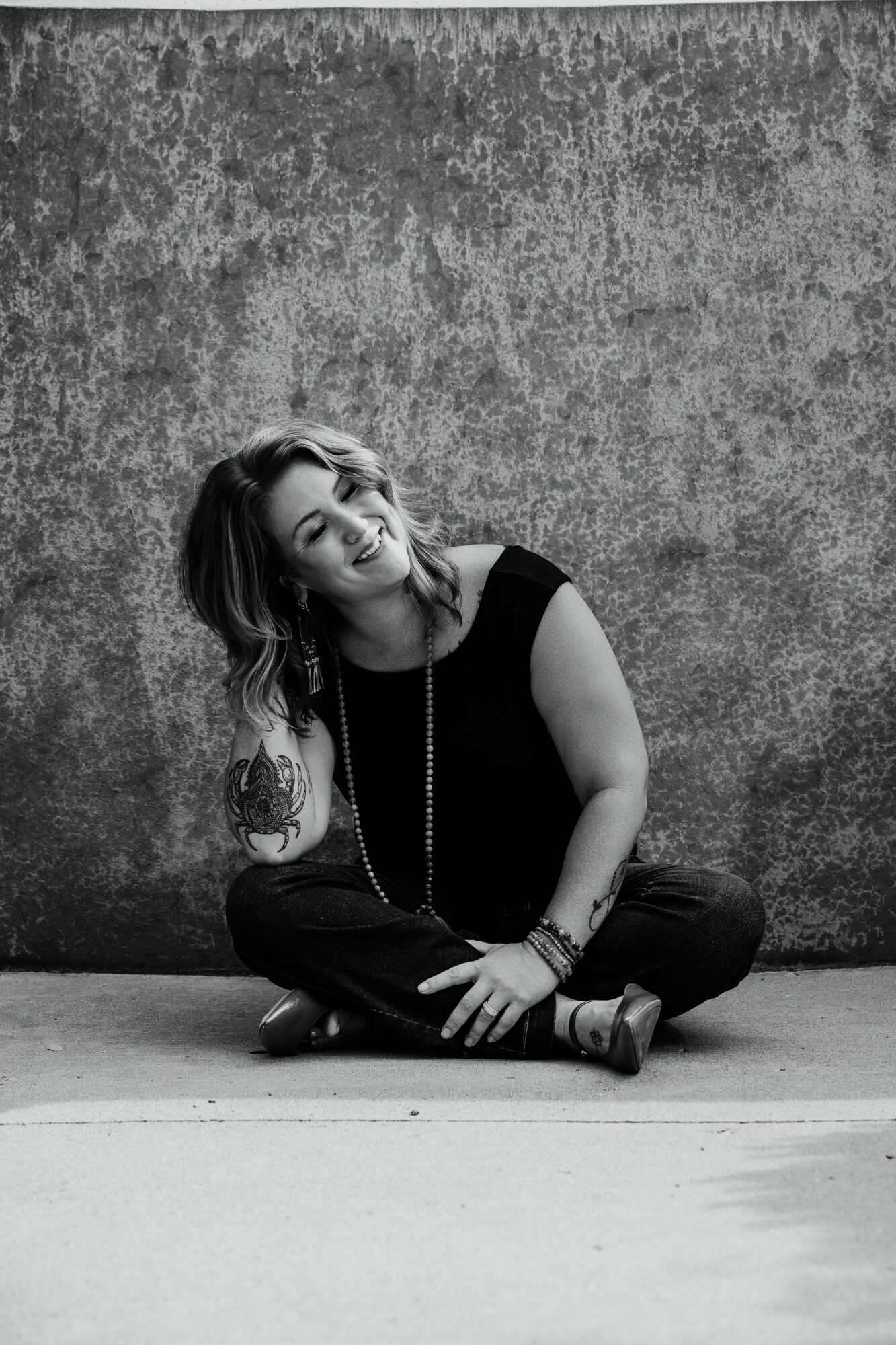
Today we’d like to introduce you to Jen Bullen.
Alright, so thank you so much for sharing your story and insight with our readers. To kick things off, can you tell us a bit about how you got started?
I sometimes joke that Rising Strong Wellness has grown up alongside me, because what I do now looks pretty different from what I thought I was building when I first started.
My way into this work was really through my own body. I spent years working in healthcare and as a first responder, often on night shift, and I became very good at pushing through. Long before that, I had also spent a lot of my life trying to control my body—through food, exercise, achievement, being “good,” and doing all the things I thought I was supposed to do. Eventually, my body had other plans.
Yoga was one of the first places I began to experience my body differently. Not as something to fix or discipline, but as something I could actually listen to. That curiosity eventually led me out of healthcare and into teaching yoga, and then into deeper study of trauma, the nervous system, somatics, Ayurveda, meditation, body image and the many ways our lived experiences shape our relationship with our bodies.
For a while, I probably would have described my work simply as yoga or wellness. I don’t anymore.
Over the years, I’ve become much more interested in the bigger question of what it means to actually live in a body—especially in a culture that has so many opinions about which bodies are healthy, beautiful, safe, productive, acceptable or worthy of belonging. Our body stories don’t happen in a vacuum. They’re shaped by our families, relationships, religion, healthcare, diet culture, gender, race, ability, aging, grief, trauma, community and the systems we live inside.
That realization has changed my work quite a bit.
Today, Rising Strong Wellness sits somewhere at the intersection of somatic healing, seasonal living, body liberation and community care. I teach Yoga for Body Connection, facilitate groups and workshops, create practices and resources through my Rest & Reflect membership, teach in yoga teacher trainings, and continue studying because I hope I never reach a point where I think I know everything there is to know about being human.
This year especially has been an interesting evolution. I’ve stepped back from much of my one-on-one work to make more room for writing, teaching, creating and bringing people together. I’m currently preparing for The Whole Body Experience, a community gathering built around a very simple idea: every body has a story, and there is something powerful that happens when we get curious enough to listen to stories beyond our own.
I think that’s probably the thread running through everything I’ve done. I started this work wanting to help people feel better in their bodies. These days, I’m less interested in telling anyone how they should feel and much more interested in creating spaces where people can become curious about what their body already knows.
And honestly, I think I’m still figuring it out alongside everyone else. That’s one of my favorite parts.
I’m sure it wasn’t obstacle-free, but would you say the journey has been fairly smooth so far?
Definitely not—and I’m not sure I would trust anyone who said it was.
One of the biggest challenges has been learning to trust myself and my own intuition. I spent a lot of years looking outside of myself for the “right” way to do things, so building something that asks me to listen inward has been its own practice. There have been plenty of moments when I’ve wondered if I should be doing more, growing faster, following the formula, posting more, selling harder, making the thing more polished before I put it into the world.
But so much of my work has been created while I’m still living it.
I think there’s a vulnerability in healing while creating because you don’t always get to wrap the lesson up with a pretty bow before you share it. Sometimes I’m teaching something I’ve studied for years while also discovering a new layer of it in my own life. Sometimes I create something and six months later realize I would say it differently now. I used to see that as inconsistency. Now I think it’s evidence that I’m still paying attention.
Building a business outside of a traditional business model has also been challenging. I tend to work from a very heart-centered, relational, community-focused place. I’m much more drawn to cyclical and traditionally feminine ways of creating—seasons of growth, rest, listening, tending and responding—than the constant push toward scaling, productivity and bigger numbers that we often associate with business success.
That sounds beautiful until you also have bills to pay.
So there is a very real tension between wanting my work to be accessible and community-minded and needing it to be financially sustainable. I don’t think I’ve completely solved that one yet. I’m learning that generosity and sustainability don’t have to be opposites, and that caring for the person doing the work is part of community care too.
More than anything, I think the struggle has been learning that I can build something differently. I can change my mind. I can outgrow an offering. I can rest. I can create from curiosity instead of urgency. And I can let Rising Strong Wellness be a living thing rather than forcing it into a business model that was never really mine in the first place.
Can you tell our readers more about what you do and what you think sets you apart from others?
This is always the hardest question for me because I do a lot of things that don’t fit neatly into one little box.
At the center of my work is the body—not the body as a project to improve, but the body as a place we live, a source of information, and something shaped by everything we’ve experienced.
I’m a somatic healing coach and yoga teacher, and my work weaves together nervous system education, trauma-informed yoga, Somatic Experiencing-informed practices, Ayurveda, meditation, body image and body liberation. But honestly, the modality matters less to me than the person sitting in front of me. I’m always asking: What helps this particular body feel safe enough to be curious? What creates more choice? What helps someone hear themselves a little more clearly?
I’m probably best known for creating spaces for people who haven’t always felt comfortable in traditional yoga or wellness spaces. People living in larger bodies, people with chronic pain or illness, highly sensitive people, and helping professionals, people healing complicated relationships with food or movement, people navigating aging and changing bodies, and people who simply don’t want another person telling them how to fix themselves.
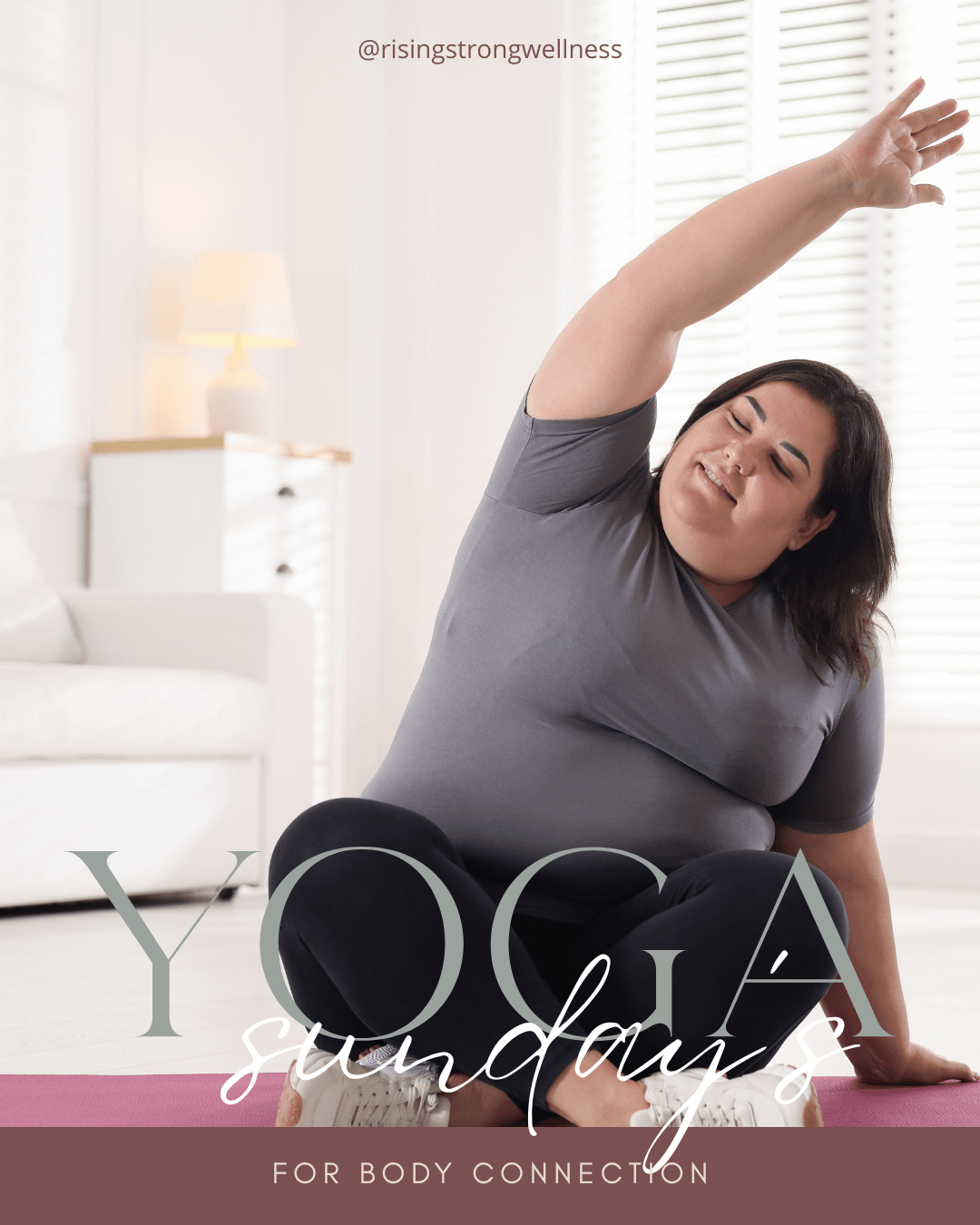
My weekly Yoga for Body Connection class is a good example. It’s gentle, slow, supported and pay-what-you-can. There’s no expectation that you perform a pose, share your story or even experience the practice the way I describe it. Choice is part of the practice.
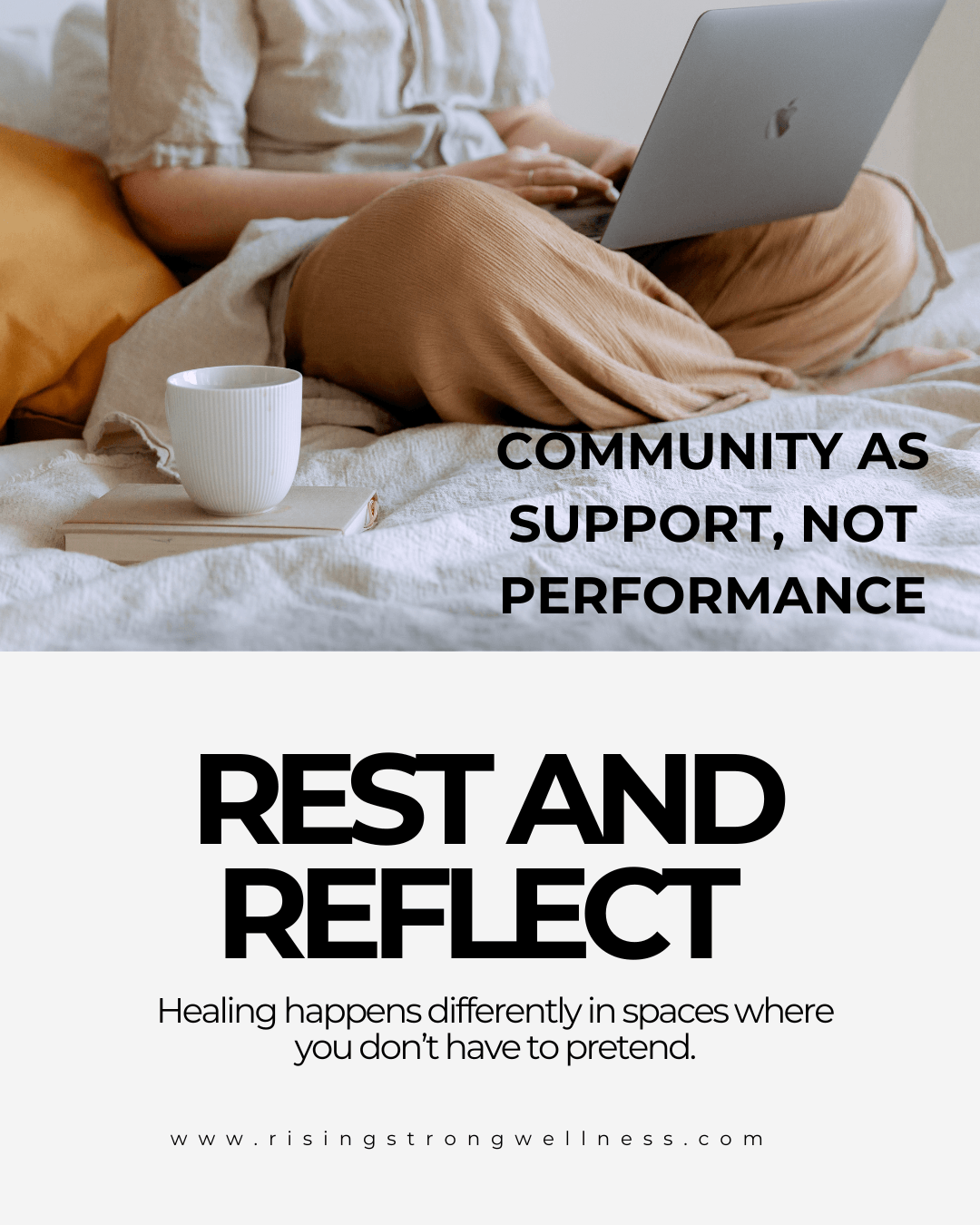
I also created Rest & Reflect, a membership where I explore nervous system care, seasonal living, Ayurveda, movement, meditation and reflection in a way that feels much more like having a companion through the seasons than following a wellness program.
But what I’m especially proud of right now is how much the work has expanded beyond individual healing and into community care.
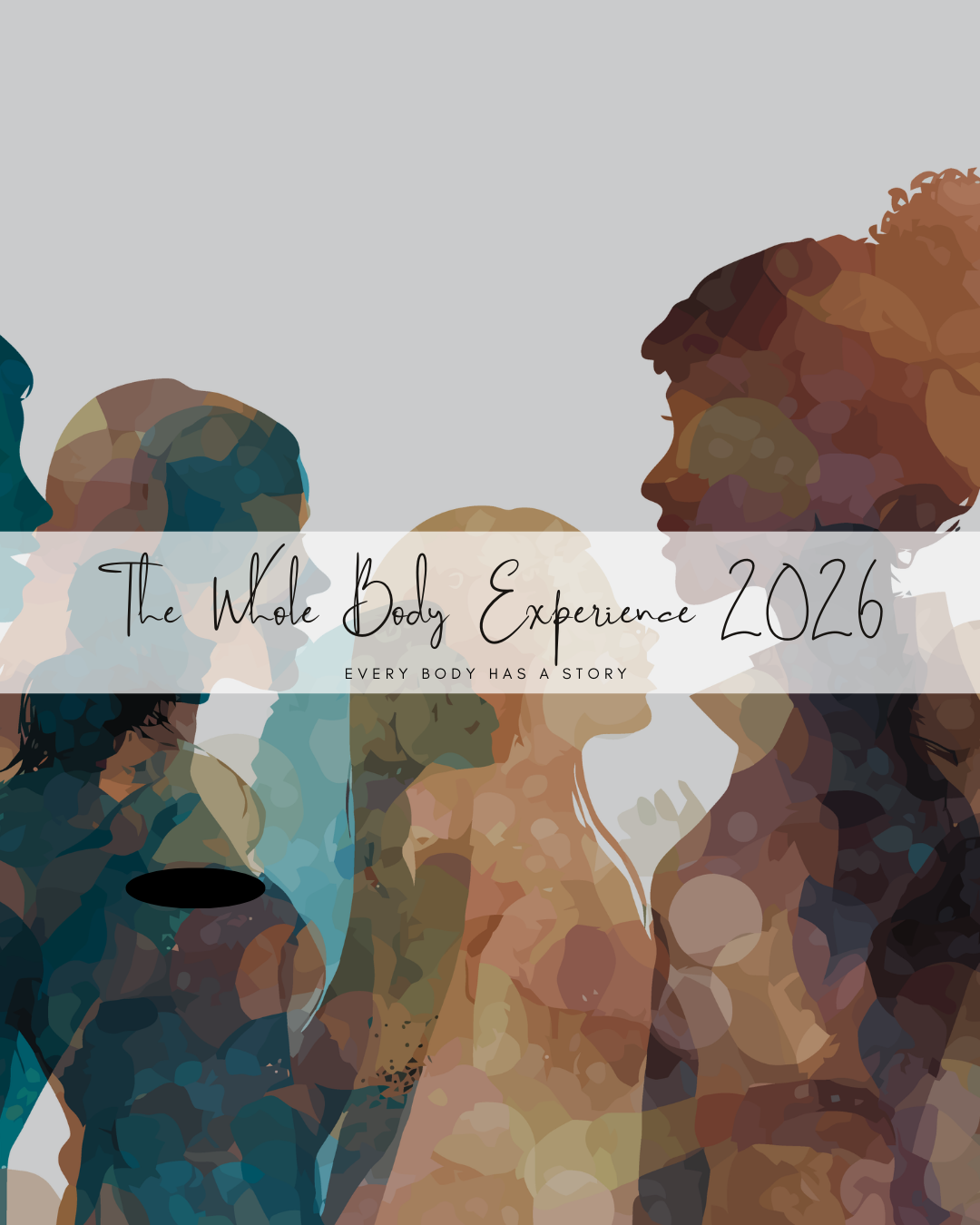
This October I’m hosting The Whole Body Experience, a gathering built around the idea that every body has a story. We’re bringing people together to talk about the things that shape those stories—food, culture, gender, sexuality, beauty, hair, grief, health, access, identity, aging and belonging. There will be storytelling, art, movement, music and opportunities to simply listen to experiences different from our own.
That feels like a natural evolution of everything I’ve been doing.
Because I don’t think healing happens only when we close our eyes, regulate our nervous systems and work on ourselves. Sometimes healing happens when someone tells the truth about their experience and another person stays long enough to hear it. Sometimes it happens through laughter, making something together, sharing food, being outside, or realizing you aren’t the only one.
If there’s something that sets my work apart, maybe it’s that I’m not very interested in becoming anyone’s guru. I don’t want people to need me in order to trust themselves. I want to create experiences that help people become more curious about their own bodies, their own knowing and each other.
I think I’m most proud of the fact that people often tell me they feel safe being human in the spaces I create. To me, there isn’t a better measure of the work than that.
Before we go, is there anything else you can share with us?
I think if there’s anything I’d want to leave people with, it’s that every body has a story.
The person sitting across from you at the coffee shop, the body you scroll past online, the person whose choices you don’t understand, the body that makes you uncomfortable, and your own body staring back at you in the mirror—there is always more to the story than what we can see.
I think we could use a little more curiosity about each other right now.
That idea has become such a big part of my work, and it’s really the heart behind The Whole Body Experience I’m hosting this October. I want to create more places where we can be together without needing to fix, debate or even completely understand one another. Places where listening counts as participation.
I’m also writing a book, which feels both exciting and a little terrifying to say out loud. It’s another extension of these same questions I’ve been living and teaching around—what it means to inhabit a body, how our stories get written into us, and what can happen when we begin listening differently. Writing has become a much bigger part of my work over the last few years, and I’m excited to see where that part of the story goes.
I think that’s what I hope my work keeps becoming: less about wellness as another thing to achieve and more about remembering how to belong—to our bodies, to each other, to our communities and to the world we’re living in.
Also, I hope we laugh while we’re doing it. Healing can be really serious work, but I don’t think it has to be serious all the time.
Pricing:
- I use a sliding scale for all offerings.
Contact Info:
- Website: https://www.risingstrongwellness.com
- Instagram: Jen.risingstrong
- Other: https://substack.com/@risingstrongwellness