





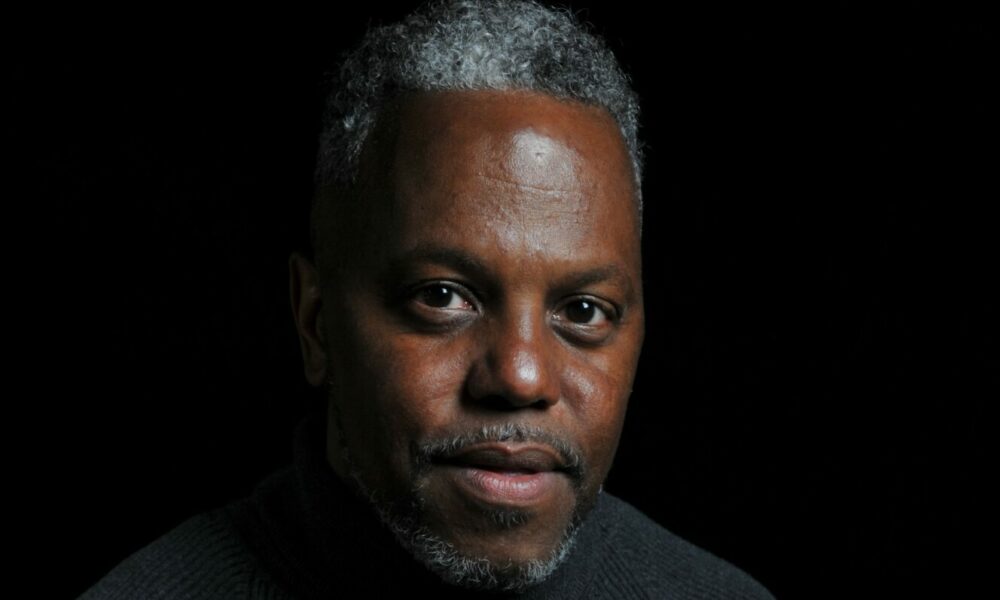
Today we’d like to introduce you to Bob Campbell.
Hi Bob, can you start by introducing yourself? We’d love to learn more about how you got to where you are today.
I’m a writer based in Flint, Michigan; my creative nonfiction, essays, and novel excerpts have appeared in Michigan Quarterly Review, Belt Magazine, Forge Literary Magazine, Hypertext Magazine, All Write in Sin City (podcast), and Gravel Magazine. I’m also a contributor to Belt Publishing’s Midwest Architecture Journeys, published in October 2019. My debut novel, Motown Man, was published in November 2020 by Urban Farmhouse Press (Windsor, Ontario).
I was previously a staff writer for the Flint Journal, Lexington Herald-Leader, and Detroit Free Press. Prior to moving into journalism, I was an electrician at AC Spark Plug, formerly a division of General Motors.
Alright, so let’s dig a little deeper into the story – has it been an easy path overall, and if not, what were the challenges you’ve had to overcome?
With respect to finishing my novel and getting it published, the path wasn’t easy. There were several starts and stops, as my self-confidence flagged at times. At one point, I thought I had lost the manuscript. I had set it aside for quite a while and bought a new computer in the interim. When I went to work on it again, I couldn’t find the draft manuscript anywhere on my computer. Finally, it dawned on me to check the old computer, which, fortunately, I hadn’t yet discarded.
Getting published was an equally frustrating experience. I racked up a lot of rejection letters from literary agents and small publishers. I continued to believe that I had a story worth telling. However, I was ready to push the project aside – maybe for good – until I woke up one morning to find an acceptance letter from Urban Farmhouse Press in my email inbox.
My genre is literary fiction and essays but finding time for my creative writing can be challenging sometimes while working full-time. I’m also trying to remain optimistic about the challenges confronting our nation and the globe, both political and environmental. However, I’m still betting on our better angels prevailing. That’s true for me personally, too, as I work through my lulls in writing. There’s the old saying about progress rarely moving forward in a straight line and that it instead meanders. Sometimes while meandering, you can even find yourself going in the opposite direction of your intended destination. But while I’m meandering, so to speak, I still try to keep my eyes and ears open for ideas. The things that I see, hear or pick up along the way may be useful later in some way.
Can you tell our readers more about what you do and what you think sets you apart from others?
My novel, Motown Man, was inspired by a news story in Flint from the early 1990s. Without giving away plot points, I rearranged the circumstances and introduced fictional characters to explore different themes of interest, including the racial dynamics of our society and the promise and perils of industrial automation in a Midwest factory town in transition.
The love story at the heart of Motown Man involving the main characters – Abby, who is white, and Bradley, who is Black – is an allegory about the prospects of achieving genuine interracial communion in our society. Abby and Bradley are engaged. So, it’s not unusual for an engaged couple to think about how their lives will change as a married couple. What do you keep identity-wise, and what do you relinquish? How will you get along with the in-laws? What might your children look like? And so forth.
As for what sets me apart, we’re all individuals. We are an accumulation of our upbringing, lived experiences, hopes and wishes, opportunities and challenges. It’s that mixture that sets me apart, I guess.
What are your plans for the future?
I’ve been gathering string for a second novel. It’s a slow process. In the meantime, I’ve been busy with several recently completed essays. One is a 6,000-word piece about the history of a Black resort area in Michigan’s Thumb Region. Many people have heard of Idlewild, the Black resort in northwest lower Michigan that was popular in the first half of the 20th Century. But fewer know about Shay Lake, a similar enclave in Tuscola County that picked up in the late 1950s as Idlewild’s popularity waned.
The “Flint to Shay Lake” essay will be featured in a forthcoming regional guide about places in Mideast Michigan that was inspired by the stories produced in 1930s America by the WPA/Federal Writers’ Project. The collection of essays, “Exploring Mideast Michigan’s Empty Spaces,” will be available in digital format this fall. I have a second essay about Flint’s historic Black Southside neighborhoods, co-authored with a fellow Flint writer, which will also be featured in the collection. An associate professor of English at the University of Michigan-Flint organized the project.
In addition, I’ve written two shorter pieces for a local history magazine. One was a tribute to the 144 servicemen from Flint and other communities in Genesee County whose names are engraved on the Vietnam Veterans Memorial in Washington, D.C. Flint is second to Detroit for the Michigan city with the most names on The Wall. The second article is about the 101-year-old Golden Leaf Club in Flint. The Golden Leaf is an institution and last vestige of the once thriving Floral Park neighborhood, a vibrant Black community that included barber shops, grocery stores, pharmacies and a theater. Most of the neighborhood was erased a half-century ago to make way for I-475 and the I-475/I-69 interchange.
The members-only club was a local mecca for Black entertainment during its heyday and a stop on the “Chitlin’ Circuit,” a collection of performance venues throughout the eastern, southern and upper Midwest areas of the United States that provided commercial and cultural acceptance for Black musicians, comedians and other entertainers during the era of racial segregation in the United States.
So, I’ve been busy producing some nonfiction works. But my long-term goal is to publish another novel as well as some short stories.
Contact Info:
- Website: bobcampbellwrites.com
- Instagram: @bcampbellwrites
- Twitter: @bobcampbell82


Image Credits
Jerry Taliaferro