




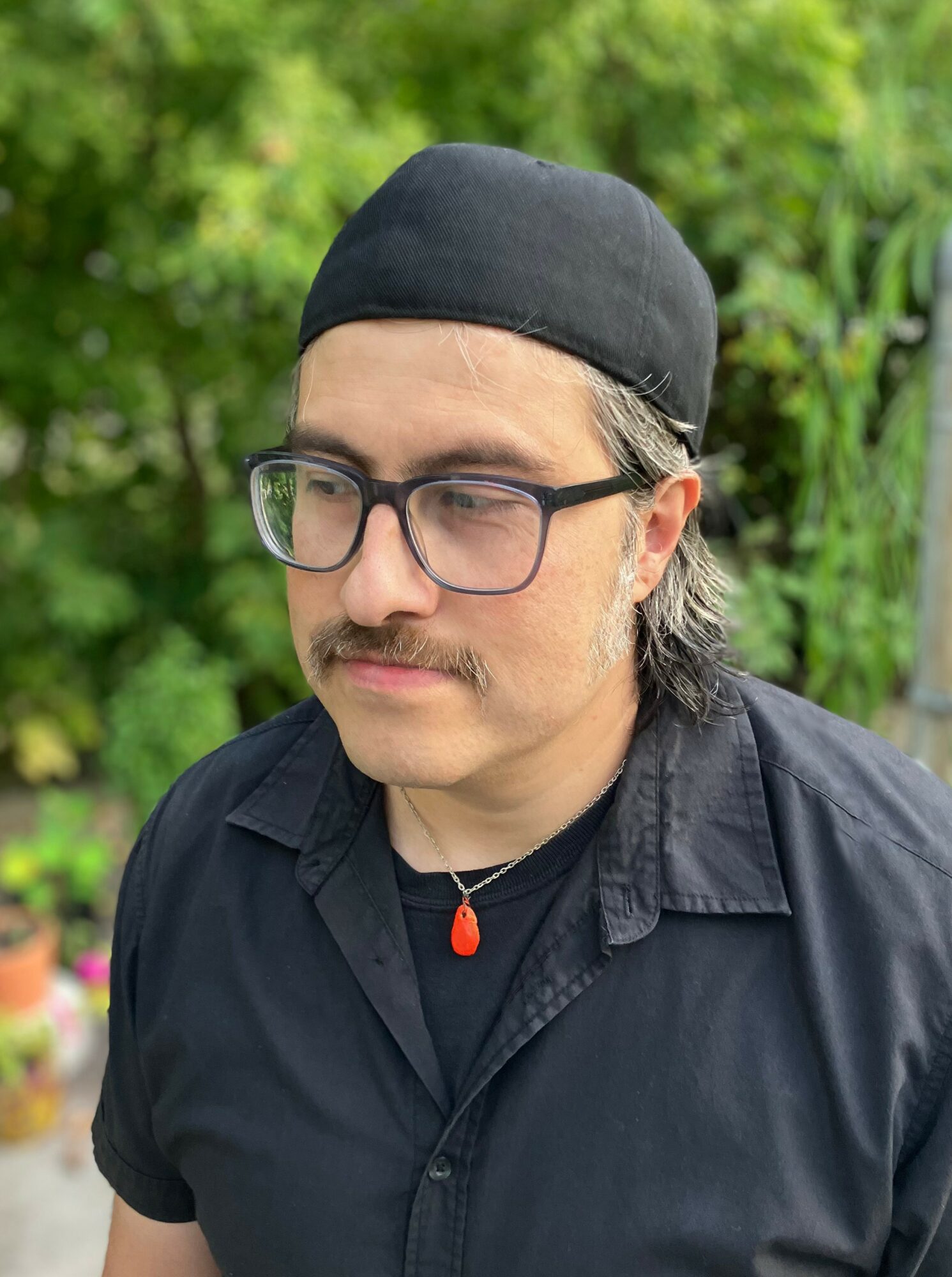
Today we’d like to introduce you to Peter Bernal.
Hi Peter, thanks for joining us today. We’d love for you to start by introducing yourself.
I was raised in a working class Tejano family in southeast Texas, descended from farmers, ranchers and laborers. I knew early on that I was a visual thinker, and was able to convey things with images that I couldn’t with words. I learned some basics of drawing from my cousin Benny, who is today a great artist. However, no one else in my family really understood what being a visual artist meant. The priest from my church, Fr. Michael van der Peet (the very same man who mentored Mother Teresa) recognized that I had an interest in colors and painting, and enlightened my parents that I should pursue my passion and encourage my education. As an aside, Fr. Michael was Dutch, and introduced me to the painter I still love today: Vincent van Gogh. I was lucky that our relatively “sub-rural” neighborhood had access to good schools and I feel grateful that I had good art teachers.
As a young adult, I always relied on art making as a spiritual and emotional outlet. Even though I no longer call myself religious, I use art as a medium to express my humanity, and I embrace it as part of my identity. I used it to develop my critical thinking, and today I embrace challenging and difficult imagery. I do my best to be honest with myself and the viewer, and I hope that the images I paint can reflect that. I care very much about integrity.
Alright, so let’s dig a little deeper into the story – has it been an easy path overall and if not, what were the challenges you’ve had to overcome?
I would not say it’s been a smooth road. I knew early on that being an artist would not be an easy path, based on my education in art history and my awareness of many of the life stories of artists. Some adults in my life may have encouraged the career side, but art meant more to me than that. I absolutely did not care about “making it” All I want to do was simply create art. Maybe it was because I felt alienated by my ethnic identity or my obviously different social class in my school, that I understood that I would never really fit in. I stopped trying and embraced it. There is a lot of value in embracing who we really are inside, and I keep that even today.
I started to have mental health related challenges in my early adulthood. I began having severe panic attacks and feeling very ill, almost daily for a few years. It turned out that my extreme anxiety and depression were revealed to be rooted in a lot of false beliefs I carried. Among many negative thoughts and emotions, I felt like I didn’t belong in my own space. A big part of my treatment was to challenge those beliefs. Historically, a lot of artists went through the same path, and were able to persevere by changing the rules of what belonging to a society means; to embrace becoming bohemian or a surrealist. Artists can make their own rules.
The silver lining is that I focused learning on how to be a proper Skeptic. To embrace growth, and shed as many wrong beliefs as possible. This process not only helped me heal from the worst of my panic disorder, but also helps me manage the day to day of my mental health. Serious critical inquiry is the operating system for the way that I think , I don’t take doubt and questioning for granted. Having said that, as serious as I am about that, I make a point in my life to make rest and relaxation a big priority, I feel happiest when I can paint or spend time with my wife without external pressures. And as seriously as I take the philosophical side of art, to me the act of creating with paint is fun and exciting, I still get a lot of joy from playing with colors like I did when I was little.
Thanks for sharing that. So, maybe next you can tell us a bit more about your work?
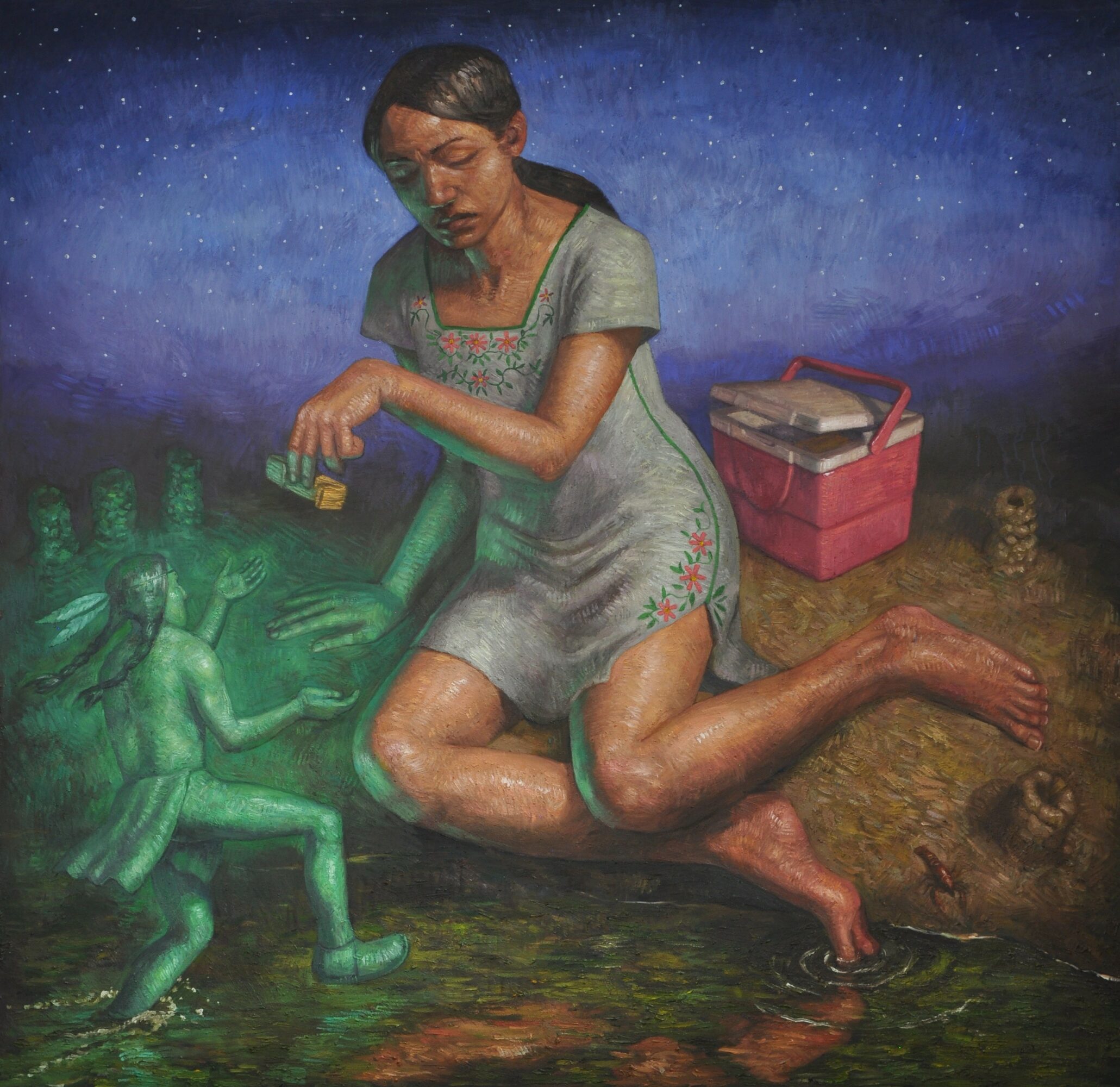
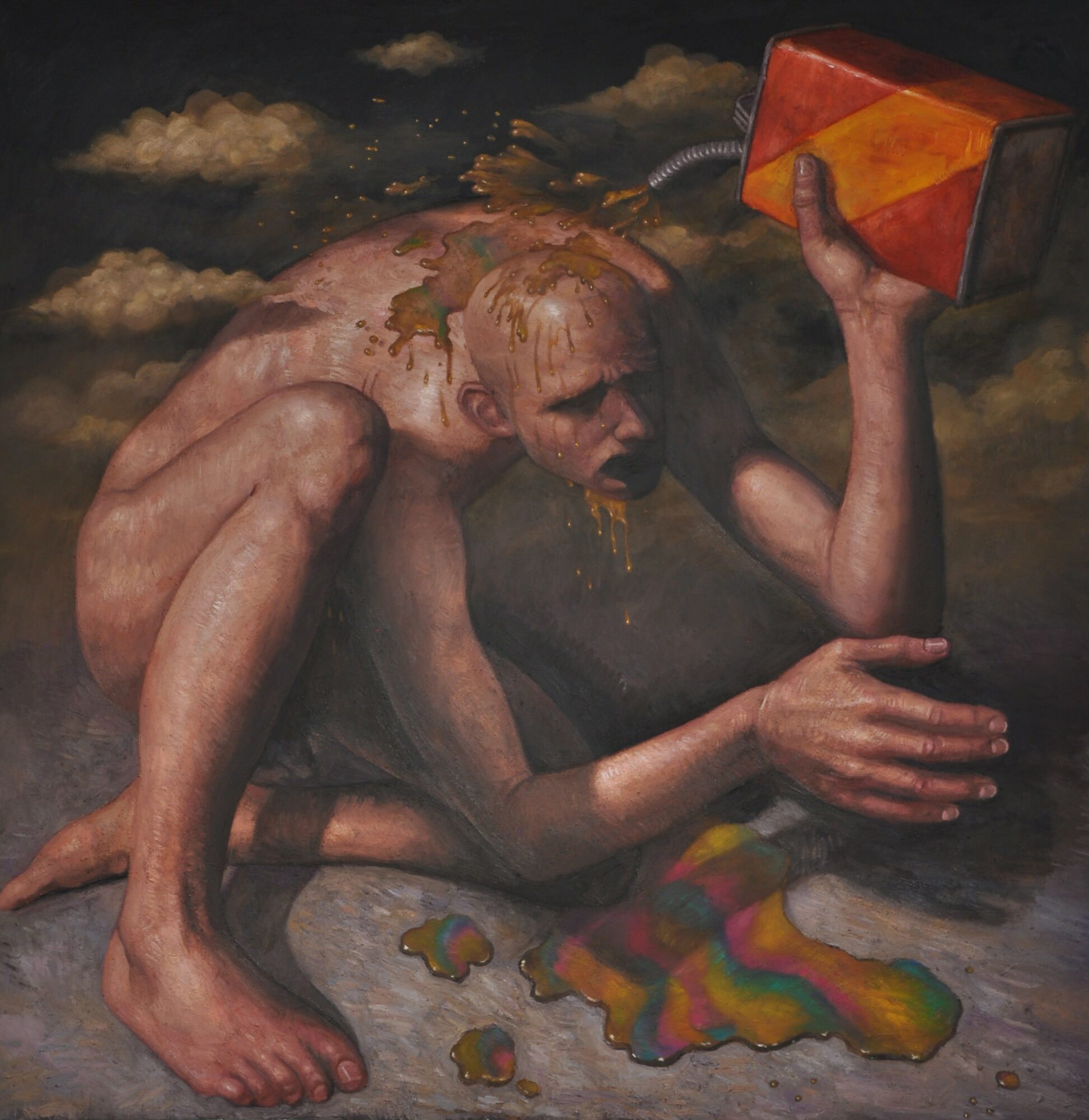
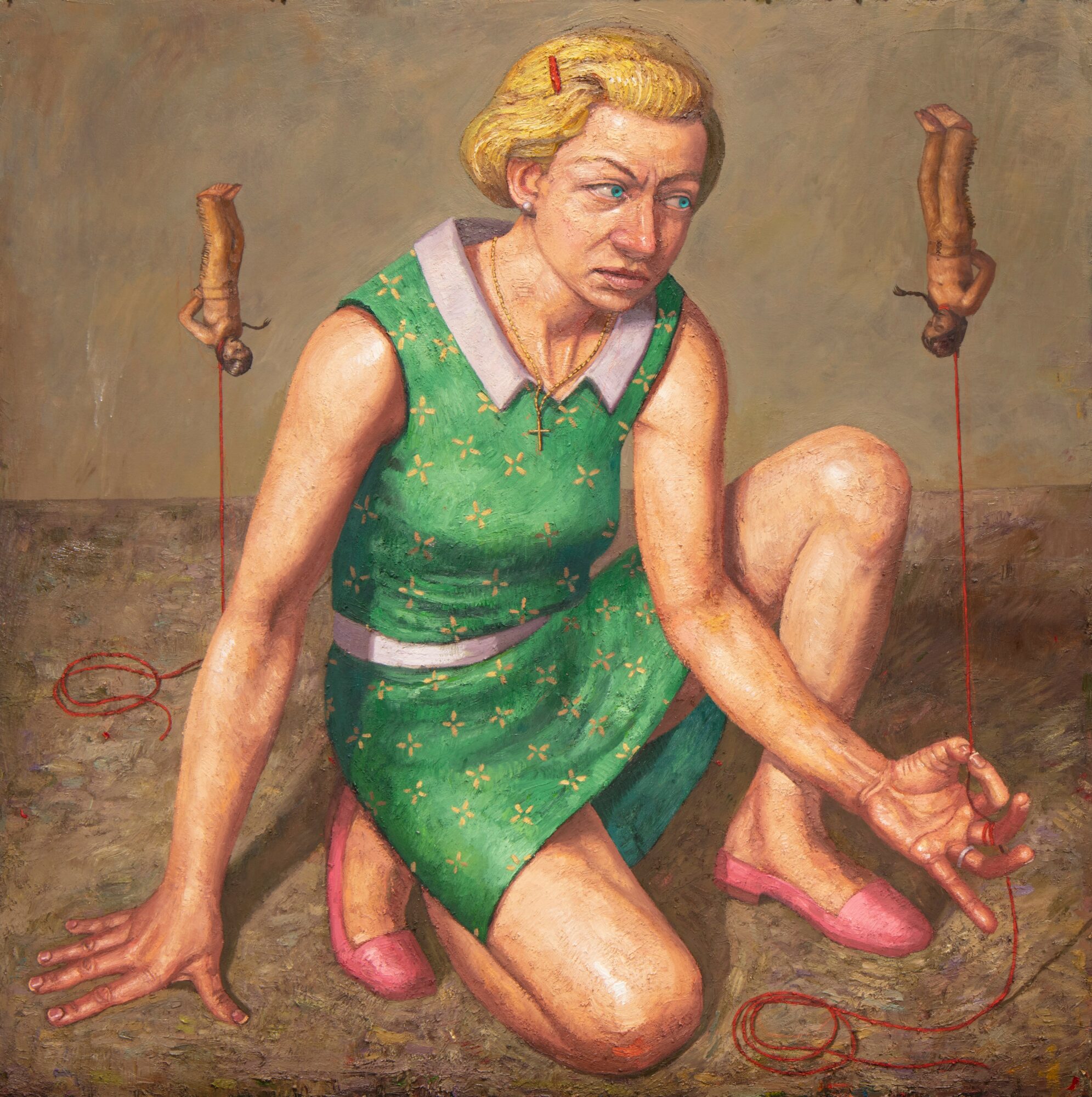
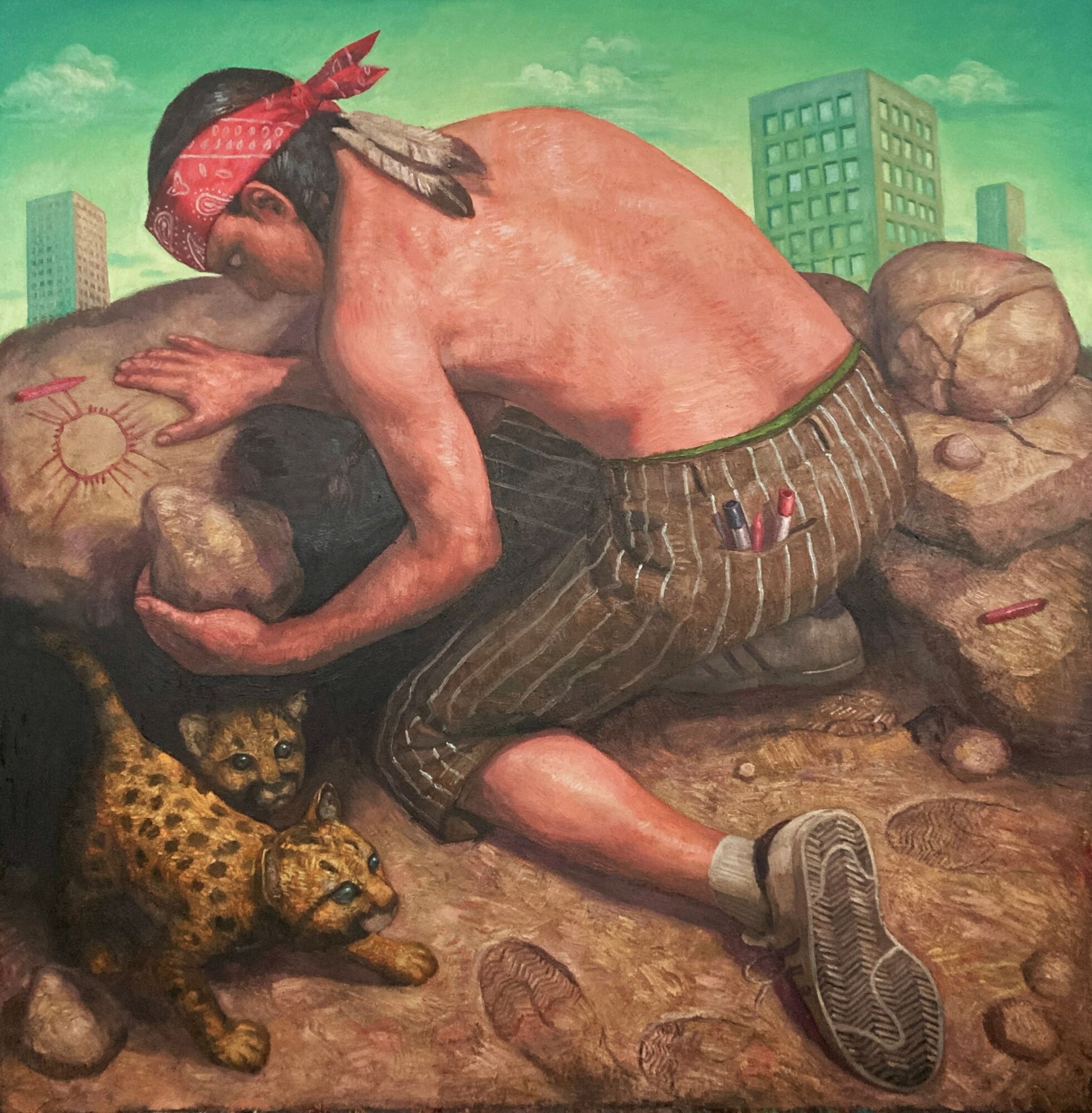
I am a visual artist, and I spend most of my time painting large scale with oil colors. I use my painting to study or discover things about my world and I am passionate about the visual language of art. I want to make statements about the world I see, and to understand what makes people do the things they do. A lot of my painting is figurative, meaning the human condition is the centerpiece of the work. I use the human figure to tell a story, and my goal is to use my composition to understand humanity and also learn more about myself through this introspective process.
My paint is thick and heavy, because I really love oil paint itself, even the way it smells. The heavy paint, or sometimes fine detailed brushwork, allow me to express my direct emotion on a subject. I let it out on the surface.
Oils allow me to work slowly and meditatively, or quickly when I want to make a statement in a hurry. But mostly, besides making an image, the act of painting has taken up a big part of how and why I believe what I believe. I paint like an anti-artist. The whole point for me is the act of making, the picture is only a footprint.
So, before we go, how can our readers or others connect or collaborate with you? How can they support you?
Although painting and working for me is a solitary endeavor, I do like the occasional collaboration. I appreciate working with artists that have a common goal, for the betterment of the community, to both strive to be the best artist we can be and to encourage unity.
As for support, I believe there needs to be more respect and public appreciation for the arts. Let us be, and all grow together. I would like to see a world that creative fields are allowed to flourish. Yes, creatives are entitled to make as good a living as they can achieve, but I more vehemently think that achievement (financial or otherwise) in and of itself is not conducive to creativity.
Contact Info:
- Website: https://peterdanielbernal.com