




Today we’d like to introduce you to Maya James.
Maya, we appreciate you taking the time to share your story with us today. Where does your story begin?
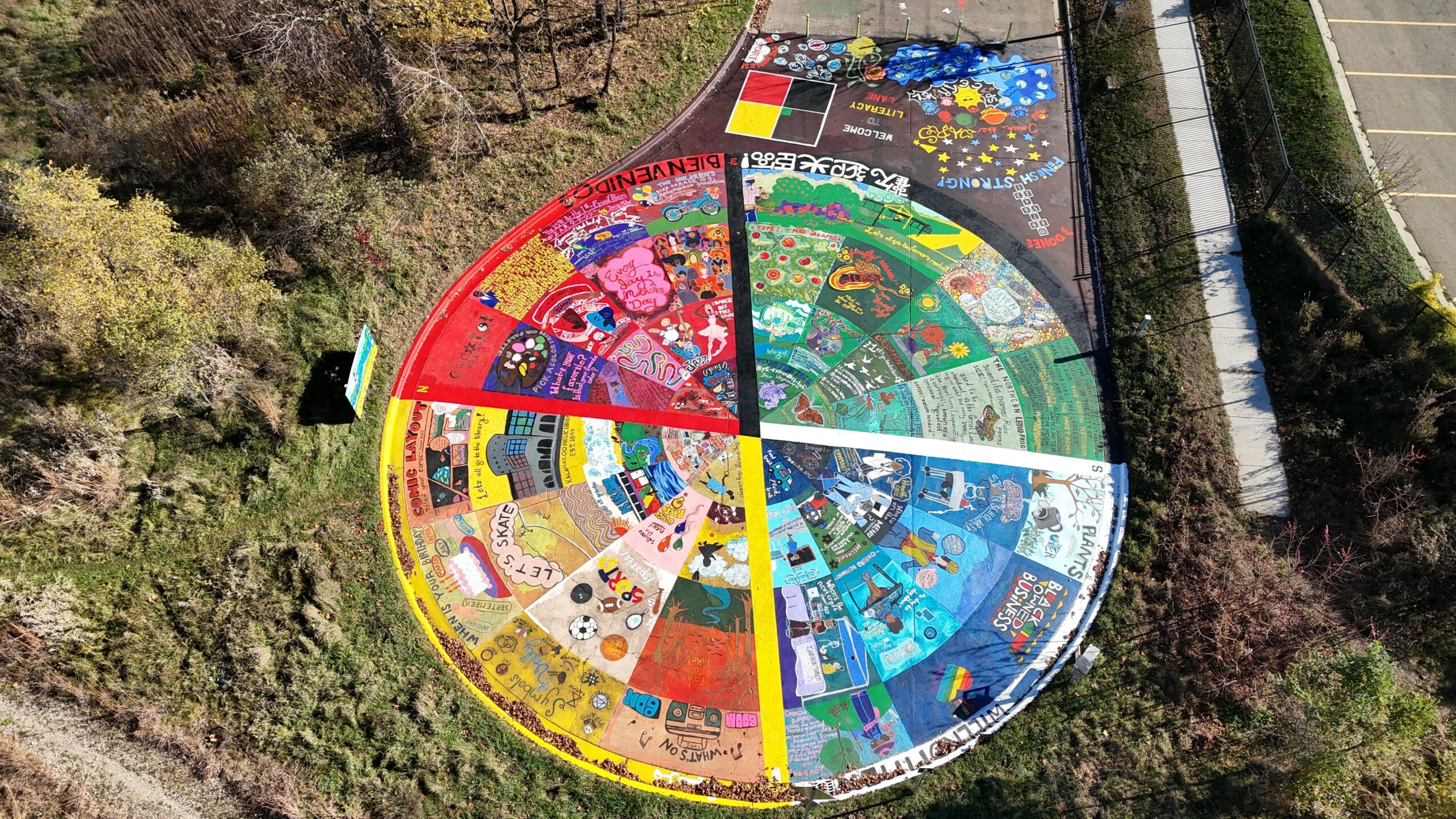
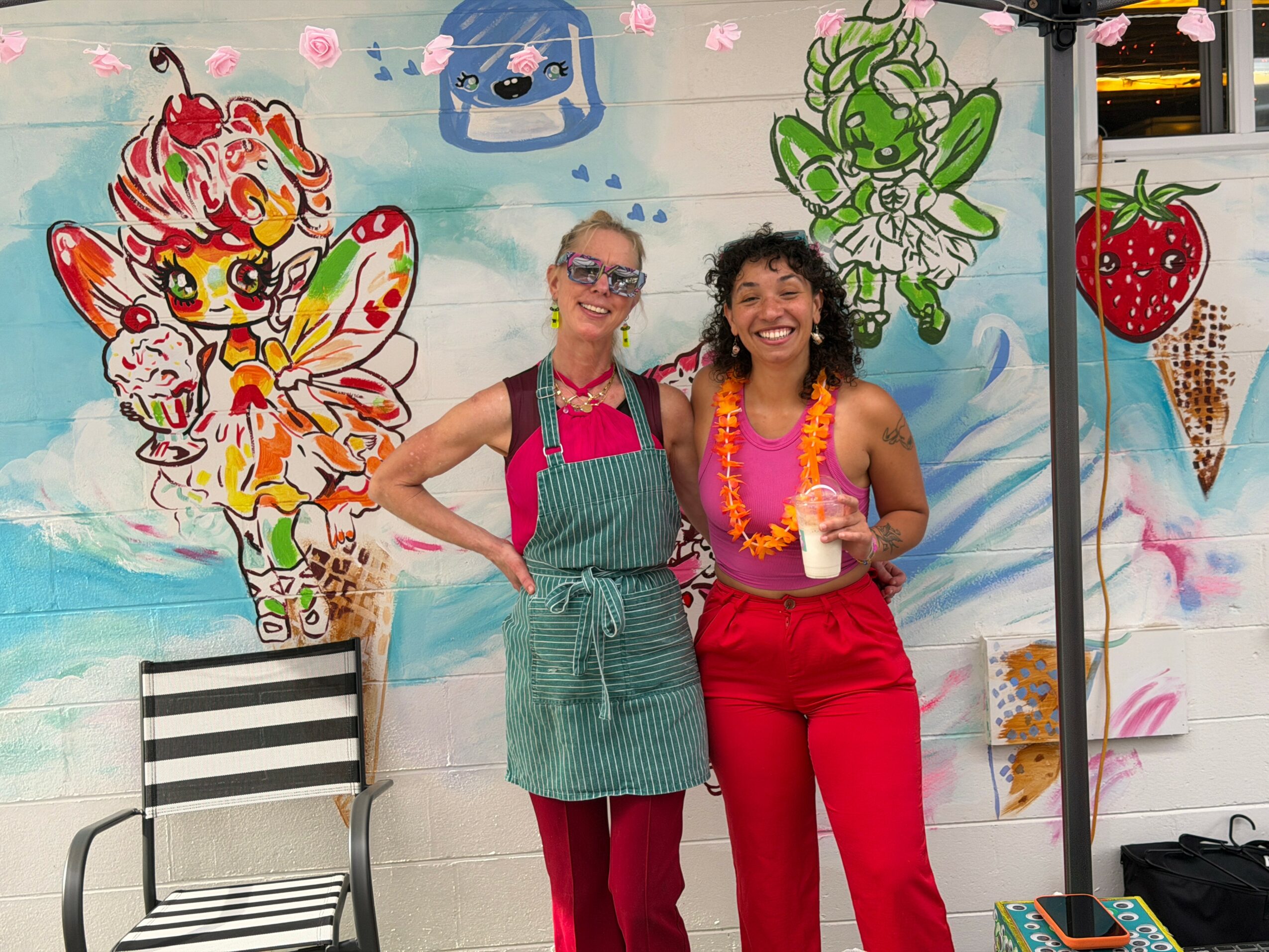
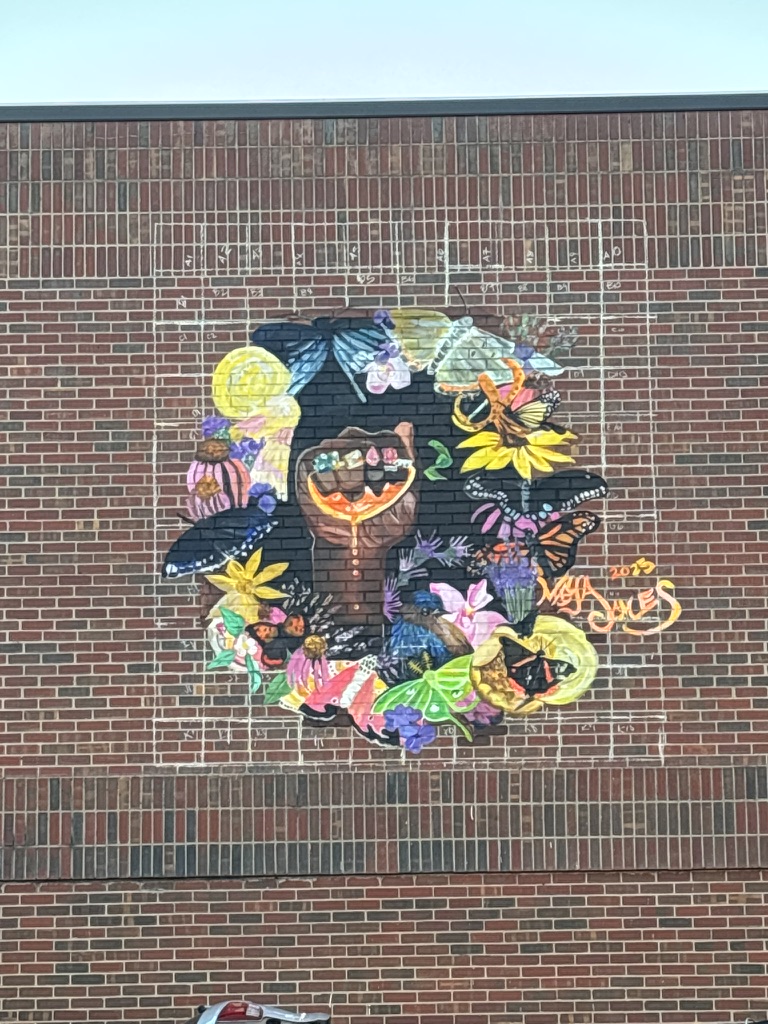
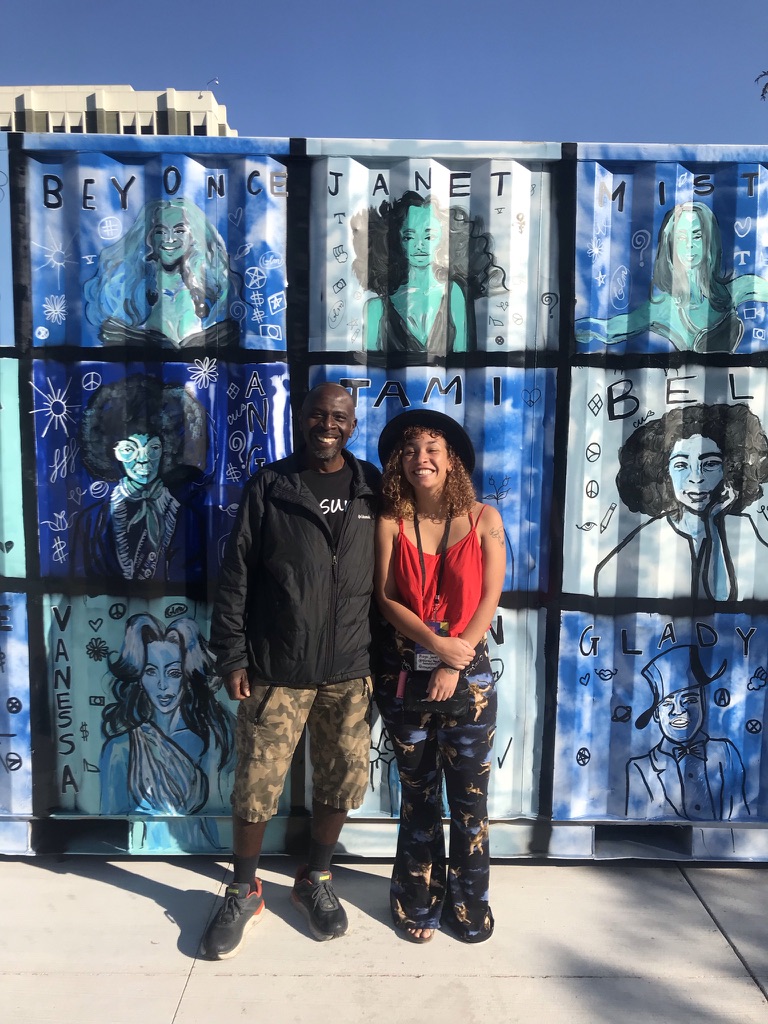
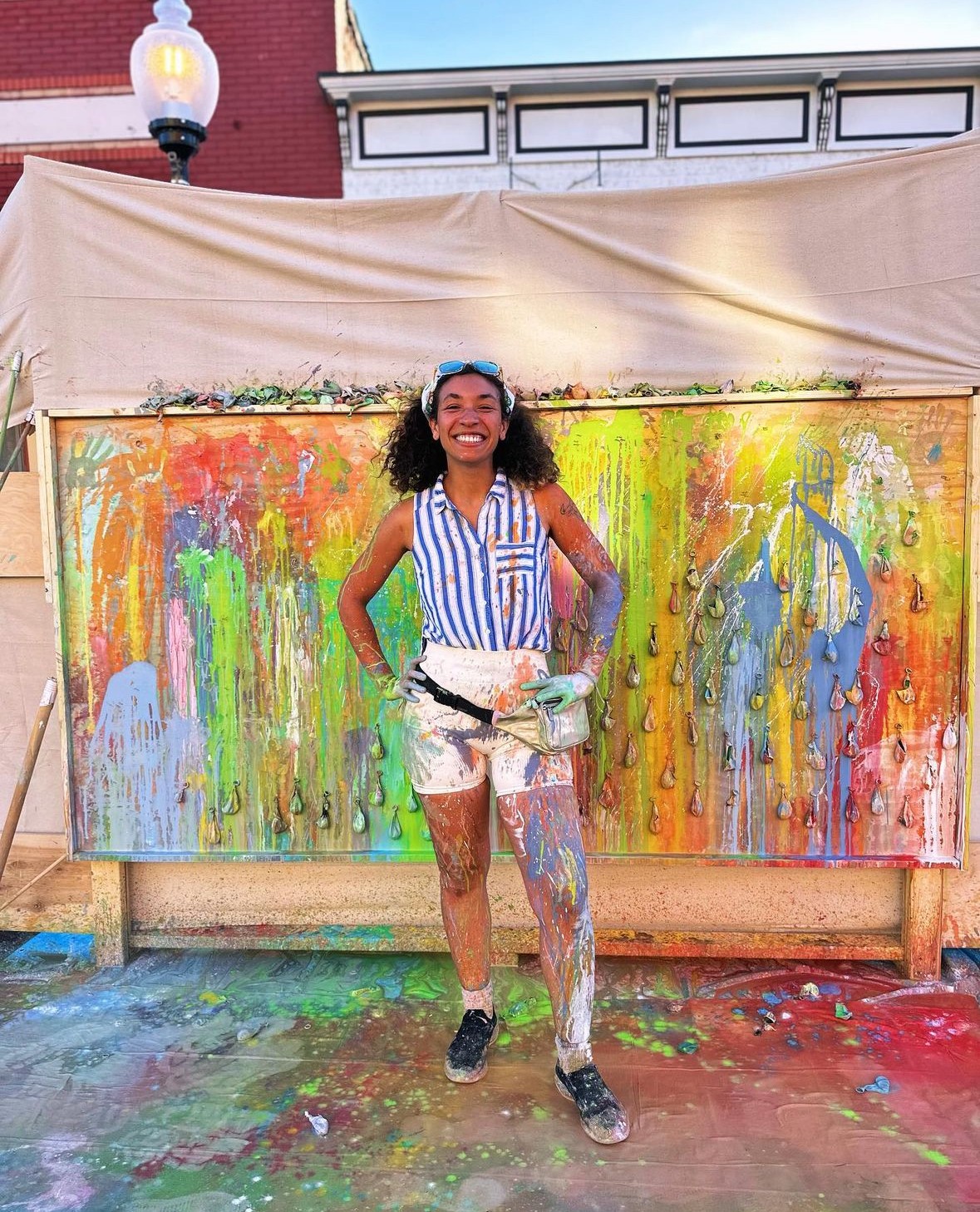
My name is Maya Sophia Ananda James, a multidisciplinary social practice multimedia artist, graphic novelist, author, writer, arts educator, journalist, recipient of the Vanguard Award in ArtPrize 2023, and the artist behind The Kalamazoo Literacy Council’s “Literacy Lane”, one of the the largest ground murals in Michigan and “We Got the Juice (In The Zoo)”, a mural on the Metro Station in Downtown Kalamazoo, sponsored by the Arts Council of Greater Kalamazoo and the City of Kalamazoo. My work thrives in collaboration with communities and organizations serving undervalued groups, including but not limited to black women and black LGBTQIA+ individuals. My dedication is to make a positive impact and support marginalized voices through both art and action. My writings were featured in the New York Times Race/Related Column, USA Today, USA Today College, and on the YR Media. My commitment to community engagement and social justice, such as social practice initiatives like “Come As You Are,” an art auction celebrating black LGBTQIA+ leaders and the installation “#nomorestolensistas”, recipient of the Vanguard Award in ArtPrize 2023. I currently write as a social practice correspondent for Second Wave Media, and I am the artist behind the Kalamazoo Literacy Council’s Literacy Lane, one of the largest ground murals in Michigan, and a playspace dedicated to literacy.
Art is the weapon of choice in my family against white supremacy. In 1955, my family fled Texas in the dead of night, eventually settling in sunny Los Angeles. After our family was driven off our land and out of the state, my father found freedom within his dream to escape a lot of the evils of Jim Crow.
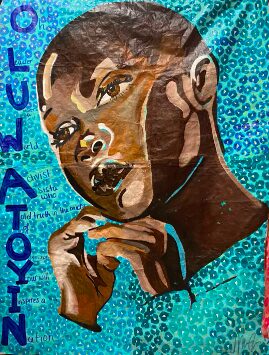
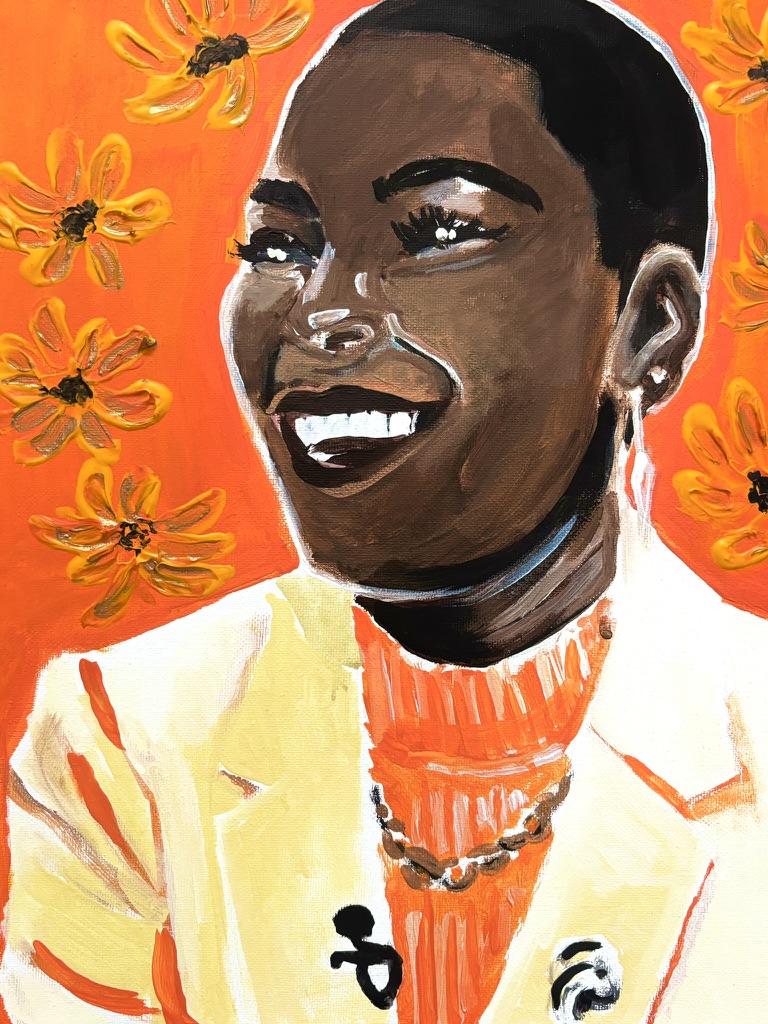
Breaking barriers, my father became the first in his family to attend college, earning a master’s degree in Fine Arts and becoming one of the most prolific Black artists of his time. While he resisted being categorized as a “Black” artist, I embraced the responsibility of claiming our identity as “Black” artists. It may be hard for many people around the world to understand why someone who looks like me might claim Blackness as their identity. It is clear to me, however, that my father was not the last in our family to experience racial violence in the backwoods of rural America. My nuance is that I am a byproduct of the unpleasant intersections that the children of our world sometimes represent or result from. My work is dedicated to portraying the resilience of black people and creating art that challenges harmful assumptions through untold stories essential for our future.
My career began in journalism while pursuing a Political Science degree when I was a teenager in college, the pivotal moment occurring at a Collegiate Associated Press Conference with my community college newspaper, where I pitched an idea to YR media despite their initial lack of interest. This led to my first work as a youth correspondent, mainly focusing on controversial subjects, race relations, and racist violence in northern Michigan. My writings were featured in the New York Times Race/Related Column, USA Today, USA Today College, and on the YR Media.
Responses to my literary work stimulated my decision to leave my predominantly white hometown, which was a source of trauma that led me to pursue an art career centered around black femme identity. Becoming a full-time artist required significant sacrifice, especially because it was less traditional than my father’s experiences in the ’60s and ’70s in his burgeoning art career. With the publication of “LUKUMI,” I became the first Black woman to participate in the National Dearborn Artist Residency at the City Hall ArtSpace Lofts on behalf of the National Arab American Museum, housed in the same city hall that once hosted the reign of segregationist Orville L. Hubbard.
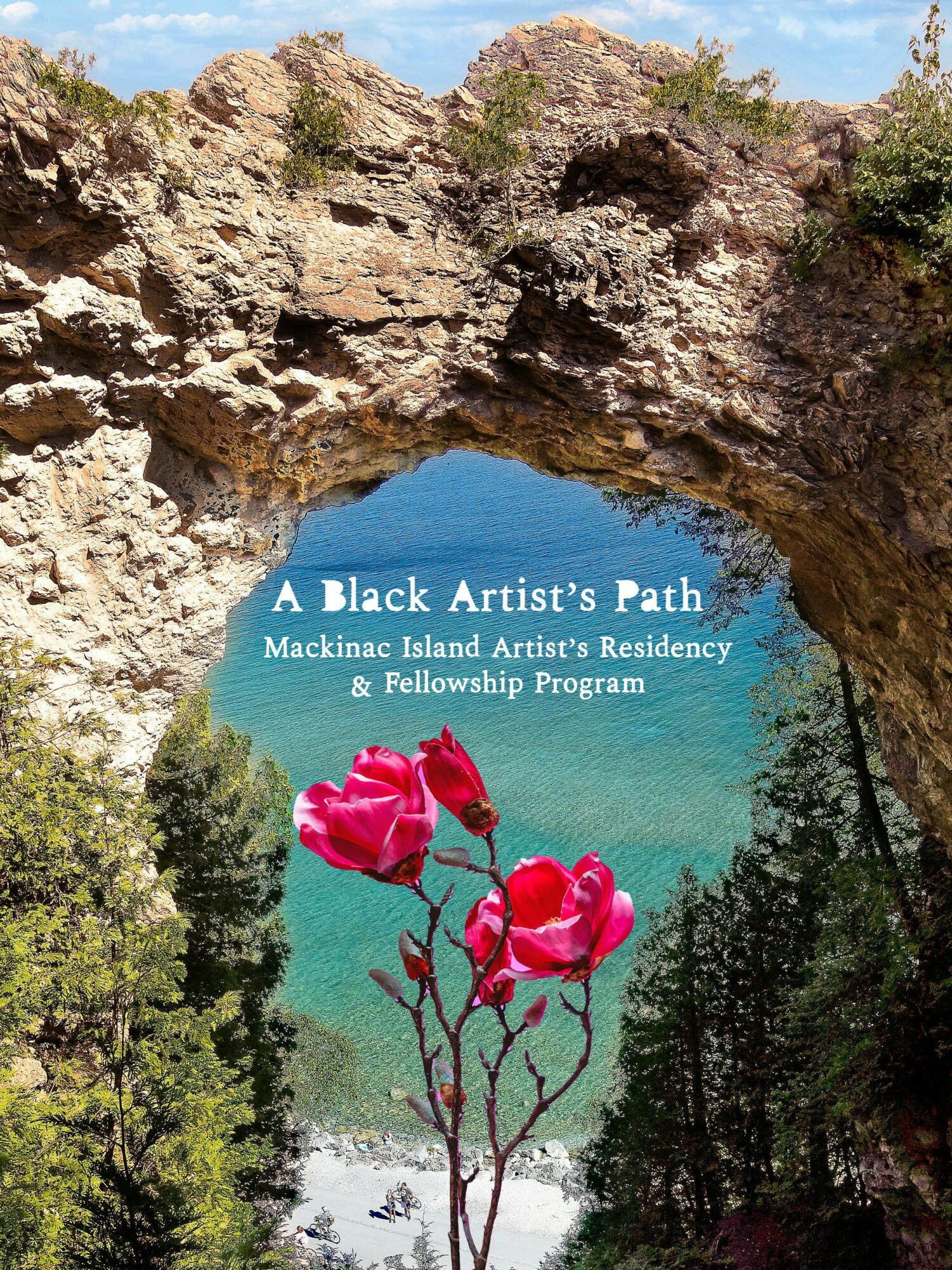
My artistic pursuits align with my commitment to community engagement and social justice. My work is based on strategic social practice initiatives and community practice artwork, and I currently run a business for Black Artists called “A Black Artist’s Path”, with our residency in Mackinac Island launching in 2027 and the application launching July 27th, 2026.
I’m sure it wasn’t obstacle-free, but would you say the journey has been fairly smooth so far?
Everything I’ve achieved has been against the odds. While it’s difficult to recount all of my experiences for an interview, I can confidently say that I don’t regret facing any challenges or obstacles. Each mistake and failure, along with the criticism from various community organizations and groups, has taught me valuable lessons that have propelled me forward. I try not to dwell too long on the bad these days and just focus on the love from my community.
Alright, so let’s switch gears a bit and talk business. What should we know about your work?
I often encounter the perception that my success is merely a product of luck. However, the reality is that this success has been the result of relentless dedication and hard work, which has led to chronic health challenges, exposure to hazardous work environments, and ongoing mental health struggles. Moreover, I have been asked, “What makes *you* so special?”
The answer lies in my commitment to hard work, kindness, and community care. I am resolute in my decision to engage in endeavors that not only enrich my community but also nourish my soul.
What distinguishes my work is not solely the artistic skills I have honed over decades, but rather the relationships I cultivate with my clients. I am dedicated to selling my artwork and creating commissioned pieces for individuals and organizations whose missions align with the aspiration to enhance Kalamazoo, Michigan, and beyond. By reflecting the same level of care that they demonstrate towards their communities, I strive to provide creative opportunities for underserved populations of all backgrounds.
Can you share something surprising about yourself?
I had the honor of contributing to The New York Times during my formative years, and I invite everyone to read my article before forming any opinions about my experiences. You may find that my reflections resonate with you more than you might anticipate, regardless of your background. The article can be accessed here: https://www.nytimes.com/2017/08/02/us/first-encounters-with-racism.html.
In addition to my writing endeavors, I lead a program for Black artists titled “A Black Artist’s Path.” This initiative convenes participants online on the last Sunday of each month, where we focus on skill development and delve into the legacies of those who have paved the way in our field. Our community includes individuals aged 19 to 79 from diverse locations across the country, and we warmly welcome anyone interested in joining us. For further details, please visit: https://discord.gg/VEMFTbFWxs.
Contact Info:
- Website: https://mayacreatewith.substack.com
- Instagram: https://www.instagram.com/ablackartistpath/
- Facebook: A Black Artist’s Path
- Youtube: @ablackartistspath