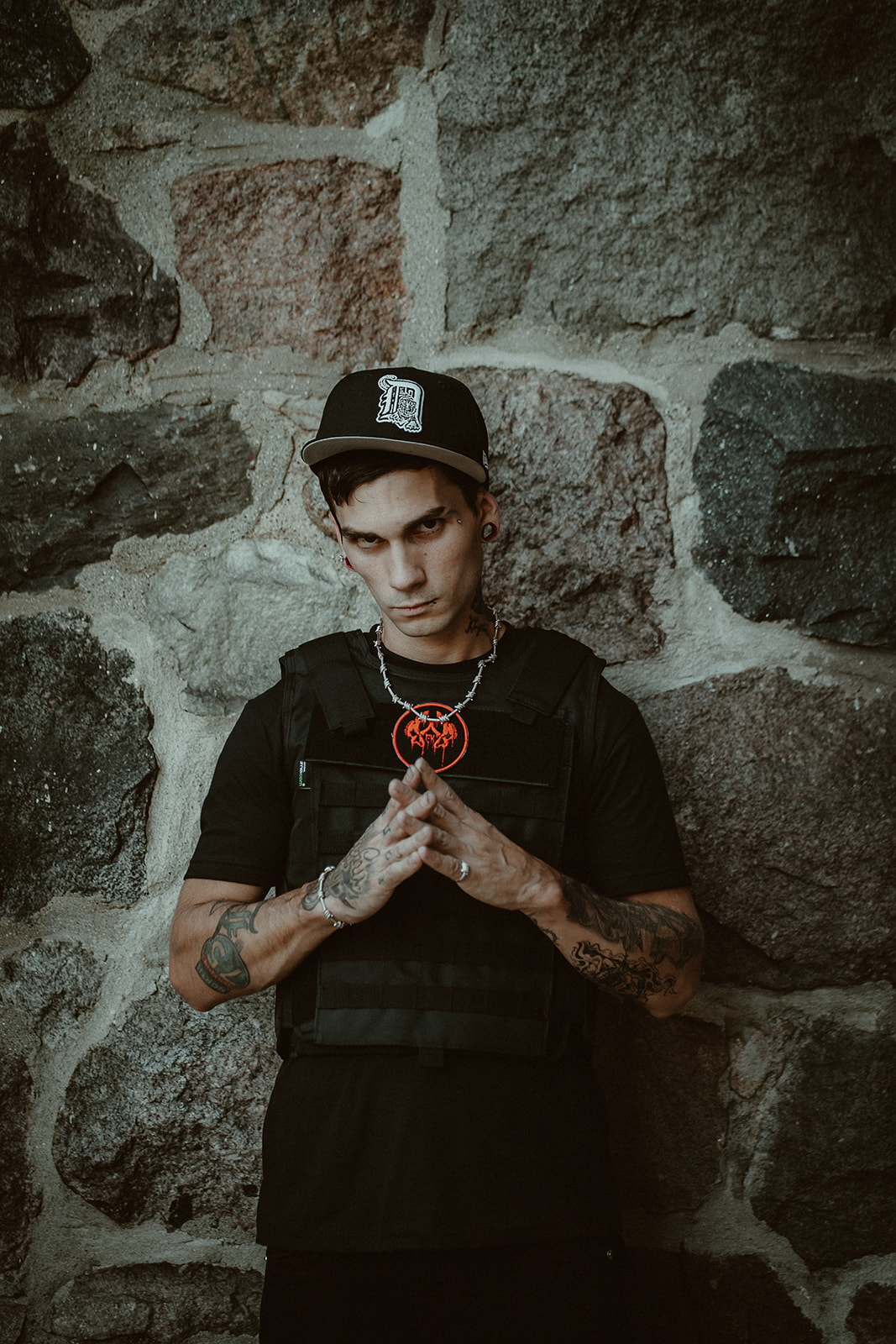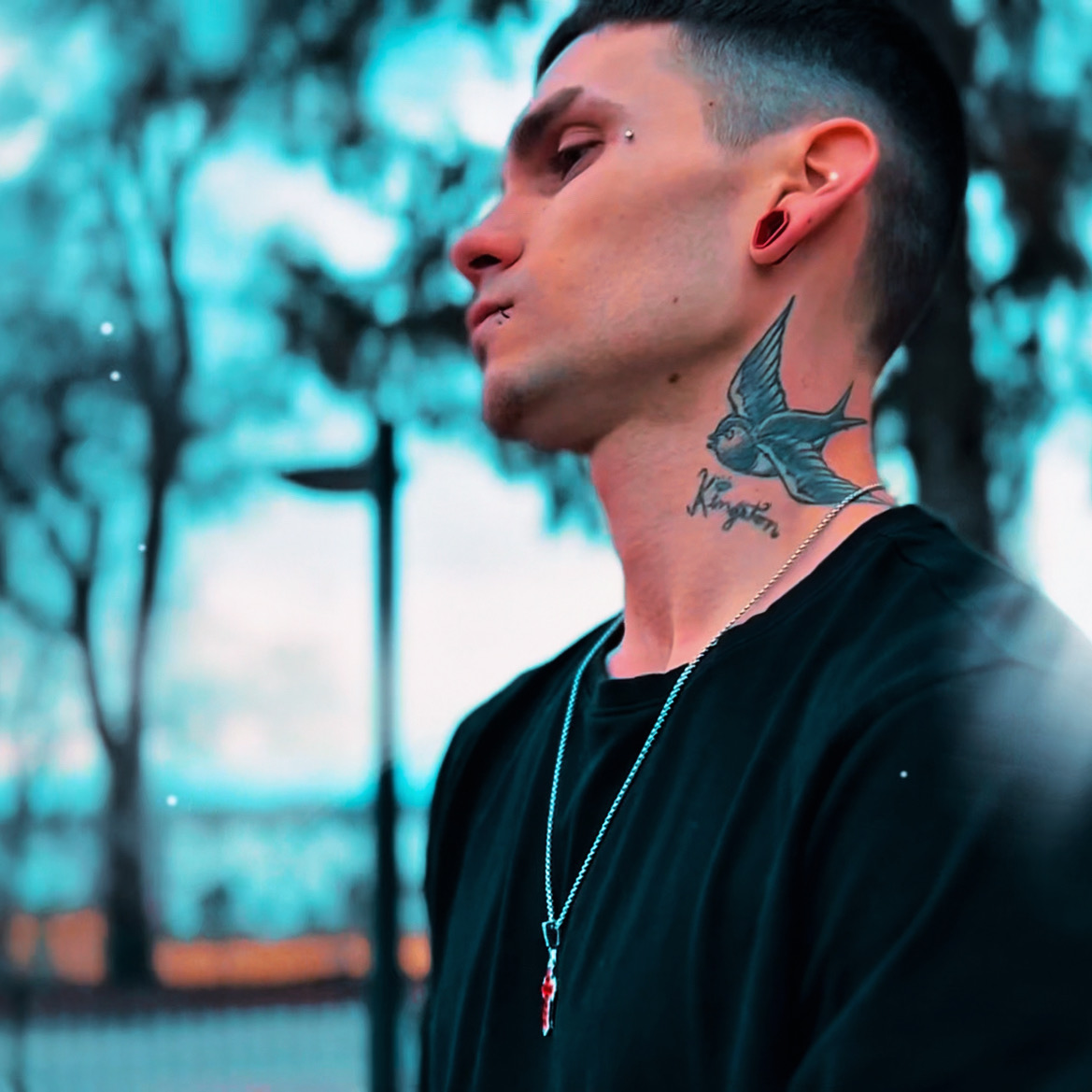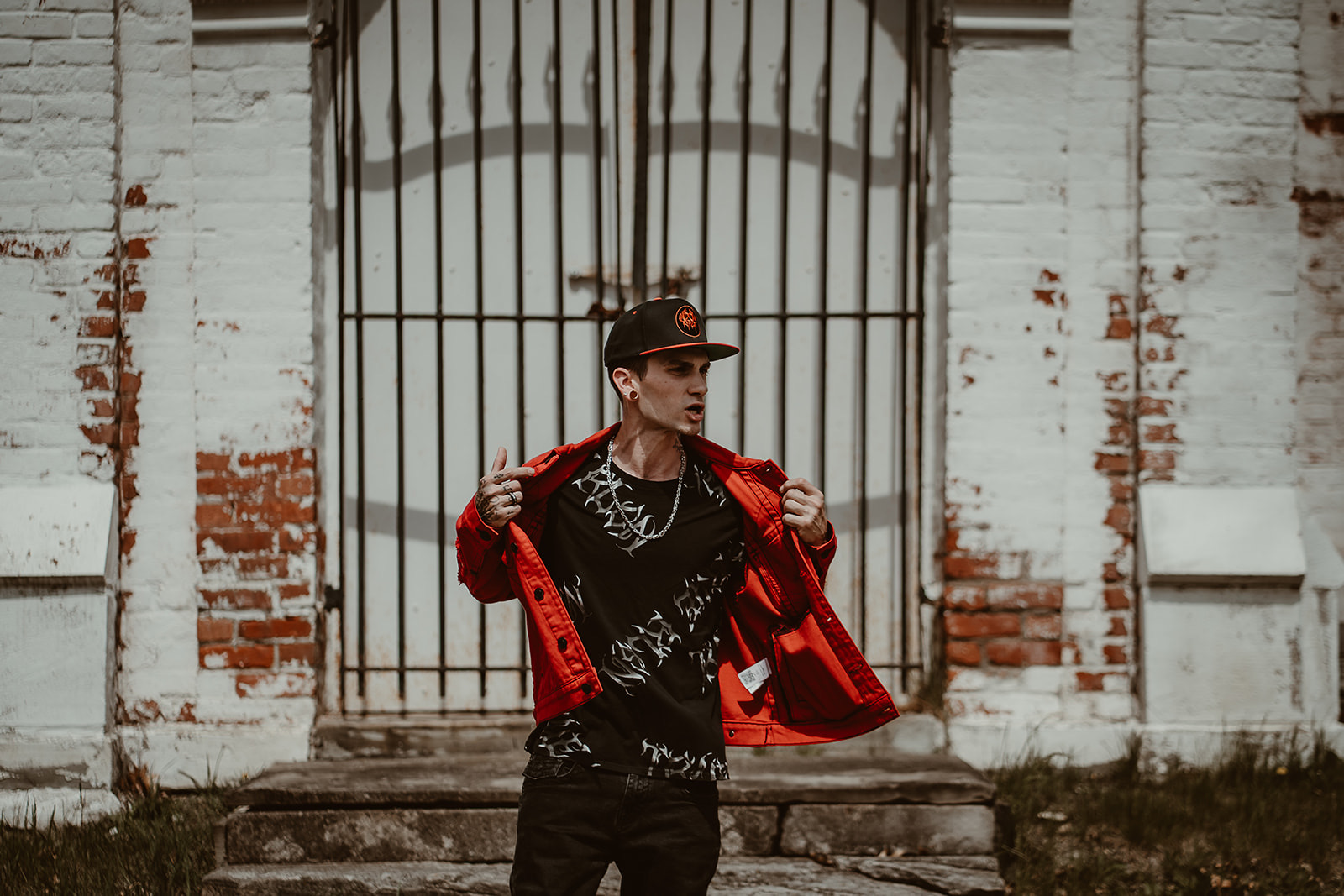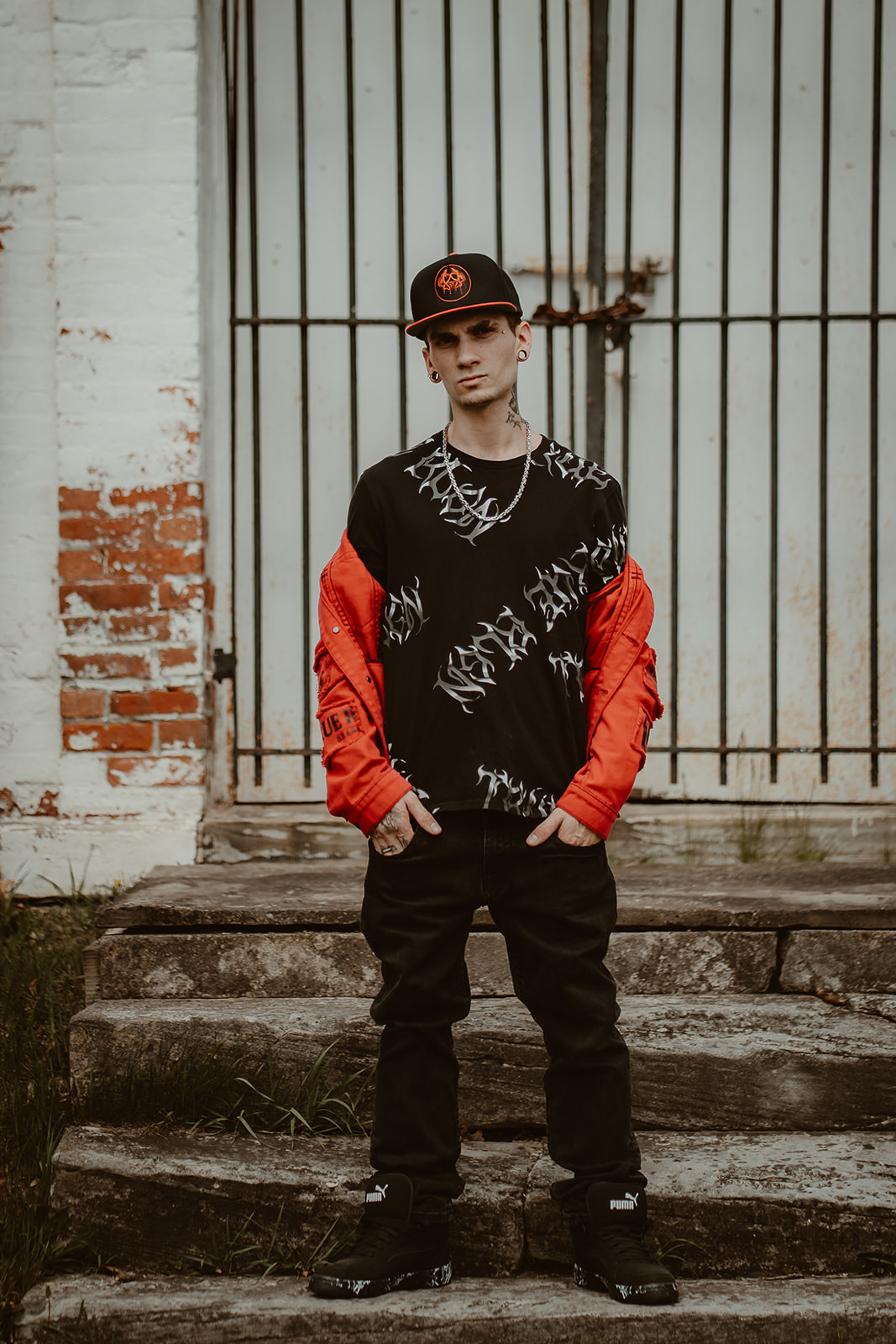




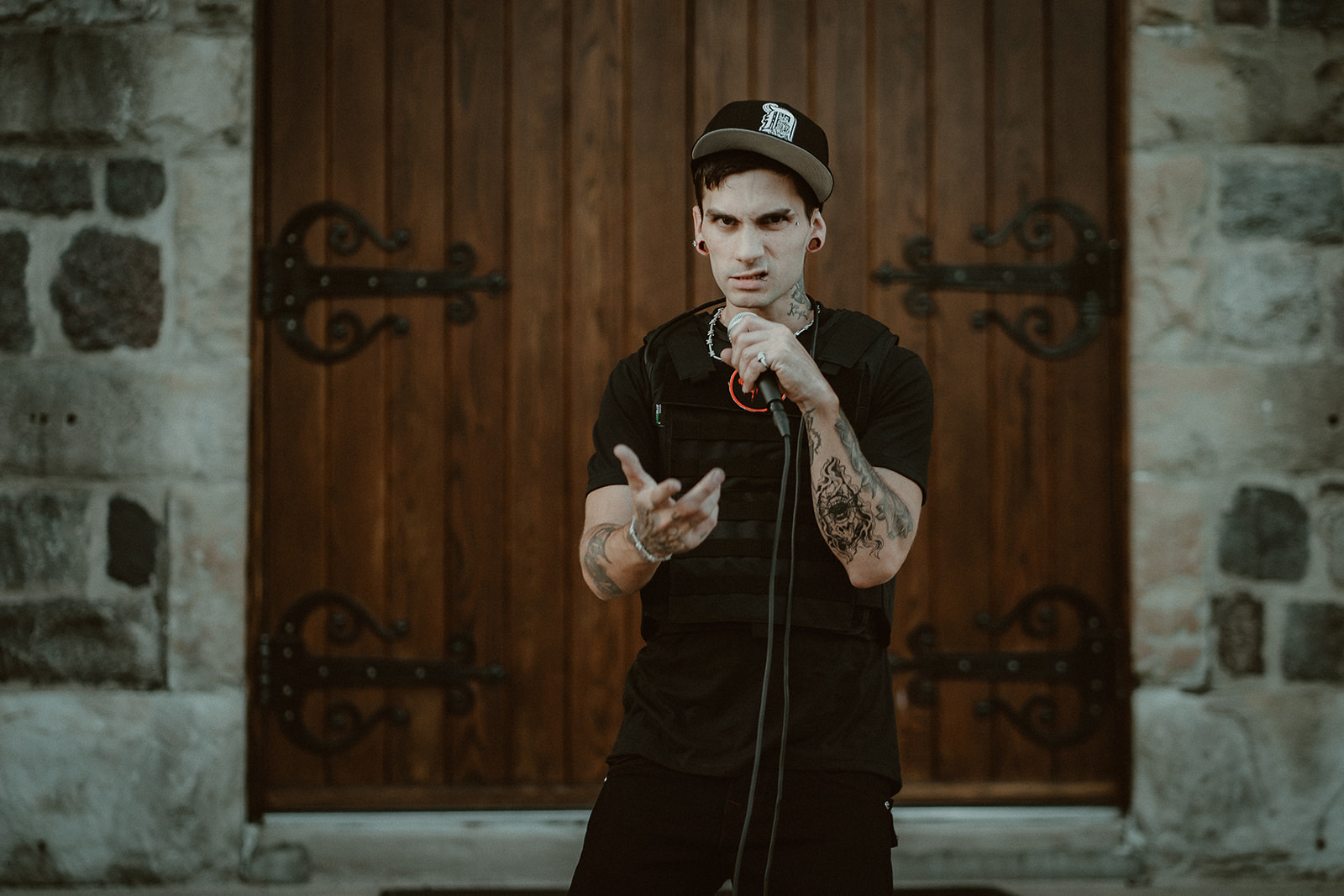
Today we’d like to introduce you to Elijah “E-Kaine” Eubanks.
Hi E-Kaine, we’re thrilled to have a chance to learn your story today. So, before we get into specifics, maybe you can briefly walk us through how you got to where you are today?
My story is really about becoming somebody I never thought I would live long enough to become.
I come from Michigan, and for a long time my life was defined more by survival than purpose. I started struggling with addiction when I was around 17, and over the years that lifestyle took me through some very dark places. I experienced homelessness, got caught up in gang life, dealt with depression and suicidal thoughts, and spent a lot of years feeling like I was moving through life without any real direction. There were times when I genuinely didn’t care whether I made it to the next chapter.
Music was always there, though.
It became the place where I could say the things I didn’t know how to say anywhere else. The anger, addiction, relationships, feeling like an outcast, being broke, being overlooked, wanting to disappear—all of that eventually became material. Looking back, a lot of the darkness that could have destroyed me ended up becoming the foundation of my art.
Everything really started changing for me in 2022 when I found out I was going to become a father. That forced me to look at my life differently. It wasn’t just about whether I cared what happened to me anymore. Somebody else was going to depend on me. I had to decide whether I was going to keep repeating the same cycle or become the person my child needed me to be.
So I started rebuilding.
I got clean, became a father, and then welcomed my second child the following year. I went back to school and studied music production through the Los Angeles Film School, earning both my associate and bachelor’s degrees. At the same time, I began taking music much more seriously—not simply as something I loved doing, but as the thing I wanted to build my life around.
That process eventually created E-Kaine and what I call The Dark Prophet.
The idea behind The Dark Prophet is that sometimes you have to be willing to walk directly through the darkness to find the light on the other side. I don’t pretend that the darker parts of my life never happened, because they made me who I am. Instead, I try to transform those experiences into something that might help somebody else survive theirs.
That is why my music talks about addiction, mental health, homelessness, toxic relationships, fatherhood, perseverance, and feeling like you don’t belong. I make music for the people who feel overlooked, misunderstood, broken down, or written off. I want somebody listening to one of my songs to think, “If he came out of that, maybe my story isn’t finished either.”
Today, I’m an independent artist, producer, mixing and mastering engineer, and I’m building Seal VII Records as the next chapter of everything I’ve learned. I’ve had the opportunity to collaborate with artists like Krizz Kaliko and Rome Music, perform throughout Michigan and outside my home state, release projects that tell increasingly deeper parts of my story, and build a community of listeners I call the Kaineiacs.
My latest project, The Mark of Kaine, probably represents me better than anything I’ve released before. It’s about carrying the scars of your past without allowing them to control your future. The “mark” isn’t necessarily something you’re ashamed of. It can become evidence that you survived.
I’m still building. I’m still learning. I definitely don’t consider the story finished.
But when I look at where I came from—addicted, homeless, lost, and unsure whether I even wanted a future—and compare that to where I am today, raising my children, creating music, building a business, and chasing something bigger than myself, it feels like I’m living a life that an earlier version of me wouldn’t have believed was possible.
That’s really what E-Kaine represents to me.
You can come from the darkest chapter of your life and still write something different afterward.
Sometimes the dark was never your enemy. Sometimes it was where you learned how to see the light.
I’m sure it wasn’t obstacle-free, but would you say the journey has been fairly smooth so far?
Definitely not. The road has been anything but smooth, but I think that’s a big part of why I am who I am today.
Some of my biggest struggles happened before the music career even really started. Addiction took up a huge portion of my younger life. I started struggling with it around 17, and that eventually led me through homelessness, gang life, depression, suicidal thoughts, damaged relationships, and a lot of situations where I honestly didn’t know what my future was going to look like.
Getting out of that lifestyle was one challenge. Learning how to actually build a life afterward was another.
When I got clean and became a father, I didn’t suddenly have everything figured out. I had to learn how to be consistent, responsible, and disciplined after spending years living almost completely in survival mode. I was trying to become a better father, finish school, build a music career, learn production and engineering, and figure out who I was without the things that used to define my life.
The music industry has brought its own struggles too.
Being an independent artist means wearing a ridiculous number of hats. I’m not only writing and recording the music. I’m producing, mixing, mastering, creating graphics, planning releases, shooting content, promoting shows, studying analytics, trying to grow social media, building a website, working on merchandise, handling distribution, networking, and learning the business side at the same time.
A lot of that has had to happen without a major budget or a huge team behind me.
There have been performances where the turnout wasn’t what I hoped for. Releases that didn’t immediately get the attention I thought they deserved. Opportunities that fell through. Shows that got postponed. Content that I spent hours creating only for it to barely reach anybody. There have also been plenty of moments where I’ve had to question whether the money, time, and energy I’m putting into this will eventually pay off.
That can mess with you mentally, especially when social media makes it look like everybody else is succeeding overnight.
One of the biggest things I’ve had to learn is not to measure my progress against somebody else’s highlight reel.
I’ve also had to learn that sometimes being talented isn’t enough. You have to understand marketing, branding, networking, consistency, business, and how to create opportunities instead of waiting for somebody to discover you. Every time I realize there’s something I don’t know, I try to learn it.
And there have definitely been times when I’ve dropped the ball myself. I think it’s important to admit that too. Not every setback was somebody else’s fault. Sometimes I wasn’t prepared enough. Sometimes I didn’t promote enough. Sometimes I tried to do too many things at once. Sometimes fear, overthinking, or perfectionism slowed me down.
But I’ve learned more from those moments than I probably would have learned if everything had gone perfectly.
The difference between who I was then and who I am now is that I don’t automatically see struggle as a reason to quit anymore.
I’ve already survived things that were much bigger than a bad show, a disappointing release, a low-performing post, or somebody telling me no.
Now I look at those things as part of the process.
I’m still nowhere near where I ultimately want to be, but I’m much farther than where I started. Every obstacle has given me something—discipline, perspective, patience, material for my music, or another lesson about how to move smarter the next time.
For me, the road being difficult almost makes the destination mean more.
If everything had come easily, I’m not sure E-Kaine would exist in the form he does today.
Appreciate you sharing that. What else should we know about what you do?
At the core, I’m an independent artist, producer, mixing and mastering engineer, and creative entrepreneur.
As E-Kaine, I make dark, cinematic, emotionally driven hip-hop that pulls from alternative hip-hop, horrorcore, trap, and heavier influences. My music can be aggressive, vulnerable, melodic, introspective, or high-energy depending on the record, but the common thread is that I want everything to feel honest.
I specialize in turning real experiences into music.
A lot of what I write comes from things I’ve actually lived through—addiction, homelessness, mental health struggles, relationships, fatherhood, feeling like an outsider, rebuilding my life, and trying to become something greater than the person I used to be.
I think that’s what people are beginning to know me for: darker music that still has a sense of hope underneath it.
The idea behind my Dark Prophet persona is that darkness doesn’t always have to represent destruction. Sometimes it’s where you learn the most about yourself. My goal is to make music for people who feel like they don’t fit into the traditional mold—the outcasts, misfits, and people fighting battles that nobody else can see.
Outside of performing and writing, I’m heavily involved in the technical and business side of everything I do.
I produce music, record, mix, master, develop concepts, create visual ideas, work on branding, design promotional material, plan releases, study marketing, handle distribution, and continue learning the business side of the industry. That independence is extremely important to me because I don’t just want to understand how to make a song. I want to understand how to build an entire career and eventually help other artists do the same.
That’s also why I’m building Seal VII Records.
The long-term vision is bigger than just my own career. I want to create an environment where artists can develop their sound, identity, technical skills, and business knowledge without feeling like they have to give away everything they own just to get an opportunity.
One of the things I’m most proud of is how much I’ve learned to do myself.
There was a time when I was simply trying to figure out how to survive. Now I can sit down with an idea and help take it from a blank session all the way to a finished song, visual concept, release strategy, and performance.
I’m also proud of the collaborations and opportunities I’ve been able to earn independently. I’ve worked with artists like Krizz Kaliko and Rome Music, performed throughout Michigan and outside my home state, completed my degrees in music production, and continued building an audience without having a major label machine behind me.
But creatively, I’m probably most proud of my project The Mark of Kaine.
That project feels like everything I’ve been trying to build coming together. The music, the visuals, the symbolism, the storytelling, and my own personal growth all exist inside the same world. It isn’t just a collection of songs to me. It represents accepting the marks that life leaves on you and deciding that those scars don’t have to determine where you end up.
What I think sets me apart is that I’m not trying to separate the artist from the person.
The music, the imagery, the Dark Prophet character, and everything surrounding E-Kaine is rooted in something real. I’m not creating darkness because I think it looks cool. I’ve lived through some of it. And I’m not talking about hope because it sounds inspirational. I had to find it.
I also think my willingness to keep learning separates me. If I don’t understand something about production, marketing, branding, business, performance, or the industry, I want to learn it. I don’t want my career to depend entirely on waiting for somebody else to come along and do those things for me.
Ultimately, I want people to look at E-Kaine and see more than another rapper.
I want them to see an artist with a world, a message, and a purpose behind what he creates.
If someone who feels completely lost hears my music and realizes that their darkest chapter doesn’t have to be the end of their story, then I’ve accomplished something bigger than just making a good record.
What were you like growing up?
Growing up I was very reserved. I had friends, but I ended up trying to fit in everywhere I went instead of being real about who I was.
I think a lot of that came from wanting to be accepted. Depending on who I was around, I would adjust parts of myself to match the people in the room. I wasn’t necessarily pretending to be somebody completely different, but I definitely held back parts of my personality because I didn’t always feel comfortable standing out.
Looking back, that’s interesting because standing out is such a huge part of who I am now.
I was always creative and very drawn to music. Music became one of the places where I could explore emotions and ideas that I wasn’t necessarily comfortable expressing in normal conversation. I paid attention to the way artists could build an entire identity around their music—not only the songs, but the visuals, attitude, performances, and the world surrounding them.
I’ve also always been somebody who could get completely absorbed in something once it caught my interest. I wanted to understand how things worked and how they were made. As I got older, that curiosity naturally led me deeper into writing, recording, production, engineering, video, design, and eventually the business side of music.
But personality-wise, I was much quieter than the person people see when I’m performing as E-Kaine.
I spent a lot of time in my own head. I observed people. I overthought things. I had things I wanted to say but didn’t always know how to say them. Music eventually became the place where that quieter side of me could become loud.
I also think constantly trying to fit in contributed to some of the choices I made later in life. When you spend enough time looking outside yourself for acceptance, it becomes easy to follow people or environments that might not actually be good for you. It took me a long time to understand the difference between being accepted and actually being yourself.
That lesson has become a major part of my artistry today.
E-Kaine is almost the opposite of the kid I was growing up. Instead of hiding the things that make me different, I lean into them. I’ve learned that I don’t have to change who I am depending on the room I’m standing in.
And ironically, once I stopped trying so hard to fit in, I started figuring out who I actually was.
That’s probably one of the biggest messages behind what I do now: you don’t have to become somebody else to belong somewhere. Sometimes the things you spent years trying to hide are the exact things that make you worth remembering.
Pricing:
- Recording Services: $25/hr
- Mixing Services: $40/hr
- Mastering: $60 per song or project
- Features: $200 per verse or $80 per hook
Contact Info:
- Website: https://www.therealekaine.com
- Instagram: https://www.instagram.com/therealekaine
- Facebook: https://www.facebook.com/share/19irZWWqtZ/
- Youtube: https://youtube.com/@therealekaine
- Soundcloud: https://on.soundcloud.com/82dg53JMIQn1ExSnkX
- Other: https://open.spotify.com/artist/4JFKDXd7I6QIQJxtffqMoB