




Today we’d like to introduce you to David Warners.
Hi David, it’s an honor to have you on the platform. Thanks for taking the time to share your story with us – to start maybe you can share some of your backstory with our readers?
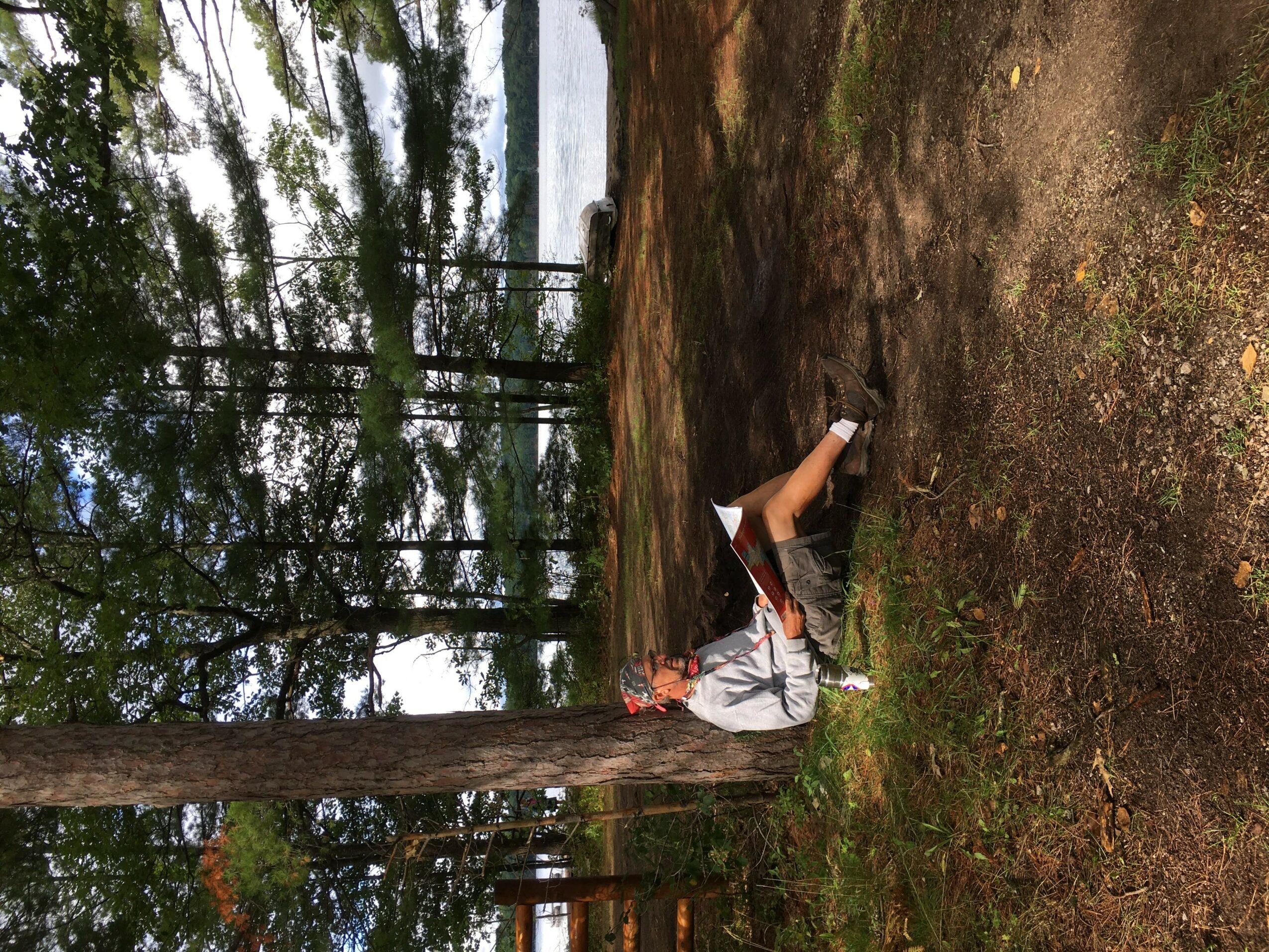
I was born in SE Grand Rapids, grew up near King Park, went to GR Christian HS and Calvin University. Confused about my major and not doing too well academically, I dropped out of college for a year and hiked the Appalachian Trail, which gave me clarity to study biology. After Calvin I moved to Madison, WI to do a MS in Wetlands Ecology and eventually did a PhD in Plant Ecology at the University of Michigan in Ann Arbor. Although I never intended to return to West Michigan, an opening at Calvin drew me and my wife Teri back to Grand Rapids in 1997.
Soon after we moved to Grand Rapids, I noticed a bike path along a stream that passed under Eastern Avenue about a half mile from our house. I remember going down there when the kids were little, stopping at several spots to look at the moving water. It was heartbreaking. Flotillas of garbage, a shopping cart, several old tires, and water that looked like chocolate milk from severely eroded banks. I told the kids that this is not a good creek to play in. The ugly name of the stream, Plaster Creek, seemed to fit it well.
Over the next few years, I discovered that like my home, Calvin University, is located within the Plaster Creek Watershed. That means the water running off our rooftops, lawns, and parking lots eventually makes its way into Plaster Creek. We were complicit in contributing to the lousy condition of this stream. I also learned that climate change models for West Michigan were predicting increased frequency and intensity of rainstorms, which exacerbates the problem of urban runoff and flood risk for downstream neighborhoods.
At Calvin we talk a lot about the importance of Christian Environmental Stewardship, which I love. However, the realization that my home and my campus were contributing to the ugliness and degradation of this local creek made me very uncomfortable. This discomfort led to the formation of a faith-based watershed restoration group called Plaster Creek Stewards (PCS). We officially began this work in 2009 after several years of doing service-learning projects focused on the creek. During those early years we learned that this creek was considered the most contaminated waterway in West Michigan. It not only carried large volumes of sediment and garbage, but also dangerously high levels of E. coli that spike after each rainfall. Simply by touching the water, children had increased risk of contracting infections. I had been right to warn my children not to play there.
We also learned that the creek’s original Ottawa name was Ken-O-Sha, which means water of the walleye, a fish that would swim from Lake Michigan into the Grand River and then up this creek to spawn. But according to historic records no walleye have been seen in the creek since the mid 1850s, after the first mine was set up along the banks of Ken-O-Sha to extract gypsum. The gypsum was ground into powder and mixed with water to make plaster, but this operation rendered the stream unlivable for walleye. Ironically, the area where the mining took place was called “Happy Valley” because people were making so much money there. So, originally this creek was named for a living creature that supported the local Ottawa. But with colonization the name was changed to an economic commodity that was mined from the stream banks. In the process, a long legacy of contamination and neglect began.
As we started this work our goal was to restore the creek to health so that children would once again be able to play in it. However, while restoration of this creek is desperately needed, we soon realized that for lasting change to happen, a different emphasis would be needed. If PCS was somehow able to bring this creek back to health, but in the meantime everyone in the watershed continued living the way they had been living, the creek would quickly become contaminated all over again. We began to understand that a polluted creek was not the problem, but rather a symptom. The actual problem was that people in the watershed were not living in proper relationship with the creation. Our focus shifted from the creek itself to the relationship between people and the creek, from restoration ecology to reconciliation ecology.
Reconciliation ecology is a concept introduced by Dr. Michael Rosenzweig in his 2003 book, Win-Win Ecology, in which he advocates for people to change the way we live so that other species will return and join us in human-dominated spaces. Reconciliation ecology calls for re-envisioning the human presence to better fit into the broader landscape of biodiversity. In the Plaster Creek Watershed this means creating rain gardens and bioswales that can help absorb and filter stormwater so that the creek’s flow is steadier and less erosive. It means planting trees that hold stream banks and absorb carbon and stormwater. It means re-creating floodplains that act as sponges and by doing all these things we will be drawing back bees and butterflies and other creatures that used to be important members of this watershed community. Reconciliation ecology means living in ways that promote a cleaner creek so that the creatures who originally lived in its waters, like the walleye, will return.
Our work in reconciliation ecology has also led to the realization that sometimes people don’t care about their impact on Plaster Creek because they don’t care about their downstream neighbors. We have found that reconciling relationships among watershed residents is also an important part of restoring Plaster Creek. We do this by connecting upstream and downstream schools and churches, residents and businesses to the hopeful work of doing restoration together. The workdays we host have become powerful, tangible expressions that despite our differences, we are all members of this one watershed.
The story of Plaster Creek is a metaphor for broader, global challenges like climate change. While we certainly need to restore earth’s atmosphere to healthier levels of carbon dioxide, if we somehow are able to do this but people’s relationship with the earth didn’t change, global climate change will happen all over again. Climate change is not the problem. The way we have been living on the planet is the problem. We need new, more earth-affirming ways of doing agriculture, economics, transportation, urban planning, architecture, energy, etc. We need to learn to love our global neighbors and find ways to better fit into God’s good creation of diversity, beauty, and sustainability.
The work of reconciliation is hard, yet hopeful work. Nature has a tendency to recuperate from the harms we have inflicted, and we can help facilitate in the recovery process. To date, PCS has installed over 250 native plantings that include rain gardens, bioswales, and floodplains, and we now have 14 native gardens on Calvin’s campus. These projects have diminished the amount of stormwater that reaches the creek and have become oases for native species to return and join humans in the Plaster Creek Watershed community. In the fall of 2024, students analyzing creek health by sampling stream macroinvertebrates were surprised to find Plaster Creek scores that were not significantly different from a healthy stream they were using for comparison. Then when they compared their data to sampling that had been done from the same location in the fall of 2011, their scores were significantly higher! This was the first quantifiable indication that Plaster Creek water quality is improving. Furthermore, in the past two years Plaster Creek has been the focus of freshwater mussel and sucker surveys and in both these projects, threatened species have been found. In addition, otters have been seen in a downstream urban park and this past spring a family of beavers moved into the upper region of the watershed.
Plaster Creek still receives too much contaminated stormwater when it rains. But after nearly 20 years of work, we are seeing tangible signs that good things are happening. Not only is the condition of the creek slowly improving, but people of all ages and diverse faith backgrounds and cultures are working together to heal relationships. We are seeing that these relationships are not marked by irreconcilable differences, and as they heal, diversity and beauty are returning to this place. Human beings aren’t just destroyers. We can be reconcilers too.
The troubling and hopeful story of Plaster Creek is further fleshed out in a book, Reconciliation in a Michigan Watershed (https://msupress.org/9781611864939/reconciliation-in-a-michigan-watershed/) that I co-authored with Gail Heffner, close friend and co-founder of Plaster Creek Stewards. More can be learned about Plaster Creek Stewards at https://calvin.edu/plaster-creek-stewards
The above narrative describes my involvement with Plaster Creek Stewards, I also direct another program at Calvin known as the Emma Cole Project that is documenting the remnant natural areas in Kent County. Here is a story about that work: https://calvin.edu/stories/150-years-later-calvin-students-continue-scientific-legacy-rooted-grand-rapids
Alright, so let’s dig a little deeper into the story – has it been an easy path overall and if not, what were the challenges you’ve had to overcome?
Our ongoing challenge is to motivate people to live in more environmentally careful ways and get them to care about the places where they live. Wendell Berry has an essay entitled, “It all Turns on Affection,” and in that vein I’d say what we are trying to do is cultivate a love for the earth, and specifically a love for this creek among the people with whom we work. It is hard to change the way people think about themselves and about the places where they live, especially when we are encouraging consideration for the non-human neighbors who are trying to live in these places with us. Its not something most people think about very much.
So I would not say this has been a smooth road, partly because we never knew where we were going, we have been learning so much along the way, and because while our leadership team of 6 staff all have deep convictions that what we are doing is good and right, we are perpetually challenged to secure sufficient funding for our work.
At the same time, we have witnessed the emergence a beautiful community of watershed residents who truly do care. We are working with many schools, houses of worship, neighborhood associations, and other nonprofits who extend amazing hospitality to our group and who inspire us to keep up the good fight of caring for our shared place.
Can you tell our readers more about what you do and what you think sets you apart from others?
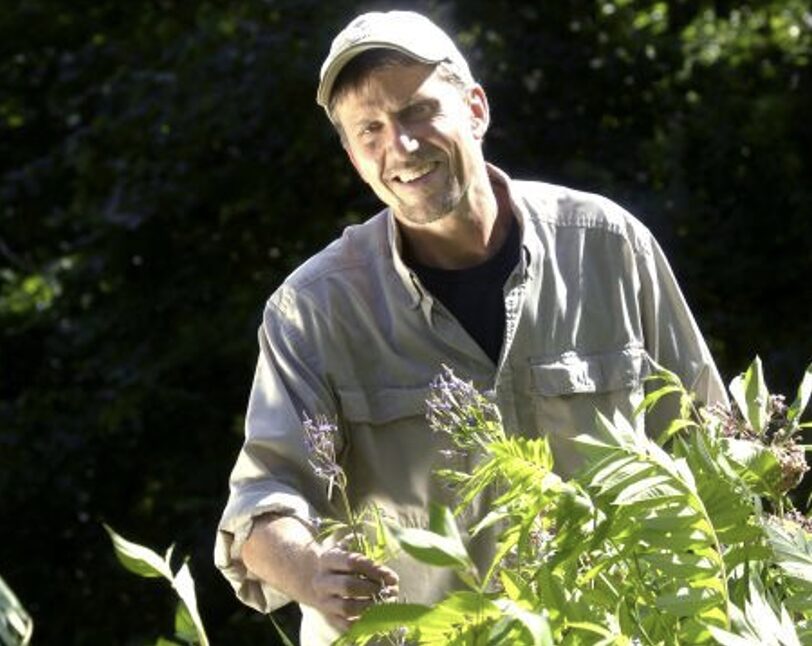
I am a lousy self promoter and this question makes me uncomfortable. But as a botanist and restoration ecologist, I would say my specialty is being drawn to places that have been damaged by human short-sightedness with a deep desire to make amends and help those places return to a healthier, more biodiverse, beautiful condition. Another specialty is that I know plants – I can walk out into any outdoor space and identify pretty much all the plant species that are growing there. This ability helps me assess the relative natural quality of a site and the degree of degradation that has occurred because some plants thrive when areas have been messed up and others need relatively pristine spaces in which to grow.
I’d also like to think that if you asked others about me, they’d say I’m known as a person who cares. I care deeply about my family, students and colleagues, about the land and water of West Michigan, and especially about the places and people who have been treated poorly by others. I am a scientist who invests a lot of emotion into my work. It breaks my heart to see what people have done. We are capable of such goodness yet we so frequently settle for neglect, apathy, and oppression.
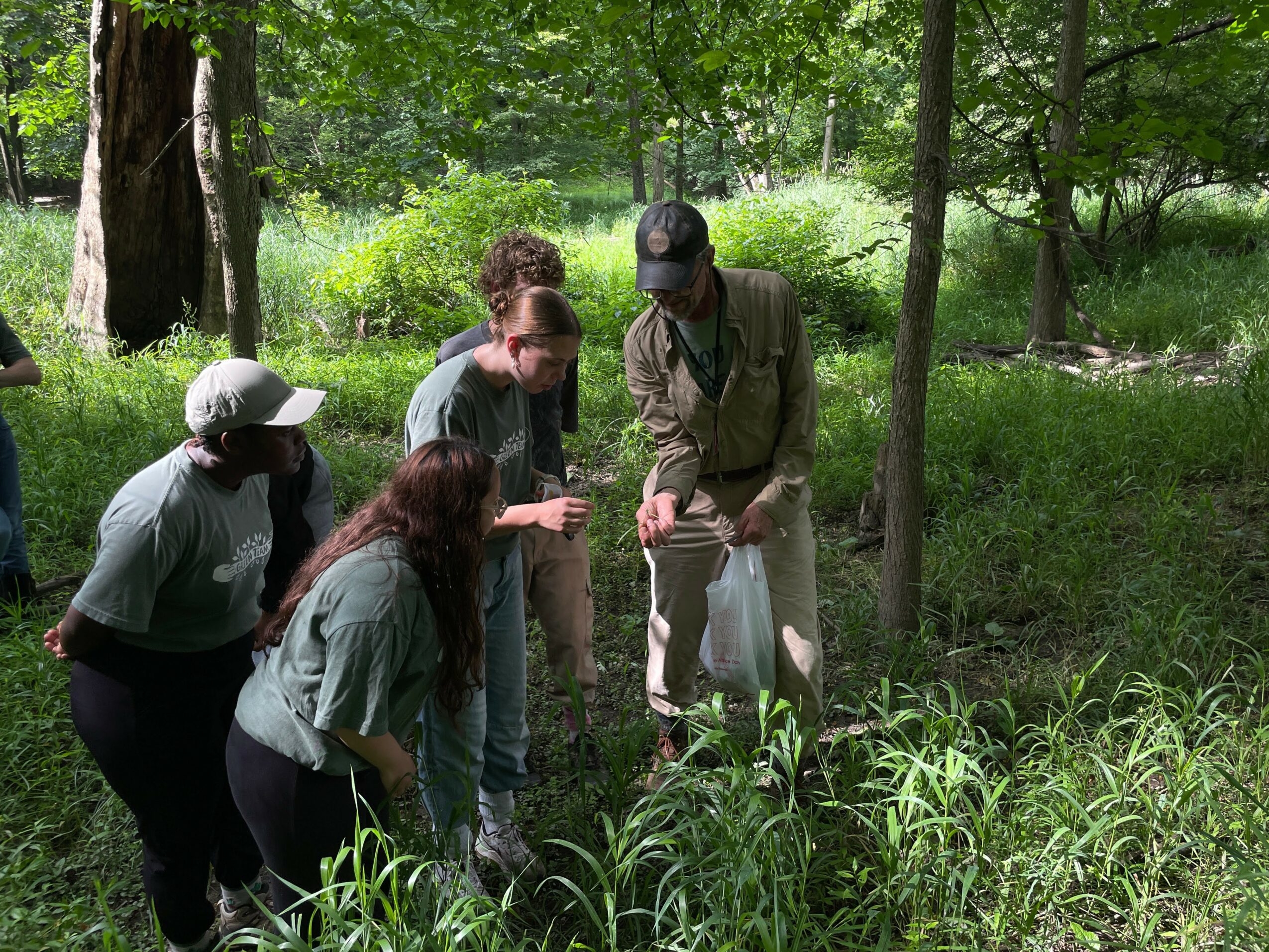
I don’t think its what I am most proud of, but I am grateful to have been involved in writing two books and over 50 scientific papers, along with numerous reports and articles. I am also proud of the HS Green Team program our Plaster Creek Stewards group runs each summer – bringing HS kids from diverse schools across the watershed to join in a multiple-week work experience during which they come alongside college students to learn how to care for the creek.
Any big plans?
One of my grandfathers was an artist and I have always carried an interest in art alongside my science, but mostly as an infrequently visited hobby. Over the course of the coming decade I hope to transition into retirement and explore the arts more intentionally – drawing and poetry mostly. I also hope to write another book, this one on the topic of what is being referred to as “Plant Blindness” – the inability of people in general, but young people in particular, to correctly name even 10 plants that are common in the places where they live. I plan to track how we got to this place of not knowing plants, why its a big deal, and how to get out of it.
Contact Info:
- Website: https://calvin.edu/plaster-creek-stewards
- Facebook: https://www.facebook.com/david.warners.9/
- LinkedIn: https://www.linkedin.com/in/david-warners-0760a036/