




Today we’d like to introduce you to Chelsie Boles
Hi Chelsie, so excited to have you with us today. What can you tell us about your story?
Our story started with ailing health, which lead us down the inevitable path to food and how it’s raised/grown. Back in 2012, there didn’t seem to be a lot of options for meat raised the way we deemed appropriate for the animals health and well being (ours as well). So, we decided to start one ourselves. We had zero farming experience other than what we learned reading from the greats like Joel Salatin, Greg Juddy, Gabe Brown, and many others in the regenerative farm space.
Rob and I both had comfortable lives and secure jobs. I was an art teacher in Rochester, and Rob co-ran and co-owned a family manufacturing business that makes springs for the automotive industry. However, Rob did not love what he was doing and as we went down the food and farming rabbit hole, it became more clear to him that he wanted to get out of the office and onto the land. He sold most of his shares in the spring business so we could afford property and to support ourselves as we built the business.
We found 58 acres in Dryden, Michigan and had planned to build a house on the property. Shortly after the purchase, we decided to search for a house close by instead of build, and happen to know the next door neighbors. Long story short, we bought the house next door, which was not for sale, and the rest is history.
Would you say it’s been a smooth road, and if not what are some of the biggest challenges you’ve faced along the way?
I don’t think starting a farm and/or a business is ever smooth. However, most of our bumps in the road have been more on a personal level. The biggest being that the house we bought ended up being full of mold (which we did not discover until 2018, and then again in 2020) and we had to embark on a long journey to renovate it, multiple times, as well as get our health back on track. Mold exposure is no joke and it affected all of us. We’re still working through it on the health end, as well as on the house end as our kitchen has been half tore out since July of 2023.
Since we are a direct to consumer farm, we are responsible not only for the raising of the animals, but also the marketing and distribution of our products. We are still learning so much about this process but the biggest hurdle is connecting with people that are looking for a product like ours, and then getting them to come to the farm and pick up their order. We do not have a farm store, so to solve this we only take orders online and customers come to our home and pick it up. This isn’t ideal but it’s worked well enough. However, we are in the works of building an on farm store that customers will be able to shop at, as well as pick up pre-orders for those who like that approach.
Another hurdle has been the addition of 4 children since we bought the property, all born within a 6 year time span. It turns out that I can not “do it all”, and struggled quite a bit finding my role and balance as a mother as well as a business owner and farmer. Those early years were tough with multiple babies in tow while attempting to navigate entrepreneurship. That’s still tough, but we’ve learned a lot and now that the children are older, things aren’t quite as difficult. In fact, they are often very helpful and I wouldn’t want to raise babies any other way than on a farm. I think in hindsight though, I personally should have put off trying to push so hard on the business end until they were a little older. I personally wouldn’t recommend starting a farm, a business, and a family all at the same time.
Thanks for sharing that. So, maybe next you can tell us a bit more about your business?
We run a small farm that focuses on mobile pasture raising animals that eat locally grown, organic feed, that will become nourishing food for us and our community. We currently raise chickens and pigs for meat as well as eggs. We also raise dairy cows, but their milk is strictly for our family but also helps feed the other animals. We are working towards also raising beef on the farm.
Our highest priority is to raise animals as close to nature as intended, leaving the soil better than when we found it. Without healthy soil, we can’t have healthy animals, and therefor we can’t be healthy ourselves. It didn’t make sense that animals were raised in doors, never EVER touching dirt or seeing the sun.
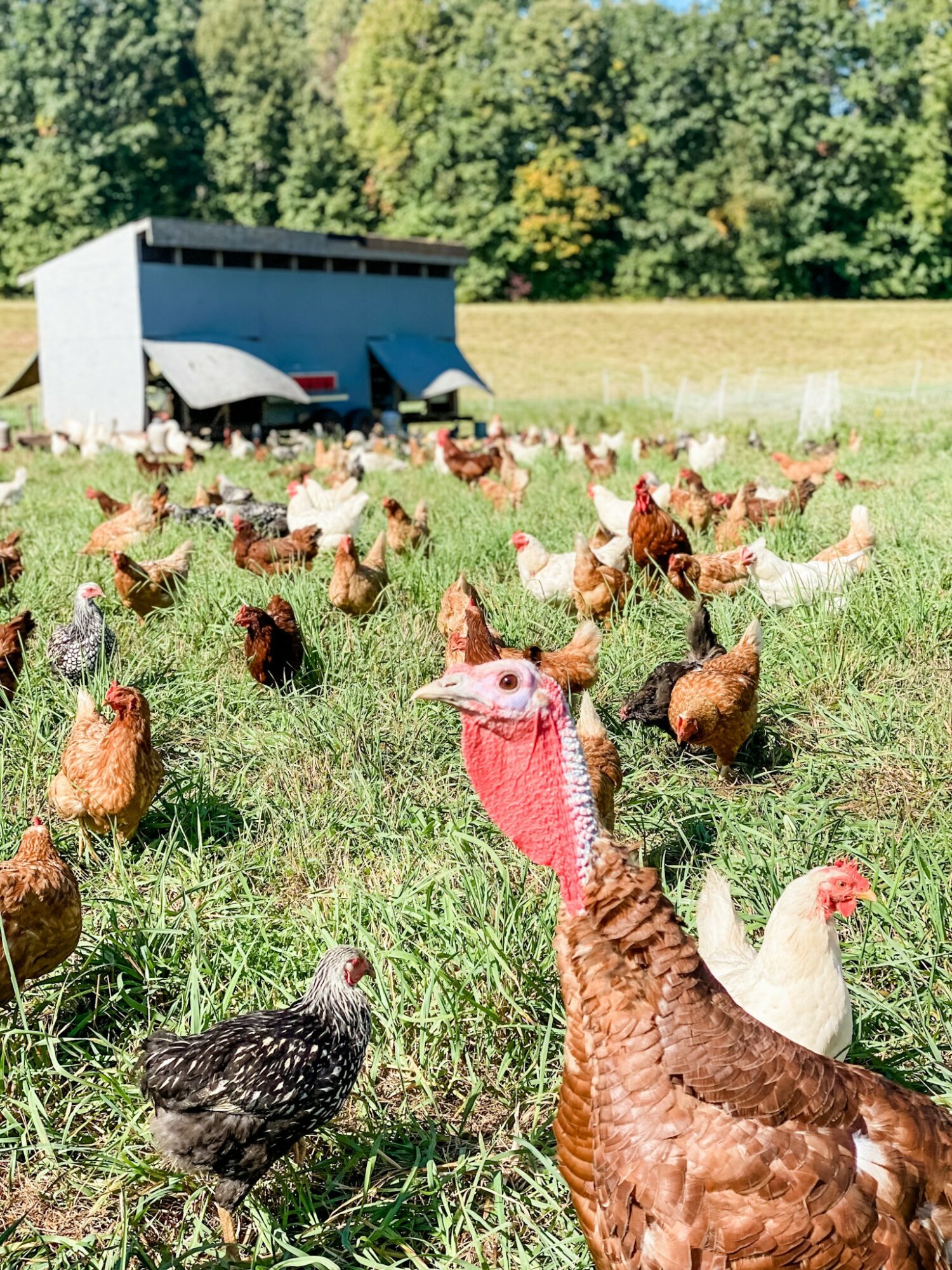
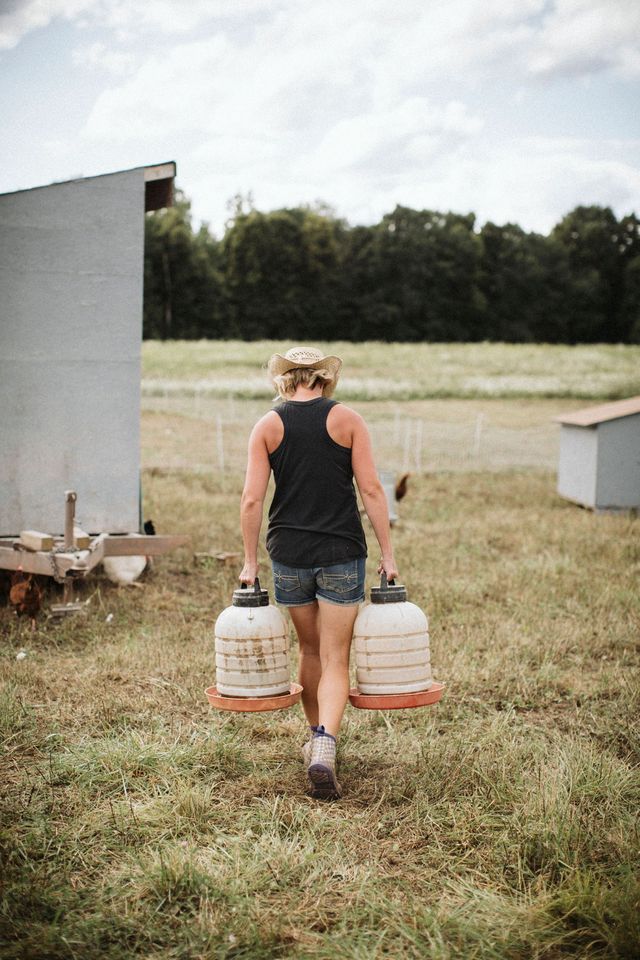
Our egg laying hens are rotated out on pasture during the warm months of the year. Every few days the coop and all the ladies move to a new paddock to ensure they have access to fresh forage and bugs. This also ensures they don’t over disturb the ground. Since we live in Michigan, pasture rotation ends around when the snow flies.
During the winter and early Spring, the girls live in a large hoop house with access to the outdoors 24/7. More of a free-range set up than a pasture-raised one. We use a deep bedding system to keep their area clean and odor free. This makes for happy, healthy, and warm birds. The deep bedding adds a layer of heat from below as it begins to break down. Sunshine through the hoop-house warms the space from above, also allowing them exposure to light all winter long. We find this is important for their health as well as their ability to lay eggs into the winter.
Pastured meat chickens can only exist during the warm season here in Michigan. This means that our delicious chicken is seasonal if we sell out before Winter.
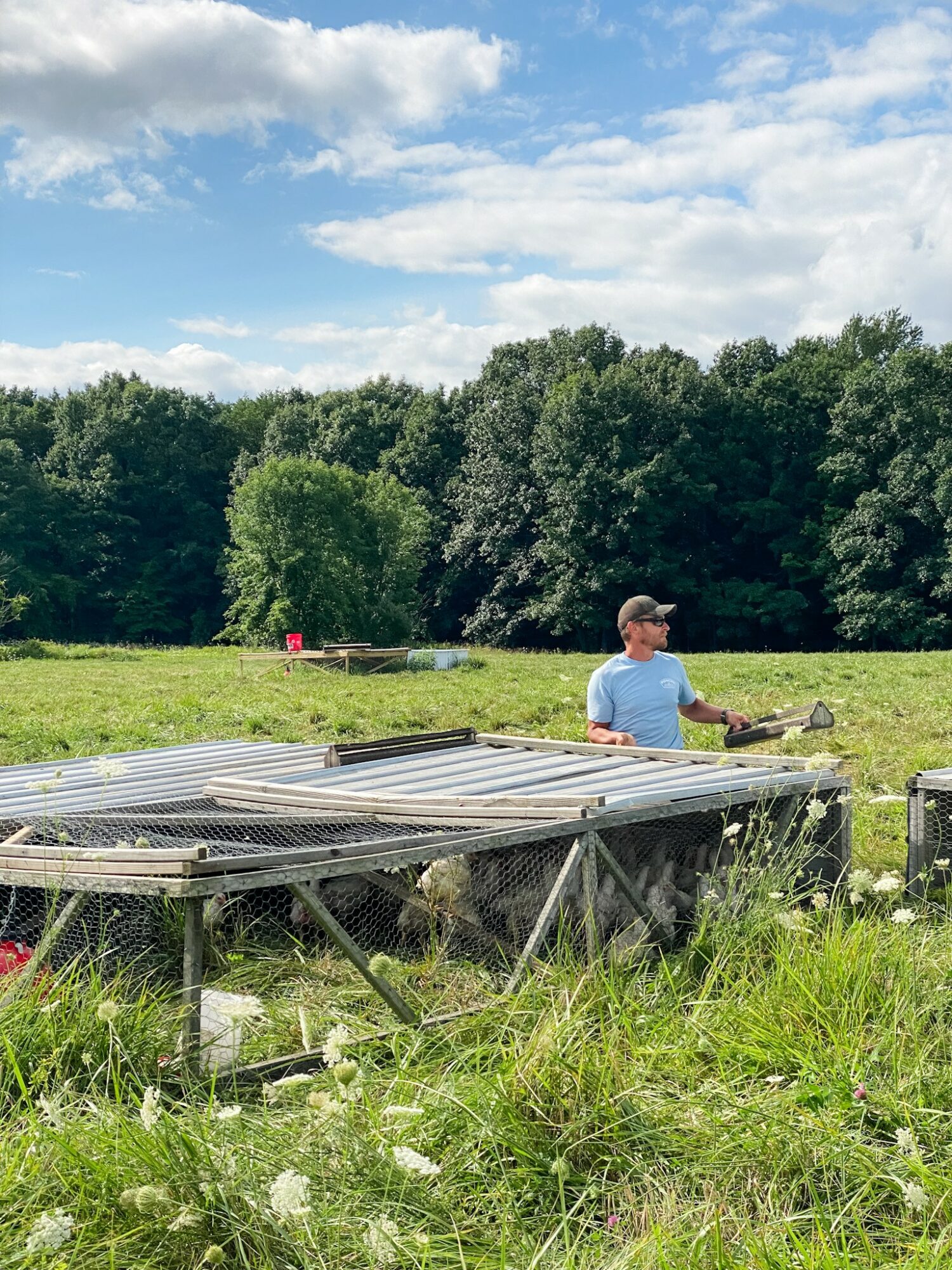
Broilers (meat chickens) need more protection from predators than our laying hens, which is why they are kept inside “chicken tractors”. They allow the birds to have shade and fresh air while having access to the pasture. They’re moved daily to ensure they have a clean living environment as well as access to fresh forage and bugs.
Did you know chickens are omnivores like us? Grocery store eggs often say “vegetarian fed” as if that’s something to be proud of. On our farm, we believe a vegetarian fed chicken is a sad one. Along with all the yummy things they find out on pasture, they are fed a local, organic feed often mixed with raw milk from our very own grass-fed dairy cows. Nutrient density at its finest.
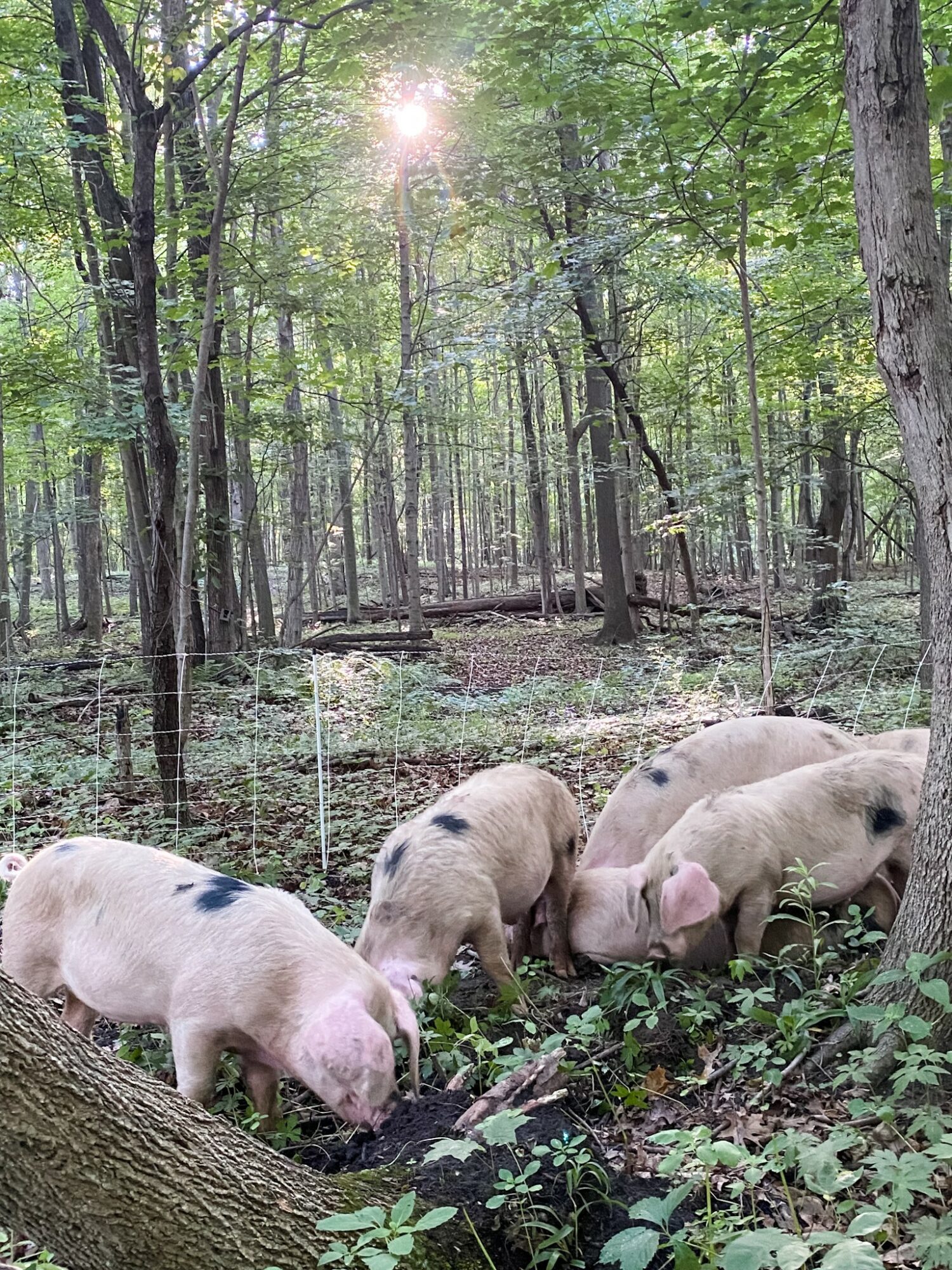
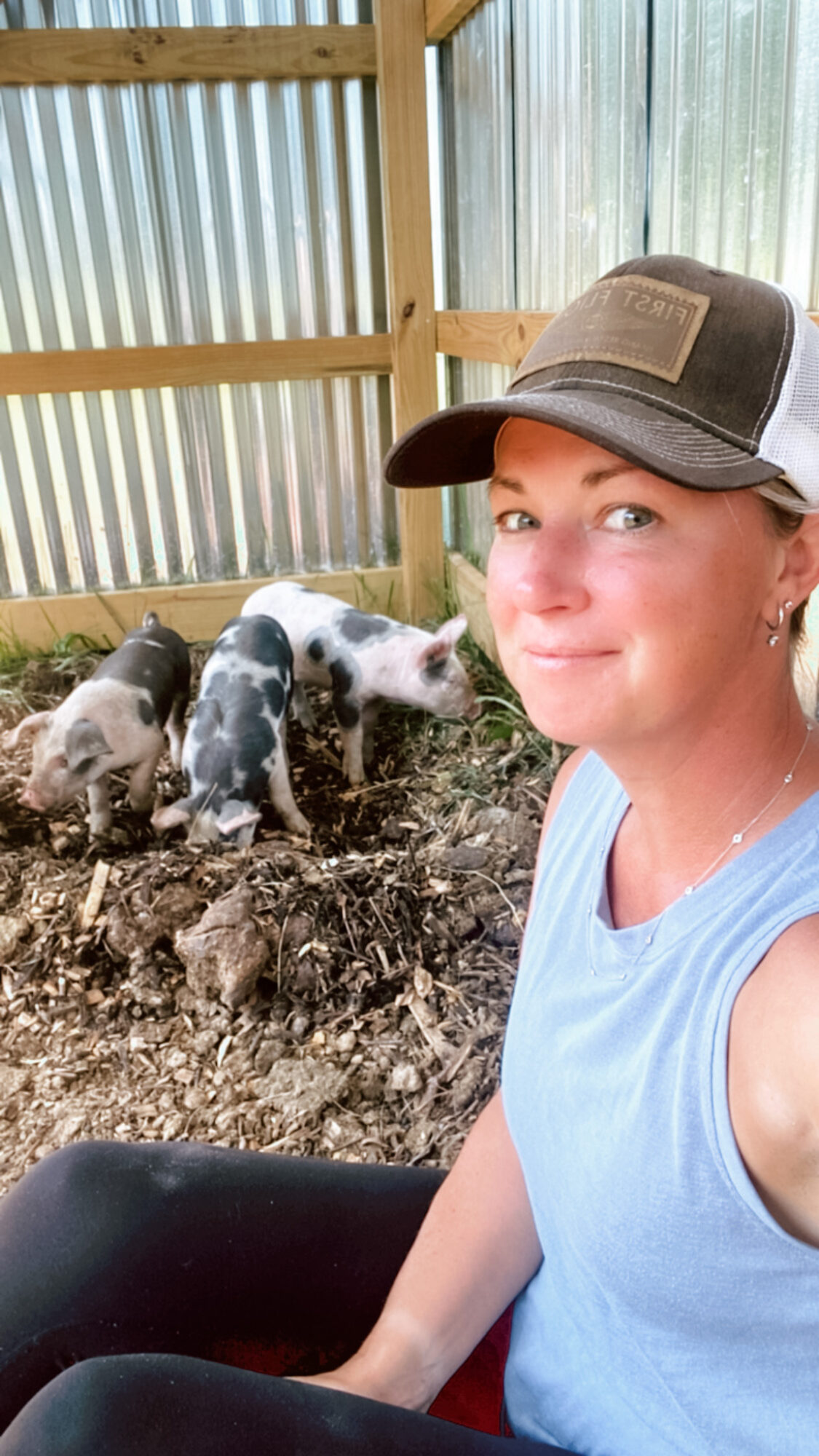
We raise pigs in the woods, or out on the pasture, rotating them often. This ensures they have access to fresh forage, nuts, tubers, bugs and whatever else they find to eat. It also ensures that they don’t over work the land as they root about as any pig should. Our pigs also enjoy milk from our dairy cows which makes them happy and their meat exceptional.
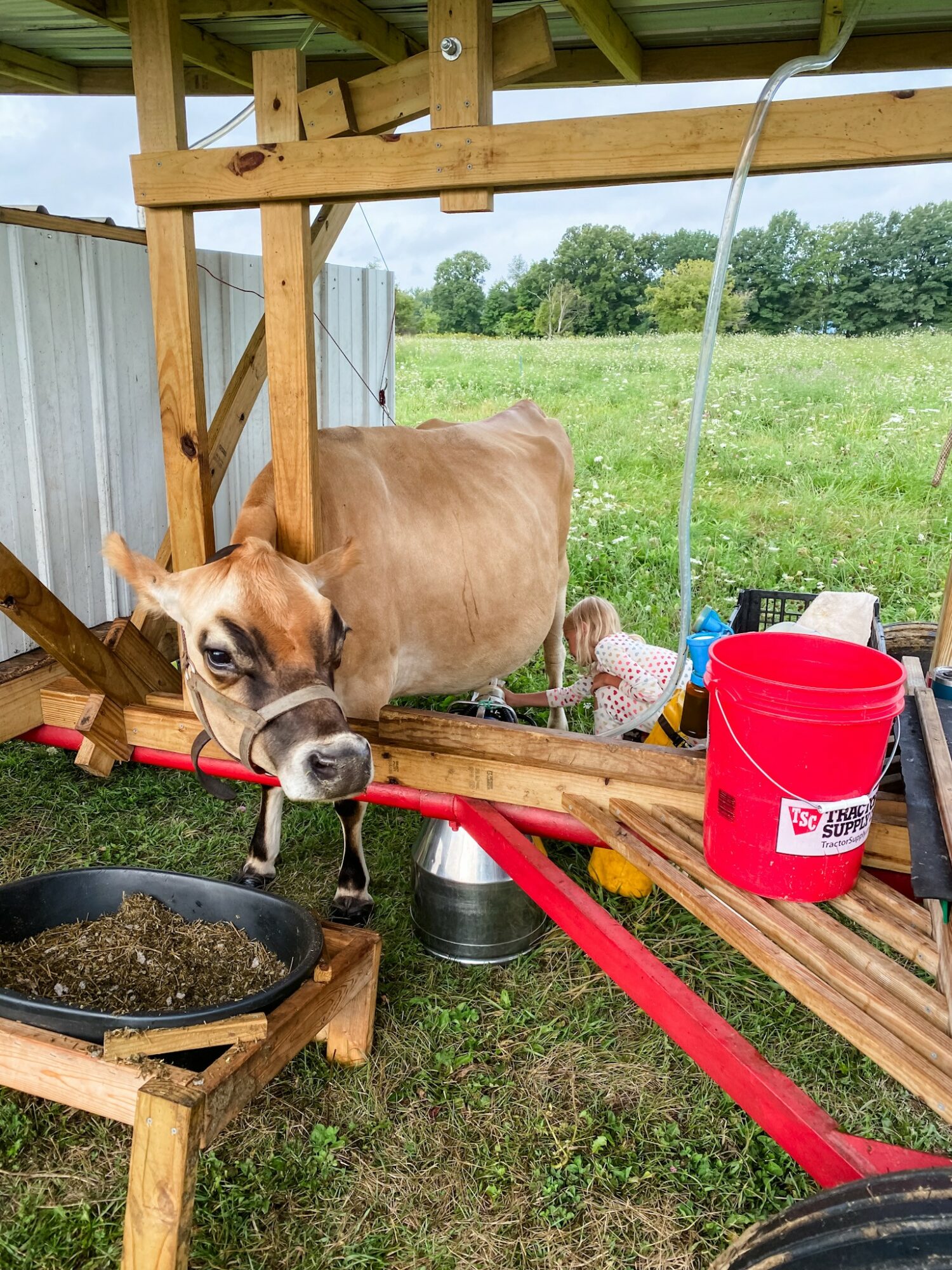
All of our animals, from the pigs to the dairy cows are moved out on pasture. Our dairy cows are even milked out on pasture when it’s warm.
We wanted a farm that was transparent about our practices and offered the ability to see what we’re up to. We want people to know their food as well as their farmer. We want customers that are excited to take on the responsibility of buying meat raised intentionally. We share our day to day life and musings about farming and food on Instagram and Facebook. We also have a newsletter and website where we share recipes, news, and all kinds of information to those who wish to sign up. Our newsletter members enjoy first dibs on when we restock products or have the occasional sale..
Our farm is different from a lot of others, especially those that sell in the grocery stores, because we move our animals constantly, like they would move in the wild. Unfortunately, it may seem that you can find “pasture raised” products in the store, however, often it’s just a marketing scheme and the animals actually never go outside. The only way to know what is really going on is to know your farmer. Either by visiting an actual farm, of following them in newsletters or on social media. We hope to open up the farm this year to more farm tours so we can really expand on the transparency aspect of our business.
We’re very proud of a lot of the things we’ve done and plan to do. But what really makes it all worth it is when customers let us know not only how delicious our products are, but that they love knowing the animals all lived the best lives any farm animal could want. Many customers come to us as ex-vegans or vegetarians wanting to bring meat back into their diet, but only wanting to source from a farm that allows the animals to express their true nature. Scratching and pecking, grazing and rooting, these are things that conventional farms rarely allow their animals to do. We also get a lot of customers that have allergic reactions to conventional raised meat or eggs, and happily find they can enjoy our products without issues. A lot of people are waking up to the problems that can occur in conventional farming and seeing that there are alternative ways to doing this. More traditional ways that honor the animals.
Is there anyone you’d like to thank or give credit to?
In the beginning of our journey, we started reading books about diet and lifestyle. I had all kinds of weird health issues and after years of going the conventional medical route and having no positive shifts, I decided to try looking at what I ate. The first book that crossed my path was by Mark Sisson called The Primal Blueprint. In 2011/2012, very few people were talking about the paleo diet, which is now more well known. But that book was one of the first on the topic and it eventually lead me to farming and how the food we were eating was raised. I wouldn’t say Mark Sissons work was a mentor or a cheerleader, but it lead us down a path of discovering farmers in the regenerative, or often called sustainable space at that time. We wouldn’t be here without the knowledge that those before us shared on these practices like Joel Salatin, Gabe Brown, and many others.
We would often go to seminars and workshops that helped us learn faster than just reading books. Through those experiences we made more connections and were able to find people that were as excited about all of this as we were. The truth is, we didn’t have any in person mentors or advocates. What we were trying to do was very rare and new at the time. Homesteading and small scale farming really didn’t become popular until after 2020, when people saw how fragile the conventional food system really is. Some of our family and friends were excited for us, but most of them thought we were kind of crazy (still do). Our success really is all due to the customers that took a chance and supported us in those early days. The ones that would allow us to use their driveways to drop off orders for customers in their area so they didn’t have to drive all the way to the farm. The customers that cared about where their food comes from and how it’s raised and fed.
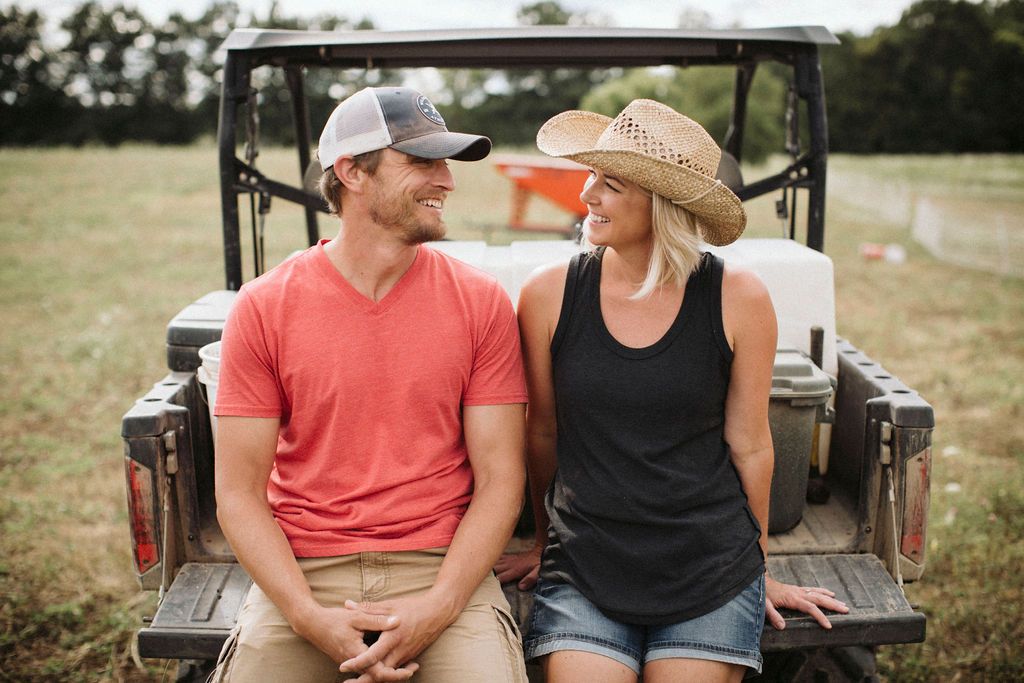
Rob and I have had to lean and cheer on each other through most of this.
Contact Info:
- Website: https://www.thegrazinglife.com
- Instagram: https://www.instagram.com/thegrazinglife/
- Facebook: The Grazing Life