




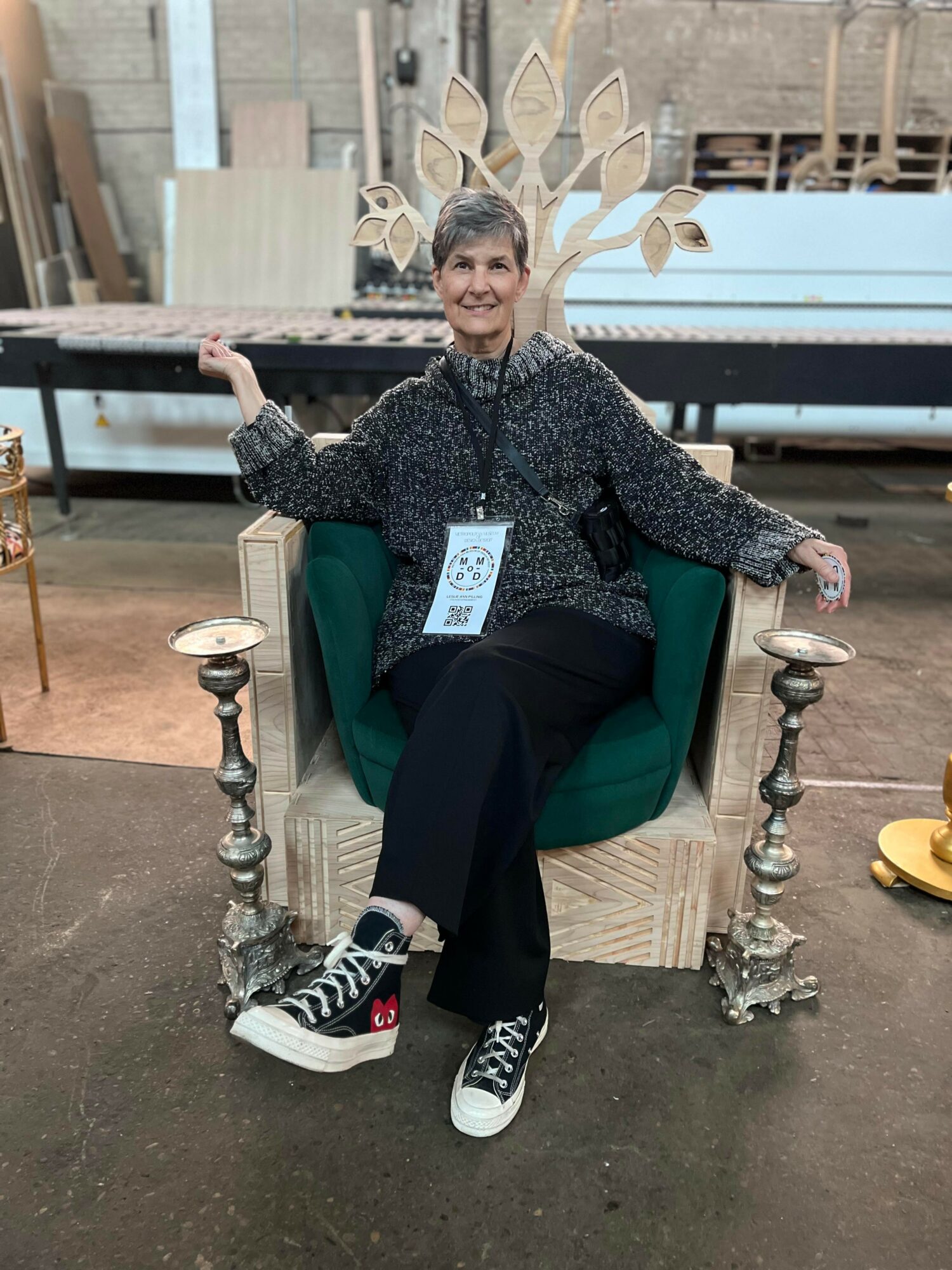
Today we’d like to introduce you to Leslie Ann Pilling.
Alright, so thank you so much for sharing your story and insight with our readers. To kick things off, can you tell us a bit about how you got started?
Leslie Ann Pilling’s Journey Into Design
Leslie Ann Pilling’s story in design began long before she ever recognized it as a career. As a child in Detroit, she found herself mesmerized by color, texture, and the small aesthetic decisions hidden in everyday objects—her neighbors patterned scarves, the stitching on her best friend’s mom, jacket, the elegance of storefront signs along Woodward Avenue. She didn’t yet have the language for it, but she instinctively understood that design was more than decoration. It was a way of seeing the world.
In high school, Leslie gravitated toward the art room, where she discovered the joy of shaping ideas with her hands—fabric, paper, found materials, anything she could transform. She was equally drawn to people and stories, curious about how objects shape our behaviors and how environments influence how we feel. Those dual loves—people and design—quietly guided her choices.
Her early professional years unfolded in the fashion industry, where she learned the discipline behind the craft: research, iteration, quality, and empathy for the end user. She became known for her ability to recognize talent, mentor emerging creatives, and build bridges between disciplines. As she evolved, so did her perspective. Design, she realized, was a collaborative team effort. It was a living conversation across fields—architecture, art, fashion, graphics, music, and community.
Over time, Leslie began imagining a space that honored this interconnectedness. Detroit had shaped her, and she believed deeply that Detroit deserved a museum that celebrated design in all its forms—not as luxury, but as a cultural force and a tool for future generations. She dreamed of a place where the past, present, and possibilities of design could coexist, a place that welcomed seasoned creators, curious learners, and communities who previously seldom saw themselves represented in museums.
That dream became a goal, which became the Metropolitan Museum of Design Detroit—MM-O-DD. Rooted in the city’s grit, innovation, and aesthetic heritage, the museum reflects Leslie’s belief that design is for everyone and that Detroit’s stories, talents, and voices deserve a global platform. Her journey, which began with curiosity and observation, continues with a mission: to shape a more inclusive, imaginative future through the power of design.
I’m sure it wasn’t obstacle-free, but would you say the journey has been fairly smooth so far?
Absolutely not—and Leslie Ann Pilling will tell you that without hesitation.
From the very beginning, her path into design was marked by resistance, uncertainty, and moments that could have easily pushed her toward a more conventional career, and she became a teacher. One of her earliest and most painful struggles was losing the battle with her parents over her chosen path. They guided her with a non-negotiable direction as they believed firmly that there was “zero job security in the design industry.” To them, design was a hobby, not a profession—and certainly not a stable future. Their concerns created a tension that followed Leslie for years, forcing her to fight for her career but for the legitimacy of her passion.
But the challenges didn’t stop there. The design world itself—competitive, fast-moving, and often unpredictable—demanded that she constantly adapt, learn, and advocate for herself. As a young woman in the industry, she sometimes found that her ideas were overlooked or underestimated. Opportunities weren’t handed to her; she built them through persistence, work ethic, and a refusal to compromise her vision.
There were financial struggles too. Pursuing creative work often meant choosing growth over comfort, investing in projects that mattered rather than ones that simply paid the bills. Leslie navigated moments where resources were scarce, doors closed unexpectedly, and progress seemed painfully slow.
Yet each challenge served as fuel. Losing the argument at home only strengthened her determination to succeed. Navigating a tough industry sharpened her instincts and resilience. The financial hurdles taught her how to think creatively, work leanly, and build community around shared purpose.
Those struggles ultimately shaped the founding of the Metropolitan Museum of Design Detroit. Leslie knew firsthand how difficult it is for emerging creatives to find support, recognition, and a sense of belonging. She wanted to build a place that offered the encouragement she once had to fight for—a place where design is valued, where talent is nurtured, and where Detroit’s creative community is celebrated as a cultural force.
The road was not smooth—but it was honest, character-building, and deeply meaningful. And every challenge along the way became part of the foundation on which MM-O-DD now stands.
Thanks – so what else should our readers know about your work and what you’re currently focused on?
Leslie Ann Pilling is a designer, innovator, and cultural builder whose work centers on educational enrichment and experiential opportunities that uplift communities through design. She specializes in creating platforms where creativity, learning, and inclusivity intersect—most notably as the founder of the Metropolitan Museum of Design Detroit. Known for her ability to mentor emerging talent and to transform big ideas into meaningful, real-world experiences, Leslie has built a reputation for turning curiosity into action and for fostering environments where diverse voices feel seen and valued. She is most proud of developing programs and initiatives that assist individuals in discovering their creative potential and shaping their own pathways. What sets her apart is her deep belief that design is not reserved for the elite; it is a living, accessible tool that can empower people of all ages and backgrounds. Through her work, she continues to champion the idea that design transforms communities—and that Detroit’s creative spirit deserves to be recognized on a global stage.
What would you say have been one of the most important lessons you’ve learned?
The most important lesson Leslie Ann Pilling has learned along her journey is that resilience and purpose must walk hand in hand. She discovered that even when doors close, support wavers, or the path feels unclear, staying rooted in one’s mission creates its own momentum. She learned that design—much like life—is an iterative process: you try, you adjust, you try again. Challenges are not setbacks but essential parts of shaping vision, character, and clarity. Most importantly, she learned that surrounding herself with curious, generous, and open-minded people can turn even the most difficult moments into opportunities for growth. This understanding continues to guide her work, her leadership, and her unwavering commitment to building spaces that inspire others to rise with the same resilience she has practiced all along.
Contact Info:
- Website: https://www.mm-o-dd.org/
- Instagram: mm_o_dd