





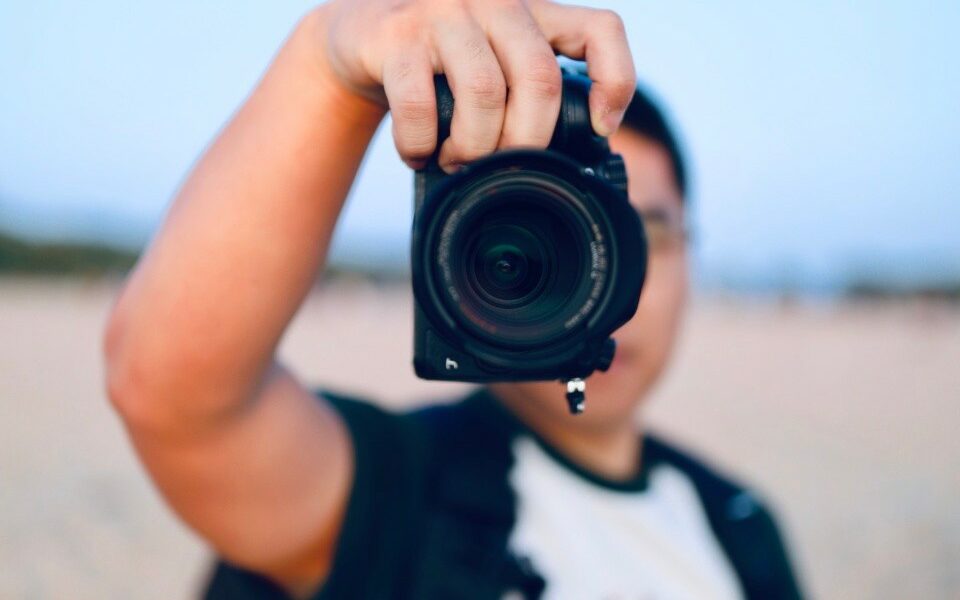
Today we’d like to introduce you to Timothy Hwang.
Hi Timothy, can you start by introducing yourself? We’d love to learn more about how you got to where you are today.
My current “business” is freelance photography, but it didn’t always start that way. I started out as a videographer actually, though I was always interested in cameras since I was a little boy. I learned how to make videos at a summer academy at a church in Korea when I was in middle school. I was one of the younger students there, while most of the people there were adults (most of them were missionaries). I learned to make videos – such as how to use a camera, how to edit simple cuts, and how to construct good storytelling. The academy was built so that missionaries can go out about their mission fields and use their newly learned skill to tell their story. I think that is when I really fell in love with the art of storytelling via the lens.
I continued to make videos throughout my early school year. I would help my dad make videos for his church. If there were school projects, I would be the one who insisted on making the video and editing them. However, I always felt like I wasn’t good enough – especially in putting myself out there, such as on social media or YouTube. The reason was quality – I simply didn’t have “good gears”. I thought I needed a really good camera with good resolution and quality to be able to compete (which is not true), so most of the videos I’ve made were for school projects.
When I graduated high school, my family bought me a full mirrorless DSLR camera, called the Panasonic Lumix GH4, with other accessories, such as a lens, microphone, and a tripod, for my graduation gift. Back in the day, it was one of the higher-end cameras. I would still use it to make videos rather than take photos. It was around this time as well when I started to upload some videos onto my YouTube channel (https://www.youtube.com/user/hyc0614). I also got into an internship at a Korean company to do video work with the help of my mentor who had first taught me about videography at the summer academy in Korea when I was in middle school.
By the time I got into college, I really didn’t have much time to make videos, as it took many hours to plan, shoot, and edit one video. That is when I took a break from making videos and then transitioned into photography. Of course, it wasn’t an easy transition, but many key components remained the same like composition and lighting. I was also fortunate to have friends who were also interested in photography and we would practice together in the art, especially portrait photography. I got more serious with the art of (portrait) photography around my junior year of college, and then around my senior year of college, I decided to try doing freelance photography. I was able to get hired for senior pictures and also be one of the school’s photographers. As with videography, I hadn’t stopped practicing as I was part of the school’s broadcasting club and also taken a class in the art of documentary (my documentary: https://www.youtube.com/watch?v=0TY613L3Lwc). I was also involved with many other clubs as a social chair so my photography/videography skills can further improve. However, my main business focused on being a photographer and taking photos for people, such as events, senior pictures, and family pictures.
Now, I am in graduate school in Indiana, so there isn’t much time for me to be involved with my freelance photography business. However, I still carry my camera most days and walk around downtown to take street photography and portraits for random strangers to help spread my business, but also meet new people!
I’m sure you wouldn’t say it’s been obstacle free, but so far would you say the journey has been a fairly smooth road?
No, it has not been a smooth road, especially time is the biggest factor! I feel like I have to always fight my way to find more time, especially while in school. Although photography takes less time than videography, it still costs me my time to actively go out and take photos and edit them, whether it is portraits, landscapes, street, abstract, etc.
Secondly, confidence. Before I started out as a freelance photographer, I always felt like I was not good enough to be paid for my work. However, one of my friend/mentor told me I have to put value into my work for others to also see the value in my work. There will always be others who are better than you, so I just got to be confident in my work and be proud of the work!
Third, I am a very curious person and have lots of interests. I think it is okay for one to have many hobbies, and I am one of those people. I have many hobbies and interests. Thus, like point 1, there may not be time or sometimes I may not feel like doing something but rather spend time doing my other hobbies. It is a constant battle with myself to be actively involved.
As you know, we’re big fans of you and your work. For our readers who might not be as familiar what can you tell them about what you do?
I am actually a lot of things – Filmmaker, Photographer, Magician, and Chemist. My main work is being a chemist as I am in graduate school, but for my ‘side-job’ I am also a filmmaker and a photographer (I call it PhotoFilmogrpahy)! My filmmaking projects mainly revolve around making videos for YouTube. Contents in my YouTube channel that you will find are documentaries, tutorials (in the art of photography/videography), and just sharing my personal life!
My photography business usually involves taking portraits for people – senior/graduation pictures, events, family photos, etc. Currently, I am trying to practice more landscape and street photography in hopes of selling prints in the future!
With magic – this is just my hobby, not my business 🙂
Any advice for finding a mentor or networking in general?
I have many mentors for different fields, whether that is for my personal life journey, business, or academic. I think many people think you need one mentor, but I think having many mentors is better as you can rely on different mentors for different things where they all can give you different viewpoints. Also, a mentor does not necessarily have to be the oldest or the wisest person (in that field). It can be just a friend who is being accountable to you to be a better person or a friend who shares similar interests. For example, one of my ‘mentors’ is actually the friend from college who practiced photography with me. Also, often times people think a mentor is someone who goes out of their way to help you and always checks on you if you are making good progress – that is a boss, not a mentor. In truth, in my opinion, a mentor is there to answer your questions and help guide you to be a better person in one specific field – in other words, you have to be the one asking questions and searching for answers, not the other way around. A mentor is just there to help you and will always be there for you when you need him/her.
Usually, my mentors are my friends. Most of them have prior experiences in the field I am interested in, and also may have more experience than me. I just ask a ton of questions to my friends and eventually, they became my mentor. In searching for a mentor, you don’t need to look far, as most of them are near you!
Another great option is joining either local or online groups. Search Facebook (or other social media) for groups that you are interested (photography, filmmaking, magic, etc.) Ask questions (A LOT) and eventually, you will find people who are willing to spend time answering your questions. Make relationships with them and also ask if they can be your mentor.
Contact Info:
- Instagram: https://www.instagram.com/timothyishyc/
- Facebook: https://www.facebook.com/timothyishyc
- Youtube: https://www.youtube.com/user/hyc0614
- Other: https://linktr.ee/timothyishyc


Image Credits
Timothy Hwang