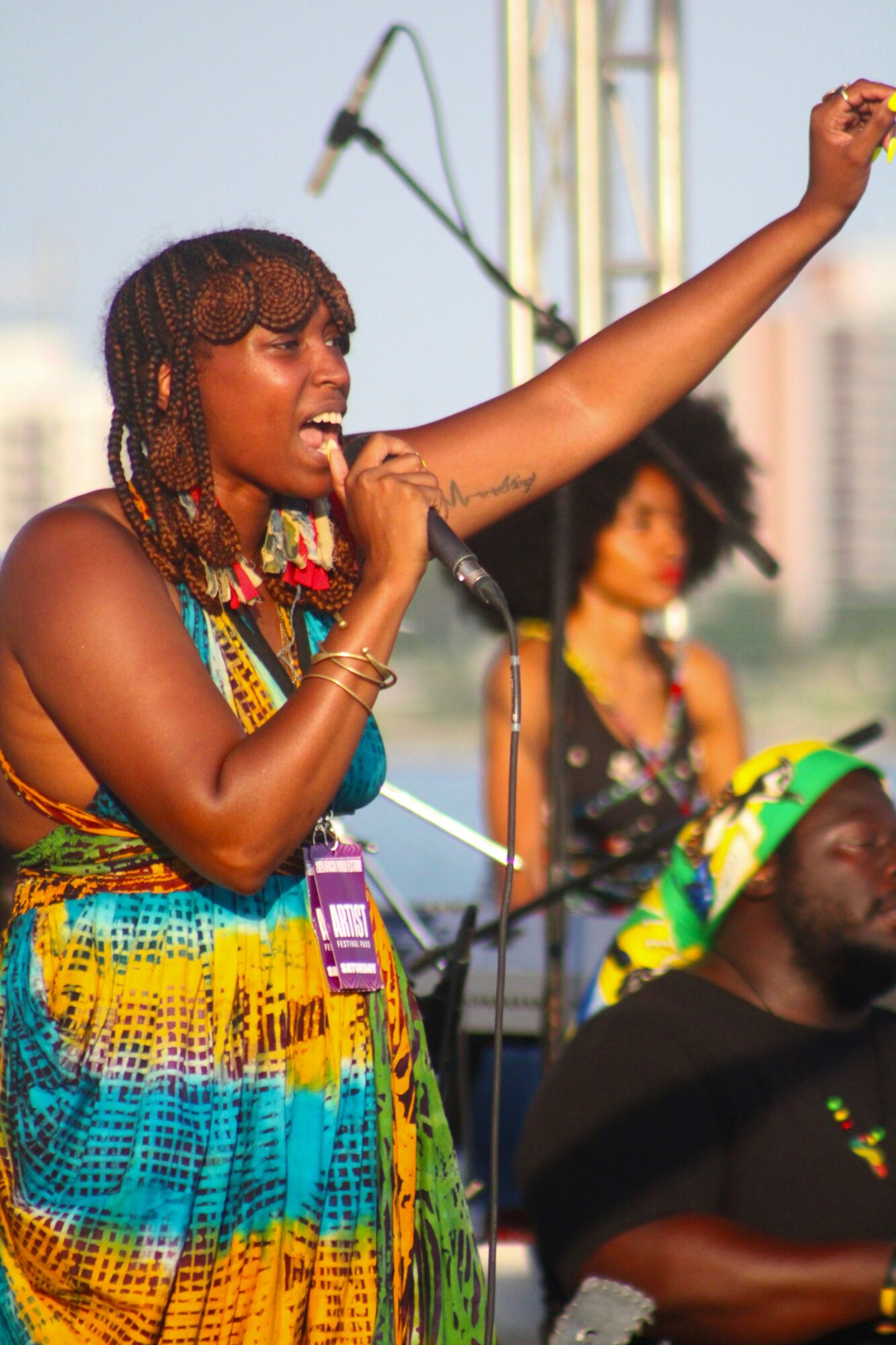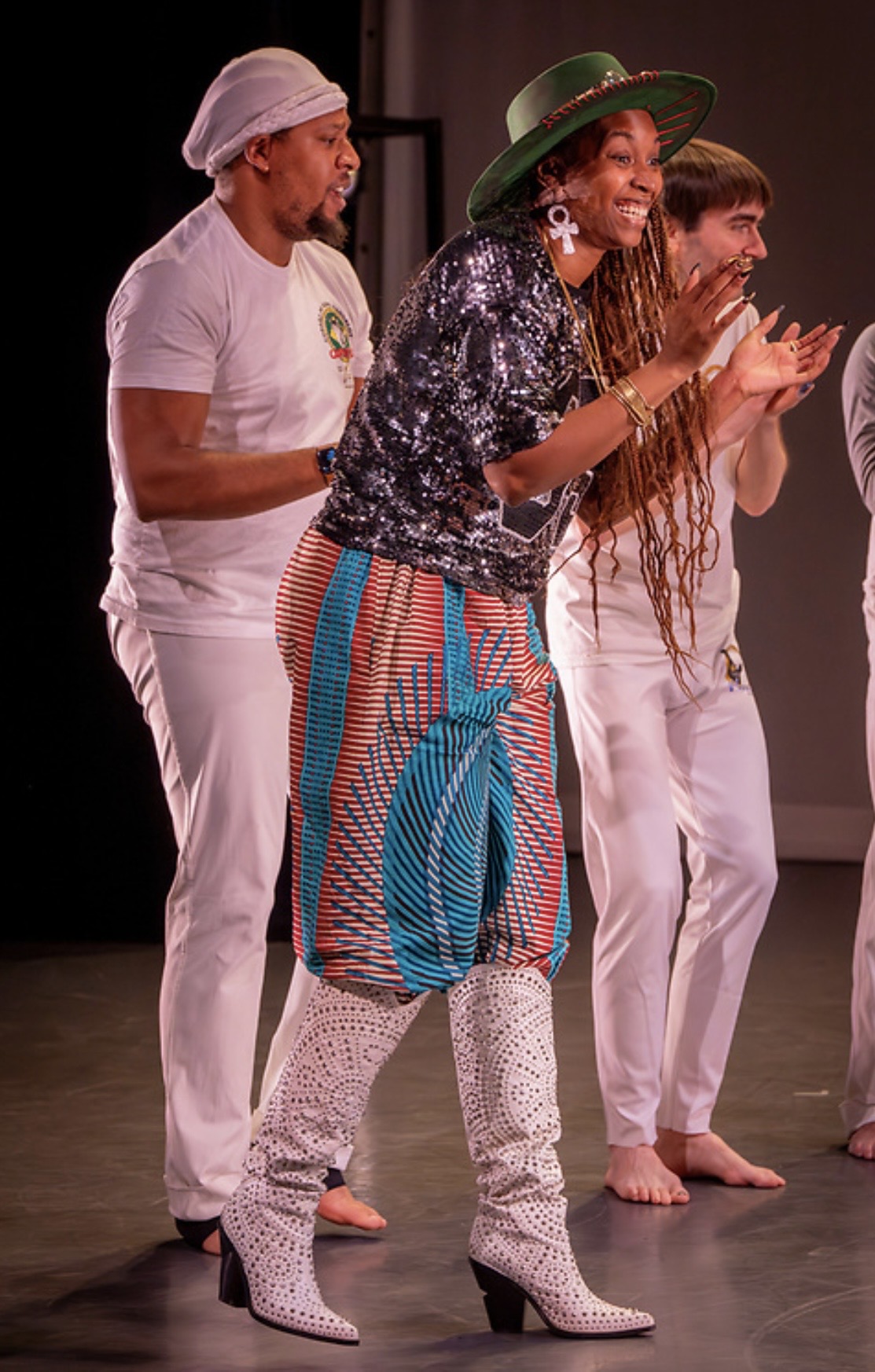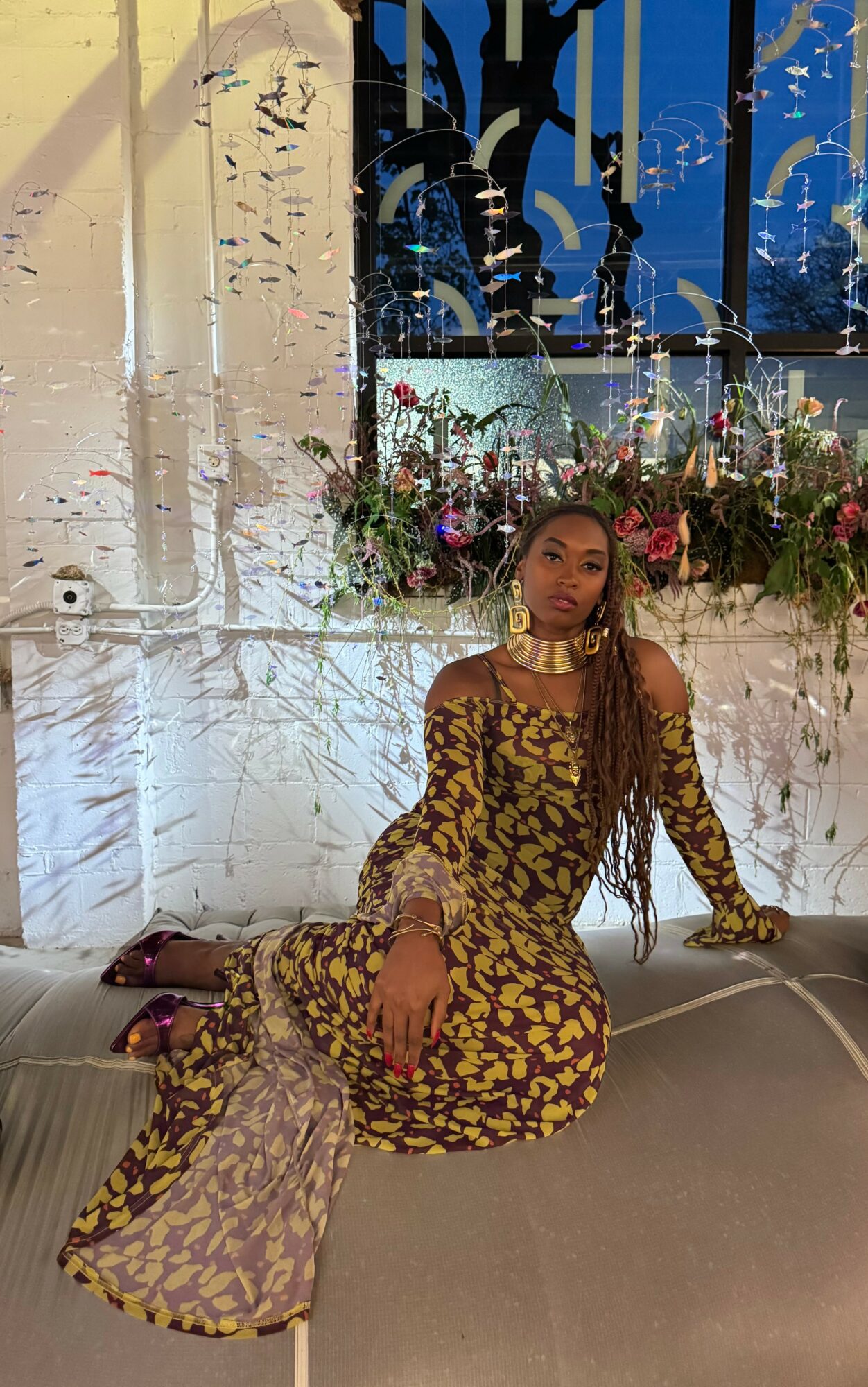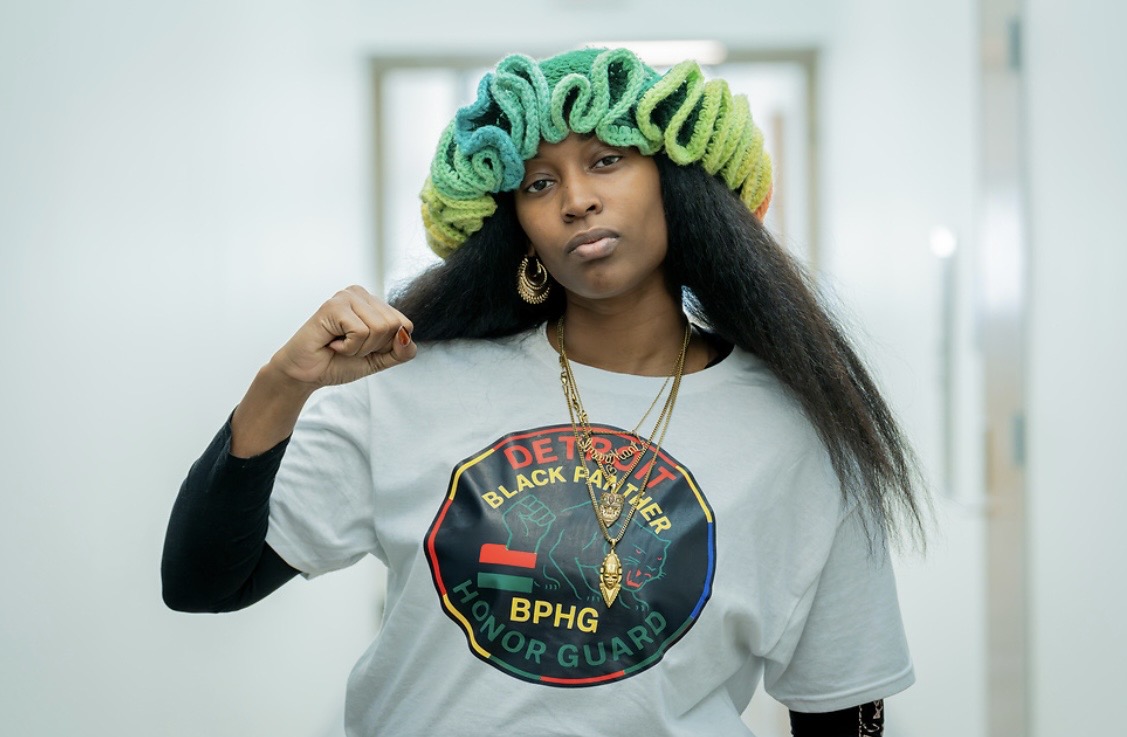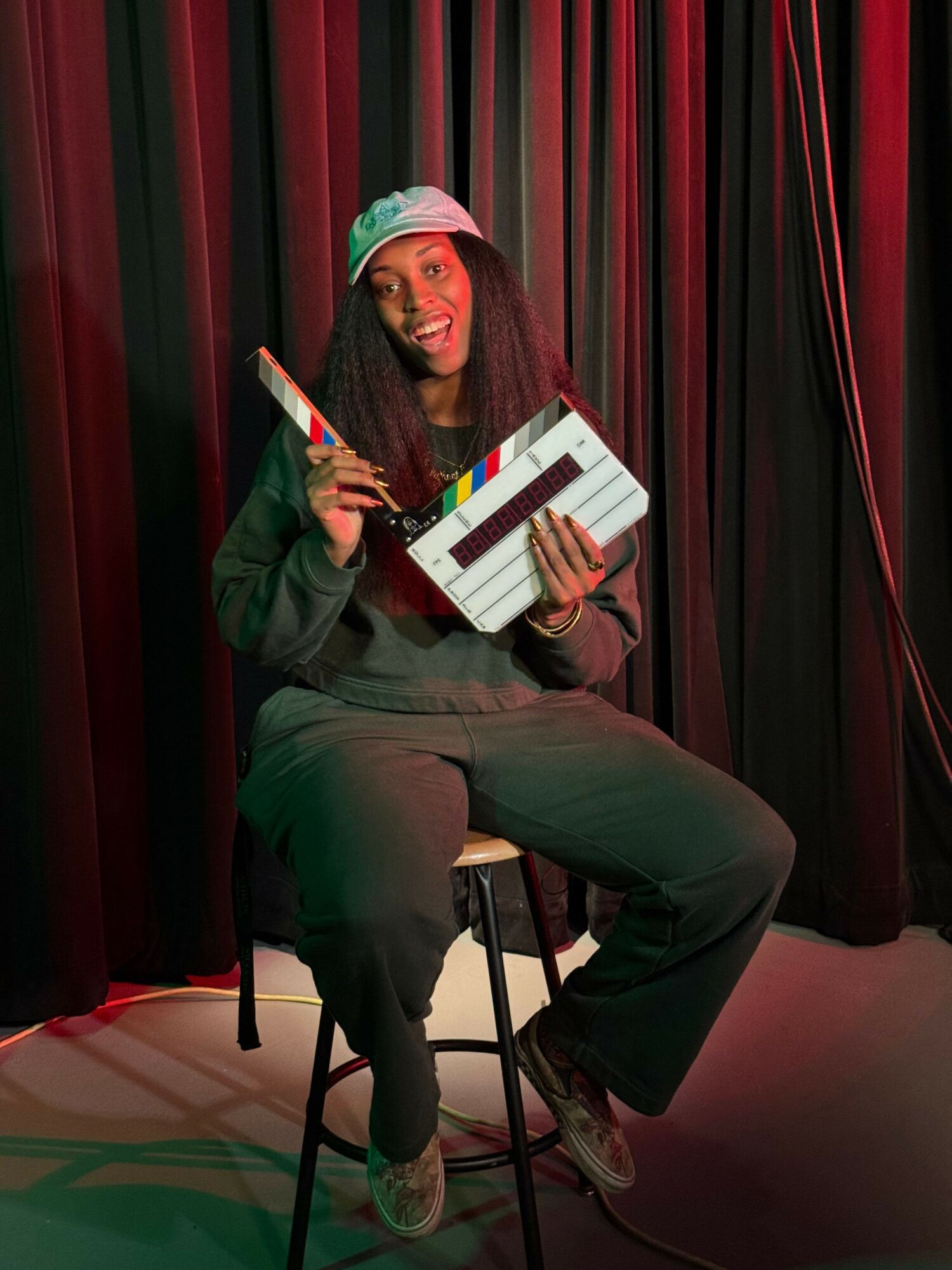




Today we’d like to introduce you to Imani Ma’at AnkhmenRa Amen Taylor.
Alright, so thank you so much for sharing your story and insight with our readers. To kick things off, can you tell us a bit about how you got started?
My story begins long before any title, degree, fellowship, or recognition. At the heart of my journey has always been a calling to use art as a vehicle for education, cultural preservation, healing, and community transformation.
I began my journey as a young dancer and educator in Norfolk, Virginia. By 19 years old, I was already teaching dance and leading summer programming for young people. I became one of the first dance instructors at the Salvation Army Kroc Center in Norfolk when it opened, and I remember leading a summer dance program with nearly 40 children. Looking back, I can see that the foundation for the work I do today was already being built. I wasn’t simply interested in teaching choreography; I was learning how movement could build confidence, discipline, identity, belonging, and community.
As my artistry developed, I became deeply rooted in the dances, rhythms, histories, and cultural traditions of Africa and the African Diaspora, particularly traditional West African dance and drum. My practice eventually expanded to include Dunham, modern, contemporary, hip-hop, choreography, filmmaking, photography, writing, and education. I have always resisted the idea that an artist has to exist in only one box. I see myself as a multidisciplinary artist whose work moves between the stage, classroom, community, and cultural spaces.
Education became another important part of that journey. I earned my BFA in Dance from the University of California, Riverside, and later received my MFA in Dance from the University of Michigan. Graduate school challenged me to examine more deeply what it meant to create work from an African-centered perspective and to understand my artistry not simply as performance, but as research, cultural memory, storytelling, and social practice.
Eventually, Detroit became fertile ground for that vision to grow.
Today, I serve as an educator at Detroit School of Arts, where I teach West African Dance and Physical Education/Health and work with young artists who constantly remind me why this work matters. I have also had the opportunity to choreograph, perform, produce, direct, and collaborate across Detroit’s artistic and cultural community.
My journey has been blessed with significant recognition, including becoming a 2022 Knight Emerging Artist Fellow and a 2024 Kresge Artist Fellow. Those honors were meaningful not simply because of the recognition, but because they affirmed that culturally rooted work—work centered in African traditions, Black stories, education, and community—deserves investment, visibility, and space.
One of the most important evolutions of my journey has been becoming an entrepreneur and organizational leader. I co-founded Flip the Switch 529, an initiative rooted in the belief that education should develop the whole child—mind, body, spirit, creativity, culture, and community. Through this work, I have been able to bring together artists, educators, cultural organizations, families, and community partners to create meaningful opportunities for Detroit youth.
Most recently, I had the opportunity to lead an ambitious six-week summer initiative through DiscoverWorks Summer Programming, funded by United Way for Southeastern Michigan and Ballmer Group. That investment allowed us to build an innovative learning environment serving Detroit children and families through academics, STEM, dance, music, visual art, cultural enrichment, wellness, field experiences, mentorship, and community partnerships.
What made the experience especially meaningful was the opportunity to think beyond traditional education. We created spaces where young people could learn academically while also being introduced to culture, creativity, movement, entrepreneurship, technology, wellness, and experiences outside of their everyday environments. It was about showing children that the world is larger than what they may see every day and helping them recognize that they belong in that larger world.
Leading this initiative stretched me beyond my identity as an artist and educator. I became the visionary, producer, administrator, advocate, collaborator, and institution builder—responsible not only for imagining what was possible, but for building the infrastructure to make it happen. It strengthened my belief that when artists, educators, and community leaders are trusted with resources and given the opportunity to lead, we can create transformative spaces for our communities.
My late father also profoundly shaped the woman and leader I have become. Before transitioning, some of his final words to me were, “Imani, I’m going to give you everything because I know that you are going to be fair.” Those words have stayed with me. I carry them into the way I lead, the opportunities I create, and the responsibility I feel when resources are placed in my hands.
That lesson became especially powerful during this most recent chapter of my work. Being entrusted with significant resources to serve young people reminded me of my father’s words. I understood that the opportunity wasn’t simply about what I could build for myself; it was about how fairly, responsibly, and intentionally I could distribute opportunity throughout my community—creating employment for artists and educators, partnerships between organizations, transformative experiences for children, and opportunities for families.
Success, for me, means more when I can open a door and hold it open long enough for others to walk through it too.
So when people ask how I got to where I am today, there really isn’t one defining moment. It has been a collection of moments—teaching children before I fully understood that education would become part of my life’s work, studying and traveling, learning from elders, embracing African traditions, creating art, experiencing loss, becoming a mother, building organizations, receiving fellowships, making mistakes, taking risks, and continuing to answer the call to serve.
I am still becoming.
Ultimately, I see my artistry as part of something much larger than myself. I am interested in what happens when art becomes infrastructure—when dance becomes education, culture becomes a pathway to identity, creativity becomes economic opportunity, and artistic practice becomes a tool for building stronger communities and future generations.
That is the work I have been called to do, and I feel like I am only at the beginning.
We all face challenges, but looking back would you describe it as a relatively smooth road?
No, it has not been a smooth road—and I don’t think anything meaningful I have built has come without sacrifice.
One of my greatest struggles has been learning how to carry a large vision in environments that may not immediately understand it. I am an artist, but I am also an educator, cultural worker, entrepreneur, mother, and community builder. For a long time, I felt pressure to choose one identity or make myself easier to define. Eventually, I realized that my ability to move between all of these worlds is actually one of my greatest strengths.
There have also been very real challenges around resources and access. Many artists and grassroots community leaders have extraordinary ideas but don’t always have immediate access to the funding, infrastructure, relationships, or institutional support necessary to bring those ideas to life. I have had to learn grant writing, budgeting, program development, administration, partnership building, fundraising, and advocacy alongside being an artist. Some of those skills were born out of necessity.
I’ve also experienced what happens when you are the person willing to dream big and take responsibility for making that dream real. Leadership can be beautiful, but it can also be heavy. There have been moments when I was simultaneously teaching, creating, managing staff, solving problems, communicating with families, handling logistics, writing grants, developing curriculum, advocating for resources, and still being expected to show up creatively. I have learned that vision requires more than inspiration—it requires systems, boundaries, accountability, and endurance.
There have been disappointments along the way as well. I have learned difficult lessons about collaboration, trust, reciprocity, and discernment. Not every person who celebrates the vision is prepared to help carry the responsibility of building it. I’ve had to learn when to extend grace, when to establish stronger boundaries, and when to simply keep moving forward.
Personally, losing my father changed me profoundly. His transition forced me to confront grief while continuing to build a life, raise my family, create, teach, and lead. His final words to me—“Imani, I’m going to give you everything because I know that you are going to be fair”—became something I carried through some of my hardest seasons. They remind me that what we inherit is not only material; sometimes we inherit responsibility, principles, and purpose.
Motherhood has transformed the journey as well. Becoming a mother while continuing to pursue my artistry and leadership has required me to reconsider success. I am building while raising a child, teaching other people’s children, serving families, and still protecting space for myself as a woman and an artist. It has made me more intentional about the world I am helping create.
I have also had to learn not to measure my journey against someone else’s timeline. Some seasons were about performing. Others were about education. Some were about surviving, studying, grieving, parenting, or quietly building something that people couldn’t see yet. I now understand that none of those seasons were wasted.
The road has challenged me, humbled me, sharpened me, and deepened my discernment. But it has also shown me what I am capable of.
I don’t romanticize struggle. I believe Black artists, educators, and community builders deserve ease, resources, rest, support, and abundance—not just recognition for how much we can endure. Part of my work now is building structures where the next generation doesn’t have to struggle in all of the same ways we did.
Every obstacle has taught me something about the kind of artist, mother, educator, and leader I want to become. I am grateful that the difficult parts of the journey did not make me smaller. They made my vision clearer.
Can you tell our readers more about what you do and what you think sets you apart from others?
My work lives at the intersection of artistry, education, African culture, youth development, and community transformation. I am a multidisciplinary artist, educator, choreographer, cultural practitioner, entrepreneur, and the co-founder and Executive Director of Flip the Switch 529. At the center of everything I do is a commitment to using the arts not simply as entertainment, but as a vehicle for identity, education, healing, cultural preservation, and liberation.
Artistically, I specialize in traditional West African dance and drum, with a significant part of my training and artistic lineage connected to Guinea, West Africa. My movement vocabulary also includes Dunham, modern, contemporary, and hip-hop. I am a writer, filmmaker, photographer, choreographer, and educator, and I believe all of these disciplines speak to one another. Whether I am creating choreography, teaching a classroom of young people, directing a production, writing a grant, or developing a community program, I am still creating.
An important influence within my West African dance training has been Moustapha Bangoura, an internationally recognized Guinean master dancer, choreographer, and former member of the National Ballet of Guinea (Les Ballets Africains). Studying within this lineage has given me a deeper understanding that African dance is not simply movement—it carries history, language, rhythm, spirituality, community, and generations of cultural knowledge. That understanding has profoundly shaped how I teach and how I approach cultural responsibility within my artistry.
I am perhaps most known for my ability to bridge worlds. I can move between the stage and the classroom, between traditional African cultural practices and contemporary artistic expression, and between being the artist with the vision and the administrator who figures out how to fund and execute it. I don’t believe artists should have to separate their creativity from their ability to build institutions, create opportunities, and transform communities.
Through Flip the Switch 529, my vision has expanded into creating African-centered, whole-child educational experiences that educate, empower, and elevate young people. Most recently, I led a six-week initiative through DiscoverWorks Summer Programming, funded by United Way for Southeastern Michigan and Ballmer Group, bringing together academics, STEM, dance, music, visual arts, cultural enrichment, wellness, mentorship, field experiences, and community partnerships for Detroit youth and families.
One of the things I am most proud of is my ability to turn an idea into something tangible that other people can benefit from. When resources come into my hands, my first thought is: How many doors can this open? How many artists can work? How many children can experience something they’ve never experienced before? How many families can be impacted?
That philosophy has inspired the newest evolution of my work: an initiative to take 25 young people to Guinea, West Africa, completely free of cost to them and their families.
This initiative is especially personal because it brings my own artistic training full circle. The students will have the extraordinary opportunity to study and perform with Moustapha Bangoura and artists connected to the National Ballet of Guinea, placing them in direct relationship with the cultural lineage that has so deeply influenced my own development as a West African dance artist and educator.
For me, there is something profoundly powerful about moving from being the student who received this knowledge to becoming the educator who can create a pathway for the next generation to experience that knowledge at its source.
This is much more than a trip. I envision it as a cultural homecoming, artistic residency, and transformational educational experience. I want our young people to stand on African soil; study traditional dance and drumming alongside master artists and culture bearers; perform in Guinea; experience the language, food, history, music, and everyday life of the people; and understand Africa beyond what they may have encountered through textbooks or media.
There is something powerful about a young person of African descent being able to encounter the continent through their own eyes.
My goal is to remove finances as the barrier. I don’t want a child’s ability to participate to depend upon whether their family can afford airfare, accommodations, meals, transportation, or cultural programming. I want all 25 young people to experience Guinea at absolutely no cost to their families. That means building partnerships, raising funds, writing grants, engaging sponsors, and bringing together a community of people and institutions who believe our children deserve access to the world.
That initiative represents so much of what sets my work apart. I don’t only teach young people about possibility—I work to physically place them inside of possibilities they may have never imagined for themselves.
I am also deeply proud of my work as an educator at Detroit School of Arts, where I teach West African Dance and Physical Education/Health. Being able to pour into the next generation of artists while maintaining my own professional artistic practice is sacred work to me. My students aren’t simply learning movement; they are learning history, discipline, cultural responsibility, confidence, collaboration, and the importance of knowing where they come from.
Receiving honors such as the 2022 Knight Emerging Artist Fellowship and becoming a 2024 Kresge Artist Fellow has affirmed my artistic journey, but some of my proudest moments will never appear on a résumé. They are the moments when a child discovers something powerful within themselves, when a young artist receives an opportunity because I was able to open a door, or when a family tells me their child experienced something they will remember for the rest of their life.
What sets me apart is that I don’t separate art from service.
My artistry is connected to my ancestry. My teaching is connected to my community. My entrepreneurship is connected to creating access. My training connects me to a lineage that I now have the responsibility to pass forward. And my leadership is connected to leaving something behind that is larger than myself.
I am not interested only in creating successful programs or beautiful performances. I am interested in building legacy.
Ultimately, I want my work to demonstrate what becomes possible when we invest deeply in our children, trust artists as leaders and visionaries, honor African cultural traditions, and give young people access to experiences that expand their understanding of who they are and who they can become.
For me, that is success: receiving knowledge, honoring it, and then creating a bridge so the next generation can travel even farther than I did.
Can you tell us more about what you were like growing up?
Growing up, I was independent, kind, respectful, caring, loving, and incredibly giving. Those qualities were poured into me by my family from the very beginning. I am the youngest in my family—and I was actually the surprise baby—so I grew up surrounded by a lot of love, protection, wisdom, and strong personalities. I learned early how to be independent while also understanding the importance of family and community.
Growing up in Norfolk, Virginia, gave me a deep foundation. Norfolk shaped my character, my creativity, and the way I understand community. But my identity has never belonged to just one place. My roots stretch through Brooklyn, New York; Asbury Park, New Jersey; Los Angeles, California; Detroit, Michigan; and ultimately across the Atlantic to Guinea, West Africa.
In many ways, I am a melting pot of all these places and all these people.
As I grew older, traveled, studied, and developed as an artist, my definition of family expanded. Detroit became another home and gave me a community that deeply shaped the woman, educator, and artist I am today. Through my studies and travels in Guinea, West Africa, I also inherited family and community that strengthened my connection to African culture and transformed the way I understand my artistic practice.
You could say I have always been an all-around kind of girl. I was curious and creative, but I was also someone who cared deeply about people. I loved dance, music, culture, storytelling, and artistic expression, but underneath all of those interests was always a desire to connect. Even as a young person, I understood that how you treat people matters.
Every community that has embraced me has contributed something to the fabric of my being. They have shaped the way I engage with people, the way I approach my artistry, the way I lead, and especially the way I value respect, kindness, generosity, cultural pride, and community responsibility.
I think that’s why my work today is so naturally centered around people. My artistry isn’t something I learned to separate from life—it grew directly out of my life, my family, my communities, and the many places that have called me their own.
Now, one of the most beautiful parts of growing older is realizing that the values once poured into me are the same values I am pouring into my own child and my students. I am carrying forward what was given to me while adding what I have learned along the journey.
So when people ask where I’m from, the answer is layered. Norfolk raised me, but many communities helped make me. I carry pieces of Virginia, New York, New Jersey, California, Detroit, and Guinea everywhere I go. Each place has given me something, and all of it lives within the woman and artist I have become.
Pricing:
- West African Dance Workshops & Residencies: Available for schools, universities, libraries, cultural institutions, community organizations, and private groups. Pricing varies based on length, number of participants, travel, and whether live drumming is included.
- – **Performances & Cultural Programming:** Available for festivals, schools, universities, corporate events, cultural celebrations, and community programs\. Rates are customized based on the scope of the performance and number of artists involved\.
- – **Choreography, Artist Residencies & Creative Direction:** Available for educational institutions, dance companies, productions, and special projects\. Pricing is determined by the scope and duration of the project\.
- • Speaking Engagements & Educational Programming: Available for panels, workshops, conferences, schools, and community organizations, with rates based on the nature and length of the engagement.
- – **Guinea, West Africa Youth Initiative:** Flip the Switch 529 is currently seeking sponsors, donors, and community partners to support our initiative to take **25 young people to Guinea, West Africa at no cost to the students or their families**, where they will study and perform alongside master artists and culture bearers\. Sponsorship and partnership opportunities are available.
Contact Info:
- Website: https://imanimaatisevolving-com.webnode.page/
- Instagram: https://www.instagram.com/_imanimaat/
- LinkedIn: https://www.linkedin.com/me?trk=p_mwlite_feed-secondary_nav
- Youtube: https://youtube.com/@imanimaat5332?si=BrbTy9yQg1NIj2SR
- Other: https://kresgeartsindetroit.org/artist/imani-maat-ankhmenra-amen-taylor/