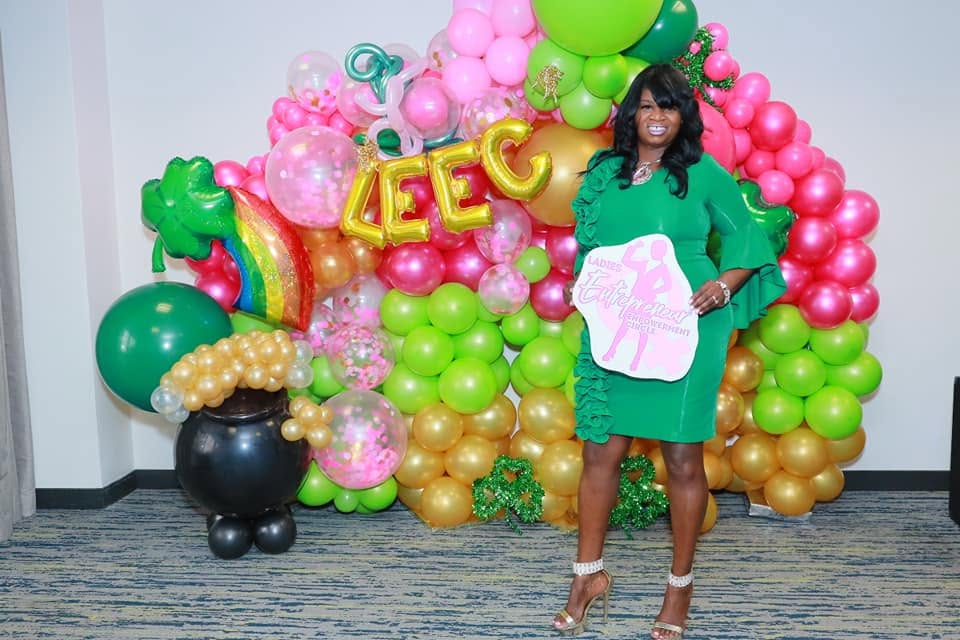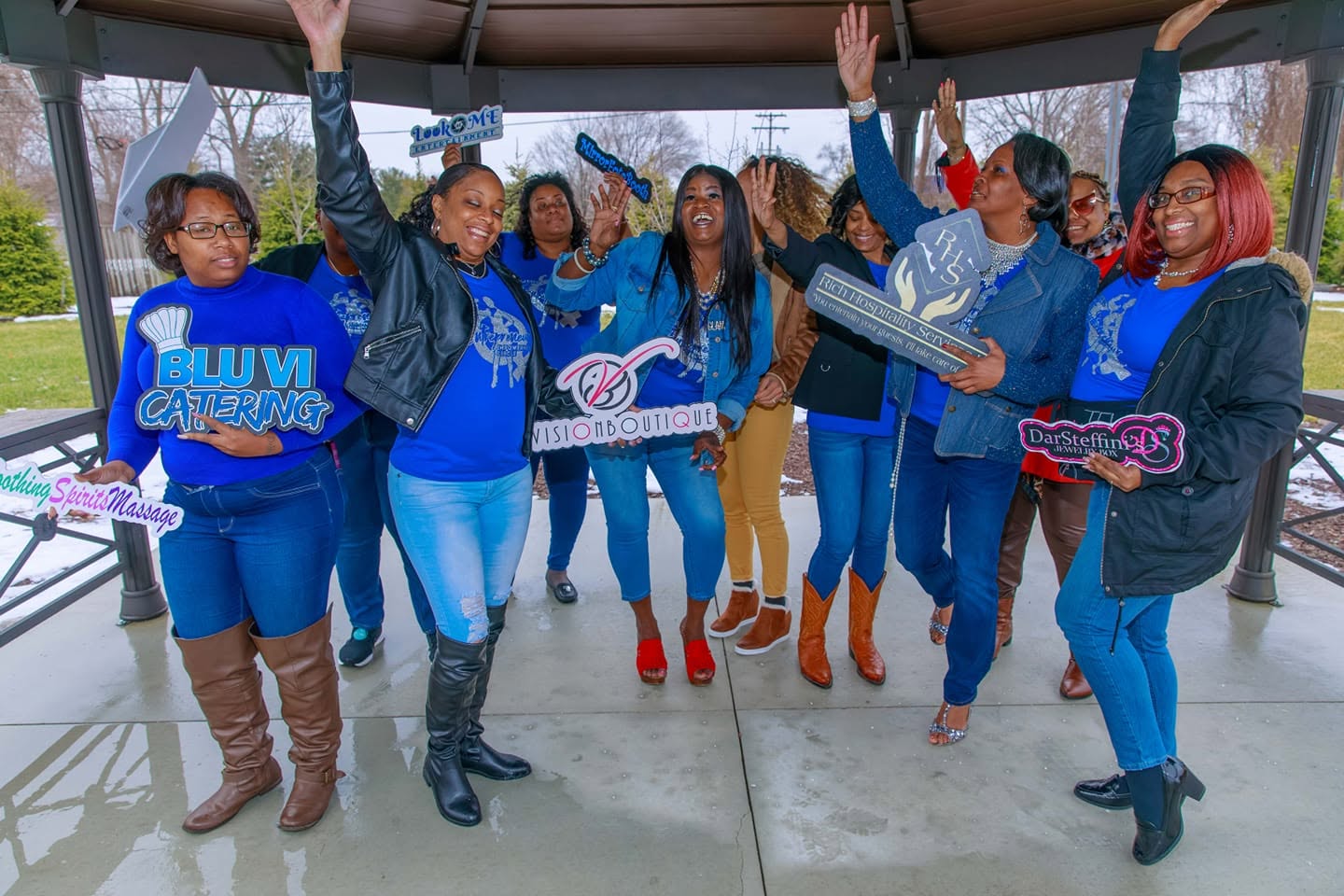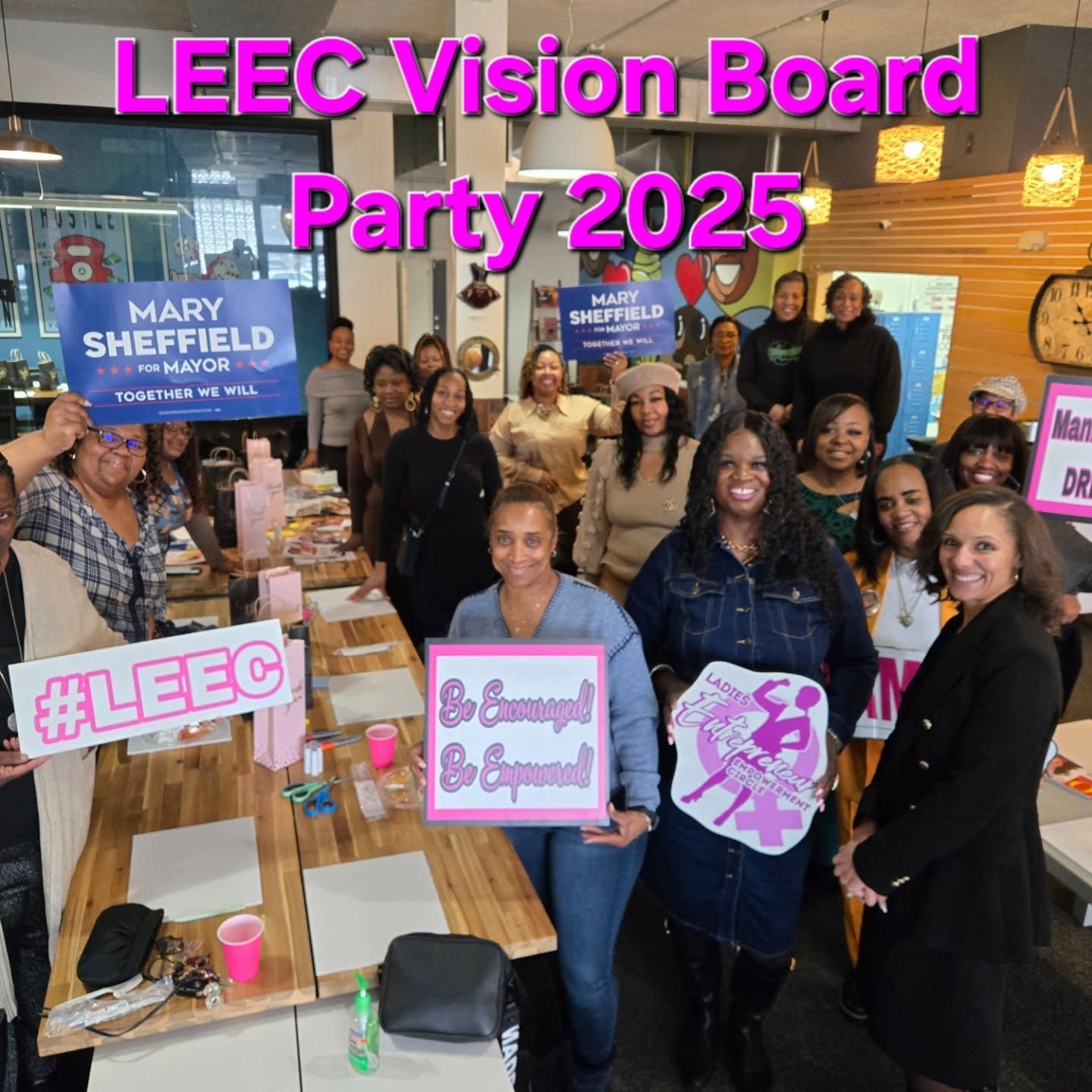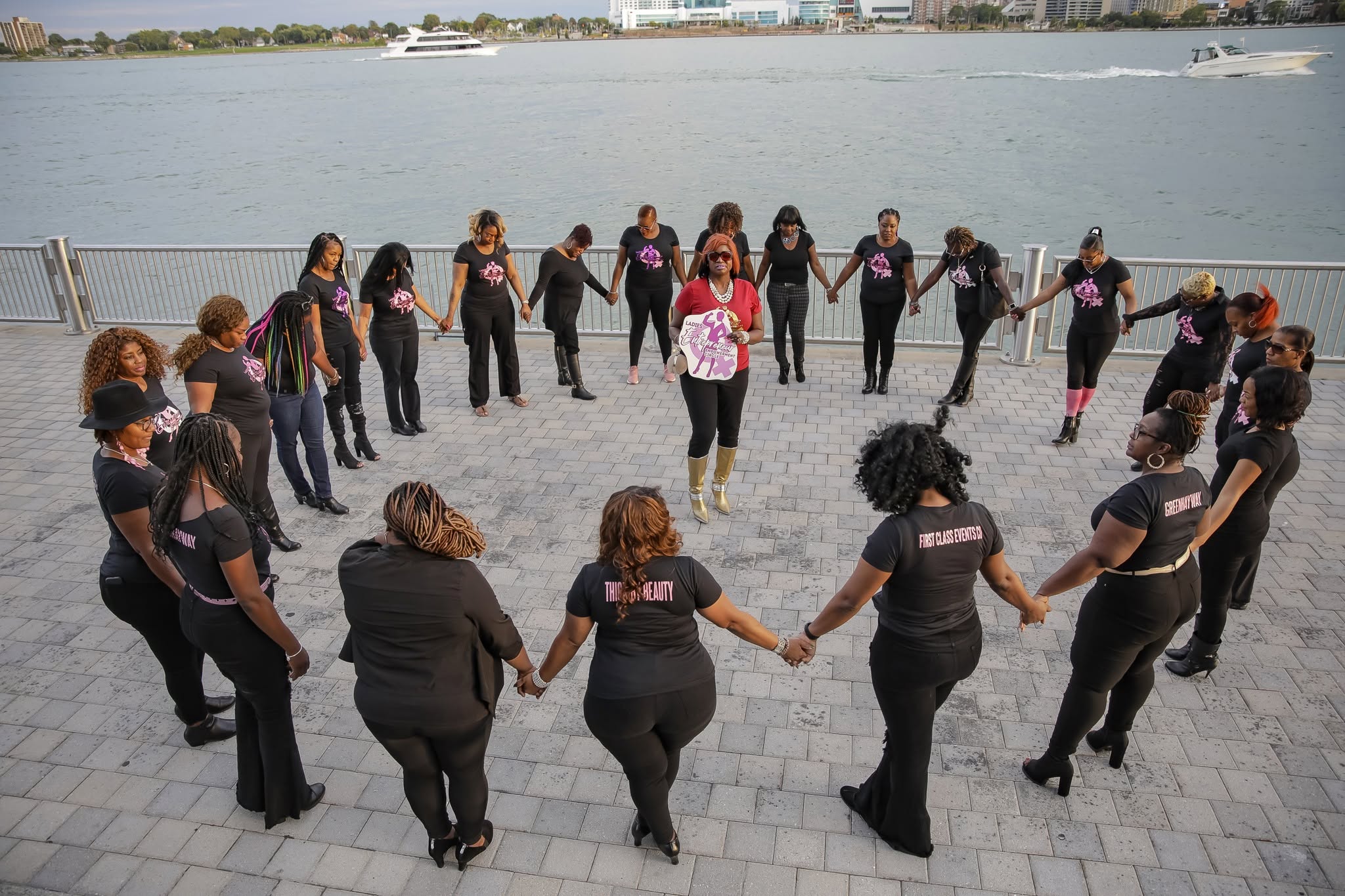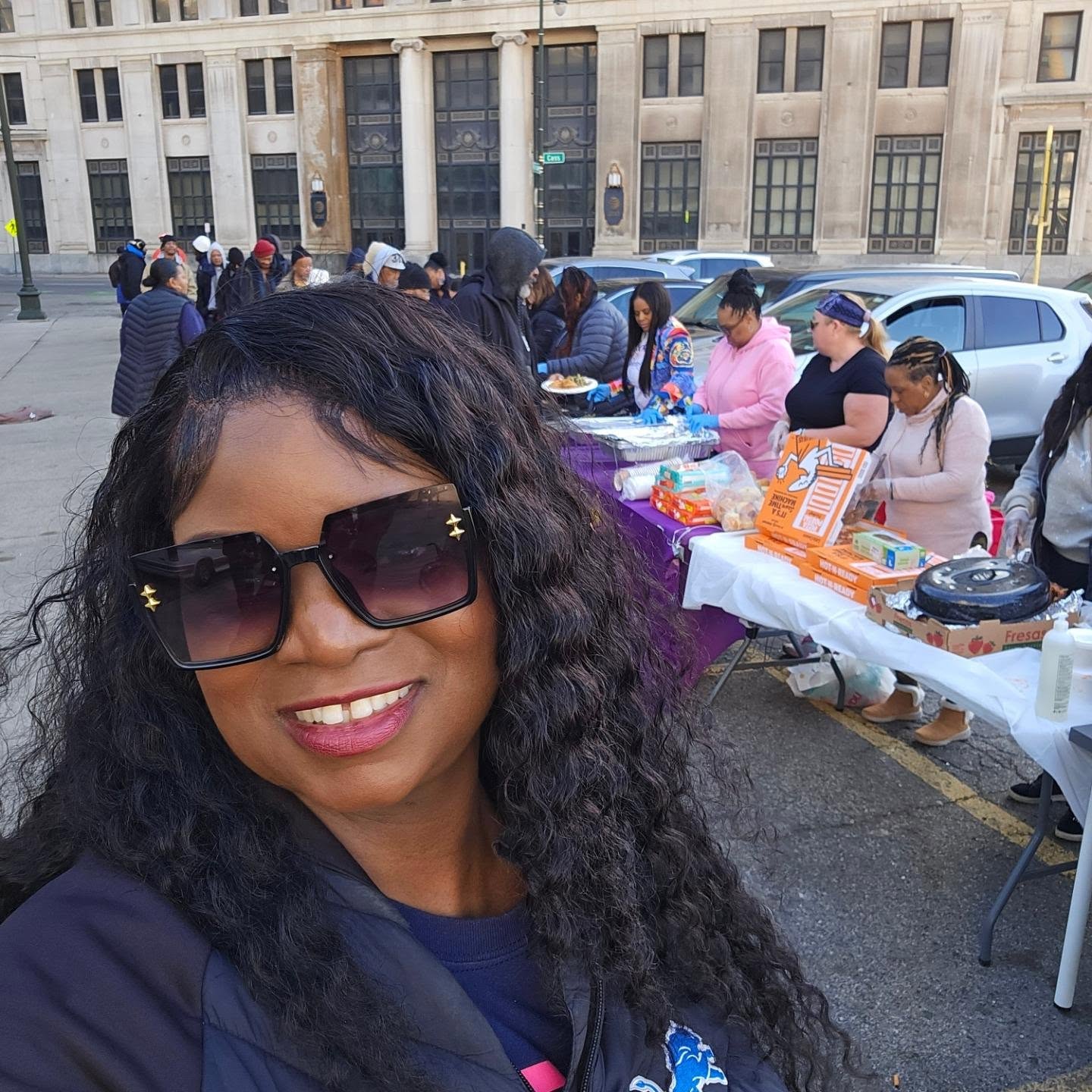





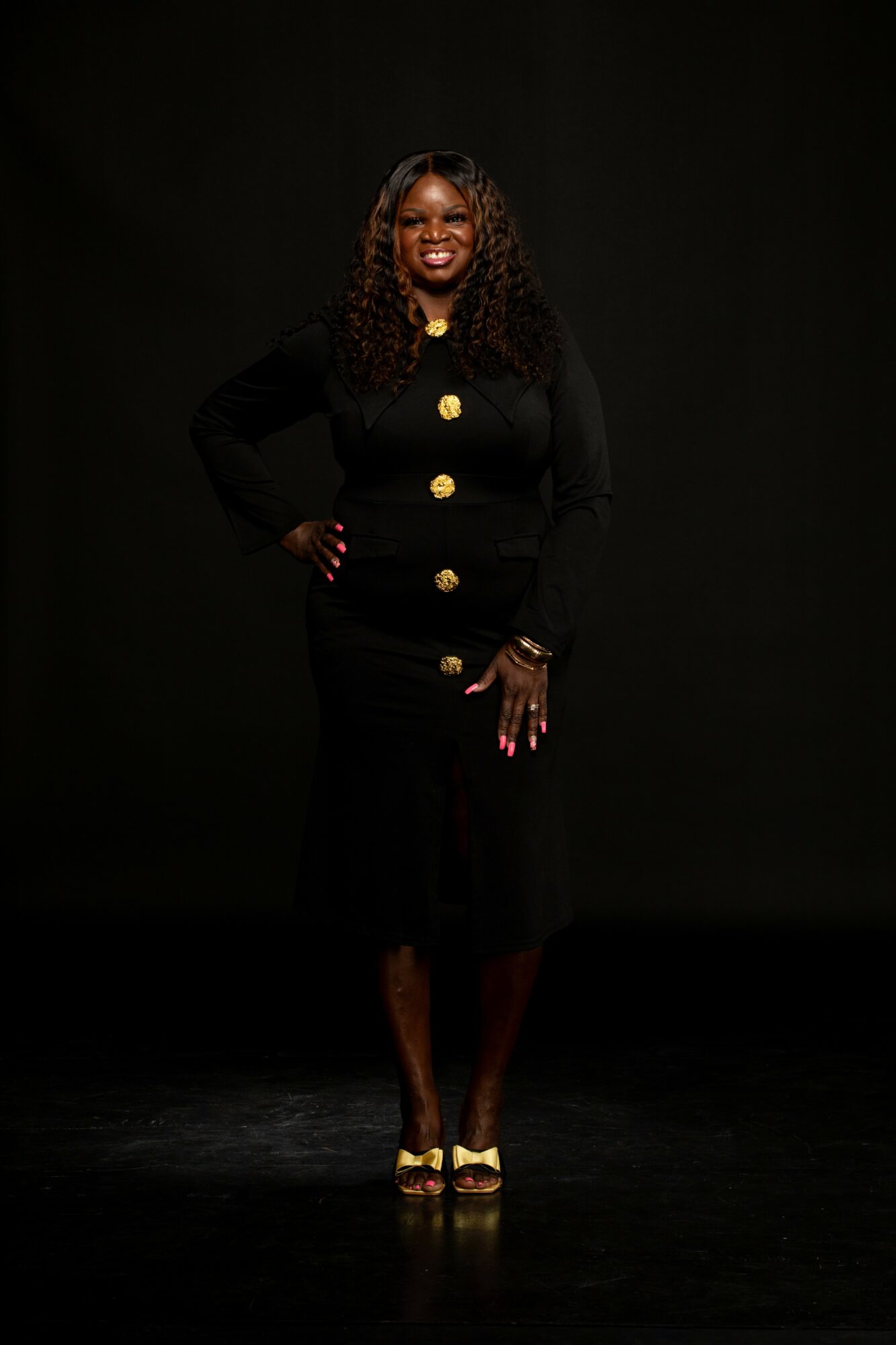
Today we’d like to introduce you to Dr. Andrea Thompson.
Hi Dr. Andrea, please kick things off for us with an introduction to yourself and your story.
My story begins in Detroit, long before I fully understood that the lessons I was learning as a little girl would one day become the foundation for my life’s work.
I grew up spending weekends and summers with my father and grandparents, who were Black business owners in Detroit. My grandparents’ entrepreneurial roots reached back to the era when Black Bottom and Paradise Valley, particularly the Hastings Street corridor, represented the heart of Black business, culture, entertainment, faith, and community in Detroit.
After displacement and redevelopment changed that historic community, my family relocated their business to the Linwood and Lothrop area, just a few blocks from West Grand Boulevard. Although the location changed, the values did not.
From the time I was a child, I was learning entrepreneurship without realizing I was being trained.
I learned that business was about more than making money. It was about people.
I watched my grandmother extend groceries on credit to neighborhood families who did not have enough money to feed their children before payday. She knew they would come back when they were paid, but more importantly, she understood that people deserved dignity even when they were struggling.
I watched my father give employment opportunities to people who were on probation. He allowed them to work in his restaurant and helped provide the accountability they needed to demonstrate that they were working and moving their lives forward.
Those experiences shaped me.
My family taught me that you could operate a successful business, take care of your family, serve your community, treat people with dignity and respect, and still keep God at the center of everything.
Our family was well known in the community, and we lived not far from the home of Rev. C. L. Franklin, father of the legendary Aretha Franklin. I was surrounded by Detroit history, Black excellence, entrepreneurship, faith, music, resilience, and community leadership.
But my childhood also had another side.
When I returned home to live with my mother, I experienced significant financial, emotional, mental, and physical struggles. My parents had separated when I was young, and I often became the recipient of pain that my mother herself was carrying. I was also growing up in an impoverished community dealing with the consequences of systemic racism, economic inequality, disinvestment, and generational trauma.
I experienced both worlds: entrepreneurship and poverty, opportunity and struggle, love and pain, community strength and systemic inequity.
Today, I understand that I needed to see both.
Those experiences gave me compassion for people who are trying to build something while simultaneously trying to survive something.
My Christian upbringing also planted seeds that would become essential later in my life. I grew up in church and began experiencing a personal relationship with God at an early age. Over time, my faith became the foundation of my healing, deliverance, restoration, leadership, and purpose.
I persevered.
My father strongly encouraged education, and I went on to college, built a career in education and counseling, worked with young people involved in the juvenile justice system, and became deeply involved in community leadership.
For more than two decades, I served children, families, schools, and communities. Yet despite the accomplishments and the lives I was privileged to impact, I knew there was still something more that I was supposed to do.
In 2019, I prayed.
I asked God, “What direction am I supposed to go in now?”
Because I had learned to recognize God’s guidance from childhood, I knew that when I reached a crossroads, I could go back to the One who gave me my purpose.
Out of that season of prayer came the vision for the Ladies Entrepreneur Empowerment Circle, now known as LEEC.
I did not just receive the vision. I acted on it.
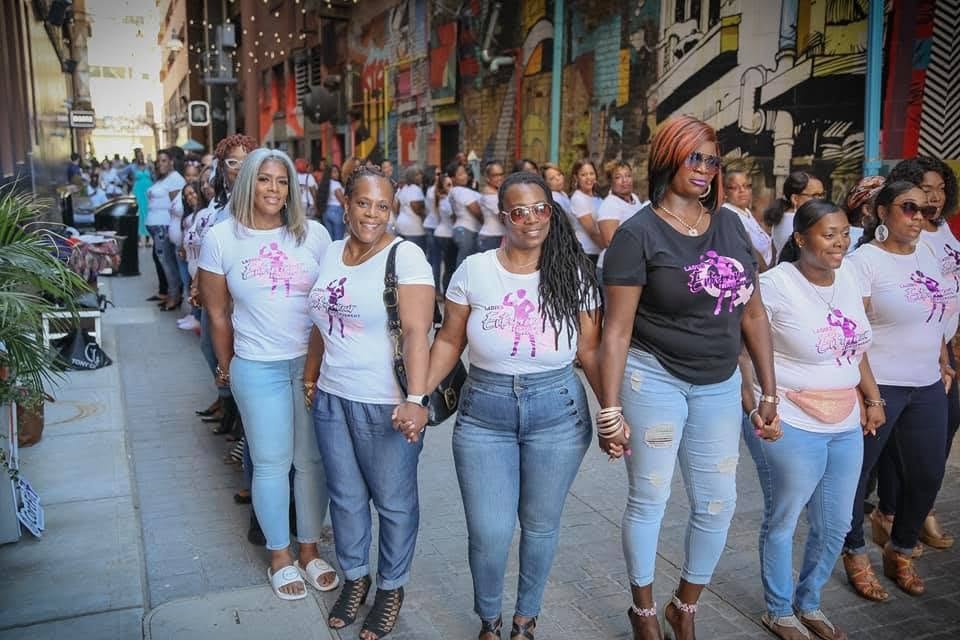
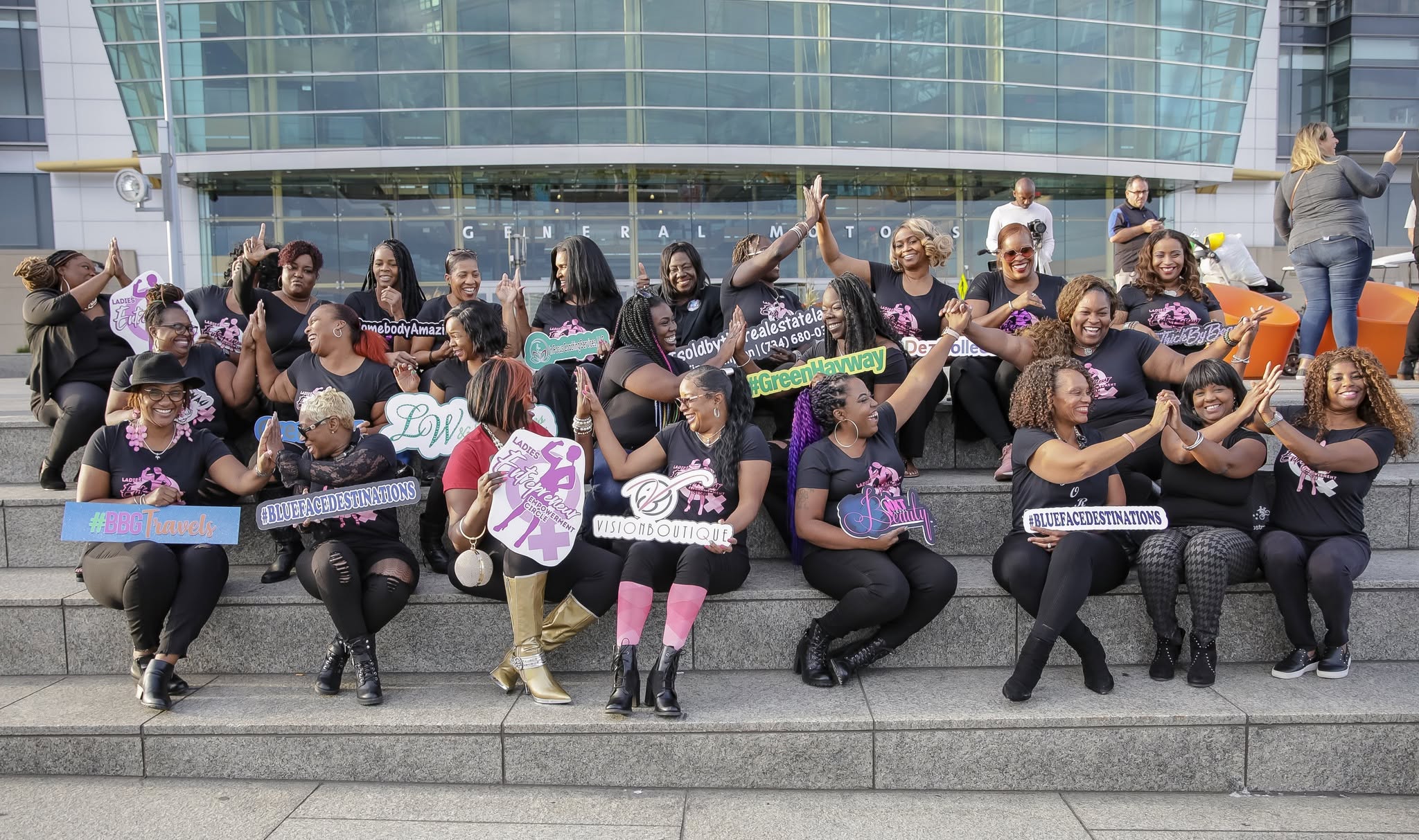
On March 21, 2019, I founded LEEC in Detroit to create the kind of ecosystem I had witnessed growing up: women supporting women, businesses supporting communities, entrepreneurs circulating resources, and leadership being used to create opportunities for people who might otherwise be overlooked.
In many ways, LEEC brought me full circle.
The little girl who watched her grandmother help families put food on their tables and watched her father give people second chances grew into a woman determined to create opportunities for thousands of others.
Today, LEEC operates through both an LLC and a 501(c)(3) nonprofit arm, providing support, education, resources, networking, leadership development, community engagement, and entrepreneurial opportunities for aspiring and established women entrepreneurs, with a particular commitment to disadvantaged women of color.
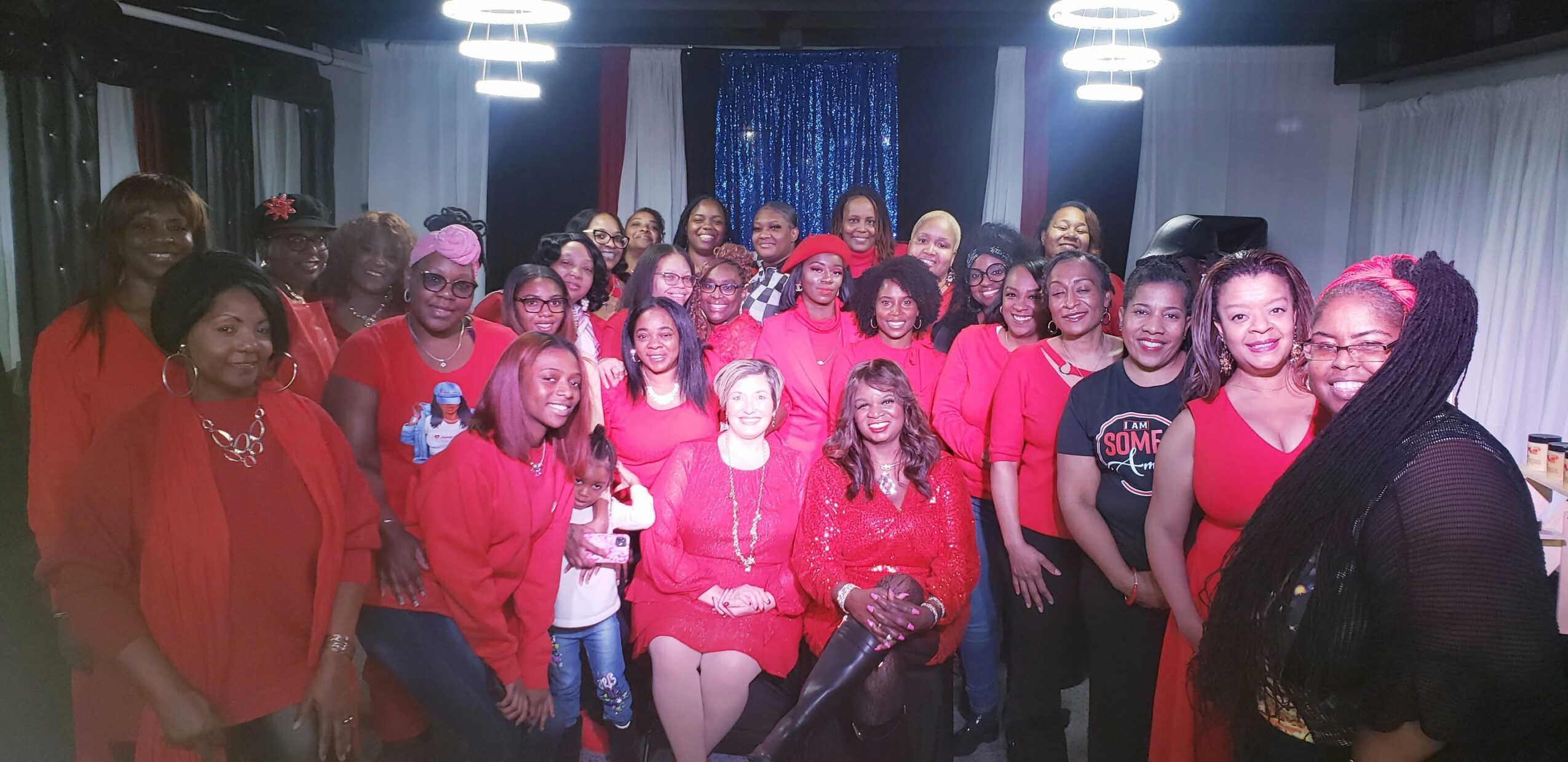
What began as a Detroit-based Facebook sisterhood has developed into a much larger movement. Over the past seven years, our network has reached approximately 5,000 women in Detroit and more than 10,000 women nationally and internationally.
Our impact has included 62 community markets, more than $125,000 reinvested into the local economy, support for more than 200 entrepreneurs, 15 businesses moving into brick-and-mortar locations, and five vendors acquiring food trucks.
But I have never measured impact by numbers alone.
We have supported youth through entrepreneurship and business literacy programs, scholarships, school supplies, literacy initiatives, and prom dress giveaways that have distributed more than 1,000 dresses. We have provided resources to survivors of domestic violence and human trafficking, returning citizens, families experiencing financial hardship, shelters, youth, and grandparents.
We have hosted voter registration initiatives, expungement clinics, community conversations, entrepreneurship training, financial education, networking experiences, and opportunities that help women move from simply having an idea to building sustainable businesses.
COVID-19 challenged our organization tremendously. Before the pandemic, LEEC had four chapters across the country. Like many organizations, we were navigating something none of us had ever experienced, and those chapters eventually dissolved.
But the vision did not die.
Sometimes expansion requires rebuilding.
On August 1, 2026, we officially launched our Georgia chapter, marking an exciting new chapter in LEEC’s national expansion. Our vision now is to establish chapters throughout the United States and ultimately internationally.
We are actively seeking purpose-driven women who believe in collaboration over competition and want to serve as LEEC Chapter Presidents in their cities. These women will not simply carry a title. They will build ecosystems where women can connect, learn, collaborate, grow businesses, build wealth, strengthen families, and create generational legacies.
That is why I often say: This is more than a position. It is a movement. This is leadership. This is legacy. This is impact.
Seven years after founding LEEC, I can look back and see that the vision was connected to my story all along.
I come from entrepreneurs.
I come from Detroit.
I come from a family that taught me that business and community service do not have to be separated.
I also come from struggle, adversity, displacement, systemic inequity, personal pain, faith, healing, perseverance, and restoration.
Every part of that story has shaped the woman and leader I am today.
My mission is bigger than helping women start businesses. I want women to heal, grow, lead, build economic power, strengthen their families, create opportunities in their communities, and leave something meaningful for the generations coming behind them.
I believe entrepreneurship can become a vehicle for economic justice. I believe community can combat isolation. I believe women can collaborate without competing against one another. And I believe we can rebuild the type of economic ecosystems that once made communities like Black Bottom and Paradise Valley thrive.
My grandparents’ generation planted something in Detroit decades ago.
My father and grandmother planted something in me.
And today, through LEEC, I have the privilege of planting those seeds in another generation.
I am not simply building an organization. I am continuing a legacy—and creating opportunities for thousands of women to build legacies of their own.
Can you talk to us a bit about the challenges and lessons you’ve learned along the way. Looking back would you say it’s been easy or smooth in retrospect?
No, it has not been a smooth road. It has been a journey filled with obstacles, sacrifices, lessons, disappointments, growth, faith, and perseverance. But I have learned that sometimes the obstacles are not there to stop you—they are there to develop you into the person capable of carrying the vision.
One of my greatest challenges in building LEEC has been learning that having a vision and building a sustainable organization are two very different things. I had the heart and passion to serve women long before I had all the funding, systems, infrastructure, volunteers, or leadership support necessary to carry the magnitude of the vision.
Building Without the Funding
Access to funding and capital has probably been one of our greatest challenges.
Programs cost money. Events cost money. Marketing, technology, training, outreach, transportation, venues, food, supplies, scholarships, and community initiatives all require resources.
For many years, when LEEC did not have the funding, my husband and I personally helped fund the vision from our own household resources.
That required sacrifice.
Ironically, we were trying to create opportunities for women who themselves were struggling with access to capital while our organization was experiencing many of those same barriers.
But I refused to allow what we did not have to determine what we could become.
I built with what was in my hands.
I had faith. I had relationships. I had knowledge. I had community. I had consistency. And most importantly, I had a genuine desire to see other women win.
Building Before Everyone Could See the Vision
Another challenge was believing in LEEC before thousands of other women could see what it could become.
That is one of the realities of being a visionary.
People often see the finished building, but they do not see you standing on the empty lot trying to explain what is coming.
There were people who told me that an organization centered around women supporting other women would never work because, as they would say, “Women don’t get along.”
And, yes, there have been difficult moments.
There have been disagreements, personality conflicts, misunderstandings, disappointments, competition, and broken relationships.
But I refused to allow negative stereotypes about women to become the identity of LEEC.
I kept pushing sisterhood, collaboration, healing, accountability, and women intentionally helping other women rise.
Another woman’s success does not diminish mine.
There is enough room for all of us to win.
Finding Committed Leadership
I also learned very quickly that people can love the vision without being committed to the work required to build it.
Growing an organization requires more than people who attend events, take pictures, share posts, or love being associated with a movement.
You need people who will work.
On the nonprofit side especially, I have needed committed leaders and board members willing to volunteer their time, attend meetings, follow through on assignments, participate in fundraising, serve the community, remain accountable, and help carry the organization’s mission forward.
That has not always been easy.
Leadership taught me that interest and commitment are not the same thing.
Learning to Delegate
One of my biggest personal leadership challenges has been learning how to delegate.
For much of the past seven years, I have been the founder, visionary, administrator, event planner, marketer, recruiter, fundraiser, partnership developer, grant writer, social media manager, problem solver, and sometimes the person setting up the room before everyone arrives.
People may see thousands of women connected to LEEC, but they may not realize how much work happens behind the scenes.
The challenge is that delegation becomes difficult when you do not yet have the operating budget to hire the team you truly need.
Right now, I am intentionally looking for committed volunteers who believe in the mission and are willing to help us build until our funding allows us to expand our paid staff.
I have learned that you can start as a one-woman show, but you cannot build a global organization as a one-woman show.
The next level of LEEC requires systems, structure, delegation, leadership development, and people who can carry the vision with excellence.
Burnout Is Not a Badge of Honor
This journey also taught me some difficult lessons about burnout.
I often teach women:
“Burnout is not a badge of honor.”
And:
“Build from wholeness, not exhaustion.”
Those are not just motivational statements. They came from lived experience.
There have been seasons when I carried too much because I was determined to make sure the vision survived.
I have learned that purpose without boundaries can become exhaustion.
My faith has given me the strength and capacity to keep moving, but wisdom has also taught me that I cannot—and should not—do everything myself.
I believe help is coming, and I am preparing the organization to receive that help.
Balancing the Many Parts of My Calling
LEEC is also not the only responsibility I carry.
Throughout this journey, I simultaneously work in education and counseling, serve young people and families, remain active in community leadership, build businesses, serve in ministry, accept speaking engagements, continue my education, and remain committed to being a wife and mother and maintaining my family relationships.
I had to learn that being called to many things does not mean everything gets equal access to me at all times.
I had to learn to prioritize.
I had to learn to protect my peace.
I had to learn that “no” is a complete sentence when saying yes would cost me my wellness.
Serving Women Who Have Been Overlooked
LEEC was intentionally created to reach women who may not always have access to traditional entrepreneurial ecosystems.
Some women come to us without access to capital.
Some lack mentorship.
Some need business education.
Some are rebuilding their lives.
Some are returning citizens.
Some are survivors of domestic violence or human trafficking.
Some are trying to build businesses while raising families and working full-time jobs.
When you build an organization around underserved communities, you inevitably confront many of the systemic barriers those communities experience.
That means our work cannot simply be motivational.
Women need information.
They need training.
They need access.
They need capital.
They need connections.
They need customers.
They need opportunities.
And sometimes they simply need someone to look at them and say, “I see something in you. Keep going.”
Turning a Community Into an Organization
Another major challenge was transitioning LEEC from a community into an organization.
Growing a network is one thing.
Building infrastructure is something completely different.
As LEEC grew, we needed bylaws, governance, board structures, leadership expectations, membership models, training calendars, fundraising goals, certifications, partnerships, chapter structures, policies, accountability systems, and succession plans.
I had to evolve from simply being the woman who started LEEC into becoming the leader responsible for building an organization that could eventually exist beyond me.
That required another level of leadership.
Sisterhood Still Requires Boundaries
One of my greatest lessons has been understanding that sisterhood does not mean the absence of boundaries.
Leadership sometimes requires saying no.
Leadership requires accountability.
Leadership requires difficult conversations.
Leadership sometimes requires making decisions that people may not understand.
And I learned something else that has been extremely important in my personal development:
Everybody connected to you is not necessarily assigned to your inner circle.
Some people are relationships for a lifetime. Some are relationships for a season. Some are partnerships. Some are colleagues. Some are acquaintances. Some are simply people you are called to serve.
Wisdom is learning the difference.
You can love people, support people, empower people, and wish them well without giving everyone unrestricted access to your life.
Moving From Networking to Collaboration
I also wanted LEEC to become more than another place where women exchanged business cards.
Networking says, “What do you do?”
Collaboration asks, “How can we build together?”
I want women referring customers to one another, purchasing from one another, sharing opportunities, creating partnerships, mentoring one another, opening doors, exchanging knowledge, and intentionally circulating economic power within our communities.
We must move beyond simply being in the same room.
We have to help each other rise.
Expanding Beyond Detroit
Now, one of our greatest challenges is also one of our greatest opportunities: expansion.
LEEC was born in Detroit, but the vision was never meant to remain only in Detroit.
Before COVID-19, we had four chapters across the country. The pandemic changed everything, and those chapters dissolved during an unprecedented period when none of us truly knew what the future would look like.
But the vision survived.
On August 1, 2026, we officially launched our Georgia chapter, and now we are rebuilding our national expansion strategy with an even stronger foundation.
I understand now that what worked when I could personally oversee everything cannot be the model for national and international growth.
I cannot be everywhere, but the vision can.
That is why our expansion model includes Chapter Presidents who can lead LEEC in their own cities while remaining connected to the mission, standards, training, and larger organization.
Protecting the Mission While Growing the Brand
As LEEC grows, one of my responsibilities is making sure that we never become so focused on becoming bigger that we forget why we started.
I want expansion.
I want national chapters.
I want international chapters.
I want corporate partnerships.
I want major funding.
I want resources that will allow us to hire staff and dramatically increase our impact.
But growth can never become more important than mission.
At the center of LEEC must always be the woman who needs an opportunity, the entrepreneur who needs someone to believe in her, the survivor rebuilding her life, the young girl discovering entrepreneurship, the mother trying to create generational stability, and the businesswoman who simply needs the right relationship or resource to reach her next level.
The Obstacles Developed Me
When I look back over the past seven years, I realize that I was not only building LEEC.
LEEC was building me.
The obstacles taught me leadership.
The financial challenges taught me stewardship.
The disappointments taught me discernment.
The exhaustion taught me boundaries.
The disagreements taught me conflict resolution.
The growth taught me delegation.
The setbacks taught me resilience.
The expansion taught me systems.
And my faith taught me to keep going when what I could see did not yet match what God had shown me.
Everybody who celebrates the vision is not necessarily assigned to help build it. I had to learn that lesson without becoming bitter, closed off, or afraid to trust people again.
I simply became wiser.
What started as a vision to empower women has become a community reaching thousands because I refused to measure our potential by what we did not have.
The obstacles did not destroy the vision. They developed the leader I needed to become to carry it.
And perhaps that is one of the greatest lessons of my journey:
LEEC didn’t just grow—I grew while building it.
And seven years later, I am still growing, still learning, still building, still believing, and still making room at the table for other women to rise.
Thanks for sharing that. So, maybe next you can tell us a bit more about your work?
My work is difficult to put into one box because my life’s work has always existed at the intersection of education, counseling, youth development, entrepreneurship, economic empowerment, community advocacy, faith, leadership, and systems change.
At the heart of everything I do is one mission: helping people gain access to opportunities, resources, education, healing, and support that can change the trajectory of their lives.
I am an educator and school counselor, entrepreneur, founder and nonprofit executive of LEEC, community leader, youth advocate, speaker, faith leader, and ecosystem builder. I specialize in taking problems that people have learned to accept and asking, “Why does it have to stay this way, and what can we do to change it?”
My professional career has included decades of service to Detroit’s children and families. My experience has ranged from juvenile justice and youth development to college advising and school counseling. My resume reflects a career that has included counseling students, monitoring academic achievement, helping young people develop college and career plans, coordinating partnerships, working with families, facilitating workshops, managing programs, and creating initiatives designed to improve student outcomes.
But I believe I am probably best known for my work surrounding the historic Detroit Right-to-Literacy lawsuit.
The Detroit Right-to-Literacy Fight
The literacy fight is one of the accomplishments I am most proud of because it was personal before it ever became historic.
My son and I led the fight and were one of the seven families involved in the Detroit right-to-literacy lawsuit and the broader fight for educational equity. In 2016, the case challenged conditions in Detroit schools and argued that children were being denied meaningful access to literacy and a basic education.
The case eventually reached the U.S. Court of Appeals for the Sixth Circuit. In April 2020, a three-judge panel issued a groundbreaking decision recognizing a fundamental right to a basic minimum education that provides access to literacy.
The case was ultimately settled with the State of Michigan. Under the settlement, the state agreed to provide $280,000 for the seven student plaintiffs, $2.72 million to Detroit Public Schools Community District for literacy-related supports, and the governor agreed to propose legislation providing at least $94.4 million for literacy-related programs and initiatives in Detroit schools.
That $94.4 million was later approved in Michigan’s FY2024 budget for literacy-related programs and activities in Detroit public schools.
For me, that was never simply a lawsuit.
It was about children.
It was about the child sitting in a classroom without the resources necessary to learn.
It was about parents who knew something was wrong but did not believe anyone would listen.
It was about Black children in Detroit having the same right to dream, learn, read, graduate, attend college, build careers, start businesses, and participate fully in society as children anywhere else.
That fight helped reshape the conversation around literacy and educational equity far beyond my own family. My professional biography identifies literacy rights, economic mobility, and community development as central areas of my work.
From Parent Advocate to Published Voice
Another moment I am extremely proud of came after the settlement.
For the first time, I wrote an opinion editorial.
I wasn’t a professional journalist. I was a mother, educator, community leader, and advocate who had something important to say.
That article was published by Bridge Michigan under the title, “We won a right to literacy in Detroit. Much work remains for equity.” In it, I shared my perspective as one of the seven families involved in the case and challenged leaders and communities not to treat the settlement as the end of the work.
That experience taught me something important about finding your voice:
You do not have to be the person traditionally expected to speak on an issue to have something valuable to say about it. Sometimes lived experience gives you an authority that no title can provide.
My Work in Education and Youth Development
My passion for education did not begin or end with a lawsuit.
I have spent decades working directly with young people.
My professional experience includes serving Detroit students as a Compact Coordinator/Data Specialist, College Advisor, and School Counselor, along with extensive experience in juvenile justice and youth development.
I have worked with young people who experienced abuse, neglect, homelessness, juvenile delinquency, family instability and involvement with the justice system. My experience taught me very early that behavior has a story behind it.
Before asking, “What is wrong with this child?” I learned to ask, “What happened to this child, what does this child need, and what strength is inside this child that we can help develop?”
That perspective continues to influence how I counsel and advocate for students today.
I specialize in helping young people connect where they are today with where they could be tomorrow—academically, personally, professionally, and emotionally.
My work has included academic achievement, college access, career development, counseling, family engagement, community partnerships, student leadership, mentoring, and creating opportunities that allow young people to experience possibilities beyond their immediate circumstances.
Building Economic Opportunity Through LEEC
My work also extends beyond education into entrepreneurship and economic empowerment.
In 2019, I founded the Ladies Entrepreneur Empowerment Circle, LEEC, which has grown into a platform serving more than 10,000 women entrepreneurs and business owners, including nearly 5,000 in Detroit, with our newest chapter launched in Georgia.
LEEC allows me to address another issue I care deeply about: economic mobility.
I don’t just want women inspired.
I want women equipped.
I want women to understand business.
I want women accessing resources.
I want women forming partnerships.
I want women becoming financially stable.
I want women creating jobs.
I want women building businesses that their children can inherit.
I want women healing enough to lead well and becoming confident enough to walk into rooms they once believed were inaccessible to them.
That is why my work through LEEC combines empowerment with practical business development, networking, leadership development, community engagement, education, partnerships, and economic opportunity.
Community Advocacy Is in My DNA
My work has also included extensive neighborhood and community leadership.
Over the years, I have served in leadership roles ranging from block club president to Vice President of the Cody Rouge Action Alliance and Executive Director of LEEC. I have been involved in community development, youth violence prevention, education, neighborhood revitalization, mentoring, civic engagement, and grassroots organizing.
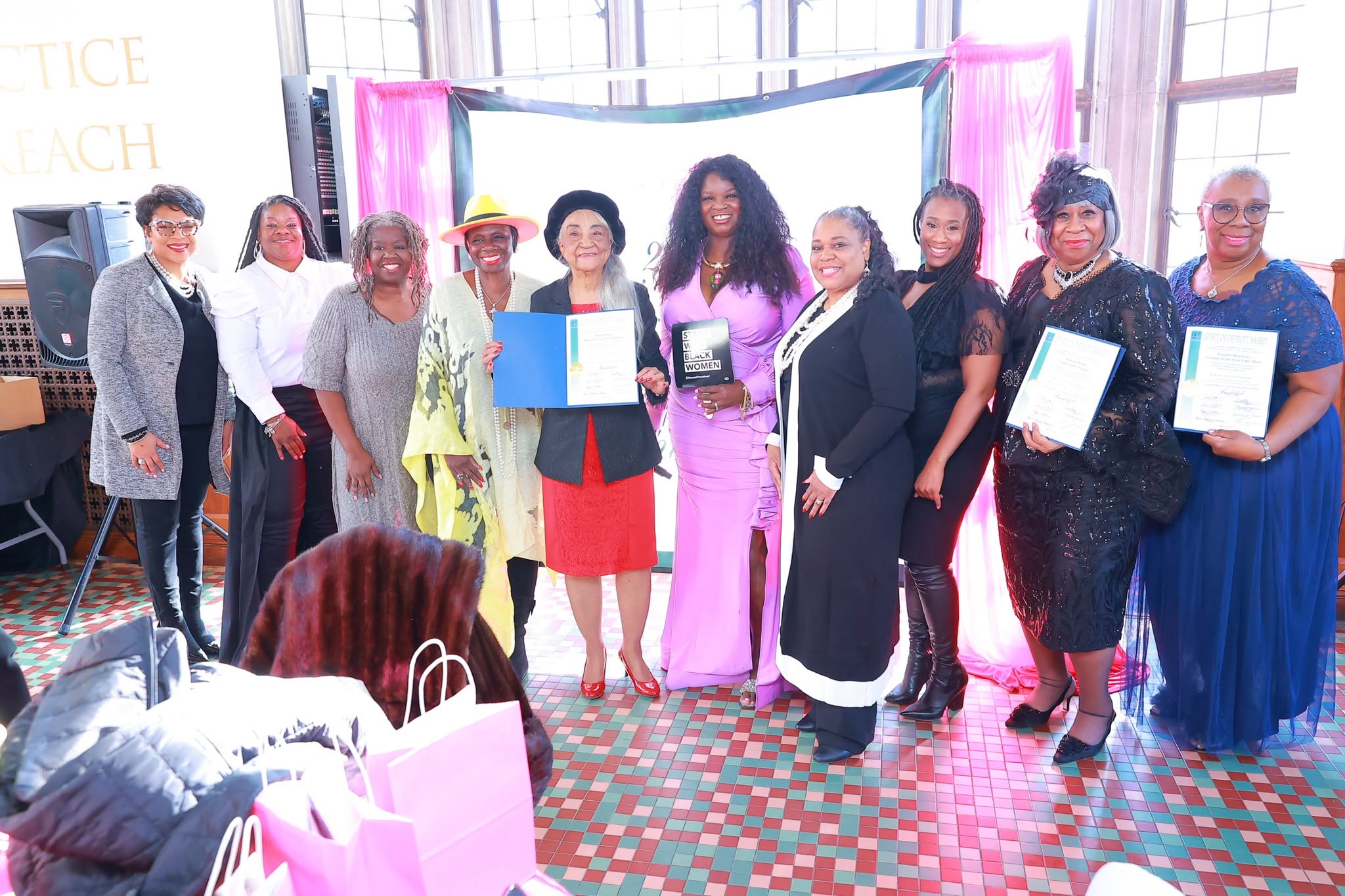
My work has received local and national recognition, including selection as a BMe Vanguard Fellow, multiple Spirit of Detroit honors, community leadership awards, and recognition for service to Detroit families and communities.
I am grateful for every award, but awards have never been the reason I serve.
Impact is the award.
Seeing a young person graduate is the award.
Watching a woman open her business is the award.
Watching someone who thought their life was over discover another opportunity is the award.
Watching policy change because ordinary families refused to remain silent is the award.
What Am I Most Proud Of?
If I had to identify what I am most proud of, I would not choose one award, title, organization, or accomplishment.
I am most proud that my work has produced evidence.
There are students whose lives changed.
There are women whose businesses grew.
There are families who received resources.
There are young people who were given another chance.
There are communities where we organized.
There are entrepreneurs who received opportunities.
And there are millions of dollars in literacy investment connected to a fight that began because Detroit families were willing to stand up for their children.
My work has been documented by local and national media, and I have had opportunities to share my perspective on education, literacy, community empowerment, and Detroit’s children with audiences beyond my city.
But I never want national recognition to disconnect me from the people and community that gave my work meaning in the first place.
Detroit is not simply where I work. Detroit is part of why I work.
What Sets Me Apart?
What sets me apart is that I understand systems from multiple sides.
I understand what it feels like to be the child who needs help.
I understand what it means to be the mother advocating for her child.
I understand the counselor sitting across from a student.
I understand the educator trying to navigate a school system.
I understand the community activist challenging that system.
I understand the entrepreneur trying to fund a vision.
I understand the nonprofit leader trying to serve people with limited resources.
And I understand the woman of faith who has had to continue believing when circumstances did not look anything like the vision.
I can sit with a struggling student in the morning, speak with education leaders in the afternoon, meet with entrepreneurs in the evening, and pray with a woman who needs encouragement that night.
I don’t believe people are one-dimensional, so my work isn’t one-dimensional either.
My psychology and counseling background helps me understand people. My education experience helps me understand institutions. My entrepreneurship experience helps me understand economic mobility. My community work helps me understand neighborhoods. My advocacy experience helps me understand systems and policy. And my faith reminds me why I serve in the first place.
I am also not afraid to challenge systems while simultaneously working inside of them.
That is an important distinction.
I have challenged educational inequity while dedicating my career to serving students inside public education. I have challenged economic inequality while building platforms for entrepreneurs. I have spoken about what communities lack while also helping communities identify and build upon the tremendous assets they already possess.
I don’t just identify problems. I build solutions.
The Thread Connecting Everything I Do
People sometimes ask how education, entrepreneurship, counseling, community development, ministry, youth advocacy, and women’s empowerment all fit together.
For me, the answer is simple:
People.
Everything I have built is about helping people become whole enough, educated enough, connected enough, supported enough, and empowered enough to change their circumstances—and eventually change the circumstances of somebody coming behind them.
I believe literacy is economic empowerment.
I believe education is community development.
I believe entrepreneurship can create generational wealth.
I believe counseling can interrupt generational trauma.
I believe advocacy can change systems.
I believe faith can sustain people while they are doing the difficult work of transformation.
And I believe leadership is not about how many people know your name.
Leadership is about how many lives are different because you were willing to use your voice, your resources, your education, your relationships, and your influence to serve.
That is the work I want my name associated with.
Not simply Andrea Thompson, the educator.
Not simply Andrea Thompson, the entrepreneur.
Not simply Andrea Thompson, the community activist.
Not simply Andrea Thompson, the founder.
I want my legacy to say:
She saw inequity and challenged it. She saw broken systems and worked to change them. She saw hurting people and helped them heal. She saw young people who needed opportunities and opened doors. She saw women with dreams and helped them build. And when she gained access to rooms, resources, platforms, and opportunities, she didn’t close the door behind her—she held it open and brought other people through with her.
That is what I do.
That is what sets me apart.
And that is the work I am most proud of.
Can you talk to us a bit about happiness and what makes you happy?
At this stage of my life, I have learned that happiness is not just about accomplishments, awards, titles, or how much I can achieve. Happiness is found in love, peace, family, faith, freedom, meaningful experiences, and the people who make life worth living.
My husband is one of my greatest sources of happiness. He is loving, gentle, supportive, fun, and most importantly, he is my friend. I spend so much of my life serving, leading, counseling, empowering, organizing, and pouring into other people, so I appreciate having a husband with whom I can simply be Andrea. I can laugh, relax, travel, dream, have fun, and enjoy life with my best friend.
There is something beautiful about having someone beside you who has seen the different seasons of your journey and continues to love, encourage, and support you. We genuinely enjoy each other’s company, and I value that tremendously.
My family makes me happy. I love my family deeply, and knowing that I am loved in return is something I never take for granted. As I have gotten older, I have realized that some of life’s greatest treasures are not things at all—they are relationships, memories, laughter, conversations, traditions, and moments you can never recreate once they have passed.
My grandchildren bring me a special kind of joy. Spending time with them allows me to slow down and experience life through their eyes. I love laughing with them, talking with them, creating memories, encouraging them, and simply being present. They also remind me why legacy matters so much to me.
I don’t only want to leave my grandchildren an inheritance; I want to leave them a legacy. I want them to remember how much their grandmother loved them, believed in them, prayed for them, encouraged them, and showed them through her own life that adversity does not have the authority to determine your destiny.
Traveling also makes me incredibly happy.
Travel represents freedom, discovery, rest, celebration, and new possibilities to me. I love experiencing different cities, cultures, food, people, scenery, and ways of life. Traveling gives me an opportunity to temporarily put down the responsibilities of leadership and simply enjoy the beauty of life.
I believe we can become so consumed with building, working, serving, and taking care of everyone else that we forget God also gave us a life to enjoy.
That is something I am much more intentional about now.
I want to build, but I also want to breathe.
I want to lead, but I also want to laugh.
I want to serve, but I also want to rest.
I want to leave a legacy, but I also want to enjoy the life I am living while I am creating it.
After everything I have experienced throughout my journey, peace makes me happy. Genuine relationships make me happy. Helping someone else succeed makes me happy. Watching young people discover their potential makes me happy. Seeing women heal, grow, build businesses, and believe in themselves makes me happy. Seeing something that once existed only as a vision become a reality makes me happy.
And my faith brings me joy because I can look back over my life and see how God carried me through seasons that could have broken me but instead helped build me.
Today, happiness looks different to me than it may have years ago.
Happiness is being loved and giving love. It is my husband, my family, my grandchildren, traveling, serving others, fulfilling my purpose, protecting my peace, laughing until my stomach hurts, creating beautiful memories, and having the freedom to enjoy what I have worked and prayed for.
I have spent much of my life helping other people heal, grow, lead, and expand. One of the greatest gifts I have given myself is permission to do the same.
I am building a legacy, but I am also living my life—and that makes me happy.
Pricing:
- IT’S TIME TO LEVEL UP, QUEEN! 👑 ✨🌸 Sis… this is your sign! $19.99 USD monthlyJOIN!!! The LEEC INNER CIRCLE TODAY! 💼✨https://leec-inner-circle.mn.co/plans/1969342?bundle_token=dd9873f156394b899403f9815d5a2713&utm_source=manual
Contact Info:
- Website: https://ladiesentrepreneurempowermentcircle.com/
- Instagram: https://www.instagram.com/detroitleec/
- Facebook: https://www.facebook.com/LEECLLC