




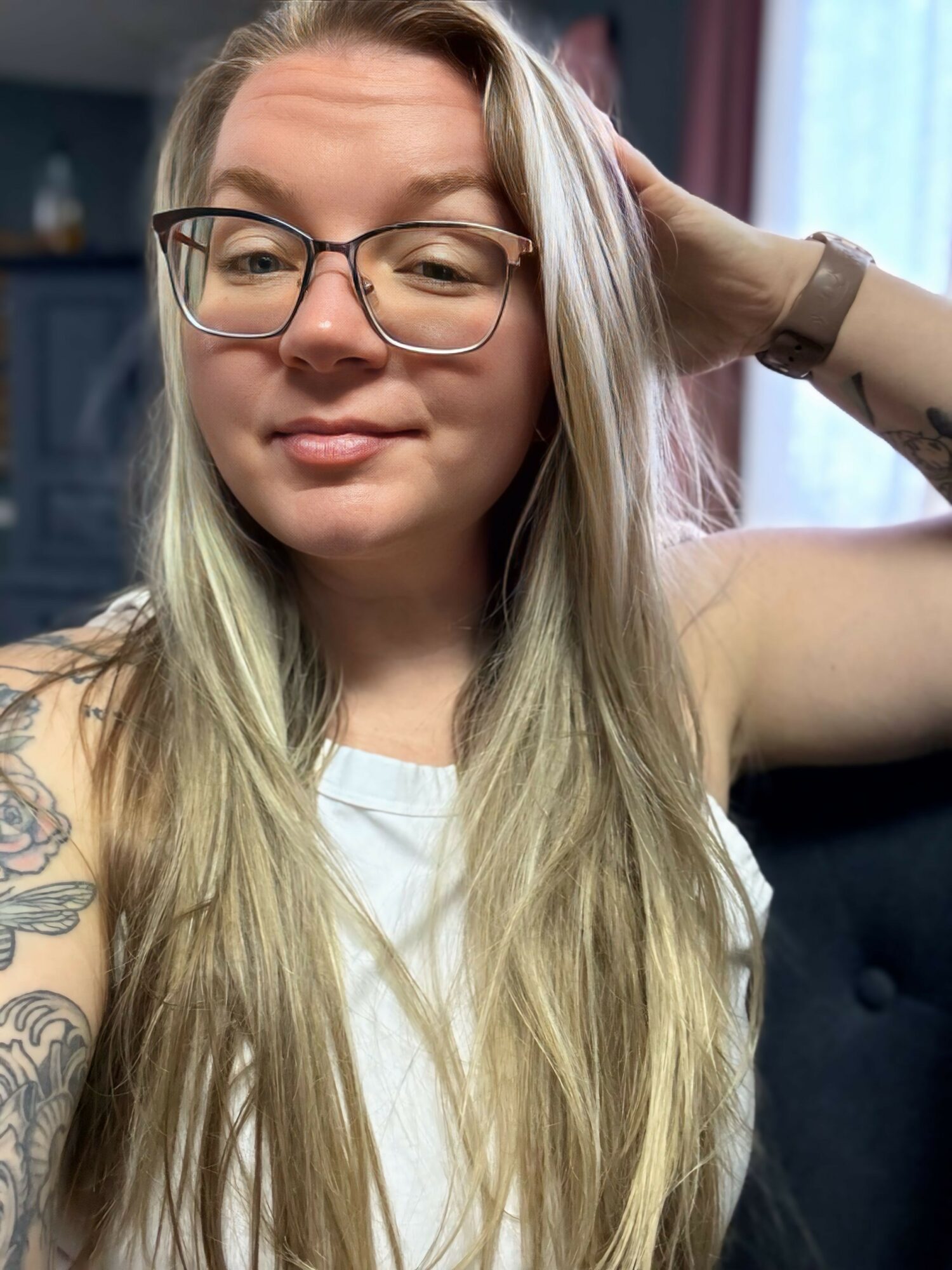
Today we’d like to introduce you to Rachel O’Connor.
Hi Rachel, can you start by introducing yourself? We’d love to learn more about how you got to where you are today?
I became a massage therapist in 2013, but I didn’t start out knowing exactly what kind of therapist I wanted to be. Like a lot of massage therapists, I began with traditional hands-on massage and worked in a few different settings before opening my own practice.
Over time, the physical demands of massage started taking a toll on my body. I was dealing with pain in my hands, shoulders, and upper body, and I knew I needed to find a way to continue doing the work without destroying myself in the process.
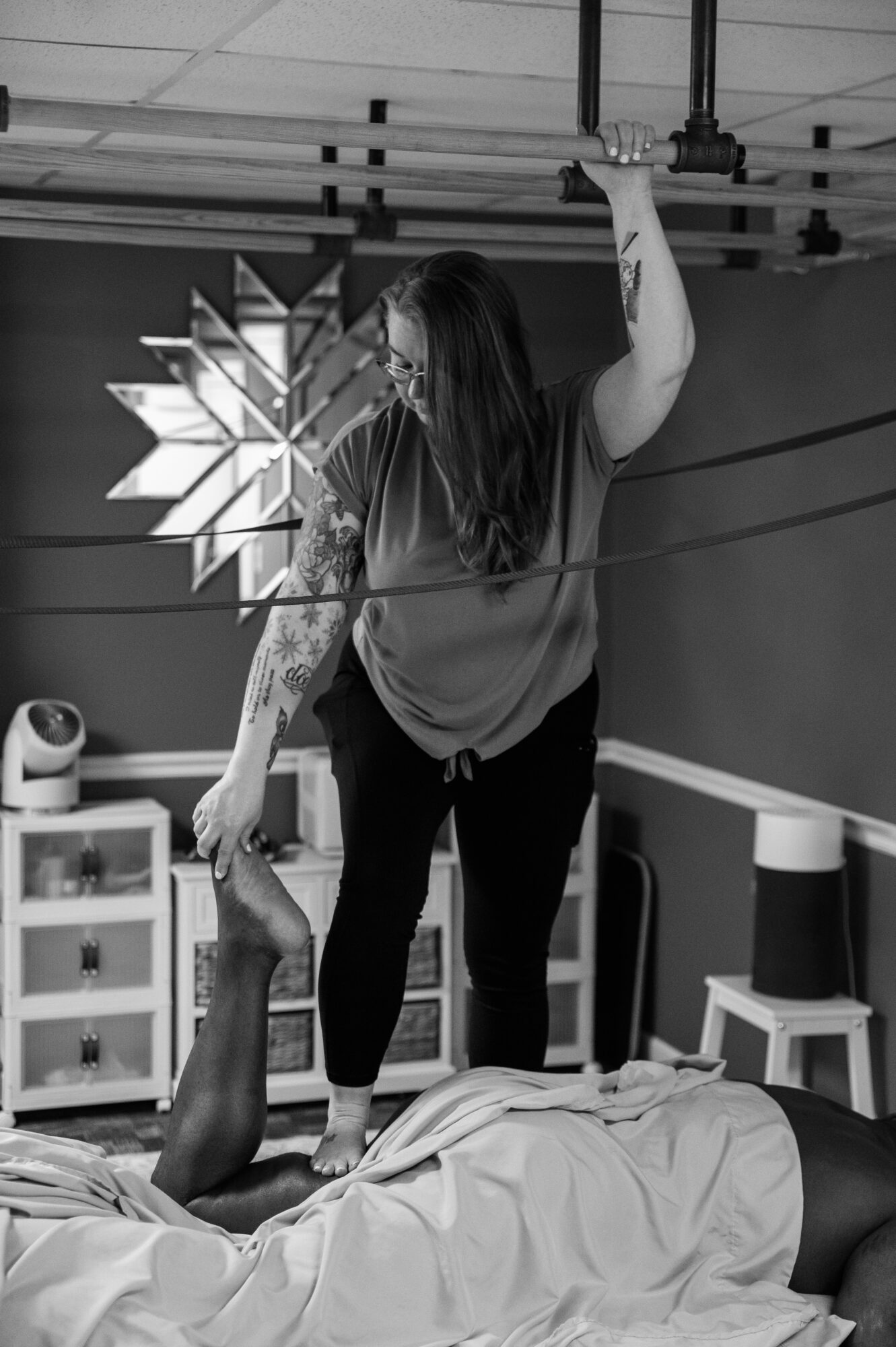
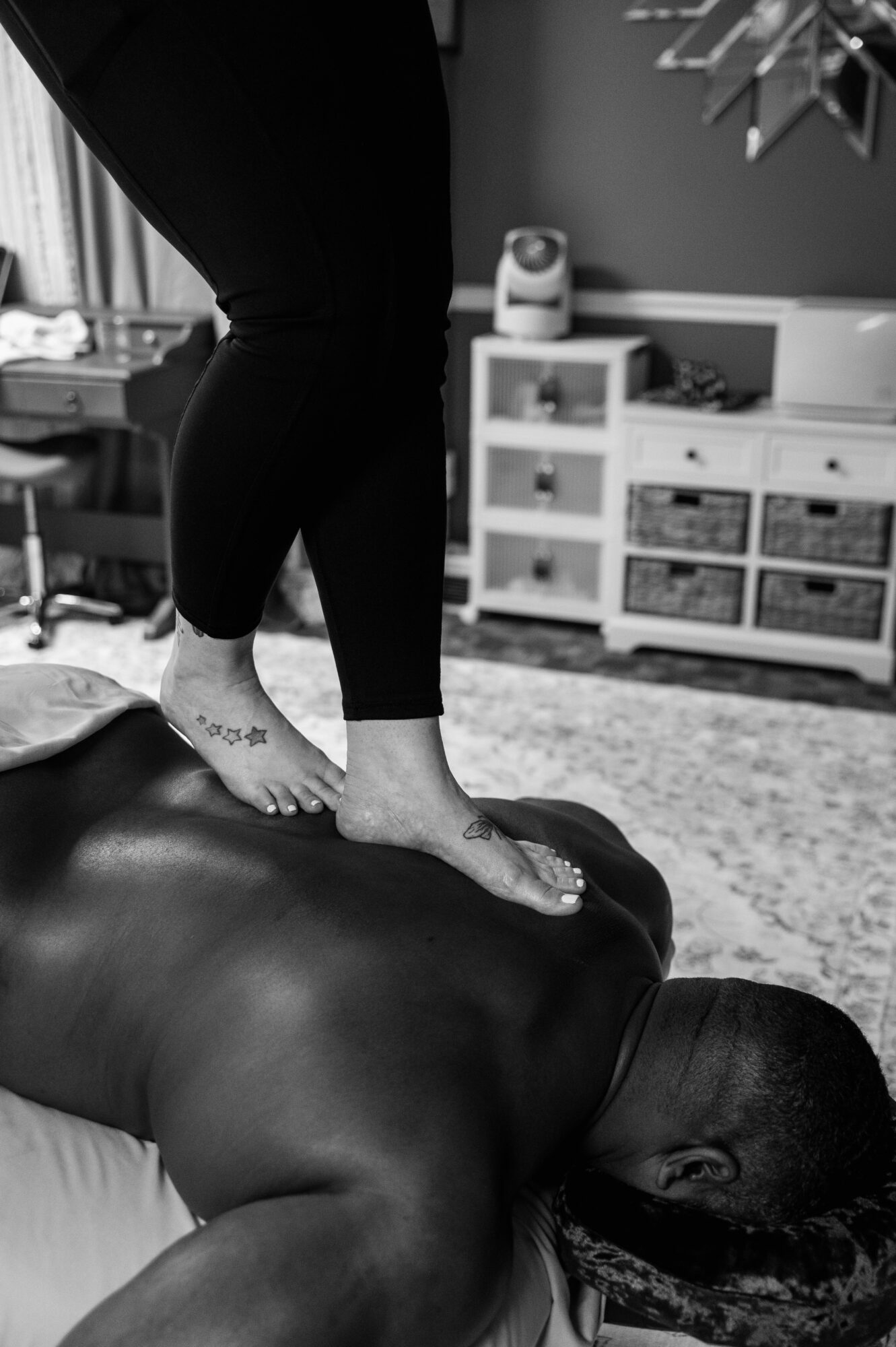
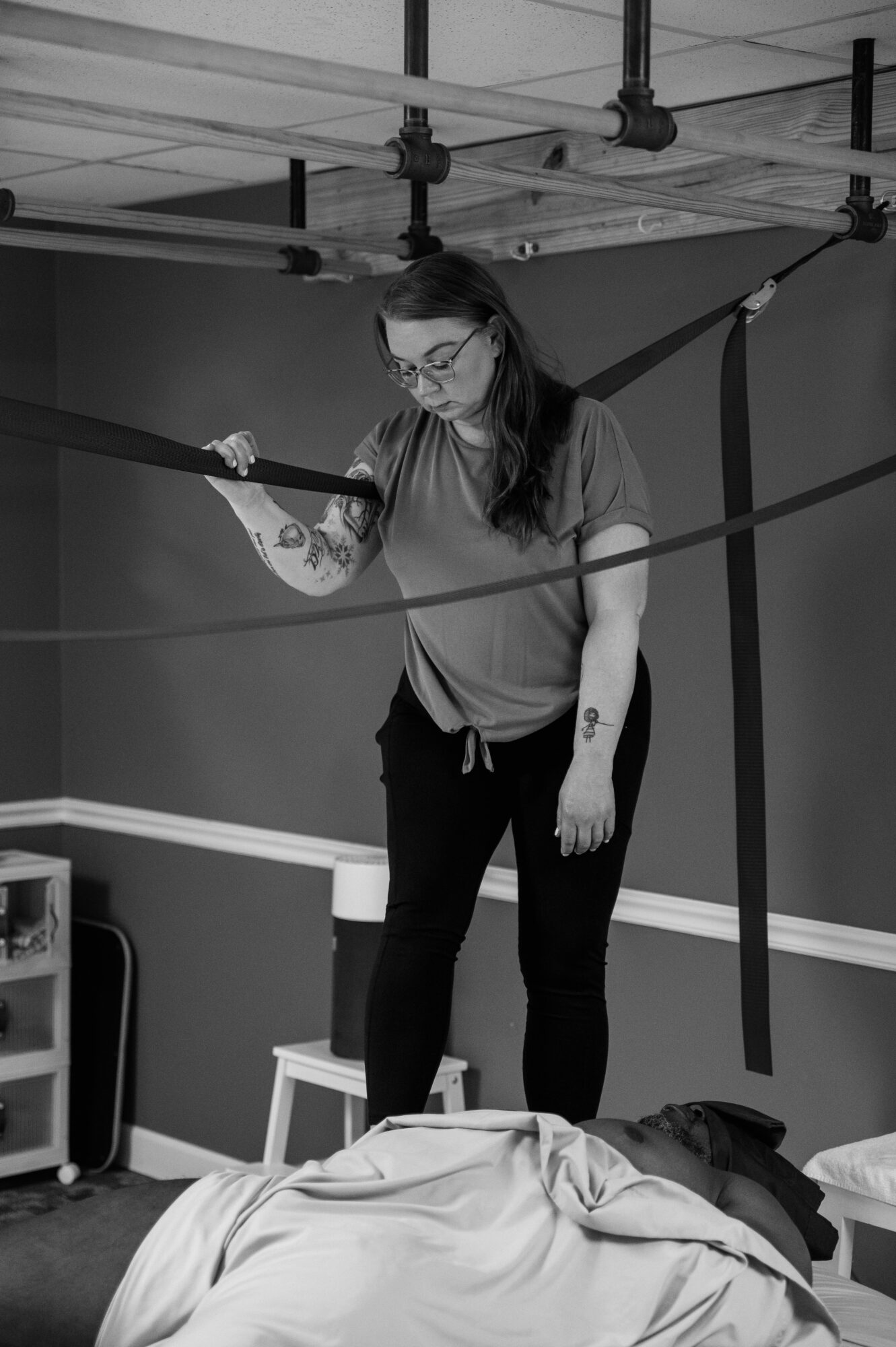
In 2017, I began learning barefoot massage. At the time, no one else in my area was offering it, and I became the first barefoot massage therapist in Livingston County. What started as a way to protect my own body completely changed the direction of my career.
I discovered that using my feet allowed me to create slow, broad, deep pressure while still being very specific and intentional. Over the years, my work has continued to evolve beyond simply providing deep pressure. I now combine barefoot massage with movement, myofascial techniques, and active client participation to help people move and feel better.
Today, I own Massage Livingston in Howell, Michigan, where I primarily work with clients who are looking for more than a relaxing massage. I also teach barefoot massage to licensed massage therapists through the LMT Refinery, helping other therapists build sustainable careers and learn how to use their feet as an effective clinical tool.
My career has become a combination of everything I care about: helping clients get meaningful results, helping massage therapists protect their bodies, and continuing to challenge the idea of what massage therapy can look like.
Alright, so let’s dig a little deeper into the story – has it been an easy path overall and if not, what were the challenges you’ve had to overcome?
Definitely not a smooth road.
One of the biggest challenges has been the physical toll of massage therapy. Early in my career, I was doing several hands-on sessions a day, five or six days a week. Eventually, my hands, shoulders, and upper body started making it very clear that pace was not sustainable. Learning barefoot massage gave me a way to keep doing the work I loved, but it also meant rebuilding my approach almost from the ground up.
There was also the challenge of introducing something unfamiliar to my community. When I began offering barefoot massage in 2017, no one else in Livingston County was doing it. I had to teach people that barefoot massage was not a gimmick and that it could be precise, therapeutic, and incredibly effective. Being the first sounds impressive now, but at the time it mostly meant there was no blueprint and no established audience waiting for me.
Owning a business has brought its own lessons. I have had to learn marketing, pricing, boundaries, scheduling, and how to build a practice that supports my life instead of consuming it. Like many service providers, I spent years believing that working harder was always the answer. One of the hardest lessons has been realizing that a successful career also has to be physically and emotionally sustainable.
The challenges have forced me to become a better therapist, a stronger business owner, and a more thoughtful educator. Every time something stopped working, I had to adapt rather than cling to the way I had always done it. That willingness to evolve is ultimately what brought me to where I am today.
We’ve been impressed with Massage Livingston , but for folks who might not be as familiar, what can you share with them about what you do and what sets you apart from others?
Massage Livingston is a private massage practice in Howell, Michigan, specializing in barefoot massage that is slow, specific, and focused on results.
I became the first therapist in Livingston County to offer barefoot massage in 2017. Since then, my work has evolved far beyond simply using my feet to provide deep pressure. I combine barefoot techniques with myofascial work, movement, positioning, and active client participation to create sessions that are tailored to the person in front of me.
Many of my clients come in because they are dealing with pain, limited mobility, or tension that keeps returning. They are not necessarily looking for the deepest massage possible. They want work that makes sense for their body and helps them move and feel better. My approach is not deep for the sake of being deep. The goal is effective depth, thoughtful pressure, and meaningful change.
What sets Massage Livingston apart is that I do not rely on a fixed routine. I pay attention to how the body responds, adjust the session as we go, and sometimes ask the client to move, breathe, or change position while I work. Massage does not always need to be something that happens passively to a client.
I am most proud that I have built a practice where clients feel comfortable being honest about what they need. They do not have to pretend they want a relaxing full-body massage if what they really want is to turn their head more easily, reach their feet, or get through the workday with less pain.
Massage Livingston is built around curiosity, adaptability, and the belief that massage therapy can be both deeply therapeutic and completely individualized.
How do you define success?
I define success differently now than I did when I first started.
Early in my career, success looked like a full schedule, more clients, and being able to work harder than everyone else. For a while, I wore exhaustion like proof that I was doing well.
Now, success means building a career that is sustainable.
It means doing work that gets meaningful results for my clients without sacrificing my own body in the process. It means having clients who trust me, return because the work is helping them, and feel comfortable being honest about what they need.
As an educator, success means helping other massage therapists think more critically, protect their bodies, and build careers they can stay in for the long haul.
Pricing:
- 60 mins. $110
- 90 mins $165
Contact Info:
- Website: https://massagelivingston.com/
- Instagram: https://www.instagram.com/themassagelivingston/