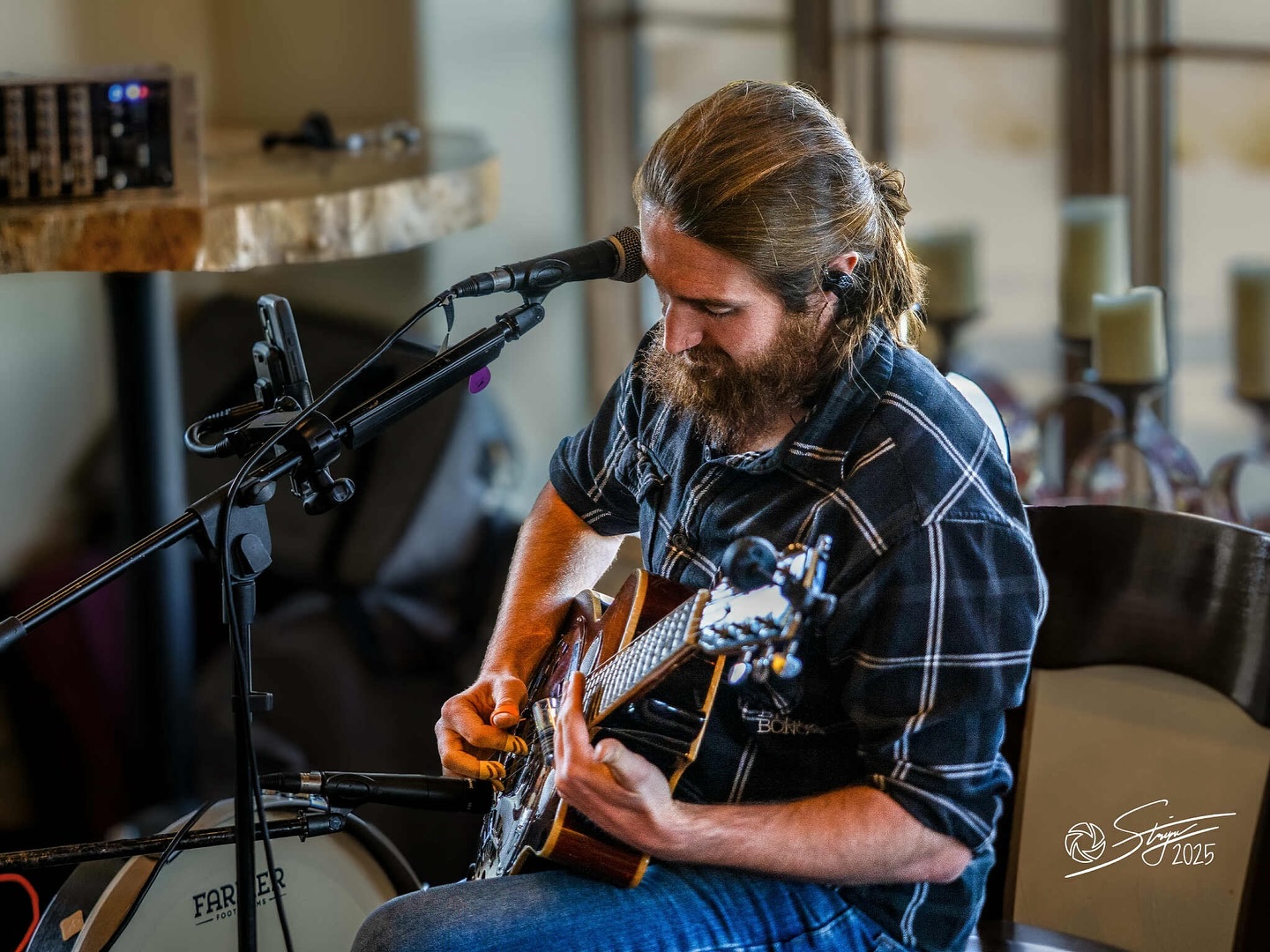




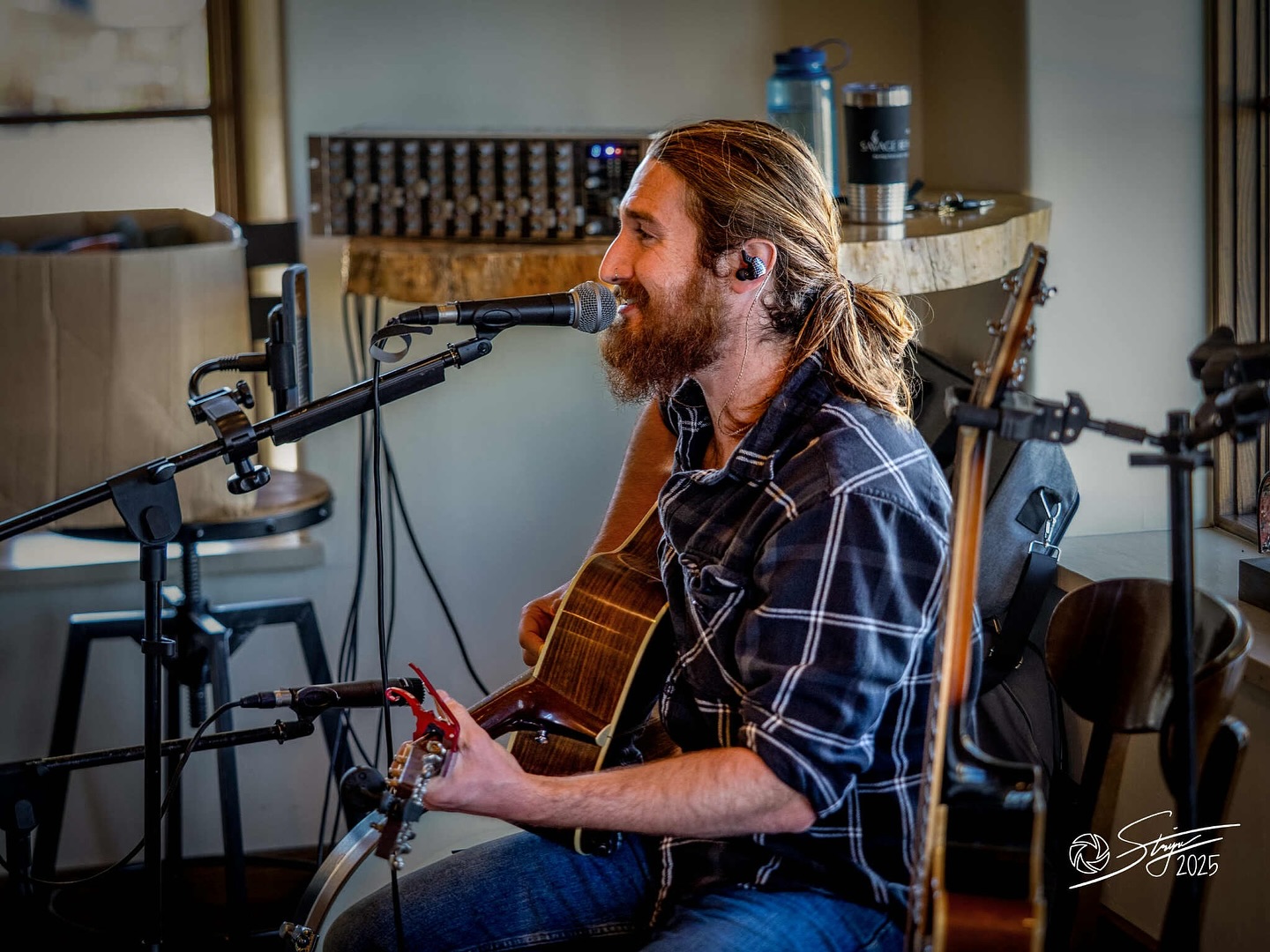
Today we’d like to introduce you to Nicholas Veine.
Hi Nicholas, thanks for sharing your story with us. To start, maybe you can tell our readers some of your backstory.
I grew up loving music. My dad played guitar and banjo and sang around the house. My mom wasn’t a musician, but she always sang along to the radio and new the words, even if she didn’t know the song titles. We went to bluegrass festivals and concerts all throughout my childhood and we were always spinning a record or playing a cassette or CD.
I picked up the guitar when I was 10 years old and never looked back. I started playing rock, blues, and more before shifting my interests to more a acoustic repertoire. I’ve loved jazz and blues ever since the early days and they make up the bulk of my setlist at this point.
I would often play in smaller groups and as a solo performer, so my guitar style has always been geared toward trying to get the most sound I can out of the guitar while singing. I’ll combine basslines, chords, melodies, and percussion to get a full band sound. Nowadays, I perform in the typical venues but also quite frequently at libraries and historical societies to peddle my more educationally-based programs.
I’m sure it wasn’t obstacle-free, but would you say the journey has been fairly smooth so far?
Yes and no.
Manistee wasn’t the most artist-friendly town. Street performers were paid very little, if any, and we relied on mostly tips. That’s part of the gig life, but unfortunately this would often extend to the venues we played in. It’s unfortunate that art is consumed en masse but often treated as a secondary thing. We (the non-musician public) hear it in movies, video games, festivals, bars, on the radio, etc. but still only treat it as a hobby or amenity, rather than something essential to our society as cultural advancement and an expression of human emotion. I think it’s trending toward better, but it’s nice to not HAVE TO suffer for our supper.
Can you tell our readers more about what you do and what you think sets you apart from others?
As a musician, it’s important to find your niche. Many performers are jukeboxes. I don’t mean to disparage them, because I have been there. I still am that way at some of the bars where people aren’t really paying attention and just want background music. But when I can, I play the blues. I play jazz. Swing. Protest songs. Music that–to me–really says something.
Many make their living in a tribute band and I say more power to you! But it’s not me. That’s not MY niche. I try to blur the line between educator and performer. Teacher and entertainer. I try to tell stories during my shows: both mine and the artists who created the music I’m playing. It’s hard to write an original song, but it’s easy and authentic to say something original. It’s easy to bring your own flavor to the music you play.
And if you can do that, no matter what repertoire your playing or what audience you’re playing to, I think you’re an artist.
If you had to, what characteristic of yours would you give the most credit to?
Flexibility.
I play a lot of solo shows where I have a specified setlist. But I’ll also play shows with other musicians, sometimes as pickup gigs or substitutions and I don’t often know the set they have planned. I have to maybe change my playing style or follow their harmonic/melodic intuitions rather than my own. Balancing that with my own flavor (because they did call ME, so I’m going to bring what only I can offer) is a fun challenge.
I can fit in with a bluegrass band, blues band, swing group, old-time, Celtic, and more. Though I certainly have preferences one way or another, the varied situations are usually a fun challenge and certainly make me a better musician, artist, and honestly all-around better person.
Contact Info:
- Website: https://nickveine.com
- Instagram: https://instagram.com/highsodiumblues
- Facebook: https://www.facebook.com/highsodiumblues
- Youtube: https://www.youtube.com/@HighSodiumBlues