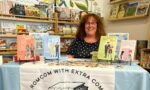




Today we’d like to introduce you to Julia Solis.
Hi Julia, we’d love for you to start by introducing yourself.
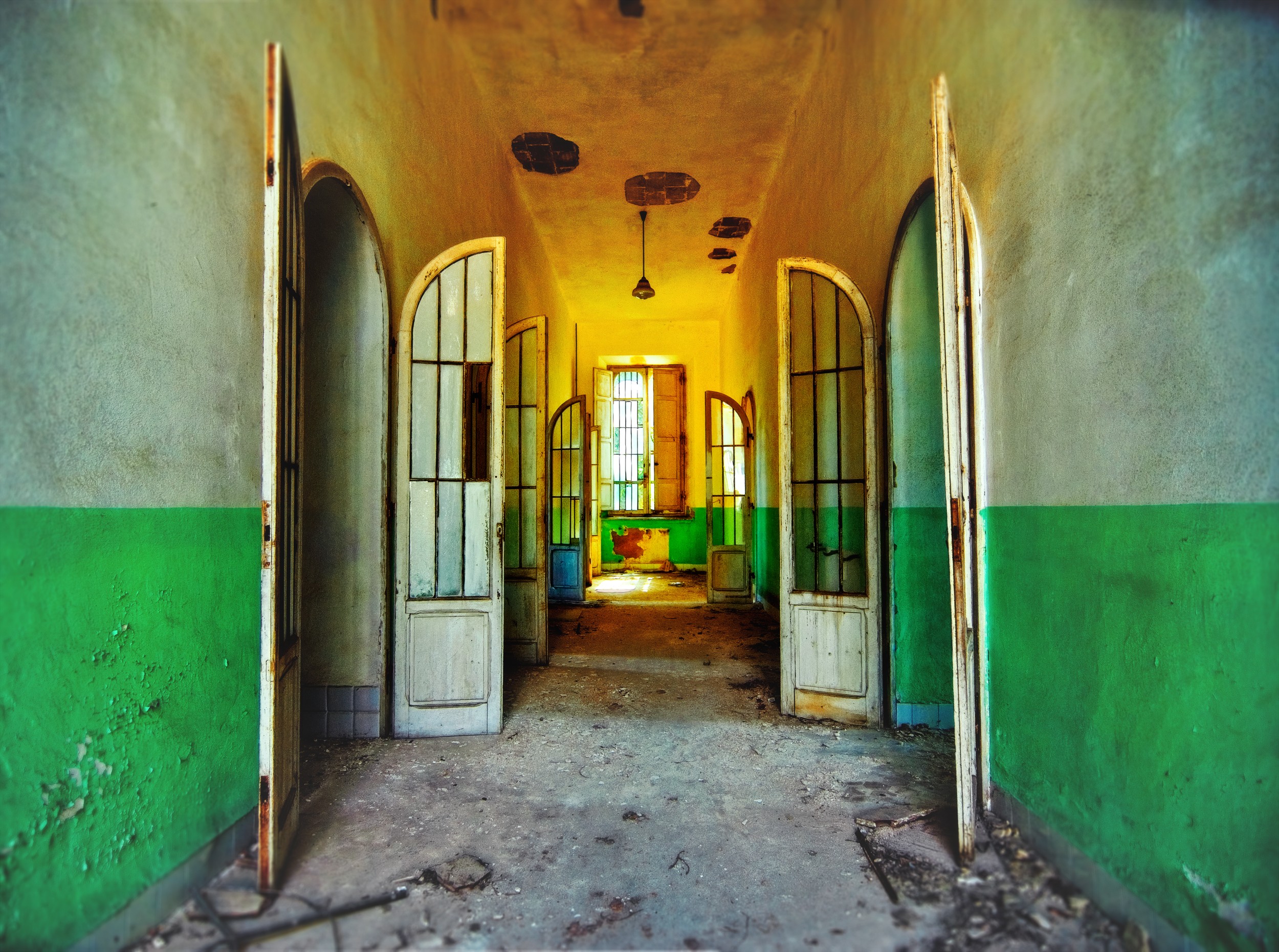
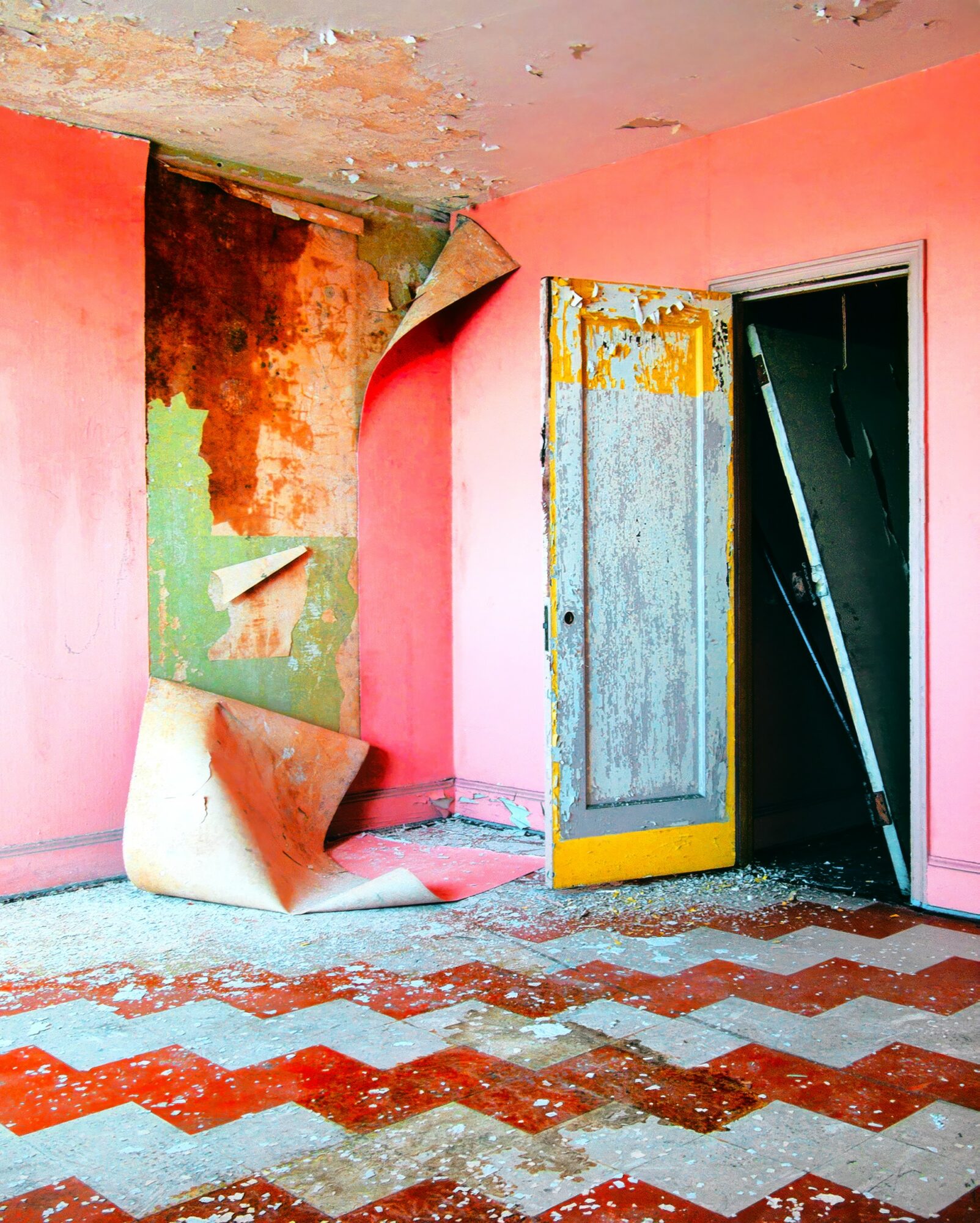
Born in Germany in the 1960s, I was raised in an environment still traumatized by World War 2. Early on, this gave me a sense of the personal toll inherent in the surrounding ruins, yet also revealed these sites as spaces for shelter, reflection and imaginative reinvention. All my life, the transformations and narratives of these places have inspired my creative work.
I studied philosophy at UCLA and moved to New York City in 1996. There I began taking photos of neglected sites for my book “New York Underground: The Anatomy of a City”, which was published in Germany in 2002 and the US in 2004. It received much attention at its publication, encouraging me to continue to seek out and document elusive urban spaces. I followed up with two more books, “Stages of Decay” on abandoned theaters, and “Capsule Out Of Time” on a struggling mining town in West Virginia. In the meantime, my photos have been published and exhibited widely (e.g. NY Times, National Geographic), with several solo shows and appearances in museums.
By the time I moved to Detroit in 2008, my focus had greatly shifted from documentation to fiction, prioritizing an imagined transformation of unusual spaces by means of storytelling or immersive installations. The majority of my performance work has been at the helm of an arts collective that I co-founded in Detroit in 2012, called The Seafoam Palace: a group of artists from diverse cultural and artistic backgrounds. Our projects come via an invitation to activate or explore a place and create a site-specific event. To prepare, we work remotely to compile a multimedia piece as the structure for the performance. I research and write the piece, inviting collaborators in as characters, sound and landscape-contributors, video artists, graphic designers, lighting and installation artists.
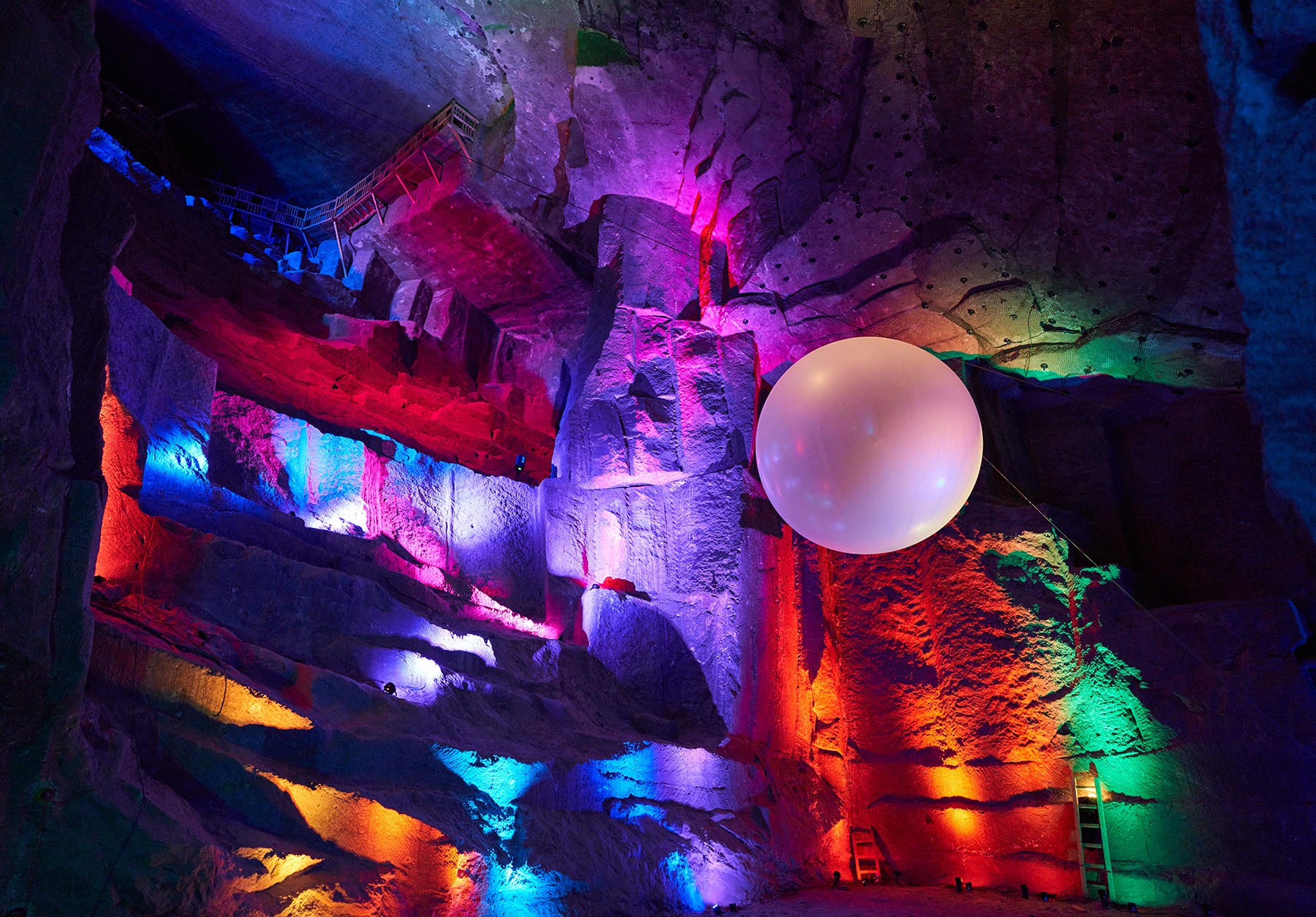
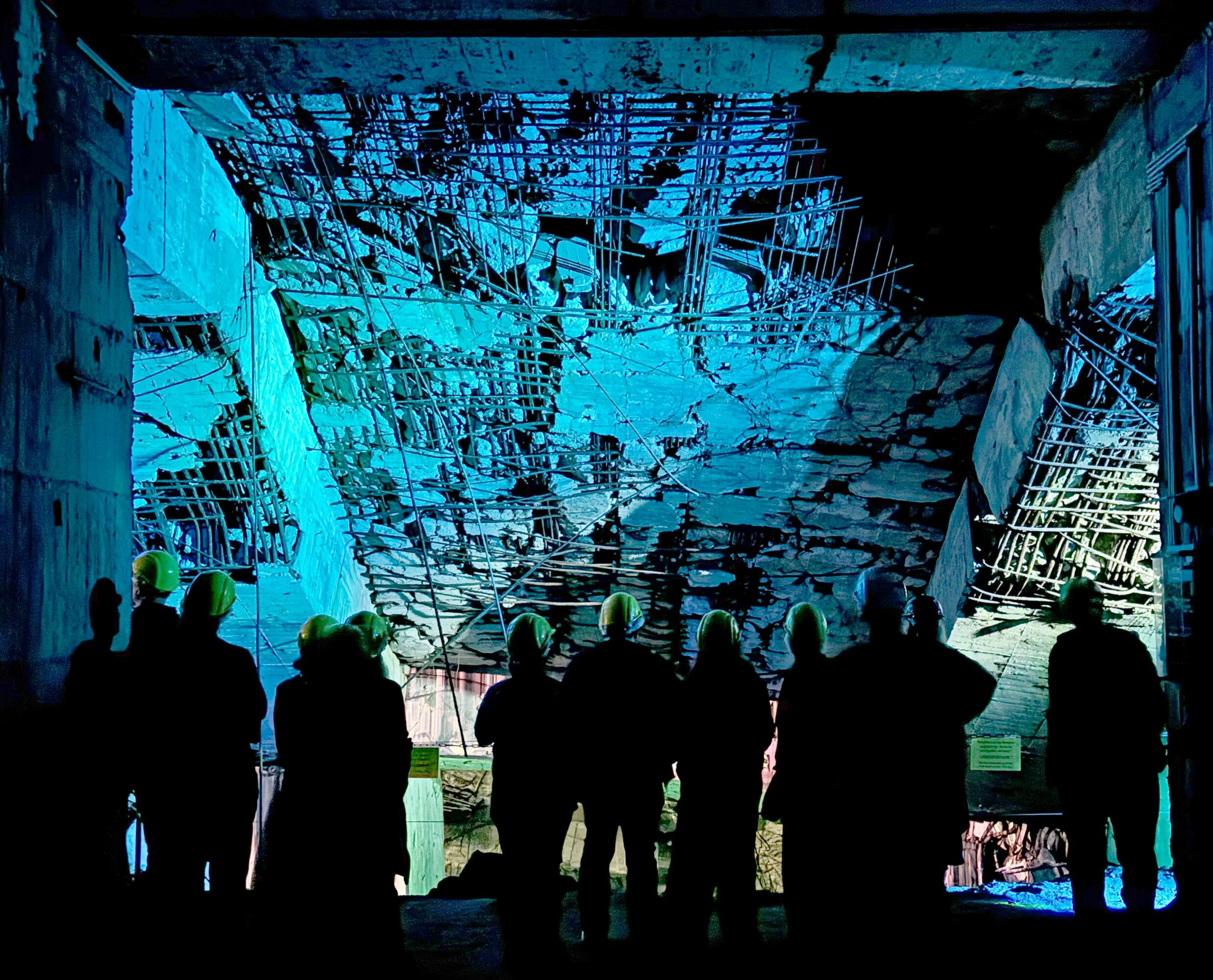
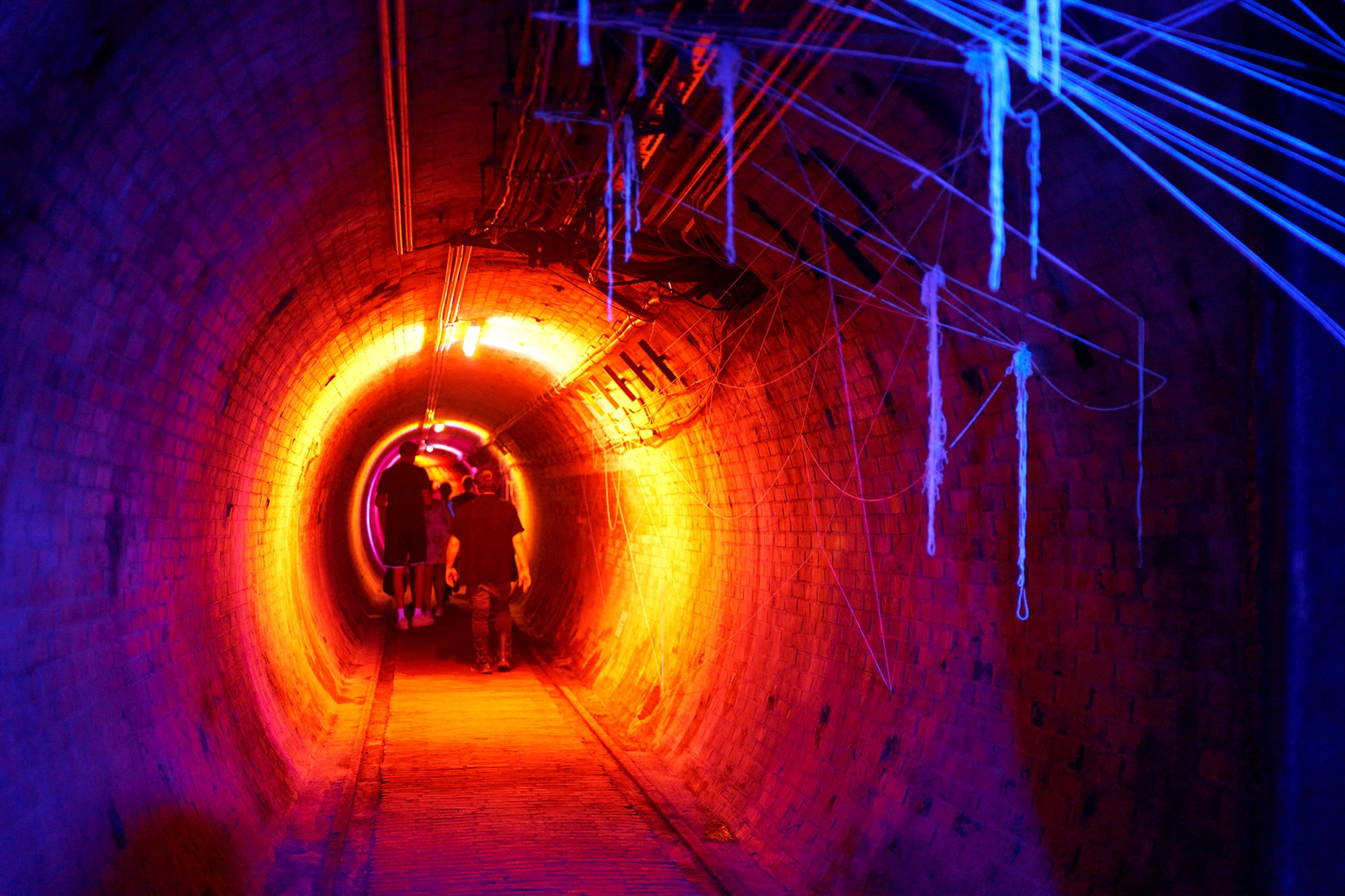
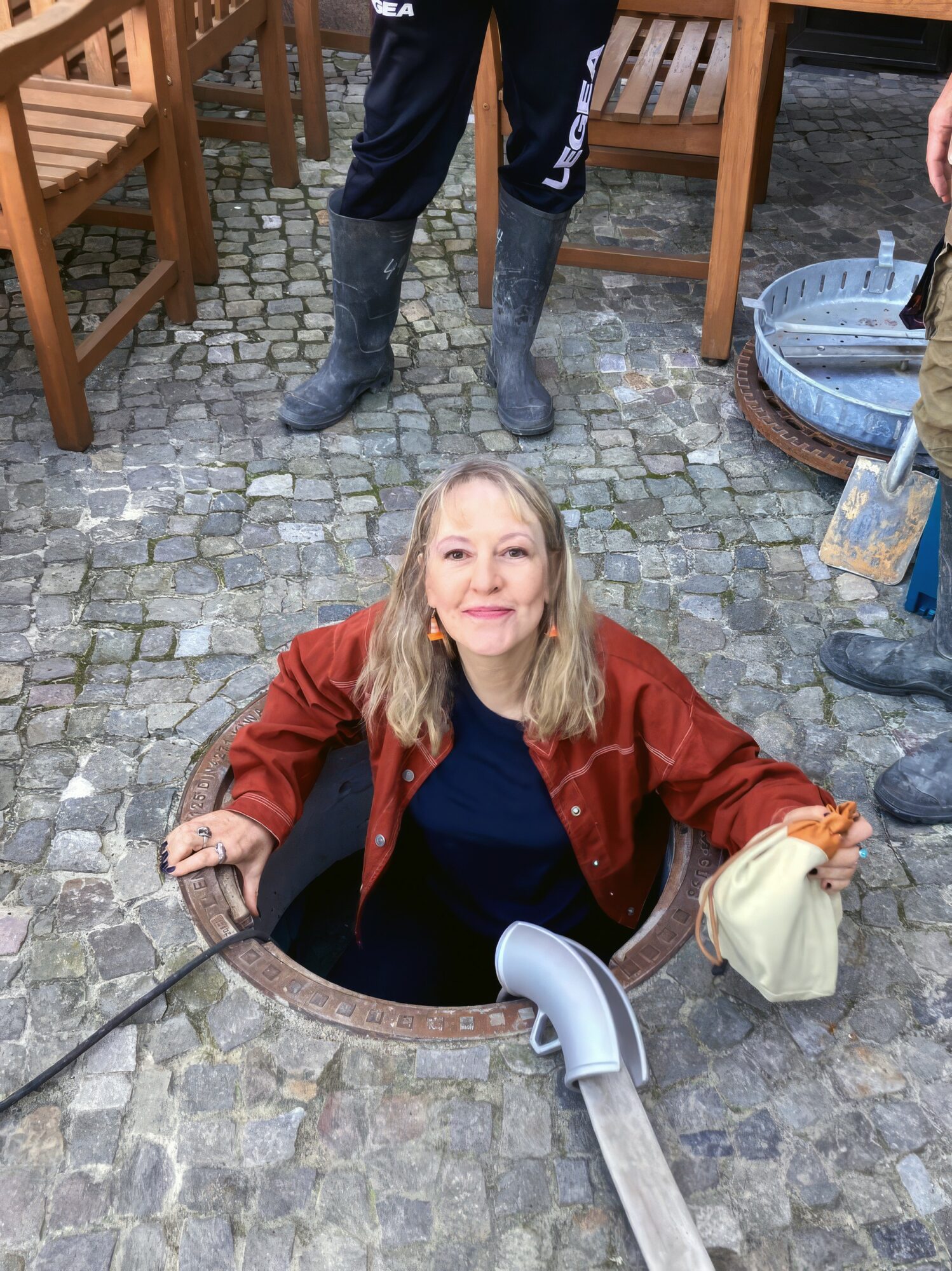
In recent years, Seafoam Palace has focused on the narrative event series “Falling Sideways.” This is a site-specific performance that has evolved from a small sound installation in an abandoned Ohio tunnel for a dozen guests (in 2020) to an annual event in Berlin (700 guests per day) hosted by the underground history association Berliner Unterwelten. We are doing another event in a partially imploded Berlin bunker this August and, in July 2026, have become the proud recipients of a project grant from the Andy Warhol Foundation to stage Falling Sideways in Detroit.
We all face challenges, but looking back would you describe it as a relatively smooth road?
Our collective usually offers events for free, with all artists pitching in to create a unique experience. Nearly all of us have day jobs to supplement whatever income we have from our artwork. In recent years, art funding in the US has become even more competitive and restrictive. I would love to see more funding opportunities for artists in Michigan whose work goes out to the public with little compensation.
Alright, so let’s switch gears a bit and talk business. What should we know about your work?
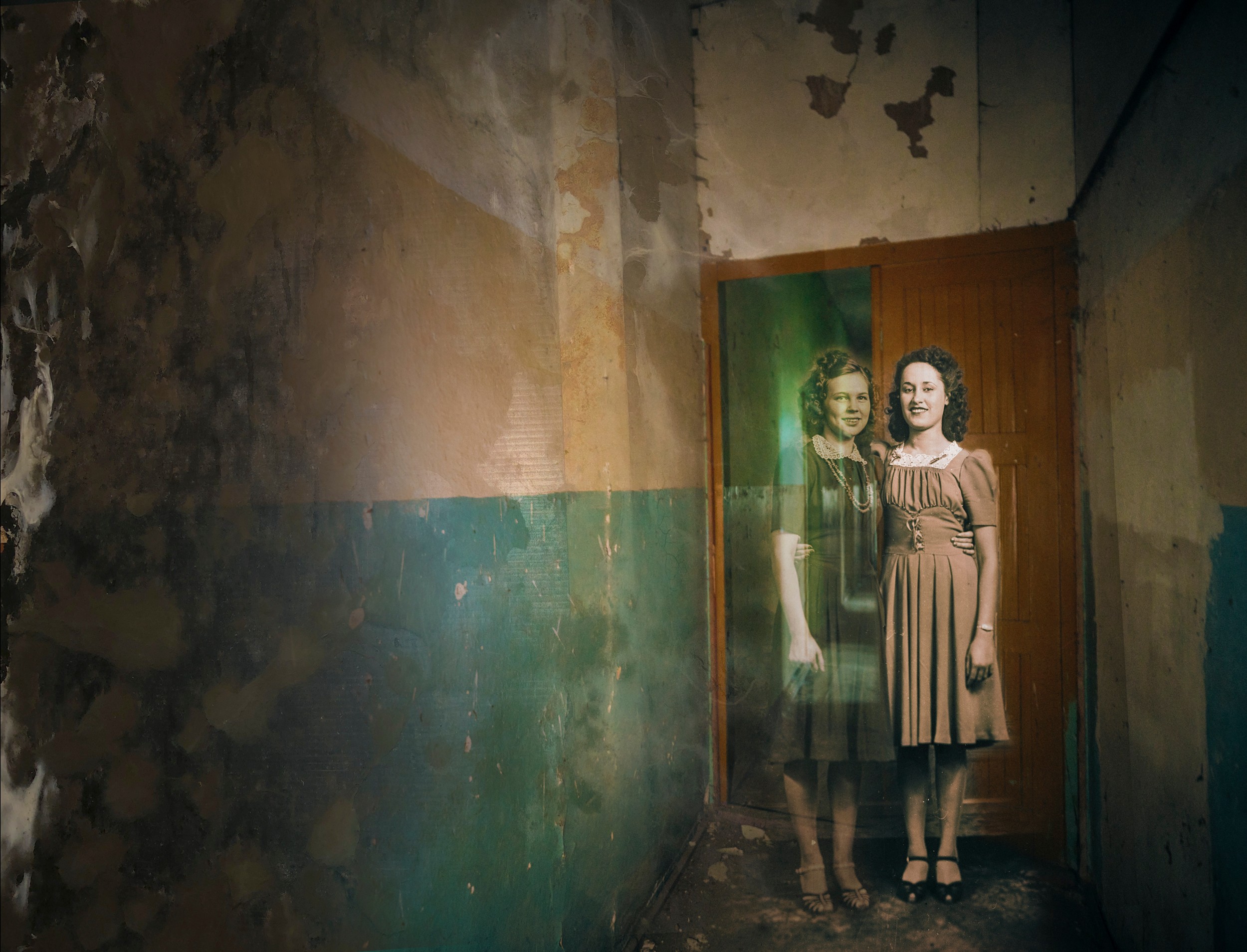
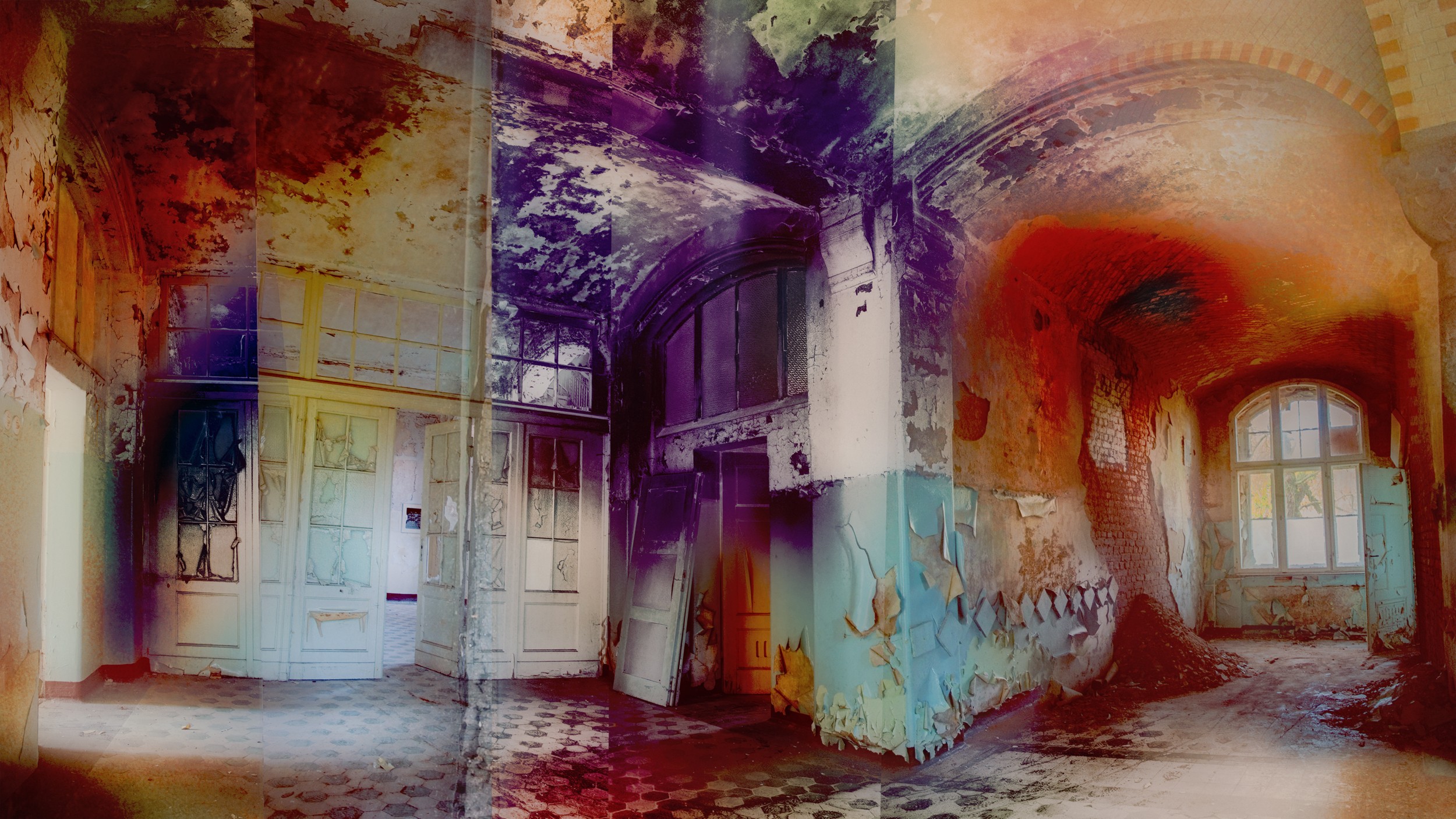
In my creative process (photo composites, stories, installations, immersive events), my question is always: how does this ultimately help bring people closer together – through shared conjectures, empathy, solving puzzles or building bonds by embarking on a physical exploration? So many deep connections between people are made from shared imaginings and creative story-building over time, a few of which I’ve co-instigated through celebrations of absurdity and weirdness with Seafoam Palace and other art collectives over the last 27 years. On a personal level, I create photo composites that are inspired by these interactions in the wild. They are mini-narratives growing out of joint explorations, speculations and experiences of deep mystery. As I tend to visualize the creative meanderings of our friends as a journey through a massive abandoned complex filled with wonder, eerieness, confusion and awe, the artwork each of us contributes is like a pitstop at closets filled with strange assemblages that are a solid note in the overarching musical composition. I find great joy in making spaces of joyful bewilderment that help shape a traveler’s experience.
Where we are in life is often partly because of others. Who/what else deserves credit for how your story turned out?
I’ve had very many mentors and teammates for whom I’m grateful. Here are two:
Tom Kirsch
Tom is my closest creative partner and also a co-founder of Seafoam Palace. His artistic practice is highly innovative, fusing rich analog aesthetics with inventive technology. For example, he is currently working on a new art installation for our upcoming event in Berlin, which involves simulated electrified rebar, ferrofluid and a 1960s telephone with shortwave radio signals triggering audio and light events when a person speaks into the phone. He is also a web developer (e.g. for fallingsideways.com) who brings fresh design to carefully thought-out projects.
John Law
John is a noted artist in the Bay Area who co-founded Burning Man and has influenced masses of people in the art of creative exploration and risk-taking performances. He is an author, performance artist and all-around inspiration. He has been like a brother to me for the last 30 years, teaching and guiding our collaborative processes.
Contact Info:
- Website: https://solis.darkpassage.com/
- Instagram: https://www.instagram.com/sunkenpalace/
- Other: https://fallingsideways.com/