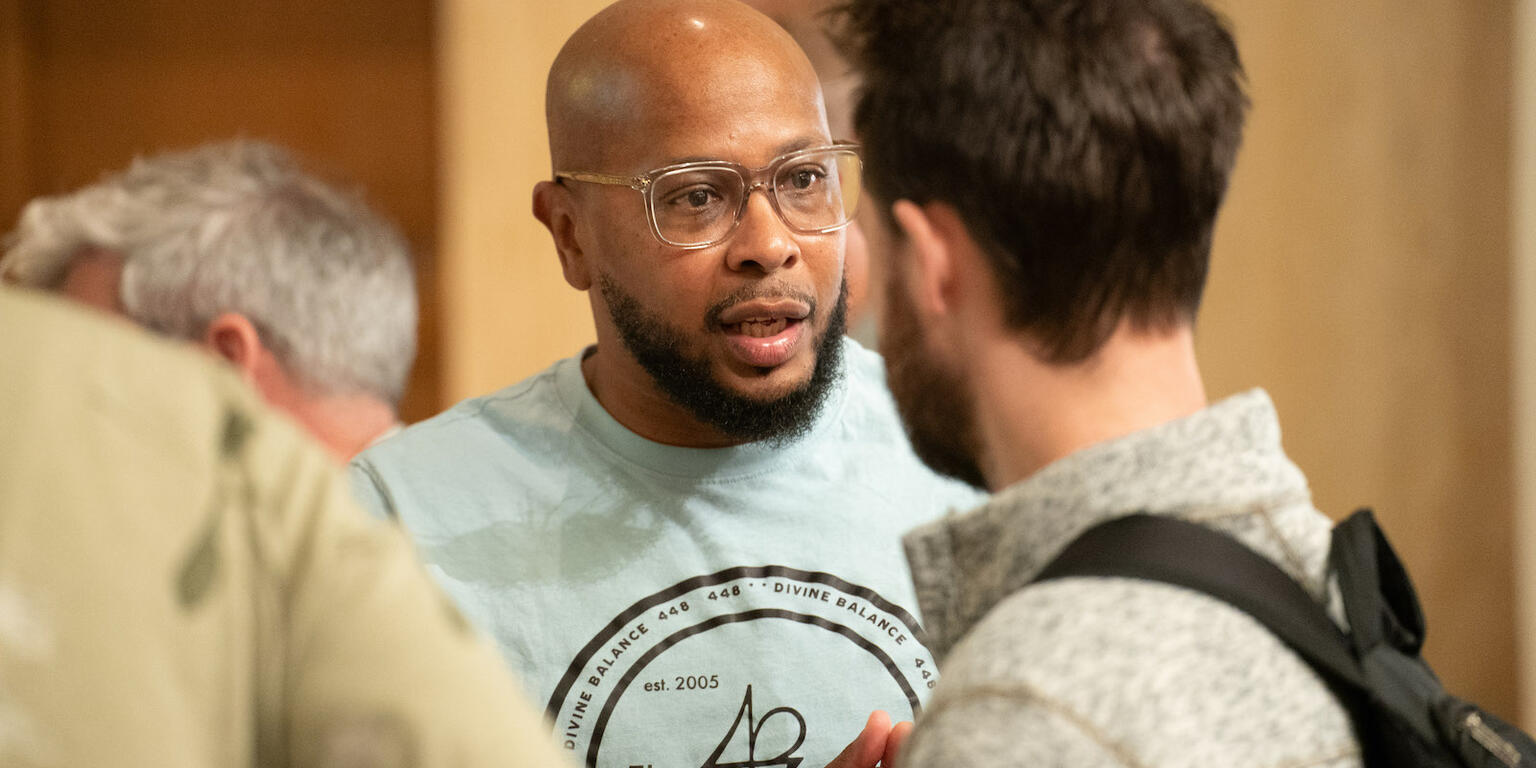





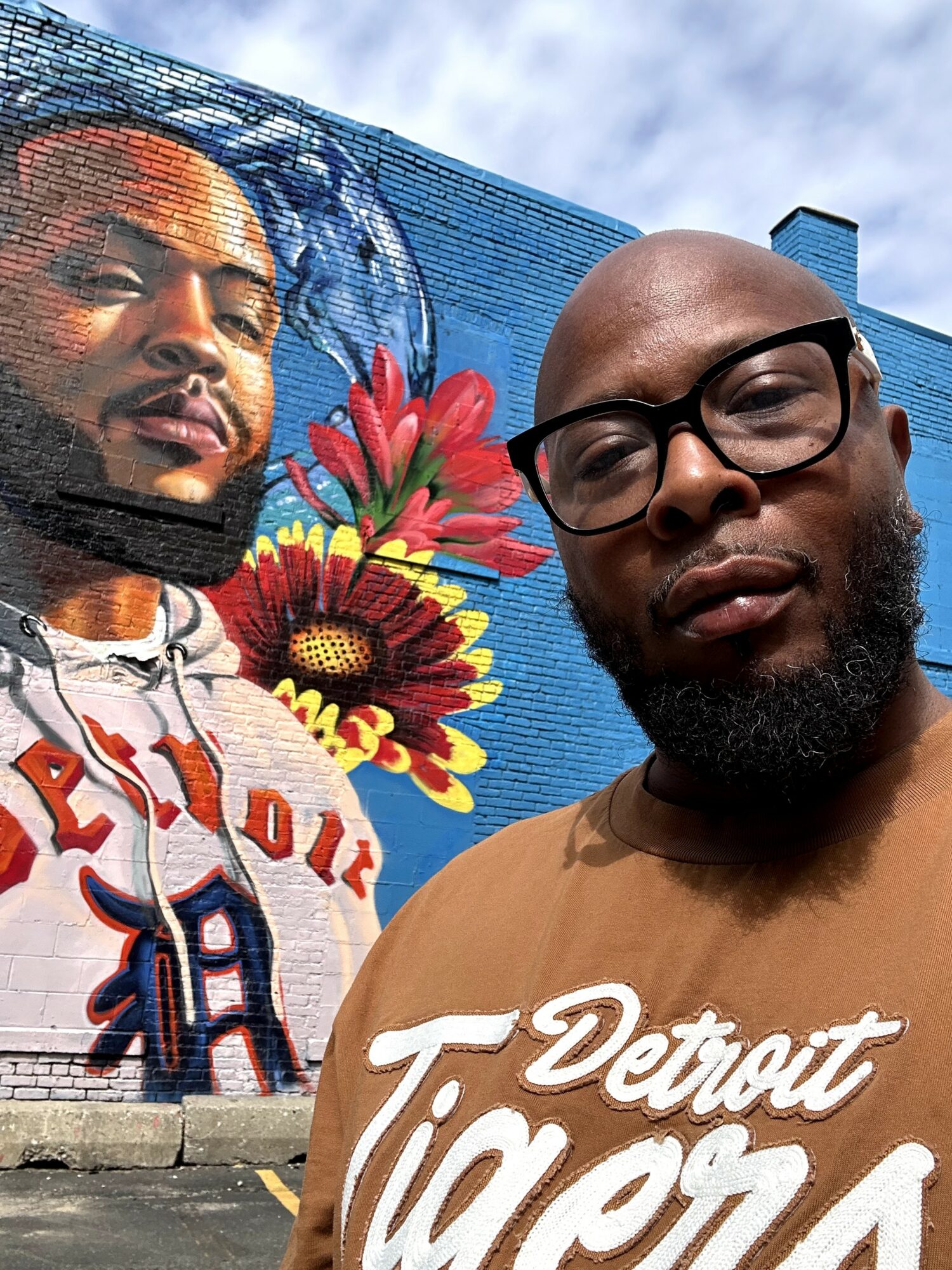
Today we’d like to introduce you to Leon Benson.
Hi Leon, thanks for sharing your story with us. To start, maybe you can tell our readers some of your backstory.
From the Clay to the Concrete: My Journey of Creation, Culture, and Survival
THE FOUNDATION: A FLINT CREATIVE IS BORN
I grew up in Flint, Michigan. I had a solid foundation—a stable, two-parent household in what we’d deem an average, middle-class neighborhood today, though it was intimately surrounded by the stark realities of urban poverty. But my true story begins with creation. My identity as a creative sparked when I was just four years old at a daycare center called Pipe Piper. I still vividly remember my teachers: Miss Anderson, a white woman, and Miss Hazel, a Black woman.
They saw a spark in me. They heavily encouraged me to mold clay sculptures, to listen deeply, and to tell stories.
That artistic drive was never just a passing phase. I learned to draw, I could build, and by the time I turned 12, my talent earned me an art scholarship to the University of Michigan for a summer program. Art wasn’t just a hobby; it was my first language.
THE AWAKENING: HIP-HOP AND HIGH SCHOOL RECOGNITION
Then came 1986. I was about ten years old when hip-hop found me, and I completely took off with it. The culture seamlessly combined everything I already loved—graphic design, storytelling, and rhythm. By the time I entered high school in 1991, I wasn’t just a kid practicing bars in his bedroom; I was a major force. My name carried weight across the school and through out my neighborhood.
I grew up running the streets and witnessing local Flint legends who were actively putting our city on the map—dynamic forces like The Dayton Family, MC Breed, and Top Authority. Being fully immersed in that golden era of Midwest hip-hop permanently shaped my drive, sharpened my pen, and solidified my understanding of the culture.
THE DETROIT CROSSROADS AND “THE CUT”
In 1993, I made the strategic move to Detroit. That environment became my proving ground for performing, networking, and finding my true footing as an artist. However, the gravity of the streets is real, and the music industry wasn’t paying the bills yet. By 1995, the economic pressure pulled me back into the drug game.
Because I was deeply immersed in that lifestyle, my creative style pivoted. My music became raw, street-centered, and drug-oriented, reflecting my daily reality.
“You know what they say: if you hang around the barbershop long enough, you’re eventually going to get a haircut. Well, I hung around drug dealers, and I got my cut.”
THE MOVE TO INDY: BUILDING AN HONEST LIFE
To be clear, I didn’t leave Detroit to expand my hustle. I transitioned from Detroit to Indianapolis, Indiana, specifically to escape the drug game entirely. I wanted to secure a regular job and build a stable, legitimate life.
As a certified carpenter and landscaper, I quickly landed a position in home renovation. From 1995 through most of 1996, I was thriving on the straight and narrow, taking pride in working with my hands.
But at the end of 1996, the economic floor dropped: I got laid off.
When you lose your legal income, the streets are always waiting with open arms. The guys I associated with daily in Indy were moving product, so I defaulted to what I knew. With my background, I quickly climbed the ranks and scaled my operation in the local trade. I wasn’t trying to be a legendary kingpin, but for my age, I was making substantial, above-average money and steadily rising.
AUGUST 8, 1998: THE DAY MY WORLD SHIFTED
Everything fractured in August of 1998. On August 8th, I was in the middle of a drug transaction inside an apartment building when gunshots rang out nearby. The people in the apartments hallway and I, looked up momentarily, but we immediately went right back to business. In that environment, gunfire was a regular occurrence; you didn’t halt operations for it.
I went home and went about my life, only to discover the next day that a 23-year-old man named Kasey Schoen had been shot and killed on the corner a block away from the apartment building I was in. I had never met him, nor had I ever seen him in the area. My initial reaction was pure frustration—I was angry that someone had brought violent heat to a block where we were actively making money.
I had no idea that this tragedy was about to swallow my life whole.
THE ULTIMATE INJUSTICE: WRONGFULLY CONVICTED
The very next week, the police arrested me, charging me with the murder of Kasey Schoen.
I was completely innocent, but I found myself caught in the jaws of a system that prioritized a conviction over the truth. My first trial began on May 26, 1999, resulting in a hung jury because the pieces simply didn’t fit. Unwilling to back down, the state put me on trial a second time on July 7, 1999.
This time, the system secured its guilty verdict.
“I was absolutely devastated. Everything I thought I knew about life, justice, and my future vanished in an instant.”
The state didn’t just make an error; they actively manufactured a narrative to protect the real killer, because he was their informant. When there were eyewitnesses who had seen the actual killer, but the prosecution and police held one key eyewitness witness in custody the entire time who could have cleared my name; and totally covered up the others. They chose to hide the truth to secure a win. I was wrongfully arrested, wrongfully convicted, and wrongfully incarcerated—a catastrophic turning point that stripped away my youth for a crime I had absolutely nothing to do with.
THE WEIGHT OF 60 YEARS: FADING AWAY
When the judge handed down a 60-year sentence, I broke into a million pieces inside. Looking across the courtroom at my family, I saw absolute, paralyzing disbelief. My mother, my sister, my children’s mother, and my two babies—who were only one and two years old—were all watching me disappear. It felt like I was literally fading away from the physical world.
At just 23 years old, I was forced to confront long-term maximum-security incarceration. In September of 1999, I was transferred to the Indiana Department of Corrections. I will be the first to admit that I was terrified. A massive part of that fear stemmed from prison geopolitics: I was a kid from Flint, Michigan, dropped into an Indiana system where I had no alliances or reputation. As an outsider, I was an easy target. I knew I had to remain unshakeable to survive.
FINDING MY EDGE IN THE CYPHERS
My ultimate shield and saving grace was hip-hop. The culture was universally respected inside the walls. I stepped into the prison cyphers, running into some of the sharpest, most formidable MCs I had ever heard. I rapped with them and against them, earning my respect the hard way. Across various prison camps—including the Wabash Valley Correctional Facility—I became widely recognized as a top-five MC. Music kept my mind sharp and established an invisible boundary line that people respected.
“Music gave me an identity when the system tried to turn me into a number. It was my survival tool.”
Refusing to let the environment consume me, I utilized Pell Grants to enroll in college courses for Indiana State University in 2001. I was still constantly producing art while maintaining a daily legal battle to clear my name. I was doing everything within my power to navigate a broken situation, but the system wasn’t done trying to break me.
LIGHTNING STRIKES TWICE: FALSELY ACCUSED AGAIN
In September of 2001, a massive prison riot erupted in cell house I was held, leaving several correctional officers severely injured. I was completely unaffiliated with the prisoners who orchestrated the violence; in fact, when it jumped off, I was literally in the shower. I minded my business and kept it moving. As a result of the riots many of the prisoners involved was subdued and taken directly to solitary confinement. The cell house placed on lockdown for a month. When the facility finally came off lockdown, I went right back to my college coursework.
But innocence offers no protection in a maximum-security facility.
In November of 2001, just two months after the riot, I was sitting at a table in the dayroom, deeply focused on my studies. Out of nowhere, guards swarmed me, threw me in cuffs, and marched me straight to solitary confinement. They accused me of being one of the main assailants in the attack. Based on outright lies and zero evidence, I was stripped of what little movement I had left and thrown into the hole.
THE DARKEST WINTER: A PRISON WITHIN A PRISON
Solitary confinement is a completely different beast—a psychological prison within a prison designed to dehumanize. I was trapped in a cage, experiencing daily harassment from guards who genuinely believed I had brutally assaulted one of their colleagues.
Then, my outside world shattered in a rapid succession of devastating blows:
December 2001: A close family member was sexually assaulted. Sitting in that isolation cell, the absolute powerlessness nearly tore my mind apart. I couldn’t protect the people I loved.
January 2002: My father passed away.
February 2002: My grandfather passed away, my direct legal appeal was denied, and I discovered that my children’s mother had completely drained my savings.
Suddenly, I had no funds left to maintain legal counsel. Reality set in. I sank into a deep, suffocating depression, feeling as though I had been left to die in a cage, entirely forgotten by the world.
ARMING MY MIND: THE TRANSFORMATION
In that darkness, a profound evolution occurred. Initially, I reacted with pure, defensive rage. But I quickly realized that blind anger wouldn’t free me. I had to transform.
Because the facility didn’t provide regular library books to inmates in solitary, I had to rely on outside supporters to ship materials in. In the meantime, I weaponized the only tools I had in my cell: a dictionary and a thesaurus. I read every single word. I expanded my vocabulary and turned my mind into an intellectual fortress.
By January of 2003, I launched a prison pen-pal website profile directly from the hole. Though physically isolated from the world, I was connecting internationally, building a global network, and strategically fighting for my life.
“They thought they locked me in a cage to break me. Instead, they gave me the quiet I needed to build an army of supporters and educate myself for the war ahead.”
10 YEARS IN THE HOLE AND THE COVER-UP
What was originally intended as a one-year disciplinary sentence stretched into a grueling, ten-year nightmare in solitary confinement. Nine of those years were spent under “administrative segregation,” meaning the Indiana Department of Corrections officially categorized me as an active threat to the safety and security of all its prisons in the state.
I wasn’t in that isolation cage acting wild, flooding cells, or losing my mind. The real motive behind my prolonged isolation was entirely political. I was dangerous to authorities simply because I was organizing, mastering the law, and refusing to lay down and die.
The terrifying truth finally surfaced in 2007. I discovered a confidential statement that the guard I was accused of assaulting had given to the State Police years prior. In that document, the officer explicitly stated that his attackers were white men belonging to the Aryan Brotherhood. The administration knew the truth the entire time. They knew a Black man from Flint, Michigan had absolutely nothing to do with the riot, yet they kept me buried in deep isolation for a decade to protect their own institutional narrative.
THE AWAKENING: KNOWLEDGE, POWER, AND THE PURPOSE OF ART
Those discoveries stripped away any remaining illusions I had about the American justice system. I saw the machinery for what it truly was. Yet, while my body was locked in a cage, my mind was entirely liberated. I used that endless, quiet isolation to devour history. I studied my lineage, ancestral roots, and global movements. It was during this profound period of isolation that I became radicalized.
However, instead of turning that radical energy into destruction, I funneled it entirely into high-level creation. My art didn’t just survive in the hole; it flourished.
“Instead of just writing regular letters to pass the time, I started writing epistles—profound letters of truth, wisdom, and purpose. I wrote raw poems straight from the heart, and I even wrote entire plays right there in my cell.”
As the years rolled on, a profound internal maturity took over. The system intended to punish me, but they accidentally provided the solitude required to shed my old skin and step into my true self. The environment didn’t change, but I did. I became a master of my mind and my craft.
SHAKESPEARE IN THE SHU: THE ULTIMATE FUSION
The absolute peak of my artistic transformation occurred when I participated in a groundbreaking program called “Shakespeare in the SHU” (Solitary Housing Unit), helmed by an Indiana State University English professor, Dr. Laura Bates. I fell in love with the text. We meticulously dissected and performed masterpieces like Othello, Macbeth, Hamlet, and King Richard to name a few.
I discovered a profound gift for the material.
I excelled at adapting the text, grasping the Old English cadence, and translating it into a raw, modern street dialect that resonated deeply with anyone from my environment. I began fusing my first love—hip-hop—with classical theater. In one of our dramatized adaptations, I seamlessly wove 50 Cent’s “Many Men” song into the Shakespearean text, creating a heavy, brilliant intersection of 16th-century tragedy and modern street survival.
A COMMERCIAL TO THE WORLD
Our artistic work inside solitary began attracting serious external attention. Eventually, MSNBC brought a production crew into the facility to profile our program for their national docuseries, *Lockup*.
There I was, locked inside a solitary confinement cell, delivering Shakespeare directly into a national television camera.
That broadcast effectively became my commercial to the world. People who hadn’t seen or heard from me in years—who assumed I was broken, diminished, or forgotten—suddenly saw me pop up on national TV, sharp as a tack, quoting classic literature and showcasing my own brilliant adaptations. It proved definitively to the outside world that my mind could never be caged.
RETURNING TO POPULATION: WEAPONIZING THE LAW
After a decade in the hole, I was finally released back into the general prison population. I didn’t return with aimless anger; I returned with a precise strategy. I had found an immovable equilibrium within myself because I had accepted the system for what it truly was: fundamentally broken, cruel, and corrupt. Fighting it with emotional rage was a losing battle. I had to fight it with surgical precision.
Returning to the general population granted me access to the vital resources that had been withheld from me for ten long years. The ultimate prize was full, unrestricted access to the law library. No more guard barriers, no more isolation slots. I took all the mental fortitude, the advanced vocabulary, and the relentless discipline I had forged in solitary confinement and marched straight into the law books. I was finally equipped to dismantle the case that stole my youth.
THE PRISON ECONOMY: HUSTLING FOR A LIFE LINE
Returning to the general population in 2011 gave me access to the law library, but it didn’t solve my absolute lack of capital. Legal battles require financial backing, and high-level attorneys do not work for free. To survive and mount a real defense, I had to operate within the parameters of my environment. From 2011 through 2015, I immersed myself in the prison’s underground economy, utilizing the contraband market to hustle up the substantial funds needed to retain a lawyer. I did what I had to do to finance my freedom.
But by 2015, a deeper realization set in. I looked at the trajectory of that lifestyle and recognized that the street hustle inside the walls was a dead end. It was an unnecessary risk that threatened to keep me tethered to the very system I was fighting to escape.
I decided to shift my strategy entirely. I took the profound knowledge, strategic discipline, and organizational skills I had cultivated during my decade in solitary confinement and redirected that energy outward.
I stopped hustling the blocks and began organizing the environment, using my art and my voice to advocate for both my personal case and the living conditions of the men around me.
THE ARCHITECT OF REHABILITATION: INTELLECTUAL LEADERSHIP
I stepped into the role of a mentor and a spiritual leader within the facility. If the system refused to rehabilitate, I would build the blueprints for transformation myself. I began designing and implementing structured institutional programs to elevate the minds of the younger generation trapped inside the penal system.
I helped create and launch several foundational initiatives:
True Self:** A program designed to help incarcerated men dismantle their toxic environmental conditioning and unearth their authentic identities.
Changing Lives Through Literature:** An intellectual crucible where I taught young men how to decode the classical literature, poetry, and Shakespearean texts that had saved my own sanity in the hole.
Poetic Justice:** A high-level poetry club and creative collective that I founded and operated alongside my brothers Philip Stroud and Demetrius Burks, turning raw trauma into polished performance art.
My leadership extended into the spiritual community of the prison as well. I took over organizing and performing with the prison choir, orchestrating powerful musical events and spiritual sets within the walls. The administration began videotaping our performances and broadcasting them across the facility’s internal closed-circuit television network.
For the second time in my incarceration, I saw myself on a television screen—but this time, I was watching my own evolution as a professional performing artist. I wasn’t just surviving; I had definitive, undeniable purpose.
SYSTEMIC BLINDNESS: THE 2018 PITFALL
By 2018, it felt like the universe was finally aligns with my freedom. I had successfully tracked down an exonerating eyewitness to the 1998 murder. This witness came forward, stepped into a courtroom, and testified under oath that I was completely innocent and that another specific individual had committed the crime. The truth was laid bare in front of the court.
Yet, in a crushing act of systemic defiance, my post-conviction relief was denied.
The devastation of that moment was absolute. I had done everything right, produced the definitive proof of my innocence, and yet the state still slammed the door. Having exhausted virtually all of my remaining legal remedies, I found myself sliding into another deep, familiar pitfall of despair.
As I had always done when backed into a corner, I turned back to my first line of defense: my art. I channeled that immense grief and frustration into the studio, writing and recording a definitive track titled “Let Me Be.” It was a sonic release of pain, a declaration of independence, and a testament to a soul that refused to be crushed.
THE MASS RELEASE INITIATIVE AND THE TIPPING POINT
When the global pandemic struck in 2020, prison facilities turned into biological traps. Recognizing the imminent danger to human life inside, I mobilized my organizational skills on a systemic scale. I drafted and filed a comprehensive clemency petition aimed at protecting the vulnerable incarcerated population of Indiana, an advocacy campaign I championed under the banner of the **Mass Release** initiative.
That structural advocacy became the catalyst for my liberation. The momentum of the Mass Release campaign caught the attention of an outside supporter who recognized the strategic brilliance of my work. This connection proved to be the missing link, bridging the gap between my cell and the Marion County Conviction Integrity Unit (CIU) in Indianapolis.
Soon after, my defense team expanded to include elite, dedicated legal minds from the University of San Francisco School of Law. With the CIU and my new counsel reviewing the suppressed evidence and hidden files of 1998, the state’s manufactured narrative finally began to completely unravel.
MARCH 9, 2023: THE TRIUMPH OF TRUTH
“Truth never dies. It is only to be discovered.”
On March 9, 2023, the wheels of justice finally turned. Decades of institutional cover-ups, false accusations, and structural isolation were permanently dismantled. I was officially and fully exonerated.
Twenty-five years after I was stolen from my family, I walked out of the correctional facility into the open air, dressed in all-white—a symbol of a clean slate and an unblemished spirit. Every single sacrifice, every hour spent devouring dictionaries in solitary confinement, every cypher, every theatrical adaptation, and every ounce of relentless consistency had paid off completely.
I left the concrete behind and stepped back onto the clay, entirely unbroken, fully realized as a creator, and ready to author the greatest chapters of my life.
THE WORLD YARD: NAVIGATING THE COGNITIVE AFTERMATH
Stepping out of those gates on March 9, 2023, a completely new world expanded before me. It was everything I had envisioned during those long, dark nights in isolation—but it was also infinitely more complex. What the public rarely sees is that liberation is not just an event; it is a profound process of psychological recalibration. Like nearly everyone who has been subjected to the trauma of long-term incarceration, solitary confinement, and structural state violence, I had to confront the invisible aftermath of my experience.
I had to navigate what clinical professionals define as **Post-Incarceration Syndrome (PICS)**. It is a psychological battlefield structured upon five distinct pillars:
Antisocial Personality Disorder:** The defensive emotional shielding developed to survive predator-heavy environments.
Post-Traumatic Stress Disorder (PTSD): The neurological scarring left by decades of continuous, ambient trauma and institutional threat.
Institutionalization:** The subconscious conditioning of a mind trained to operate strictly within institutional constraints and schedules.
Substance Use Disorder:** The destructive coping mechanisms many rely on to numb the overwhelming psychological pain of confinement.
Social Sensory Deprivation: The most prevalent and deeply rooted symptom of them all.
Social sensory deprivation is a profound cognitive disruption. When you have spent decades adapted to the rigid, hyper-vigilant confines of a literal cage, stepping into society is a massive shock to the nervous system. Suddenly, you are no longer navigating the prison yard; you are dropped into the **world yard**. The world yard has infinitely more players, unparalleled complexities, and a relentless velocity. While there were steep learning curves and personal bumps in the road—realities I still actively navigate within my personal life and relationships today—I refused to let the transition slow me down. I hit the ground running.
MOVEMENT MUSIC: SONIC ACTIVISM ON THE NATIONAL STAGE
In June of 2023, just three months after walking into freedom, I dropped my first official mixtape in partnership with Freer Records. It was a triumphant moment of creative reclamation. I took that raw, concentrated energy straight back to the frontlines, performing inside a state prison in Philadelphia, Pennsylvania, and rocking a stage in Queens, New York. The reception was electric.
I realized quickly that my creations were no longer just tracks; they were **movement music**.
“I could never turn my back on the struggle. I could never look away from the wrongfully incarcerated, from those trapped in systemic poverty, or from the millions still suffocating under the weight of an indifferent system. My art exists to give an uncompromised voice to the voiceless.”
I have spent my time since returning home traveling extensively throughout Michigan, Indiana, and across the country. I stand before audiences not merely as a survivor of an injustice, but as a living blueprint of how to weaponize intellect and art to conquer the state machinery and reclaim your life.
EXECUTIVE LEADERSHIP: THE ARCHITECTURE OF REENTRY
True power lies in translating lived experience into institutional change. I didn’t just want to speak about the flaws of the system; I sought to professionally master the landscape of mental wellness and structural rehabilitation. To anchor my advocacy in clinical authority, I underwent rigorous training to become a **Certified Reentry Specialist**, a **Recovery Coach**, and a
Clinical Peer Specialist**. I am actively in the field, doing the heavy, necessary work of bringing our people home and stabilizing their minds when they arrive.
Today, my creative and corporate execution operates at the highest levels of leadership:
Chair of the Black Men Arts and Education Team:** Founded in Detroit alongside the critically acclaimed, visionary Detroit hip-hop artist Polo Two Times, we utilize the arts to build educational frameworks for Black men.
Director of the Solitary Justice Project:** An advocacy initiative dedicated to dismantling the torturous infrastructure of solitary confinement.
Published Author: I have authored two definitive books. The first, *Letters of Gratitude: I Am Because We Are*, is a profound philosophical text on human connection. The second is a comprehensive, clinical-grade Reentry Workbook co-authored with industry experts, combining raw lived experience with proven therapeutic practices to guide individuals returning from the penal system.
THE TRUTH NEVER DIES INITIATIVE: LEVERAGING ART FOR POLICY
Everything I have built since 2023 has led to this moment. I am currently shifting into the most massive project of my career: **The Truth Never Dies Initiative**. This is the ultimate synthesis of my identity as an artist and my power as an activist.
I am producing a high-concept studio album designed entirely around the core systemic issues I protest. This record isn’t just entertainment—it is a sonic battering ram targeting state policy. Specifically, the album is built to champion **Policy 5021**, a historic piece of legislation we have officially put on the board for the state of Michigan. This policy aims to fundamentally restrict and transform the conditions of solitary confinement across the entire state. A legislative victory of this magnitude through the vehicle of cultural art has never been executed before in Michigan history.
To anchor this initiative, I am gearing up for
Common Unity 3.0 in Indianapolis, Indiana. This marks my third consecutive year producing and hosting this major awareness concert. It serves as our annual cultural beacon, bridging the gap between the men still trapped on the inside and the communities fighting on the outside. We are connecting the dots between Indiana, Michigan, and the global struggle against institutional oppression.
This is no longer about survival. This is about total cultural dominance and legislative triumph. **This is how you leverage art.**
Would you say it’s been a smooth road, and if not what are some of the biggest challenges you’ve faced along the way?
There has been a lot of struggles like you will see you know within my my cover story I was extensive because I just wanted you to understand the airline that we have with me as a Michiganian and as I navigate through the world, there has been tremendous obstacles whether it be official obstacles from Corrupt judges, prosecutors you know people who want to suppress the truth if you know, it’s still out from my own growing curves as I explain about social sensory deprivation and I’m working hard, you know to do what I do. Another thing is just coming out and being no you know people are reluctant to take a chance on you but always be at the bank on myself.
Thanks – so what else should our readers know about your work and what you’re currently focused on?
I am a multidiscipline artist. Of course I do music. My main genre is hip-hop, rap and spoken water poetry. But I am also a playwright also a song writer.
I am an urban intellectual as well. All the time II am an urban intellectual as well. All the time I spent in prison, I read everything I love, history, philosophy, sociology, psychology, spirituality, etc..
I use this knowledge to continue to produce essays and articles about the issues of reentry, art philosophy, music self-help.
I am also a community organizer, so I use this artistic touch to create change in my environment and my community in my city and my state in the world. Currently, I am the director of solitary Justice Project a project that is partner with open my door, and the CITIZENS for prison reform nonprofits. We advocate for better conditions in prison and to abolish the torturous practices of solitary confinement. We are also pushing legislation and new policy to change the laws of solitary confinement is used here in the state of Michigan.
My day job basically I’m a community health worker. I’m the ultimate Peire worker as a certified try inform we entry specialist. I work with Michigan Department of corrections for nearly 2 years bringing people home and giving them the resources they need it. Unfortunately, funding right now due to the presidential administration I got an office. So I shifted my gears to Recovery and I worked in that space for a short while. Now I’m working as a clinical Peire support specialist where I incorporate all those other skills into this one because my clients are from different backgrounds. For me, this is a growing curve because it helped me empathize with people even more and I like that type of learning curve.
What makes me the most proud is that I realize that I overcame all the oppression and injustice and I’m not bitter. I am still doing a work and I’m growing to do it at a higher level to change the course of humanity.
And what set me apart as I’m uniquely Lia Benson a.k.a. EL Bently 448. I am more than a survivor of solitary of wrong phone incarceration of poverty of ignorance. I am a thrive of humanity of inspiration of love.
Any advice for finding a mentor or networking in general?
My advice for finding a mentor is just be humble. A lot of times we got mentors all around us. The art finding a mentor is finding yourself. Be willing to look in the mirror and tell yourself these are the things I need and being able to look around you to see who has those qualities and who can teach you.
I have several mentors now. If you look closely as successful people, they all have mentors, but all mentors aren’t the same. I got mentor and music. Mentors and community organizing. Mentors and philosophy. And mentors in life.
There are so many ways to network in today’s society. When you look at my story, you see how I was able to network using the Internet way back in 2002. So the best way to work is creating an email list posting on social media, reaching out directly through direct messaging on the Internet making phone calls, submit texts, and go to the events where you wanna be and that’s connected, you know to your subjective interest. But the best ability is availability. Try to meet people in person and you will be surprised with a one on one to do.
There is not just one way, but all these approaches have helped me in one way or another. Most importantly follow up and being consistent.
Pricing:
- Booking for speaking engagements: $500-$5000 (depending on the time & place)
- Booking for live performances: $1000-$10000 (depending on what is required of me it can be a song or sad or maybe more, it’s all negotiable)
- Booking for workshops and facilitation: $200-$500 per hour (can negotiate a package deal if it’s something as longer than the day)
- Booking appearances: $200-$2000
Contact Info:
- Website: https://www.leonbenson.info/
- Instagram: https://www.instagram.com/el_bently_448?igsh=MWlwYjZ5ZTRxYzgyNg%3D%3D&utm_source=qr
- Facebook: https://www.facebook.com/share/14i9cHd9WZw/?mibextid=wwXIfr
- LinkedIn: https://www.linkedin.com/in/leon-benson-b116b7276?utm_source=share_via&utm_content=profile&utm_medium=member_ios
- Youtube: https://youtube.com/@elbently448?si=zH5mlAte9oYsRdJD
- Soundcloud: https://music.apple.com/us/artist/el-bently-448/1455852403
- Other: https://share.google/aimode/mkseGUtAkgG859O6P