


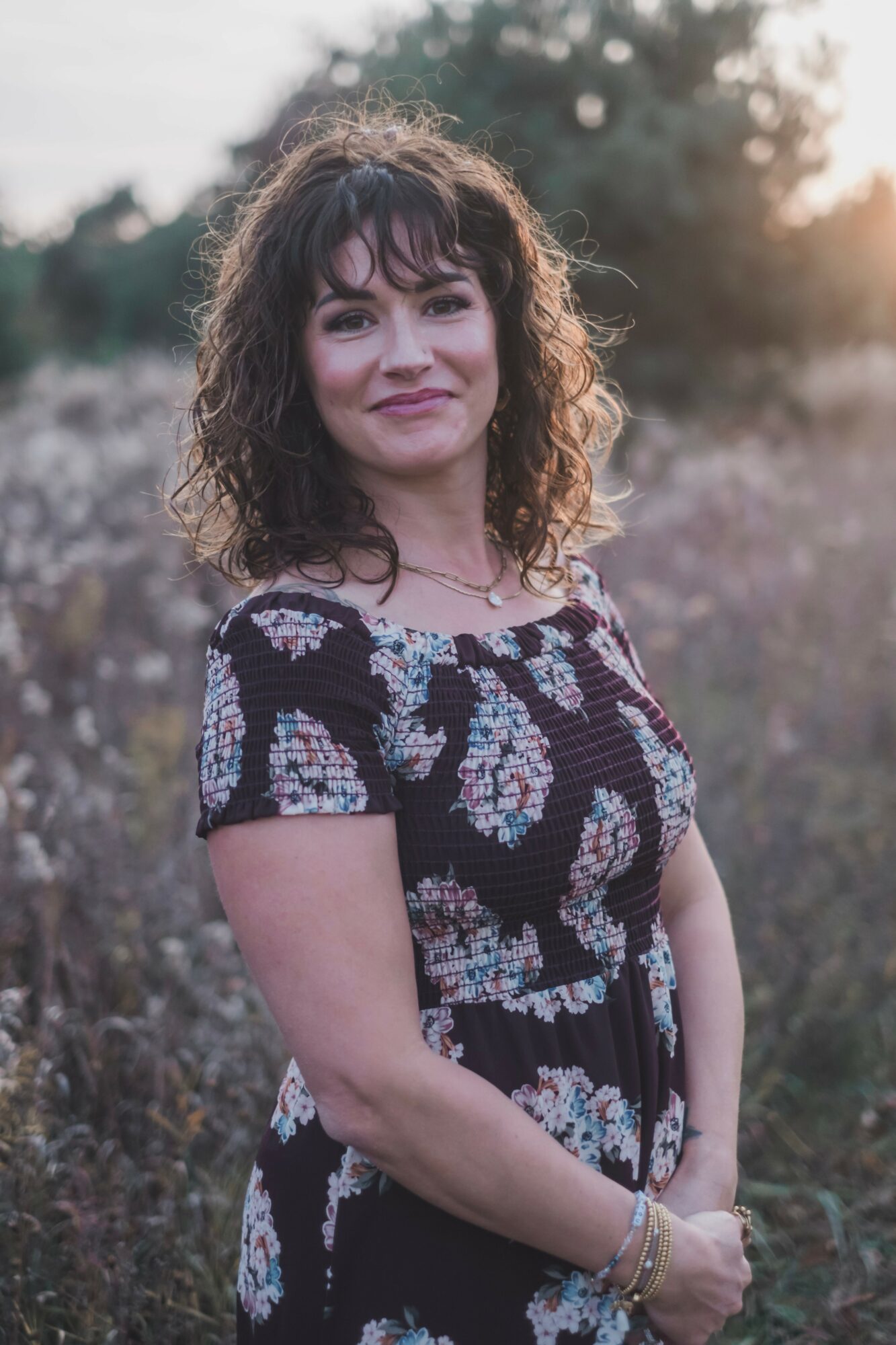
Today we’d like to introduce you to Andrea Koral.
Hi Andrea, it’s an honor to have you on the platform. Thanks for taking the time to share your story with us – to start maybe you can share some of your backstory with our readers?
I began making art while raising my young children and fully immersed in the rhythms of motherhood—managing the home, driving to playdates, and moving through the beautiful, but consuming, busyness of family life. What was missing during that season was a creative outlet. I would make small things here and there, but it never felt fully integrated into my life. In fact, it often felt like a “selfish” hobby—something that brought me joy, but also carried guilt because art supplies were expensive and didn’t feel like a practical contribution to our family.
Everything shifted when my husband returned from a work retreat and encouraged me to pursue my art more seriously. He gave me what felt like permission—to invest in supplies, to carve out time, and to treat my creativity as something worth honoring, regardless of whether it made income. That moment became a turning point in allowing myself to believe that joy itself could be a valid pursuit.
I have always been drawn to art. My mom painted when I was growing up, and I loved creating in school—especially painting and pottery. I’ve always been deeply inspired by nature and beauty in all its forms. There wasn’t a single defining moment that led me to painting; rather, it has always been something I’ve been naturally drawn toward.
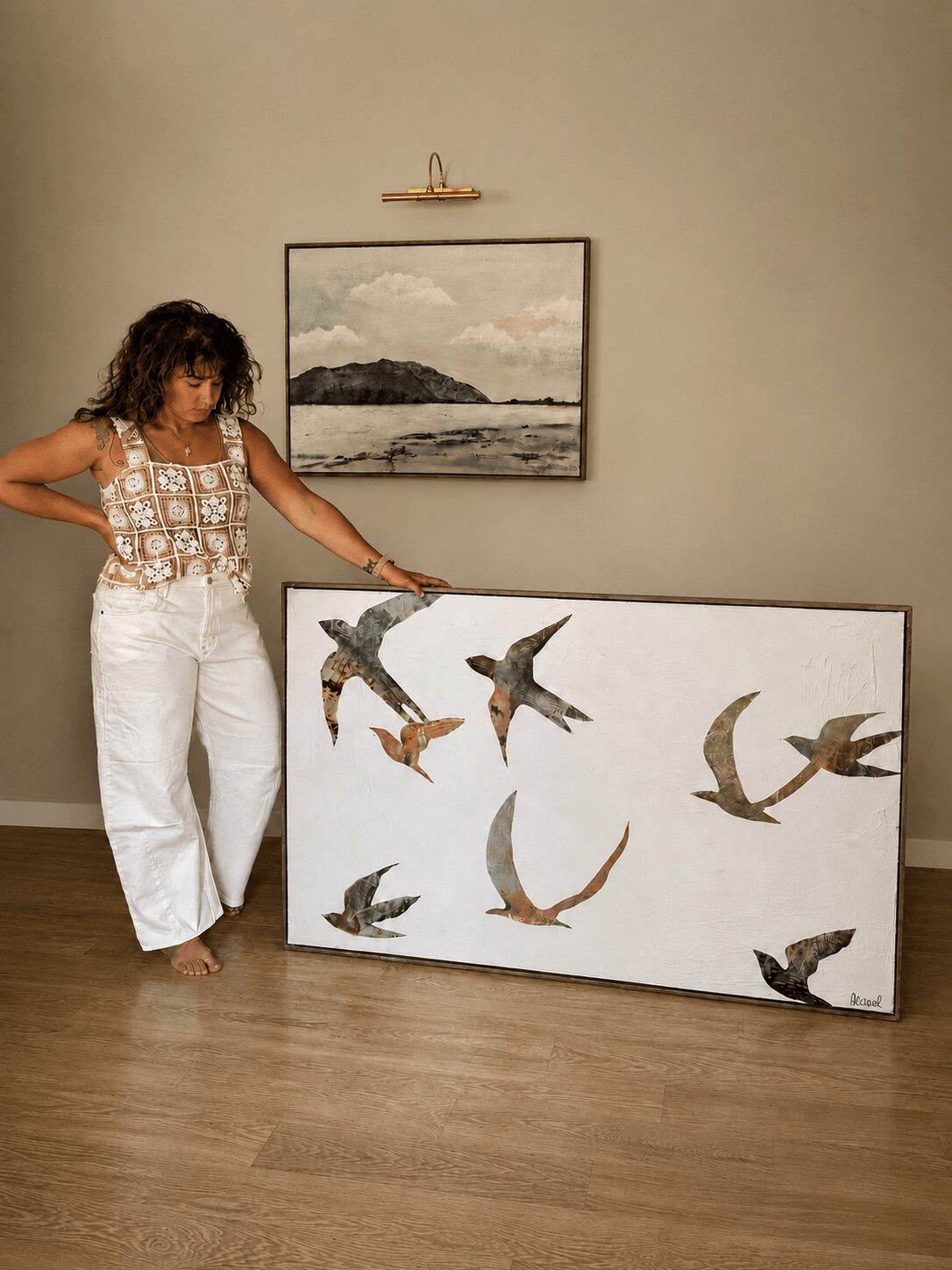
Over time, my work developed into a practice rooted in freedom, intuition, and imperfection. I’m not a perfectionist in life or in the studio. I love the unexpected—the imperfect lines in a quilt, the variation in petals of a flower, the way nature never repeats itself exactly. My process reflects that. I work intuitively, layering acrylic paint and often finishing with oil paint sticks, allowing pieces to evolve rather than forcing them into a predetermined outcome. There is a freedom in letting go of control and simply responding to what the work wants to become.
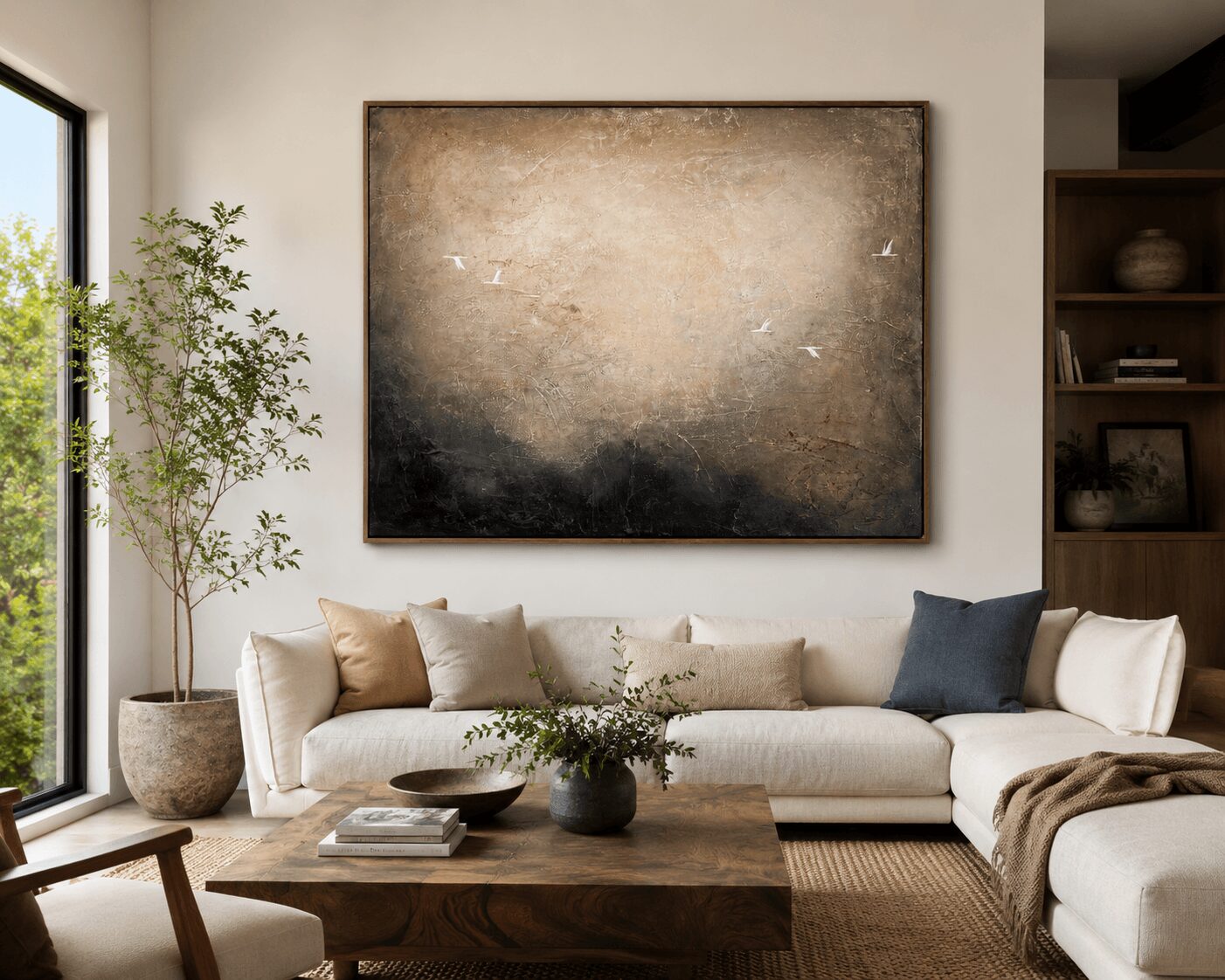
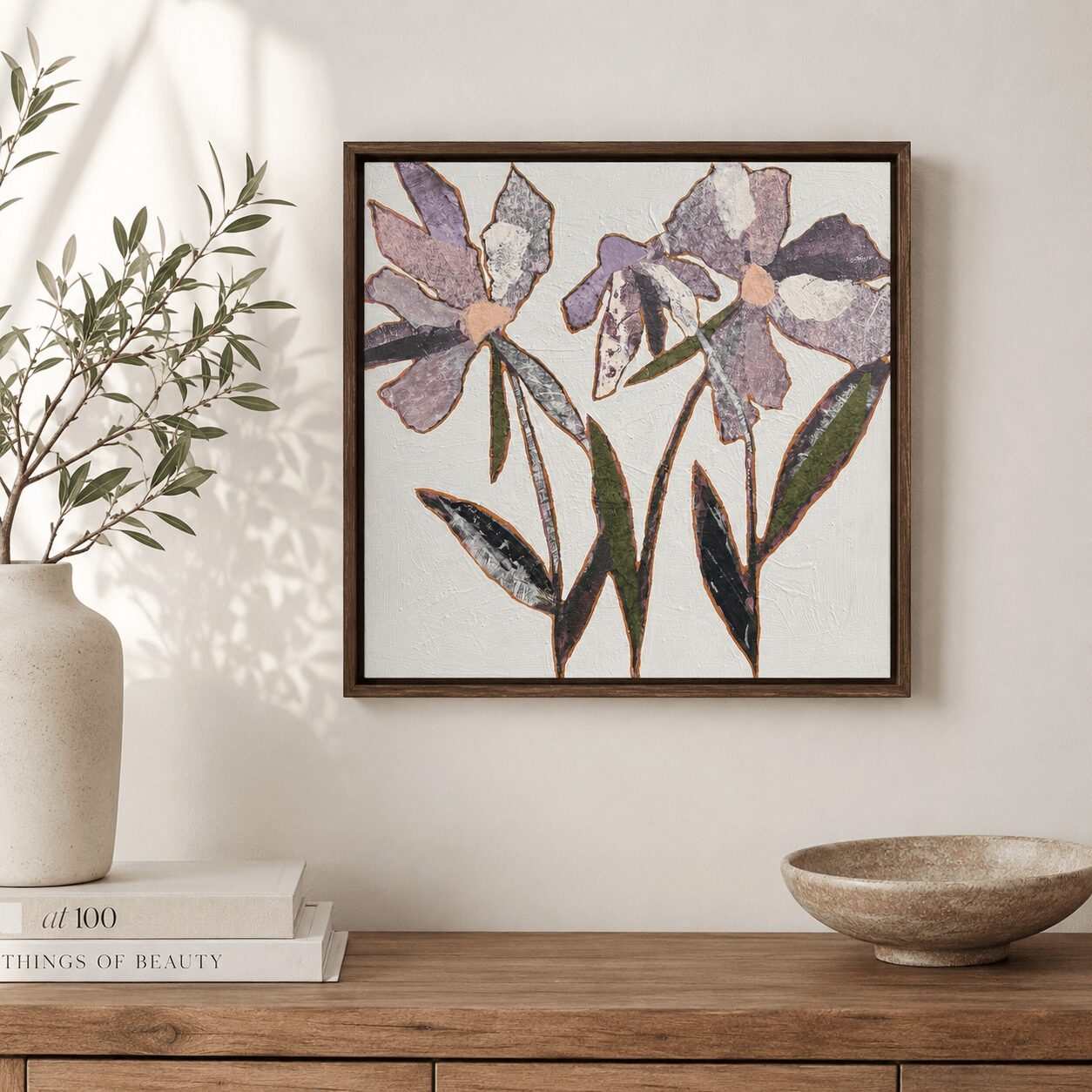
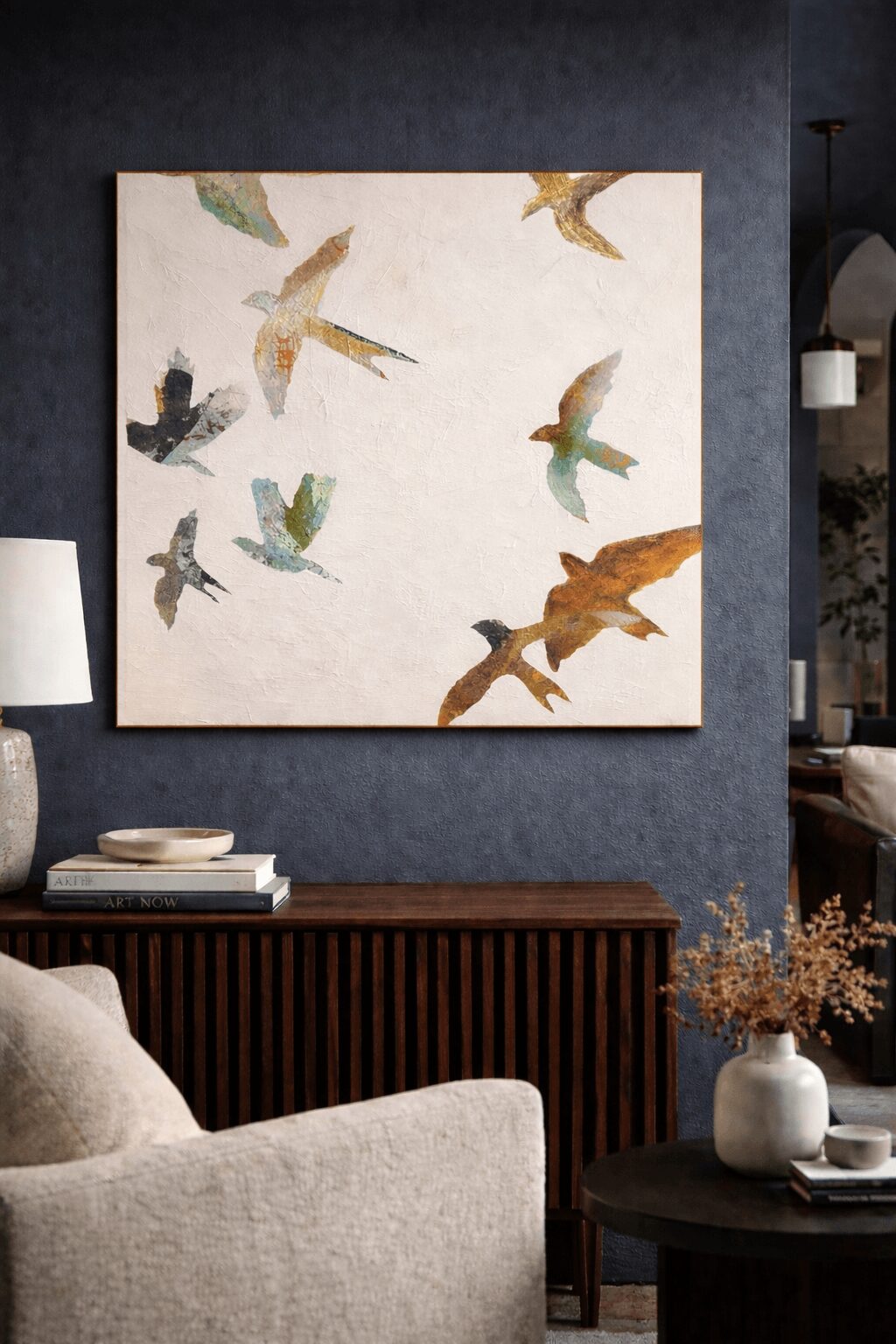
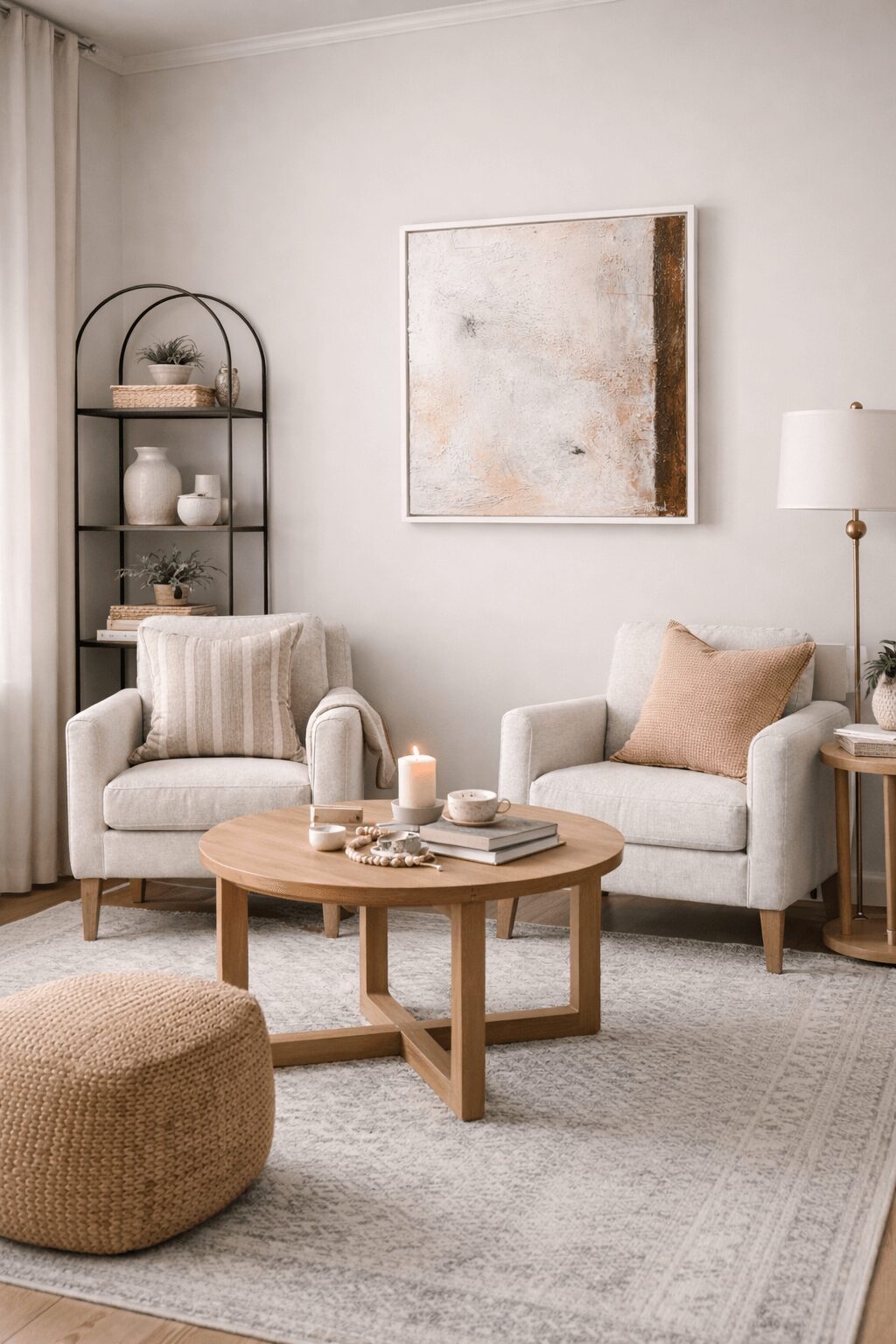
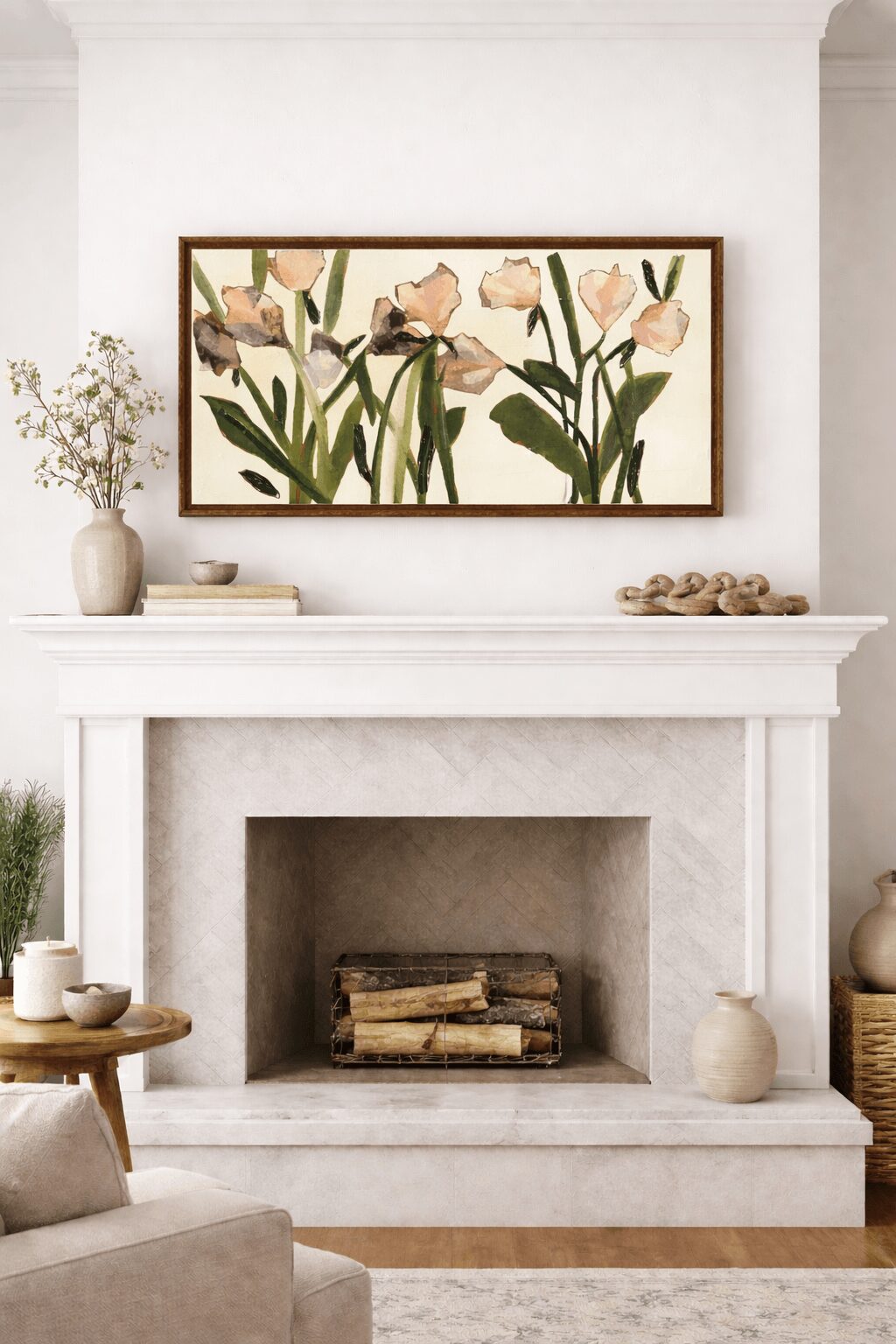
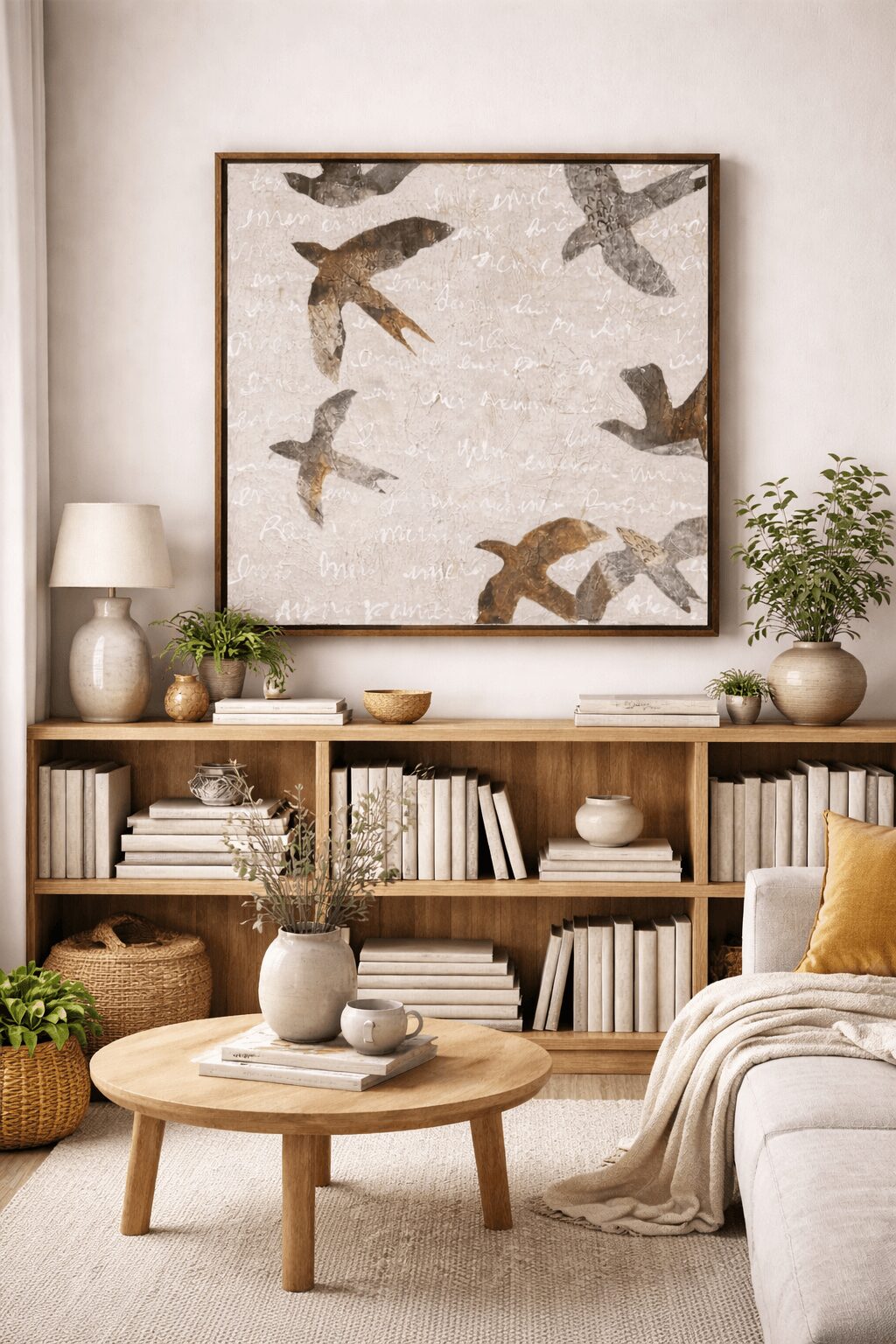
Today, I work from my home studio in Michigan, creating primarily abstract landscapes and florals. My work is textured and layered, and while acrylic is my primary medium, I often build surface depth with oil sticks. I sell primarily through interior designers and commission-based work, with pieces placed in homes in places like Bay Harbor, Caseville, and Clarkston, as well as through clients who have discovered my work via Instagram. I love the intersection of art and interior spaces—helping translate emotion and atmosphere into something that belongs within a home.
Travel is also an important influence in my work. My time in places like Uganda and Mexico has left a deep emotional imprint on how I see the world. I’m inspired by nature everywhere—water, plants, weathered wood, animals, shifting weather, and the quiet details of landscape. Sometimes I incorporate physical materials into my work—mud, coffee, tea, or natural textures—but more often, I am translating the feeling of a place rather than its literal form. My paintings are my interpretation of memory, landscape, and emotional experience.
When someone brings my work into their home, I often hear that it brings a sense of peace, warmth, and belonging to a space. One collector recently shared that I had “beautifully executed another piece for my space, making my house a home.” I think a lot about how art lives within a room, and I feel I have a strong design intuition for how a piece can transform and complete a space.
Ultimately, I create art because when I am in the studio, I feel like I am living the most authentic version of myself—fully aligned with who I am. It is where I feel most alive, most present, and most connected to the world around me. I am endlessly inspired by nature and the beauty of everyday life, and painting is how I translate that wonder into something tangible. My work is an invitation to slow down, to notice beauty, and to feel a sense of grounding within a space.
We all face challenges, but looking back would you describe it as a relatively smooth road?
Overall, it’s been a relatively smooth road, especially in the sense that I’ve felt a strong sense of alignment with my work. I haven’t experienced major roadblocks that made me question whether I should be creating. That part has always felt very natural to me.
The biggest challenge for me has been on the business side of being an artist. I deeply love the studio—the process of painting, experimenting, and creating. I wish I could spend all of my time there and simply let the work speak for itself. Ideally, I would be in the studio creating, and the work would naturally find the people it’s meant for.
What I’ve found more difficult is the promotional and administrative side of the art world—spending time online, marketing, and managing the business details that come with being a working artist. I don’t naturally gravitate toward sitting at a computer or promoting myself. My preference is always to be hands-on with paint and materials.
So the ongoing balance has been learning to make space for the business side of art while still protecting as much studio time as possible. It’s not necessarily a struggle in a negative sense, but more an adjustment—learning how to honor both the creative and practical sides of this work.
Thanks for sharing that. So, maybe next you can tell us a bit more about your work?
I specialize in abstract paintings that are layered, textured, and deeply intuitive in nature. My work is primarily created with acrylic paint, often built up with expressive layers and finished with oil paint sticks, allowing for depth, movement, and subtle contrast within each piece. I’m especially drawn to abstract landscapes and florals, always rooted in nature, memory, and emotional experience.
What makes my work unique is the way I often incorporate my clients’ personal stories into the foundation of each piece. For many commissions, I invite clients to share a meaningful quote, phrase, scripture, or words of encouragement that reflect their journey or what they want to feel in their space. I then embed those words into the base layers of the painting, sometimes allowing them to remain subtly visible as the piece evolves. It creates a hidden narrative beneath the surface—something deeply personal that becomes part of the artwork itself.
I love this aspect of my process because it creates a connection between the collector and the work that goes beyond aesthetics. It becomes personal, intentional, and meaningful in a very quiet way. Even when no specific words are included, I still approach every piece with that same intention—infusing joy, freedom, and love into the layers as I paint.
Ultimately, I want my work to feel alive in a space. I’m most proud when a piece doesn’t just “match” a room, but when it transforms it—bringing warmth, grounding, and a sense of presence. That intersection between art, emotion, and interior space is where I feel my work truly lives.
In terms of your work and the industry, what are some of the changes you are expecting to see over the next five to ten years?
Over the next five to ten years, I think the art world will continue to evolve in both exciting and challenging ways. There is already a relatively small group of people who actively seek out original artwork and want to build a genuine connection with the pieces they bring into their homes. I believe that desire—for meaning, story, and human connection—will become even more important over time.
At the same time, technology and AI are already shifting how people think about image-making and visual content. While AI can produce visually compelling work, I think it will also highlight, in a clearer way, the value of work that is deeply human—work that carries emotion, memory, and lived experience behind it.
My hope is that original art continues to hold a strong place in people’s homes and lives, especially for those who are looking for something personal and grounded. I want my work to continue finding those people—collectors who resonate with the intention, process, and story behind each piece.
Ultimately, I think the future will make the distinction between mass-generated imagery and human-made art even more meaningful. And I hope there will always be space for artists who are creating from a place of experience, intuition, and connection.
Contact Info:
- Website: https://andreakoral.com
- Instagram: andreakoral.art
- Facebook: https://www.facebook.com/andreakoral