




Today we’d like to introduce you to Mattie Levy.
Mattie, we appreciate you taking the time to share your story with us today. Where does your story begin?
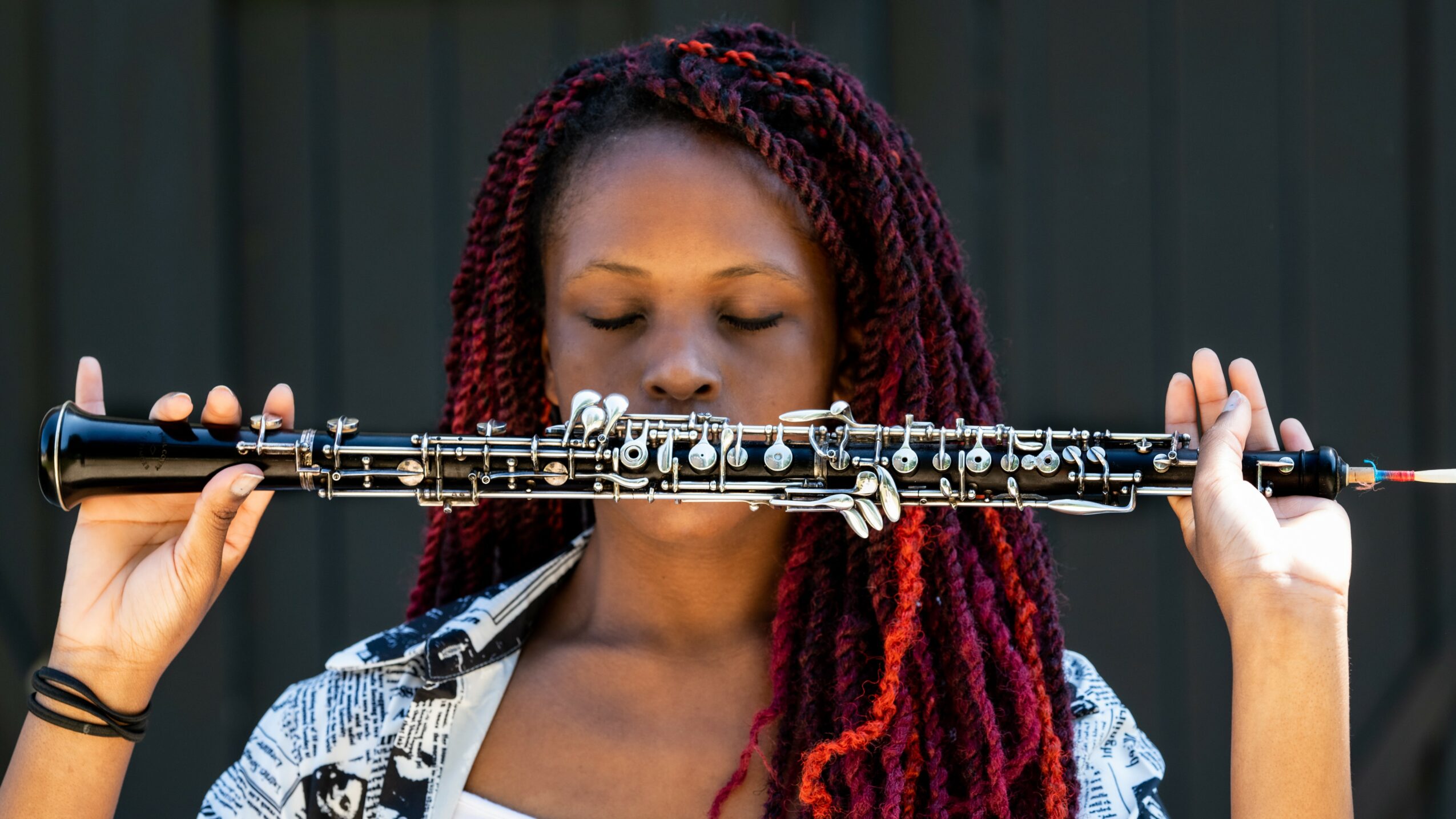
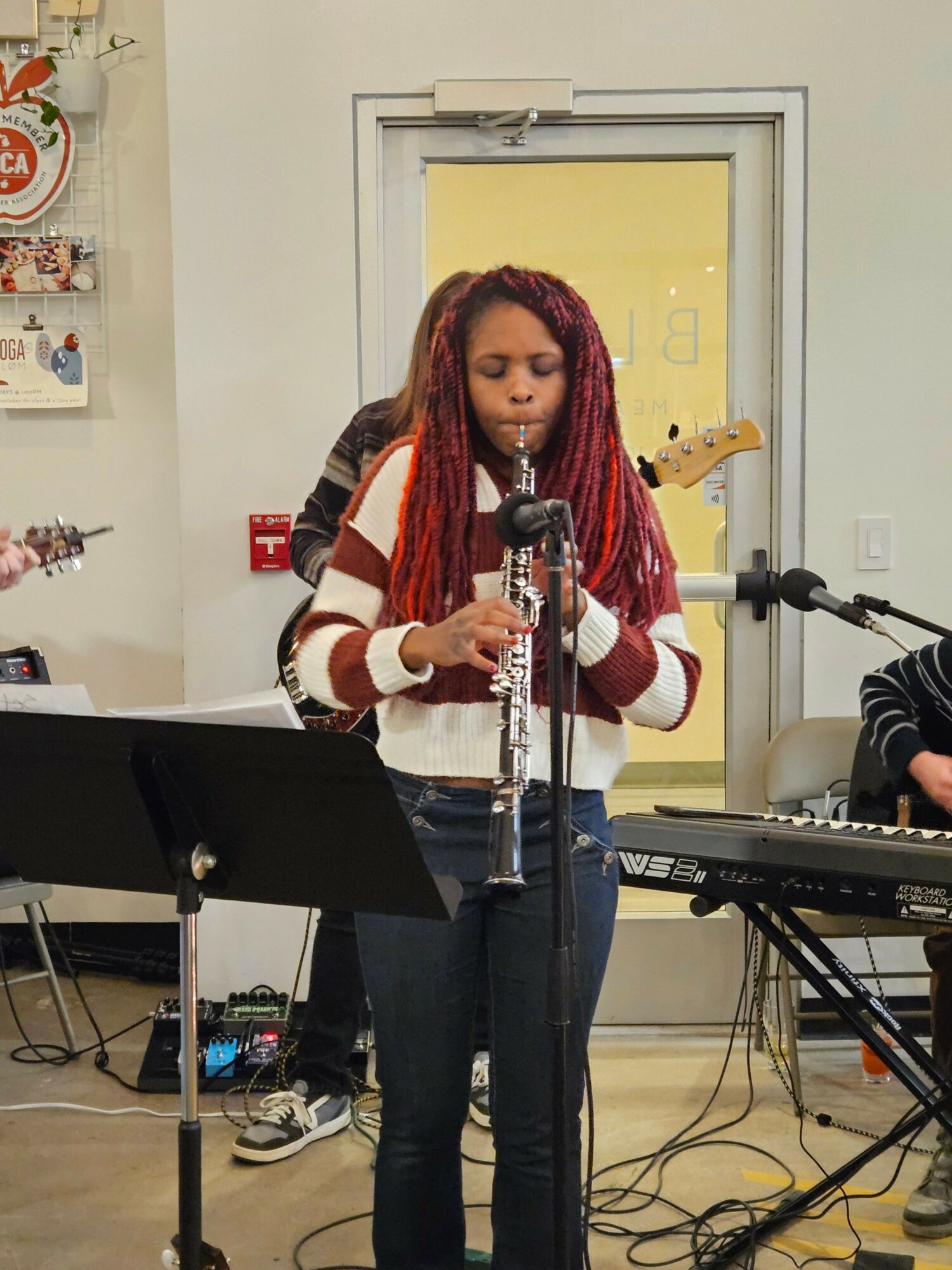
I started off playing the oboe in 6th grade, after spending years as a classically trained oboist, I realized I was interested in other music genres (musical theatre, pop, alt rock, opera, and film music). I also was interested in poetry, joining my middle school and high school slam poetry team. In college, I balanced my oboe performance degree with rehearsals in the University of Michigan educational theatre company, using theatre to discuss bystander intervention. I missed practice sessions to run meetings for the Black Leaders in Art Collective, an organization I co-founded to provide a safe space for Black students in the arts. I took the highest number of credits to fit in composition courses and creative writing. This came to a head in my senior year of college: I suddenly realized I didn’t want my senior recital to have works by Bach and Beethoven; I wanted it to feature Pixinguinha, Janelle Monae, and my own compositions. I didn’t want to spend my life scraping oboe reeds, teaching lessons, and performing in orchestras. I wanted to create poetry, compose genre-bending music, and write a musical. Now, I’m a performer/composer/poet, working to amplify Black and Black queer voices in performing arts spaces.
Alright, so let’s dig a little deeper into the story – has it been an easy path overall and if not, what were the challenges you’ve had to overcome?
The classical music world, though enjoyable, also felt a little stressful for me. I was often the only Black person in these spaces or one of few, and as I grew up I rarely saw any professional musicians who looked like me. There were also multiple times when I felt like I did not belong due to a lack of resources. I did not go to a performing arts high school, I could not afford to upgrade my instrument in college. In addition, micro-aggressions and the immense pressure that comes with being a classical musician permeated the experience. Imperfection is not acceptable if you want to be a professional classical musician. For example, in my case, if I wanted to play in a professional orchestra, I would be competing against 50+ oboists for one spot. This, in part, was another reason why I gravitated toward other genres. I still wanted to be an oboist, but I also have other interests, and as a professional classical musician, it’s difficult to be multi-disciplinary, because the majority of your time and energy must go to your instrument alone in order to succeed.
Money has also been difficult to navigate as an artist. People often use the term “starving artist” but the truth is a lot of people who are purely just doing their art for a living are not starving, because they can AFFORD to only focus on their art since they come from money or are being supported financially by a partner. Most of my friends and I are juggling multiple jobs, some art-related, some not, or living with multiple roommates, or working full-time to maintain our artistic practice. I also work full-time and am an artist after 5 because of these circumstances and the need for health insurance. That has been very difficult to grapple with, because for a long time, as a classical musician, you’re told that as long as you work hard, and you’re the best, this can be your career. Even the classical musicians who “make it” and get a professional orchestra job often have other jobs, since the money is rarely enough to sustain a living. I’m still working through and learning to accept this concept, because though I enjoy my 9-5, I really wish I could just spend my time creating and writing music, but the world does not allow that.
As you know, we’re big fans of you and your work. For our readers who might not be as familiar what can you tell them about what you do?
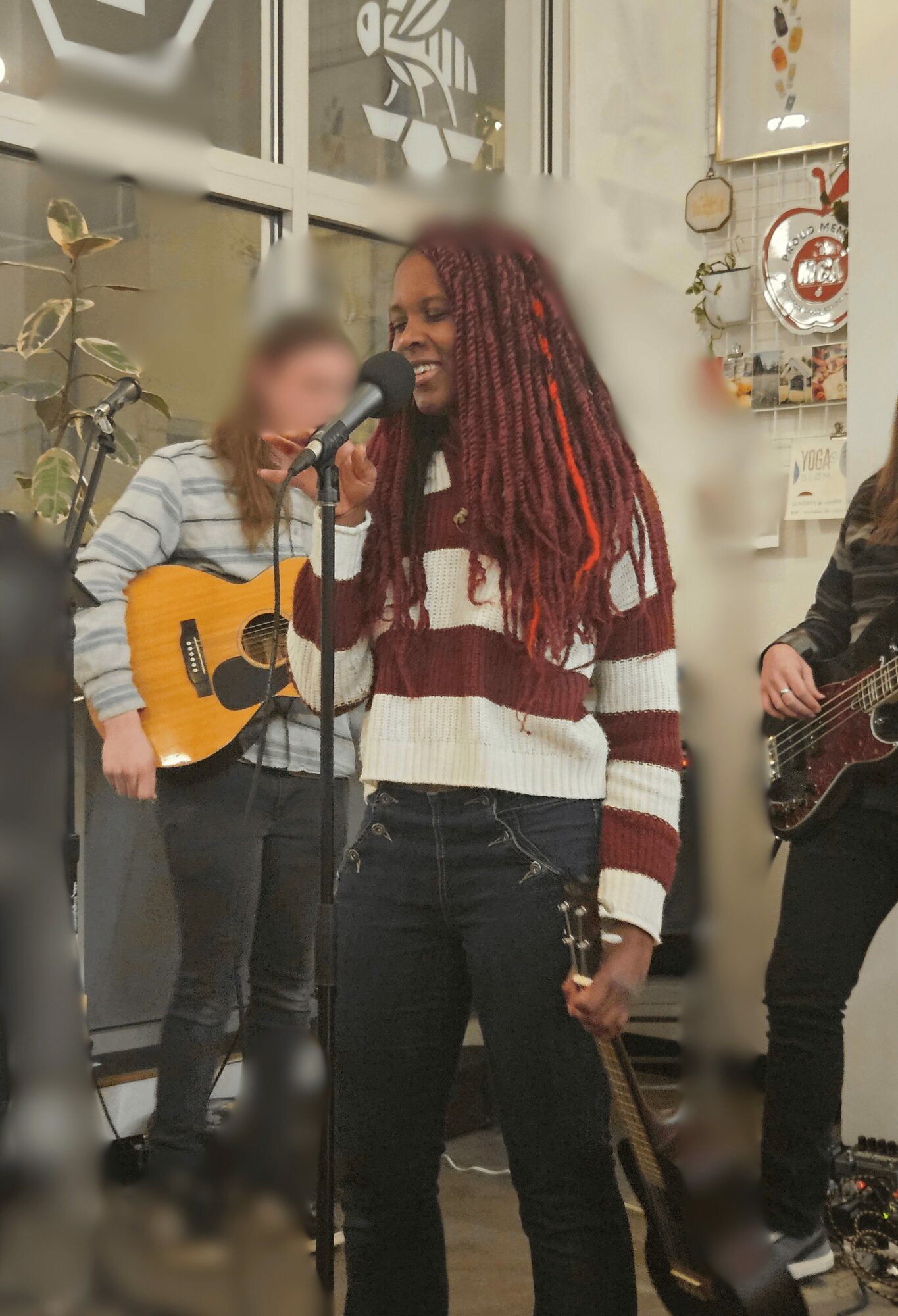
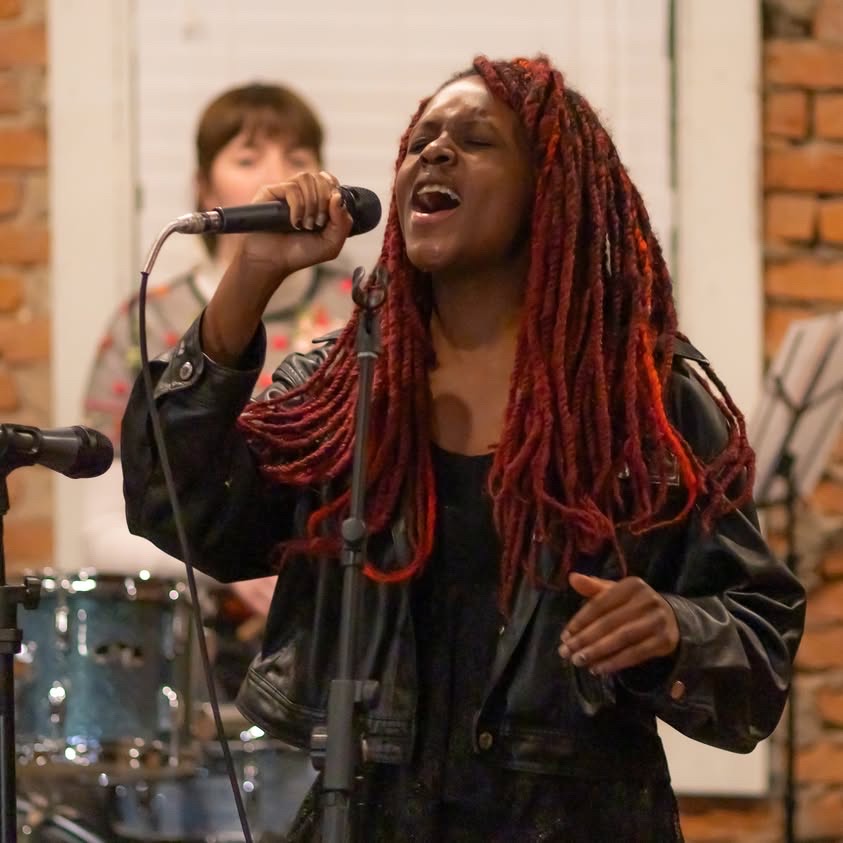
I’m a performer/composer/poet, I really identify with the buzz-word “Multi-hyphenate” that’s been going around. As a performer, I’m currently a vocalist and oboist for (dead) daisies a local alt pop band. I’m also oboist for SynTAX new music a contemporary chamber orchestra. As a composer, I write music for orchestra, musical theatre, opera, and film. I create lots of interdisciplinary works, including my Presser award-winning musical theatre-opera crossover piece Concert Black which tells the story of 3 Black classical musicians navigating the classical music world. I also consider myself a theatre-artist, performing in, and creating new works for the stage.
I’m really excited to say I am premiering a fully produced opera in May at HERE Arts Center as part of the Experiments in Opera writer’s room in New York City. I also just got my first professional orchestra commission and will be writing a piece for the Orchestra of St. Luke’s in 2027. I am so grateful to my collaborators and mentors who helped me get this far. In addition, it sounds cheesy, but I have this unceasing need to create. There are many times when I’m tired, burnt out, and just want to sit down, but then I hear music in my head I have to write down, a poem I have to get out, or a story I have to tell. That’s why I’m drawn to so many mediums; they allow me to feel like I exist in multiple capacities in this world, when we’re often told to limit ourselves.
Any advice for finding a mentor or networking in general?
I hate networking, but I like meeting people, having mentors, and finding friends. I think that’s a way to think of networking that is not pressure-filled. I got the opportunity to go to college, and I was able to go to college for music. I’ve got student loan debt, but I don’t regret it, because some of my most incredible mentors were a few of my professors. There are many people who believe college isn’t right for them, and I have met professors who weren’t supportive, but I was able to find a few who were willing to help, and I am so grateful for that. If college isn’t right for you, that’s fine. I also think you can find mentors in employers. Again, that’s not always the case. I’ve also run into employers who were not supportive, but the ones that were supportive really helped me in any way they could, and were happy to do so. I approach every professional situation as an opportunity to meet friends or learn from people, and I think that helped me a lot. I got a lot of music gigs from friends in need of a composer, or oboe gigs from friends in need of an oboist. I was able to put together my band from friends and friends of friends. I’ve decided not to waste energy on interactions with people who are not willing to be supportive. I don’t think you should have to fight for support. So, if I’m at a conference or a performance and I want to “network” I first see if they are even interested in talking to me, or if they are even interested in what I have to say. If not, it’s not worth forcing it. I only want to expend energy in situations where both parties are willing to support one another.
Contact Info:
- Website: bit,ly/levymakesproductions
- Instagram: mattie_tvc15
- LinkedIn: https://www.linkedin.com/in/mattie-levy-2003a4209/
- Youtube: https://youtube.com/@mattielevy132?si=i3PR13dB2ynB-frm