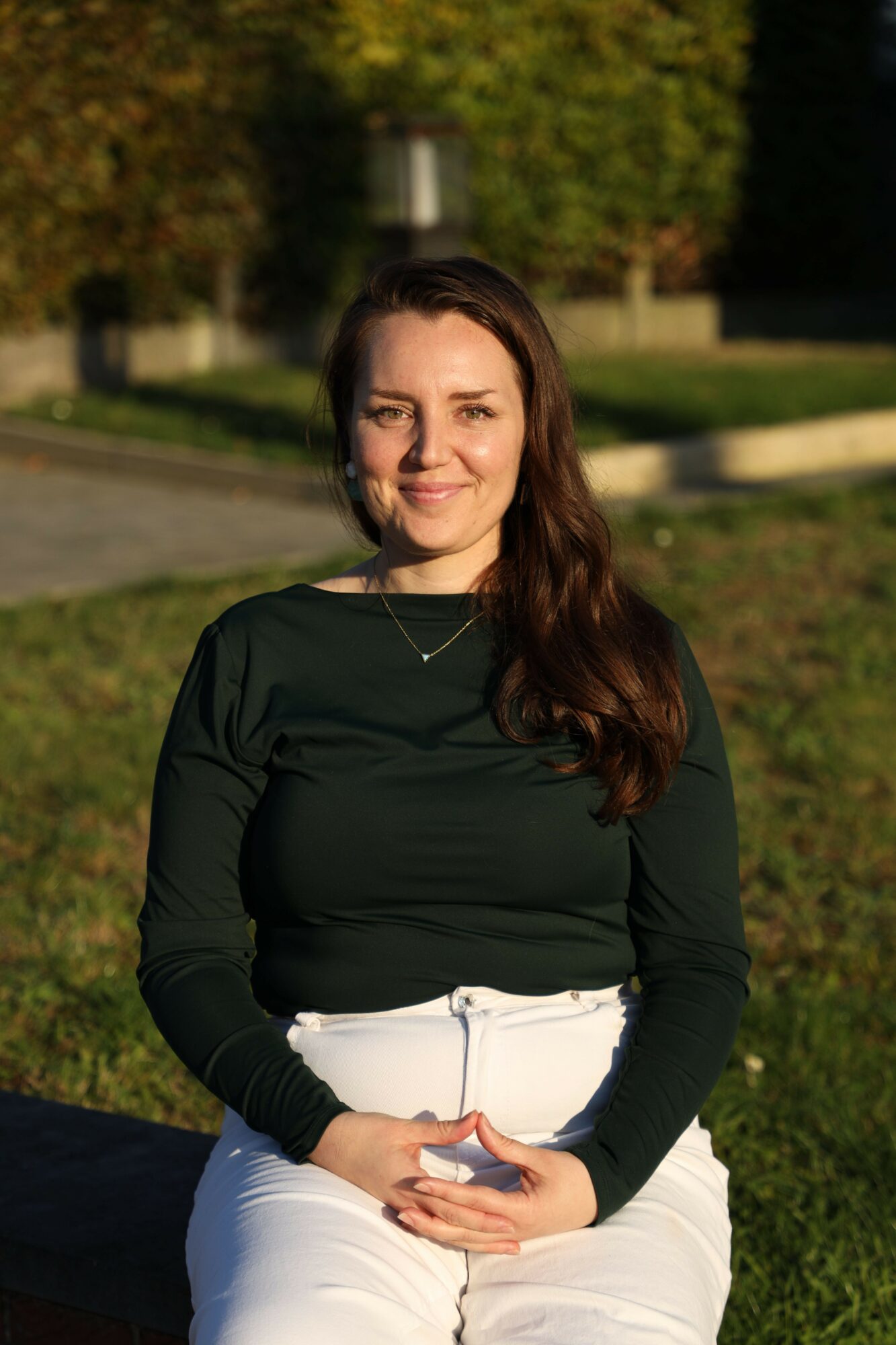



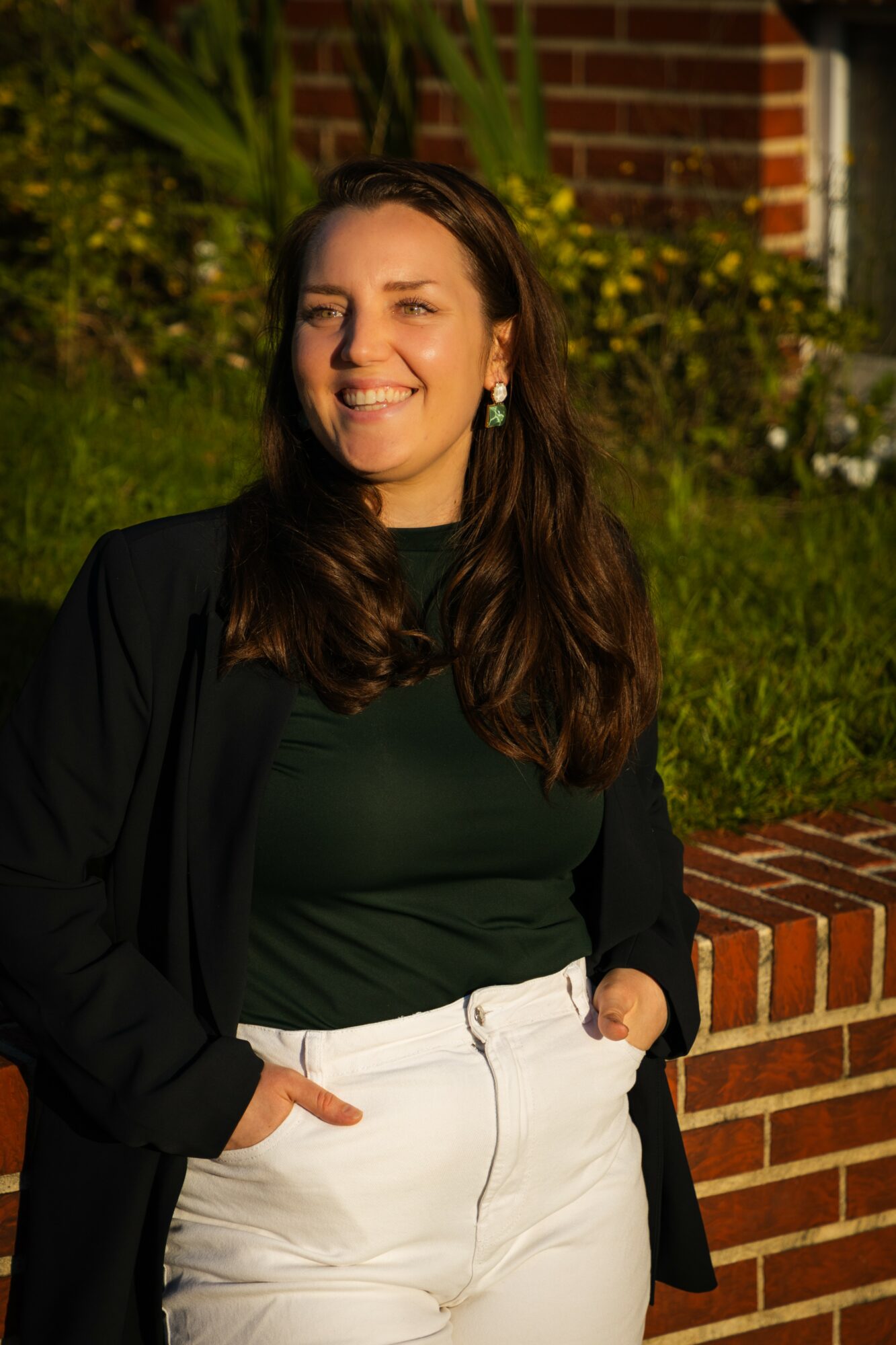
Today we’d like to introduce you to Julie Vander Meulen.
Julie, we appreciate you taking the time to share your story with us today. Where does your story begin?
I didn’t start out knowing I would do this work.
From the outside, my path looked quite “successful” early on: good studies, strong academic and professional environments, leadership roles, a clear trajectory. I did everything “right.” And for a long time, I believed that if I just kept performing, achieving, and being useful, everything would eventually feel right on the inside too.
But it didn’t.
Behind the competence and the achievements, I was exhausted. I over-functioned, over-gave, over-proved. I struggled to rest, to ask for what I wanted, to disappoint anyone. I was deeply driven — and deeply disconnected from myself. At the time, I didn’t have words for it. I just thought something was wrong with me.
My turning point didn’t come from failure, but from awareness. I started to see a pattern — not just in myself, but in so many brilliant women around me. Women who were capable, ambitious, and respected, yet quietly stuck in perfectionism, people-pleasing, and self-sacrifice. That’s when I began to name what I was experiencing: what I later came to call Good Girl Syndrome.
From there, everything changed.
I immersed myself in personal development, coaching, leadership training, and psychology — not to “fix” myself, but to understand the deeper conditioning shaping women’s lives. I trained extensively, worked across different environments, and eventually began coaching women one-on-one. What I saw confirmed my intuition: this wasn’t just a “me” problem. It was cultural.
Today, I’m an empowerment coach for high-achieving women and a thought leader on Good Girl Syndrome. I’ve coached over 150 women, written extensively on the topic, spoken on it, and built a platform dedicated to helping women stop shrinking and start owning their lives — fully, freely, and on their own terms.
What brings me the most meaning is helping women realize that there is nothing wrong with them. They were simply trained to be good before they were allowed to be whole.
Would you say it’s been a smooth road, and if not what are some of the biggest challenges you’ve faced along the way?
Not at all. And I don’t think it was meant to be.
One of the biggest challenges was that my struggles didn’t look like “failure” from the outside. I was functioning, achieving, being praised — which made it harder to admit that something was deeply off. When you’re a high-achieving woman, pain often hides behind competence. You keep going because you can, not because it feels right.
Another struggle was unlearning. Letting go of the belief that being valuable meant being agreeable, useful, or endlessly strong. Learning to disappoint people. To rest without guilt. To stop performing and start listening to myself. That was uncomfortable, and at times lonely.
Professionally, choosing this path also meant stepping away from more traditional, clearly defined roles into something more self-directed and visible. Claiming my voice publicly, talking about Good Girl Syndrome, and building something around it required courage. It meant being seen, sometimes misunderstood, and trusting my inner truth even when it wasn’t yet widely validated.
There were also moments of doubt — not about the work itself, but about whether I was “allowed” to do it. Whether I was enough. Whether I had earned the right to take up space. Those questions were part of the very pattern I was trying to help women break free from.
What helped me through all of it was learning to slow down, to build self-trust instead of self-pressure, and to stay anchored in why I do this work. The road hasn’t been smooth — but it’s been deeply formative. Every challenge shaped the clarity, compassion, and depth I now bring to the women I work with.
Great, so let’s talk business. Can you tell our readers more about what you do and what you think sets you apart from others?
My work lives at the intersection of personal leadership, women’s empowerment, and cultural change.
Under my personal brand, Julie Vander Meulen, I’ve built a body of work centered around Good Girl Syndrome — a pattern I’ve spent years researching, writing about, and working with in practice. It describes the invisible conditioning that teaches women to be good, capable, and self-sacrificing before they’re encouraged to be truthful, bold, or self-directed. It’s subtle, deeply normalized, and incredibly costly.
Professionally, I work primarily through premium coaching and corporate trainings for high-achieving women. I support women who are successful on paper but disconnected from themselves — helping them move from perfectionism and people-pleasing to self-trust, clarity, and aligned leadership. This is how I make a living, and I take great pride in doing this work at a high standard, with depth, integrity, and long-term impact.
At the same time, a large part of my work is intentionally not monetized.
Roughly 80% of my time goes into contribution, education, and awareness-building. I recently launched The Good Girl Syndrome Show on YouTube and Spotify to make these conversations accessible to women everywhere. I write a free weekly newsletter, Sunday Sanctuary, read by thousands of women every week, and I created the Good Girl Syndrome Quiz, a free in-depth self-assessment that helps women recognize patterns they often couldn’t name before.
I also regularly speak at conferences, lead workshops, and appear on podcasts and interviews to raise awareness around the silent suffering many women experience behind competence and success.
What sets my work apart is that it doesn’t ask women to “fix” themselves or become someone new. It invites them to come back to who they already are — without guilt, without performance, without shrinking. I’m deeply proud of the fact that this work has grown organically, through resonance and trust, not through pressure or noise.
More than a brand, this is a long-term commitment to changing the way women relate to success, self-worth, and power — both individually and collectively.
Where do you see things going in the next 5-10 years?
I see the industry moving away from surface-level optimization and toward deeper, more honest transformation.
For a long time, personal development and coaching have been focused on performance: doing more, being better, fixing what’s “wrong.” That approach worked to a point, but it also mirrored the same pressure many high-achieving people were already under—especially women.
Over the next 5–10 years, I believe the real shift will be toward identity, nervous system regulation, and self-trust. Less obsession with constant productivity and more focus on sustainability, embodiment, and inner alignment. People are no longer just asking, “How do I succeed?” but “How do I live well while succeeding?”
Another important shift will be the maturation of the coaching profession. Standards, ethics, supervision, and accountability will matter more. Clients are becoming more discerning, and rightly so. Coaches and trainers who combine depth, lived experience, and professional rigor will stand out, while purely performative or ungrounded approaches will lose relevance.
I also see a growing demand for work that addresses cultural conditioning, not just individual mindset. Patterns like Good Girl Syndrome, burnout, and over-functioning aren’t personal flaws—they’re systemic. The industry will need to become braver in naming that and offering frameworks that go beyond “just think differently.”
Finally, I think there will be a return to humanity and nuance. Less loud certainty, more presence. Less instant answers, more real conversation. The future of this industry belongs to people who can hold complexity, speak with humility, and help others reconnect with themselves in a way that’s honest, sustainable, and freeing.
Contact Info:
- Website: https://www.ownyourlife.academy/work-with-julie-vander-meulen
- Instagram: https://www.instagram.com/juvdmeul/
- Facebook: https://www.facebook.com/juvdmeul/
- LinkedIn: https://www.linkedin.com/in/julie-vander-meulen-the-empowerment-coach/
- Youtube: https://www.youtube.com/@JulieVanderMeulen
- Other: https://www.ownyourlife.academy/newsletter