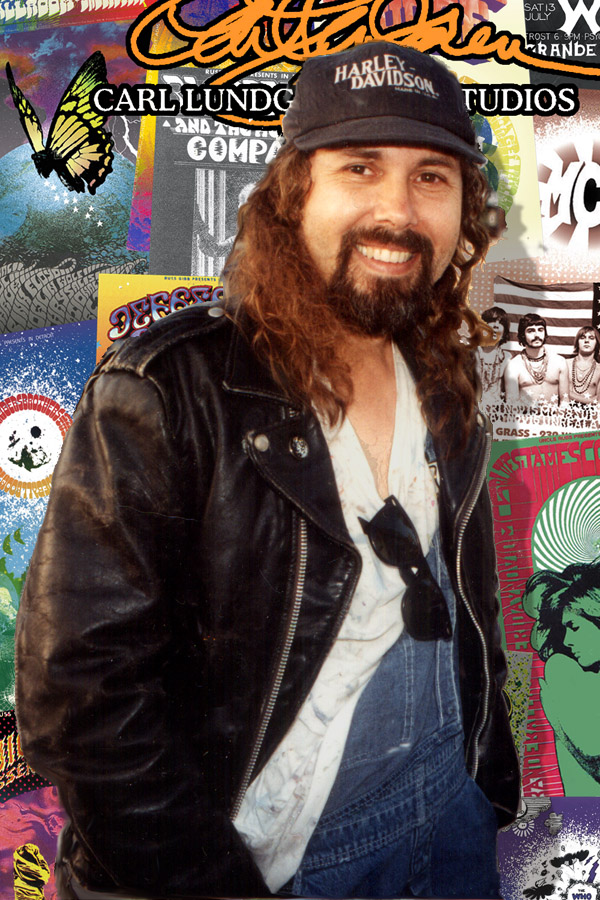




Today we’d like to introduce you to Carl Lundgren.
Hi Carl, can you start by introducing yourself? We’d love to learn more about how you got to where you are today?
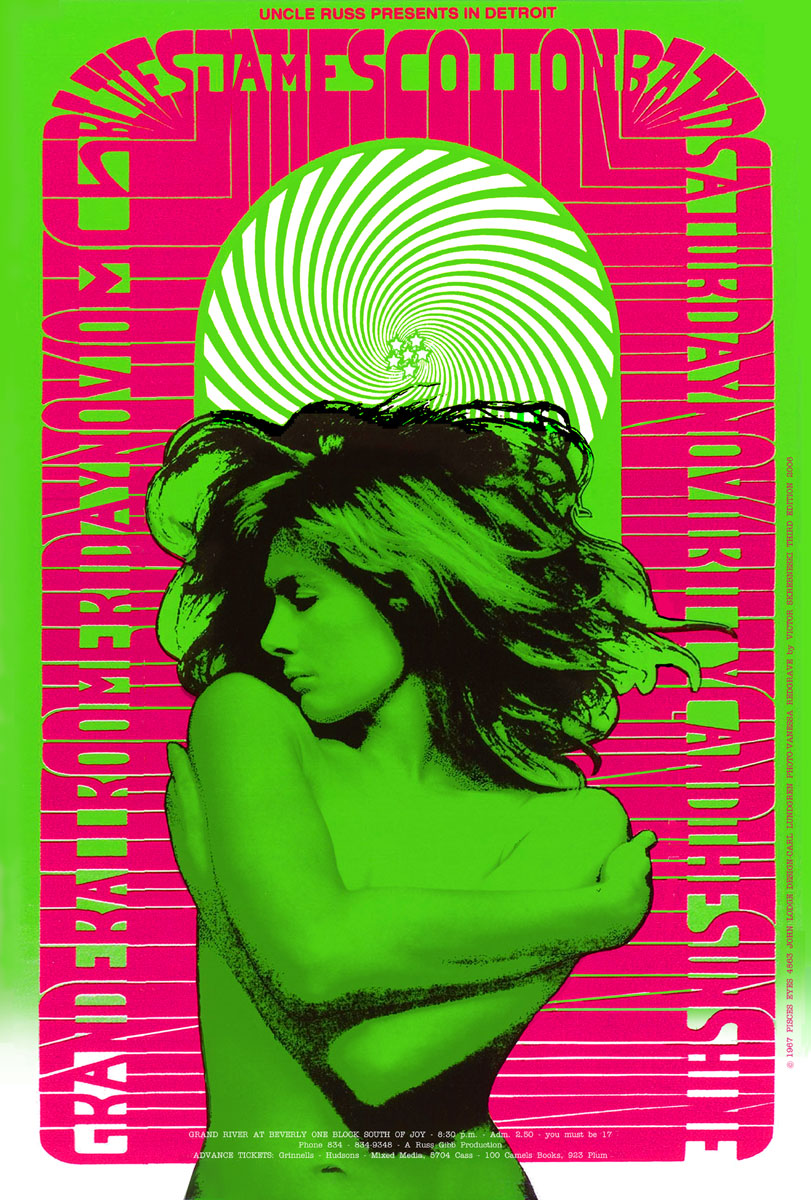
CARL LUNDGREN and the GRANDE BALLROOM, DETROIT
It’s 1966. My parents, so encouraged by my first crude attempts at art, were shocked at the idea of me actually becoming an artist! They relented when I indicated that I could learn art at “college” (something that they had been saving for while I was growing up). Through my film interests I was familiar with the programs of the big California universities and USC promptly accepted me. I was going to study art, and it was a chance for me to get out of Detroit, and move to the West Coast on my own, 2300 miles away!
My folks bought me a VW “bug” and agreed to send $100 a month to cover my living expenses. At about the same time, a bunch of my friends were leaving for San Francisco to check out the just emerging hippie scene. I joined the caravan trading in my beatnik look and began adopting the “freak” lifestyle.
San Francisco was great (I’ve since lived there a few times), but on this trip I was re-exposed to guy named “Mouse” from Detroit. He was known for air-brushing hot rod cartoons on sweatshirts at the Michigan State Fair, but now he was doing something new: artistic posters for Rock n’ Roll concerts. And I noticed.
I dropped out of college, but throughout my year on the Coast I began to see a lot of new types of artworks being created to advertise these music concerts.
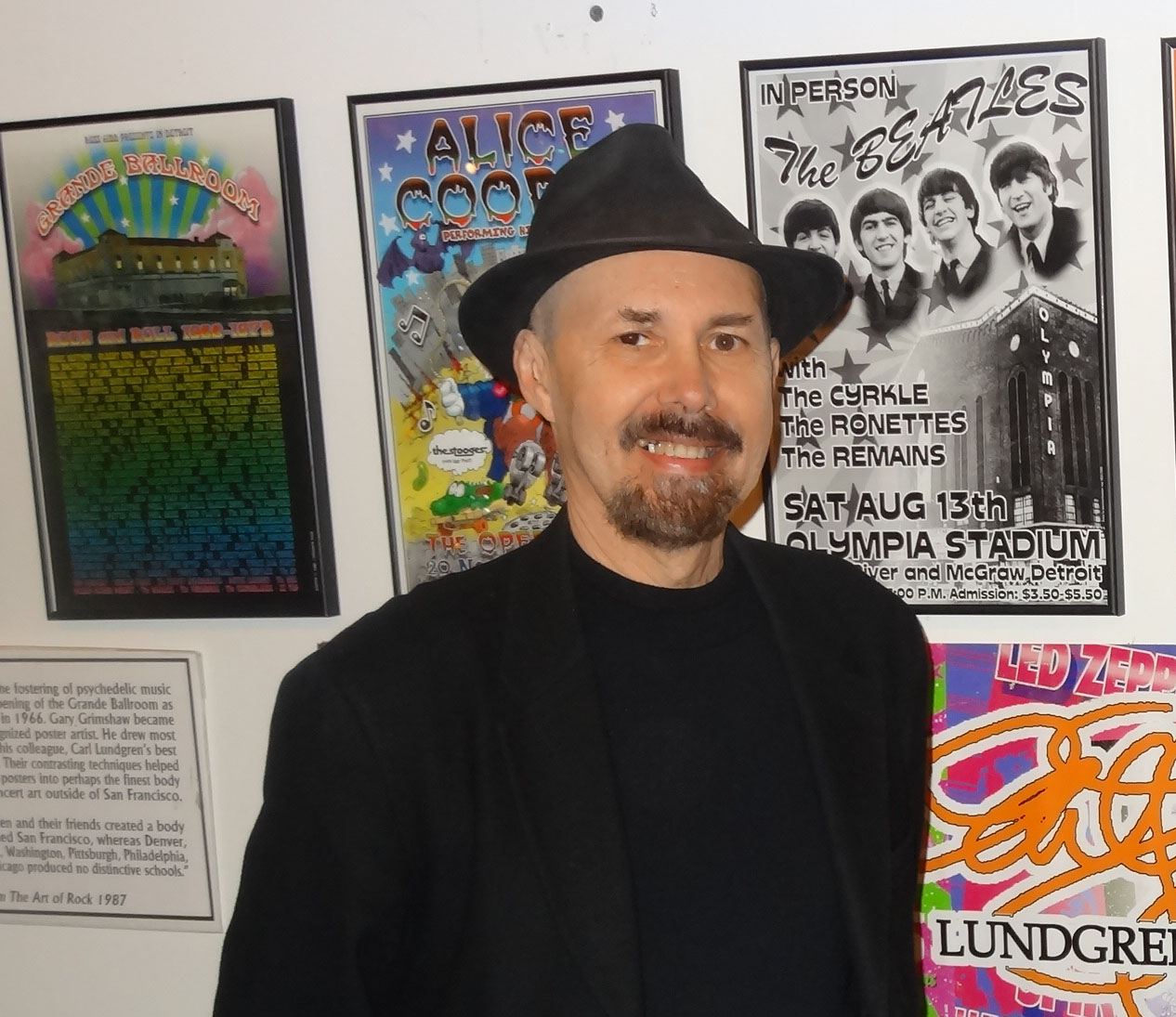
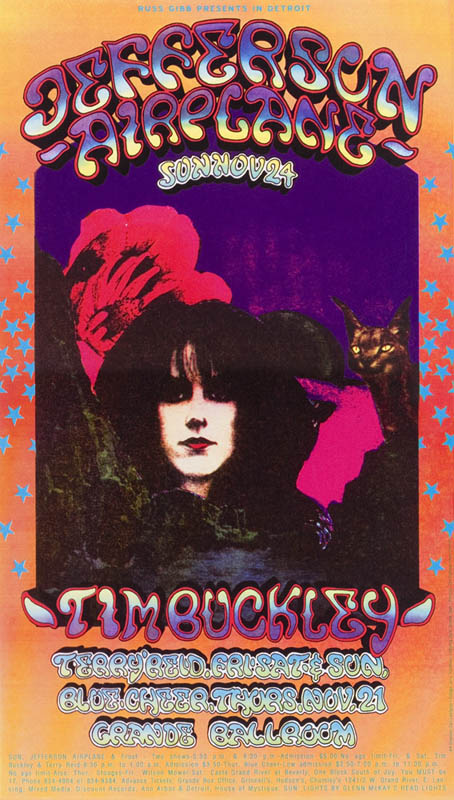
New bands like the Grateful Dead and the Jefferson Airplane played at the local ballrooms and the promoters were hiring artists to do posters and handbills for the performances. So, when I returned to Detroit, I found out that my city as well, had begun advertising its own rock shows. A local Dee Jay named Russ Gibb had re-opened an old dance hall, the Grande Ballroom (pronounced Gran-dee) and a local artist named Gary Grimshaw and Warlock studios were creating flyers for the Detroit rock events. Stylized lettering, bright colors and some sort of strange central image usually made up one of these adverts. I still couldn’t draw or paint, but I could handle that. I did some samples imitating the other artists and tracked Gary down at his pad above the “Artists’ Workshop” in an old suite of what were formerly doctor’s offices near the campus of Wayne State University. Gary was very generous and allowed me to create a trial postcard for an MC5 band benefit, cutting me in on his main source of income. (Although the Grande closed long ago, Gary spent the rest of his life creating Rock n’ Roll posters). Anyway, when his commune called Trans-Love-Energies moved to another set of Doctor’s offices a few blocks away, I moved in with them and started doing posters regularly.
During the 1967 Summer of Love, Detroit had a race rebellion, and the other members of our commune began to take on a more political, even radical mood. Michele and I no longer felt that we fit in. We had both spent time in San Francisco and decided that we should move back. Now that I had experience with Grande art, I imagined that I could make a living making posters for the big West Coast ballrooms. I couldn’t have been more mistaken. We lasted only a couple of months before financial ruin. My memories of that time were the MLK assassination and doing a crummy poster for the Family Dog’s Avalon Ballroom. The late Bill Graham turned me down for poster work at the Fillmore Auditorium. He had his girlfriend, Bonnie McLean, doing all his artwork. While in San Francisco,
I did get to meet and hang out with all the great poster artists. Returning to Detroit again, I went back to work for the Grande doing all sorts of jobs. I helped decorate the walls with Day-Glo paint, worked in the lightshow and passed out flyers.
Although I considered the Grande was “kid stuff”, I did have the opportunity to socialize with some of the greatest bands in Rock music history. I created many posters for Uncle Russ as well as for another local promoter named Mike Quatro, (Suzi Quatro’s brother), who had “discovered” the Bob Seger System, and the Amboy Dukes with Ted Nugent.
Early on we realized that the large posters were not cost effective, so we started just publishing the smaller postcard size versions of the art.
The artwork that I was doing was becoming more and more technically involved until I was actually working right at the printers rather than dropping off the job. When Gary Grimshaw had to go on the lam, I took over all the Grande poster assignments. I had to lighten my load by going on Russ Gibb’s radio show and asking the audience for artist volunteers. Bonnie Green came forward and did some cards. Another artist, Don Forsyth who called himself Donnie dope, also did many cards both in collaboration with me and on his own. One day in the mid-1980s, Phil Cushway from ArtRock Gallery visited me in Philadelphia and bought a huge stack of all the things that I had saved for $400 cash. From then on posters became more important and were considered collectible artwork. Over the years we have created a poster empire and live off the sales of my digitally re-created artwork. I sell about 150 posters of my 250 designs online platforms, retail stores and art shows. A few years ago, Hermes Press in Pittsburgh published a beautiful coffee table book of my rock posters. After 56 years, since my first poster job, and through the efforts of Eric King, the poster authority, I became rather well-known among the few still living psychedelic poster artists.
I’m sure it wasn’t obstacle-free, but would you say the journey has been fairly smooth so far?
I can honestly say that I never had a bad day or missed a meal. I got to do EXACTLY what I wanted to do my entire life, (although it took me about 9 years of practice and study to become a sucsessful professional artist) I loved every minute of it and wouldn’t change a thing.
Can you tell our readers more about what you do and what you think sets you apart from others?
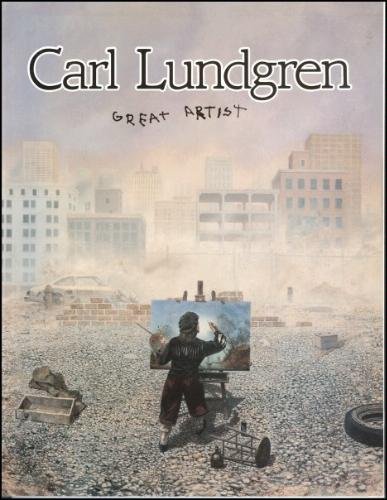
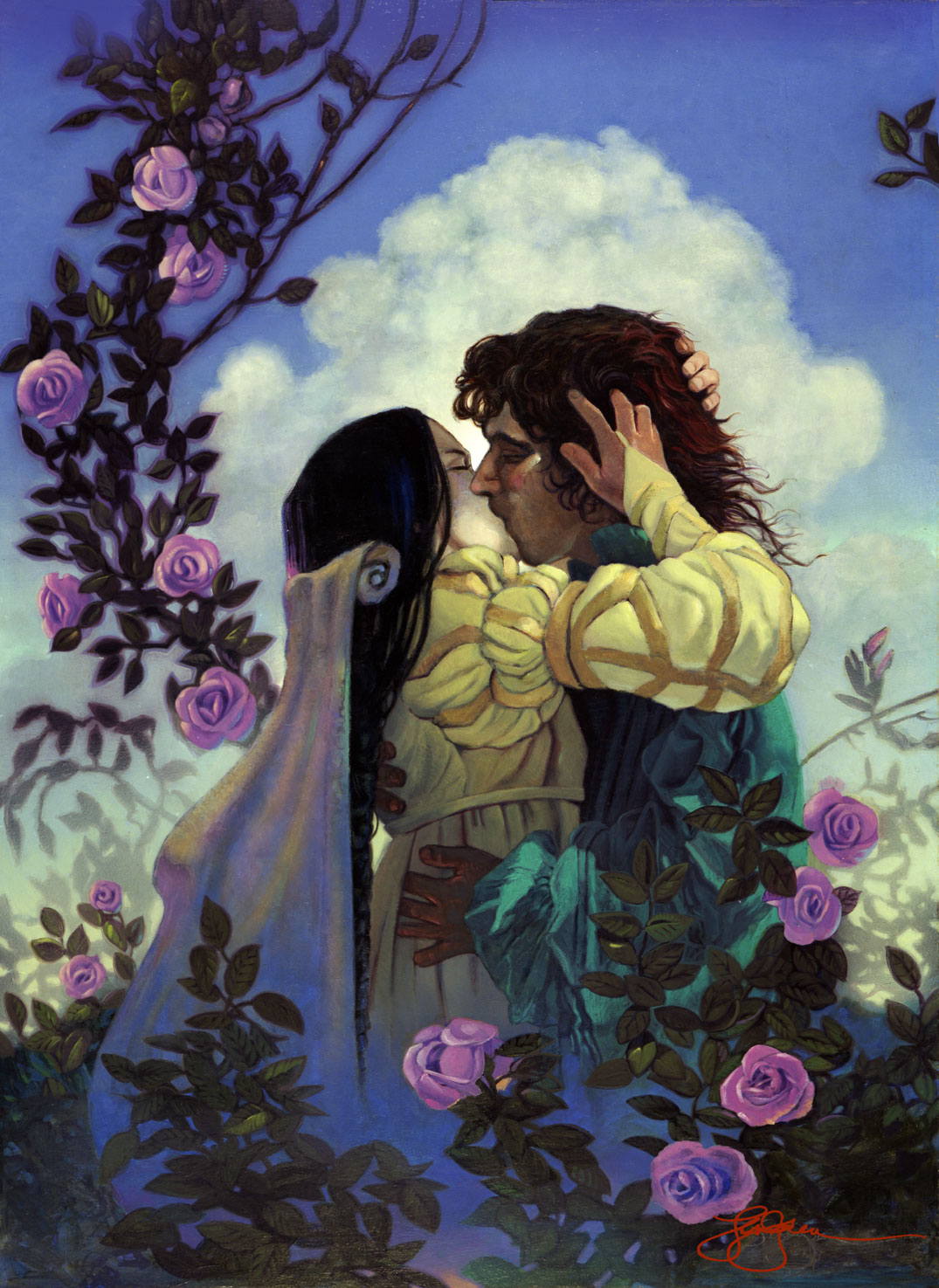
I have also been painting successfully since 1970, mainly focusing on oils and mixed media on board. I paint my fantasy and surreal pictures as realistically as possible because my goal is to convince the viewer that an unreal world may actually exist.
I started my art career while still a teenager in Detroit, concentrating on book cover illustrations. After building a small portfolio, I moved to New York City where it took me nine years to attain professionalism in the publishing industry. After 13 years in commercial art, I moved on to fine art and began displaying my work in galleries and museums all across the country and Europe. Having lived all around the country and travelled the world, I love what I do and work every day on my art.
I’ve always believed that drawing was humanity’s first form of communication. Before we had a written or a spoken language we shared our ideas through pictures, and we still do that today, whenever we design something new. I strive to communicate ideas with my artwork. To me, that is what makes a picture memorable, or even interesting! I have no interest in just exhibiting my work. I do however have a profound desire to sell original paintings as I have over the last 40 years. Because of the success and distribution of my work through art fairs, gallery shows, the internet and more, I have a huge fan following here and abroad.
My usual procedure starts with a concept, then a small rough sketch. I then develop that rough sketch by changing it many times to make it more interesting and clearer. When I like the way the sketch has ripened, I develop it even more in Photoshop. I then print the image and use it to help create an original painting. I work from top to the bottom, dark to light, background to foreground. Often times I will use the Imprimatura technique, meaning to start with a dark or neutral covered background. I try to make things as plausible as possible and I make sure that my ideas can be easily interpreted. I do not want to corrupt someone else’s experience when looking at my paintings, so I feel that there is no need to explain them.
I know there is only one original finished artwork, but in our technological world, I can reproduce my pictures digitally. My Paintings are very time consuming, some can take me years to complete, so I am forced to print them many times in order to earn my livelihood.
I have a pile of sketches and ideas that I have done over the years and those are the works that inspire me. Occasionally one will appeal to me and I will start my painting process. Some paintings will be successful and others are never finished. I have six paintings in progress right now and I have six more that I want to start. Art has been all I have ever known, all I’ve ever done, and I can’t imagine not being an artist. I have tried other jobs but I am only truly happy creating art and showing it to people. Art means to me that I have lived a great life by my own initiative. I have traveled the country and to Europe several times, had a great relationship with my family, other artists and friends. I am happy every day because I have the freedom to do exactly what I want; no king has ever lived better. It means a lot to me because it allows me to live in a world with successful creative people.
I was a member of the Society of Illustrators in New York in Manhattan, the most prestigious organization for Illustrators. It had members such as Norman Rockwell. I also studied at the Arts Students League in New York. I have been mostly inspired by the Golden Age of Illustration and the Pre-Raphaelites and I continue to look at them as an example to help better my work. I’m also influenced by several Victorian painters and William-Adolphe Bouguereau, the French academic painter.
There are not a lot of artists out there that would invest as much time in their work as I do. I sense that when people look at my work, they see how deeply involved I am in sharing my vision. I do not produce volumes of original art; therefore my community is always excited when I finally reveal a new piece of work. Every piece that I produce has a different dynamic, and my goal is mostly to make sure that my fan base feels something special when they see my art. They come to expect something different from me every time, although my original oil paintings are few and far between and therefore very expensive. I have a few collectors who can meet my price but for the most part I provide a range of moderately priced reproductions so that everyone can share in my process. I believe everyone can enjoy art so I make sure I attend as many art related functions as possible. I support other artists’ endeavors and they encourage mine as well. I feel that art should be an integral part of every community.
Main communities of interest are the fans of the genre and the collectors. Then there are the gallery attendees. And then readers, many paintings are published.
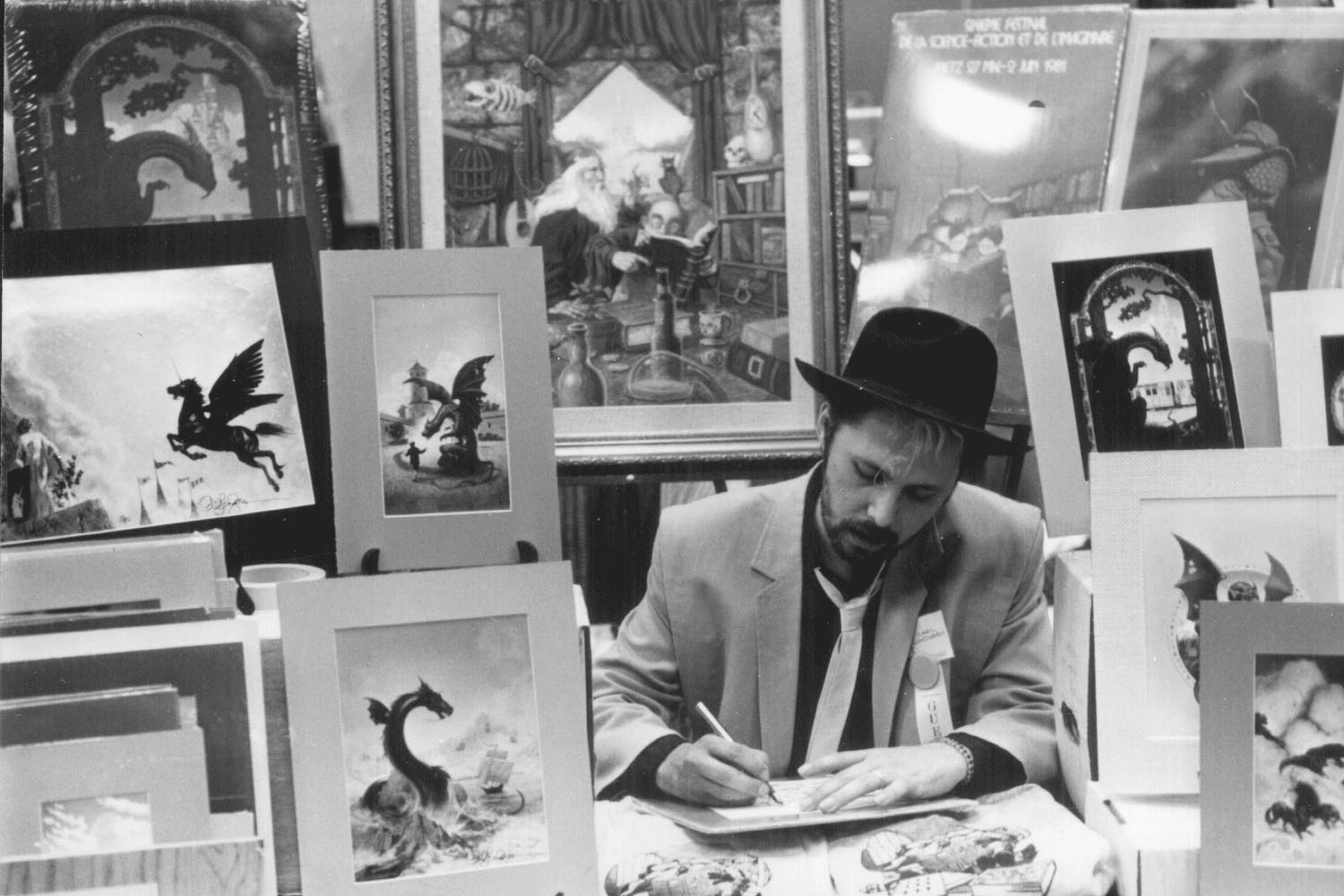
People who I consider fans of my work have been collecting my original paintings, preliminary studies, and thousands of reproductions of my work for the last 40 years. Through the book publishing industry, exhibitions are held all over the country and in Europe on a regular basis. I have been a major guest of honor and contributor to these events since my late teens. In conjunction with these events they have art shows which are well attended and have been a vehicle for selling and displaying my work.
Plus, I have been in many galleries and museum shows, which have allowed me to make a living with my art. I get fan letters, telling me I am great and those are from the people I work for. My wife Michele and I have traveled and had two art galleries in Philadelphia and Florida. We had exhibits for artists to show their work.
I have had my own school in New Jersey. I taught professionally at college and art schools. I was an adjunct teacher at Glassboro state college in New Jersey, an instructor at University of the arts in Philadelphia in their continuing education program, as well as an instructor at the Art Institute in Philadelphia. I was also a guest lecturer at UCLA extension course and Findlay College in Findlay Ohio and Bowling Green in Ohio, University of Pennsylvania in 1986 and High School of the Performing arts in Philadelphia, Delaware Art Museum and many more.
I have had at least 100 people intimately involved with all phases of producing my work. I mentored people, some who have gone on to become professional artists.
We’d be interested to hear your thoughts on luck and what role, if any, you feel it’s played for you?
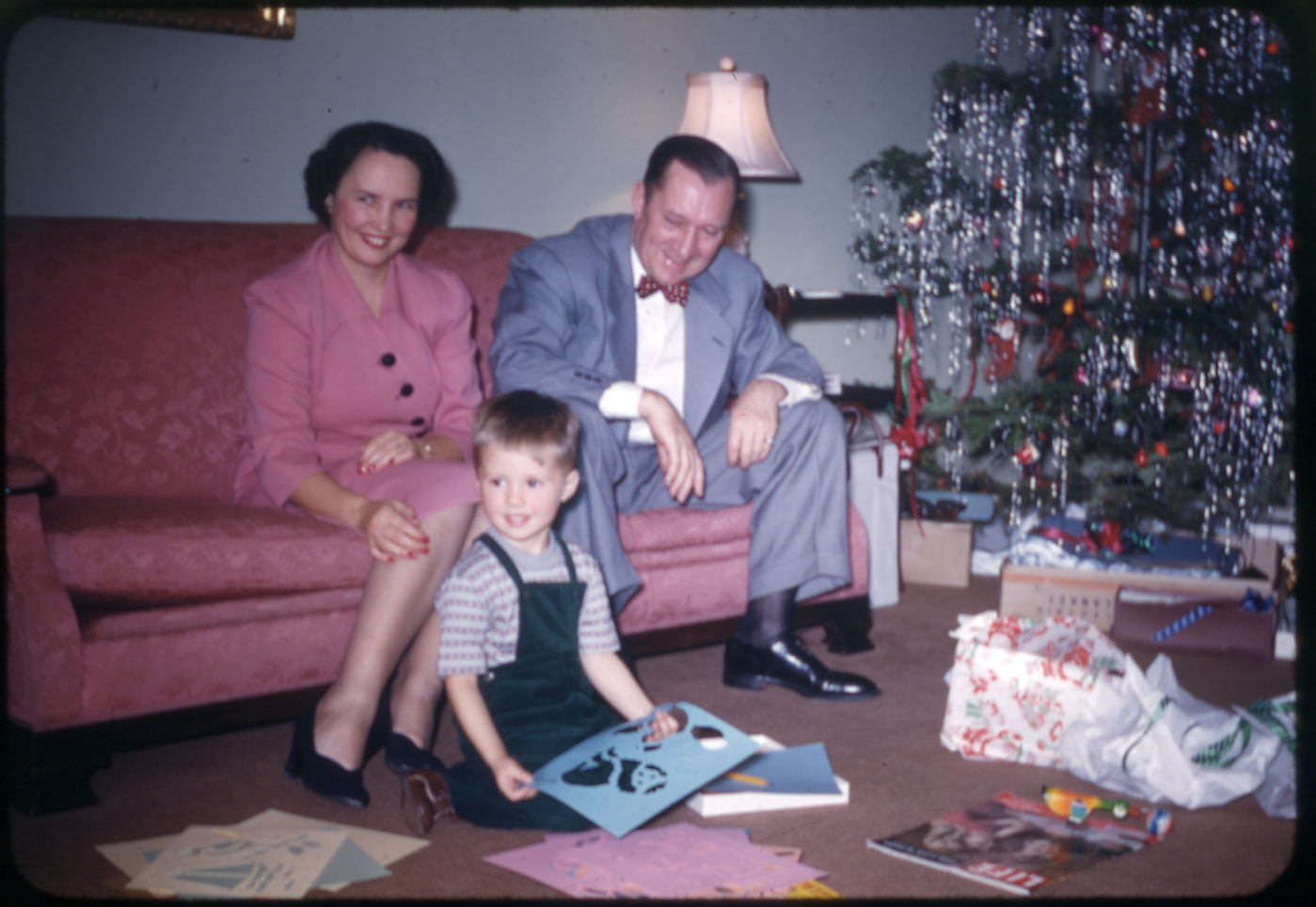
“Luck” has everything to do with it. Because of a loving and caring Mom and Dad, I was fortunate enough to be supplied with everything I needed to persue a creative career. My father especially encouaged me. He took me everywhere and showed me how to make everything with tools and my hands. My mother was so thrilled with my little kid artwork, that all I wanted to do was to impress her even more. So, I could not have been luckier in my life.
Contact Info:
- Website: https://carllundgren.com
- Facebook: Carl Lundgren