



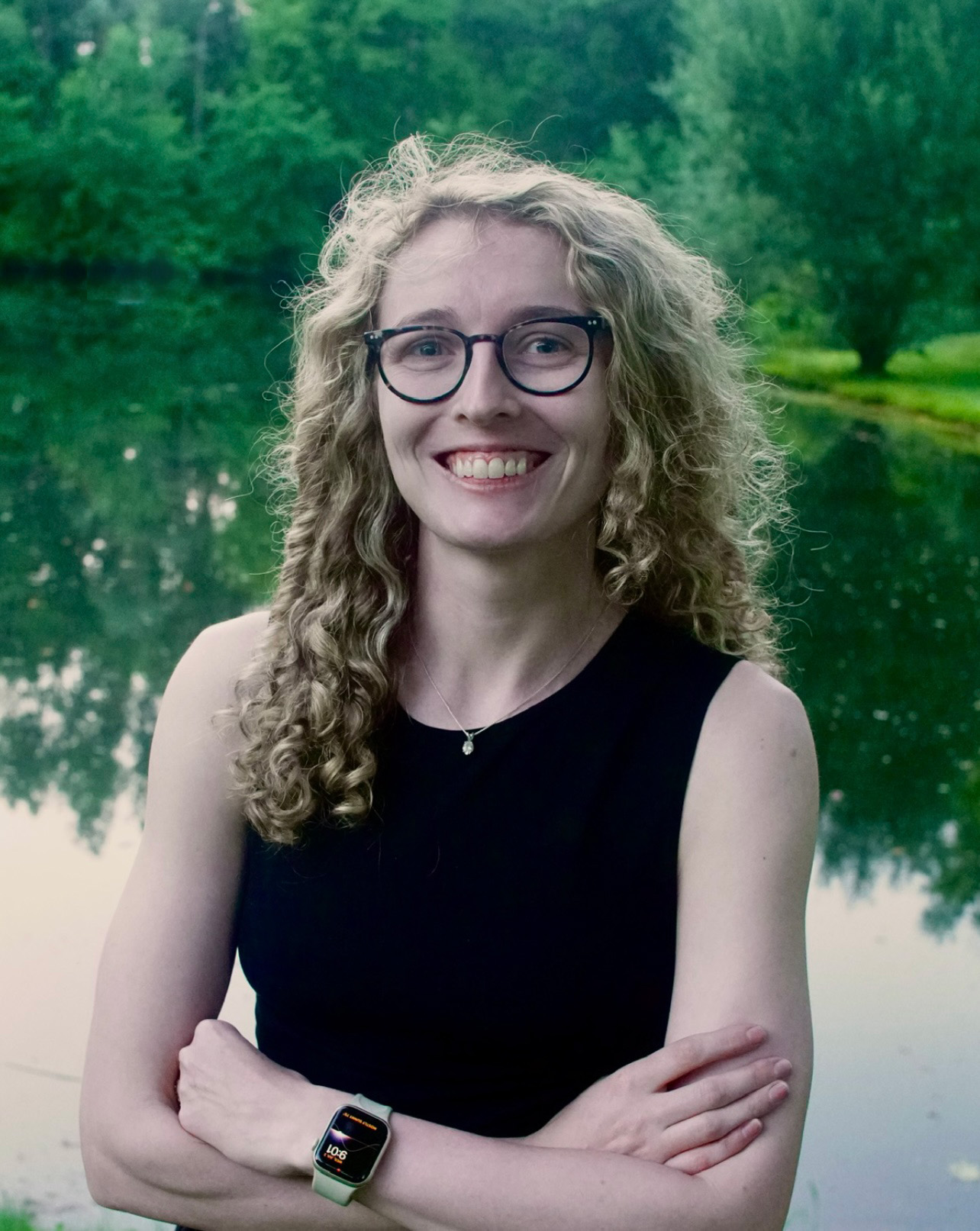
Today we’d like to introduce you to Emily Potts.
Hi Emily, thanks for sharing your story with us. To start, maybe you can tell our readers some of your backstory.
I think I’ve always been drawn to visual art. Since growing up as a young child in Houston, Texas, I remember being enamored by the The Museum of Fine Arts—specifically walking through one of Jesús Rafael Soto installations, “Penetrable”. This is my earliest memory of an artwork; I was probably five years old at the time. I remember how huge it was—bigger than me, bigger than my parents. It felt familiar, like spaghetti noodles, but also strange in how the strands would grip your skin as you walked by. This memory has stayed with me in such a vivid way, and I think it was the first time I realized how powerful and otherworldly art can be.
As a young adult, I meandered a bit in deciding what I wanted to do professionally. At one point, I was really into running and thought studying nutrition was the path I wanted to take. When I first arrived at college, I took a lot of science classes and even ran on the cross-country team at Texas State University for a while. But within that first year, it became clear that this wasn’t for me. The things I loved about running—the feeling of freedom and being in touch with my body—were slipping further away. I felt lost for a while and took a mix of classes to explore different interests, always with the mindset of figuring out a practical career path.
That career-focused mindset kept me from pursuing my real interest: art. There is stigma against the value of an art degree. My anxiety about not finding a job kept me from taking studio courses for a long time. It wasn’t until my junior year that I finally took a drawing class and a 3D design class—and I fell in love. It reminded me of that childhood memory of how powerful and otherworldly art can be. It was also clear to me that art has the potential to build connections across different disciplines.
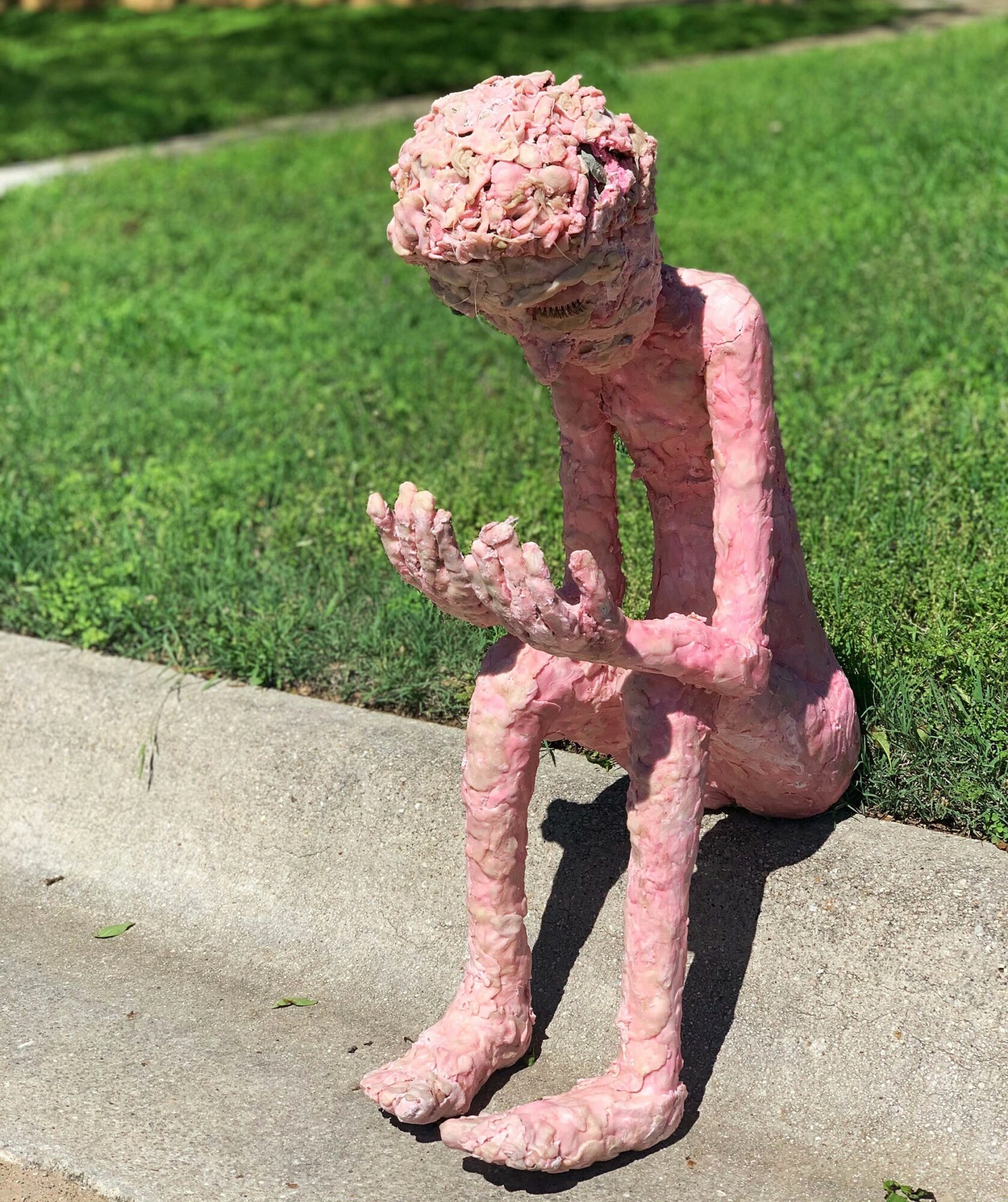
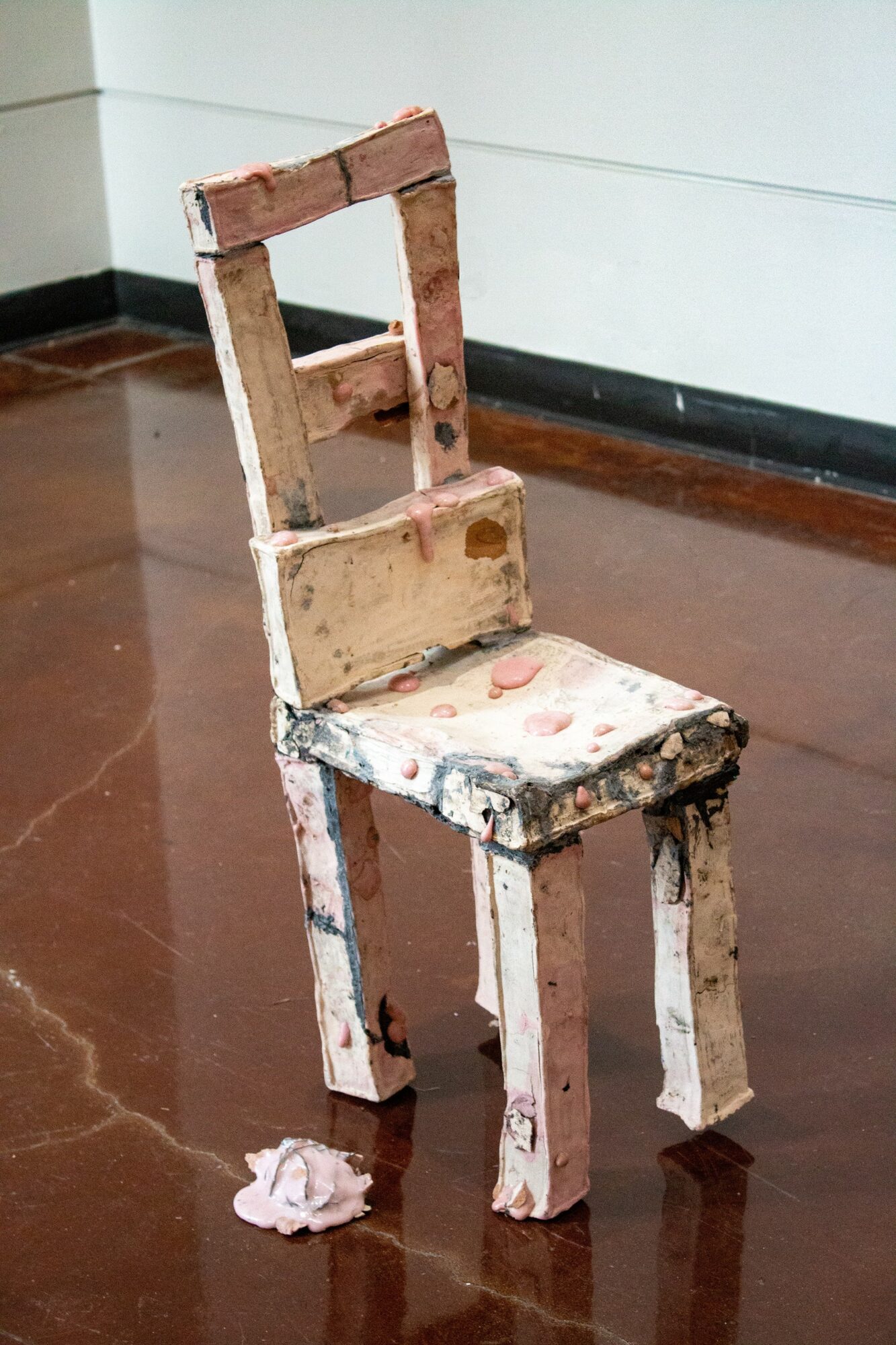
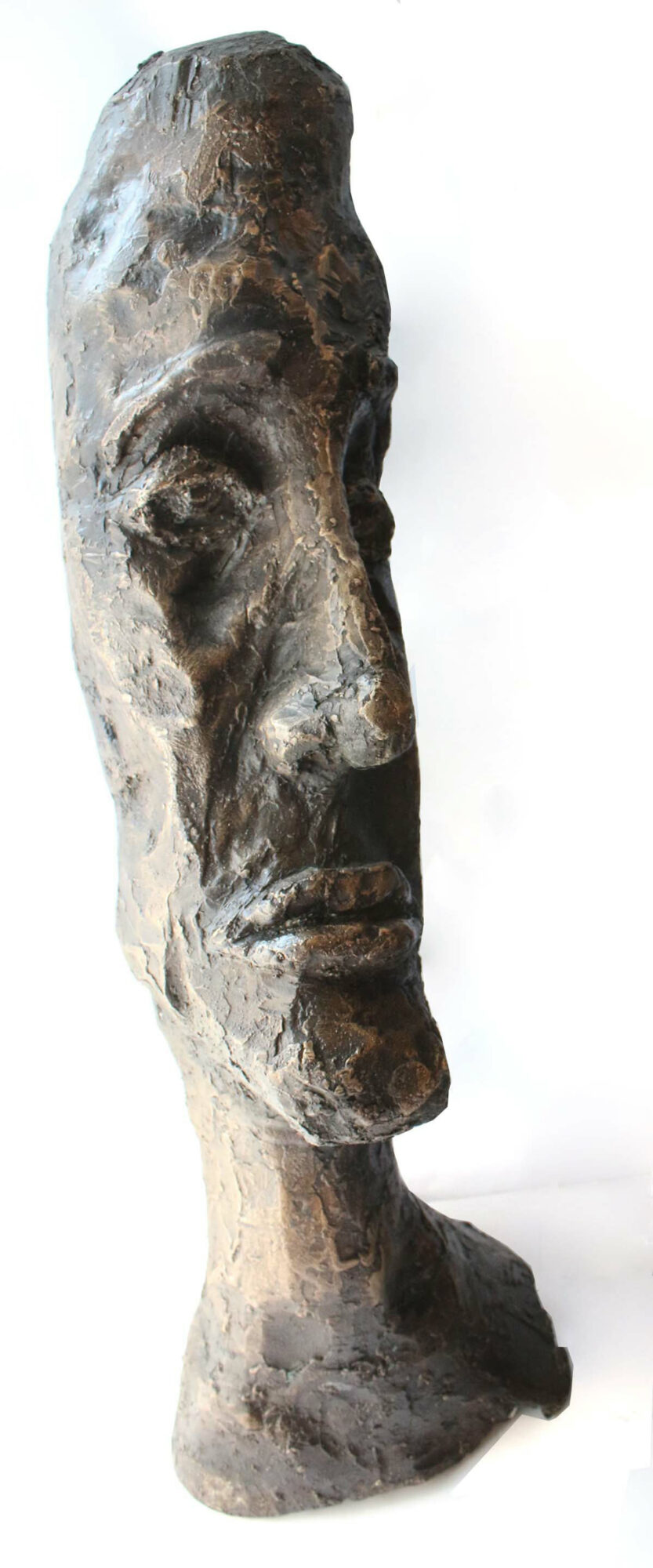
Since then, it’s been full force. I ended up concentrating in sculpture in both my undergraduate and graduate studies. I’ve had the chance to experiment with so many materials—ceramics, bronze, steel, wood, fabric, fine metals, and even bubble gum. This constant exploration sometimes feels like playing mad scientist in the basement, and I love it. My work often revisits the feelings and mysteries of the body. I’m still very interested in the sciences, especially anatomy and psychology, and I like to reference that imagery in abstract or metaphorical ways in my artwork.
I currently work at Michigan State University and teach foundations studio courses. I knew I wanted to stay within academia because I wanted to give others what my professors gave me—skills/ingenuity and a reminder of the never-ending potential of art. College can be a weird time where managing expectations and outcomes is a real concern, but it’s also a place to explore the things you love and reconnect with passions you may have pushed aside. I tell my students that art offers a different way of thinking and has the potential to make connections across disciplines. I also emphasize the importance of experimentation and not being too precious with ideas—unexpected and exciting things happen in the studio, and it’s important to embrace them and learn from them.
I’m sure it wasn’t obstacle-free, but would you say the journey has been fairly smooth so far?
Since I graduated from grad school in Spring of 2022, I have moved states three times within a three-year period for various visiting 1-year contract positions at different universities. I am grateful for these opportunities; they have allowed me to see firsthand a wide range of students, shops/studios, and departments, and I’ve learned a lot in a short amount of time. I’ve been in Michigan for about a year and a half now, and this is my second year teaching at Michigan State University. It really is a blessing to have a position that isn’t visiting and has the potential to offer a bit more stability. Aside from being tenure-track or tenured, job security in academia can feel a little wobbly. During the frequent moves, my partner had to continually readjust his employment, which was challenging, and I’m incredibly grateful for how supportive he has been through all of it. I think these experiences have also helped us understand what is truly worth moving for.
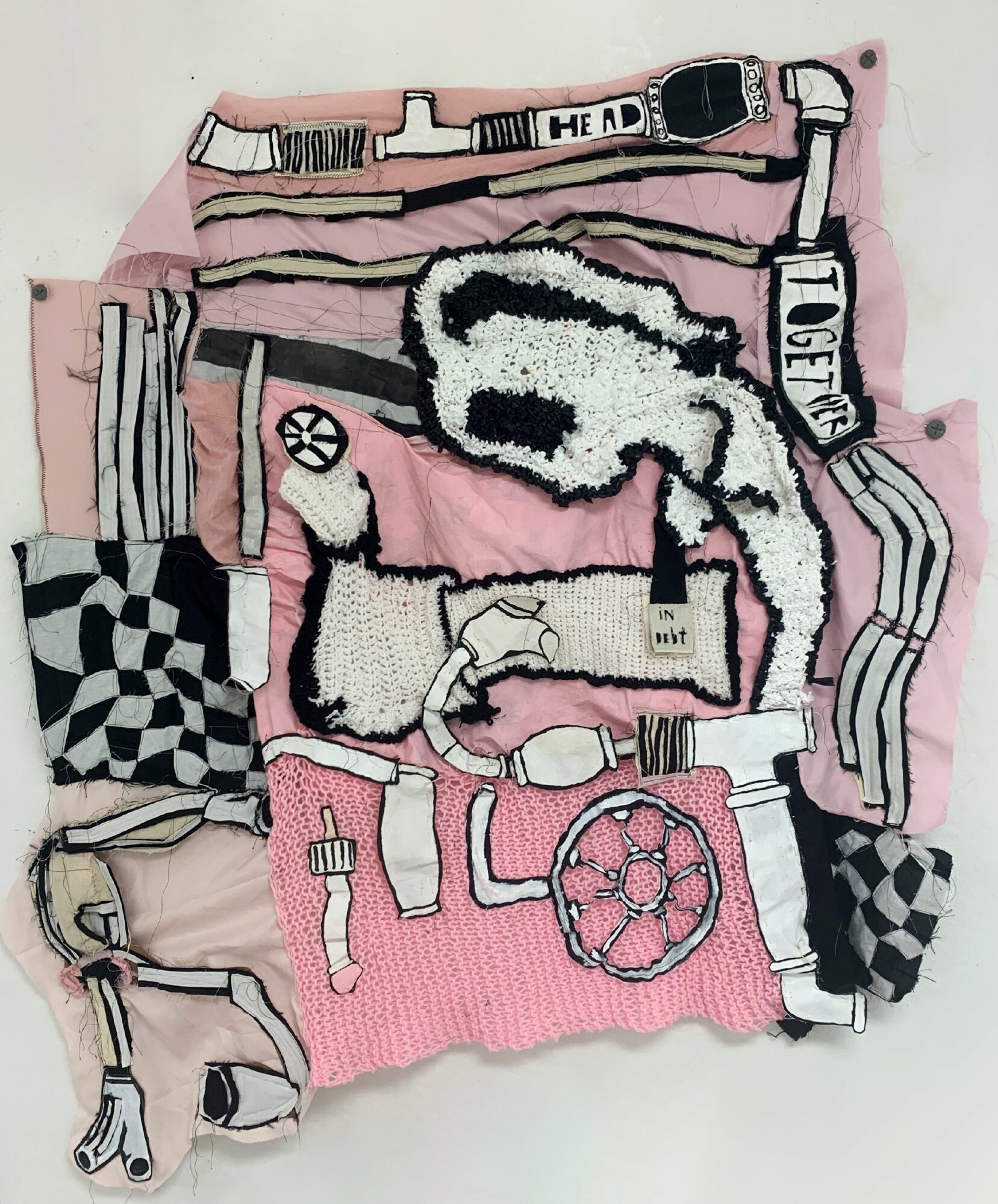
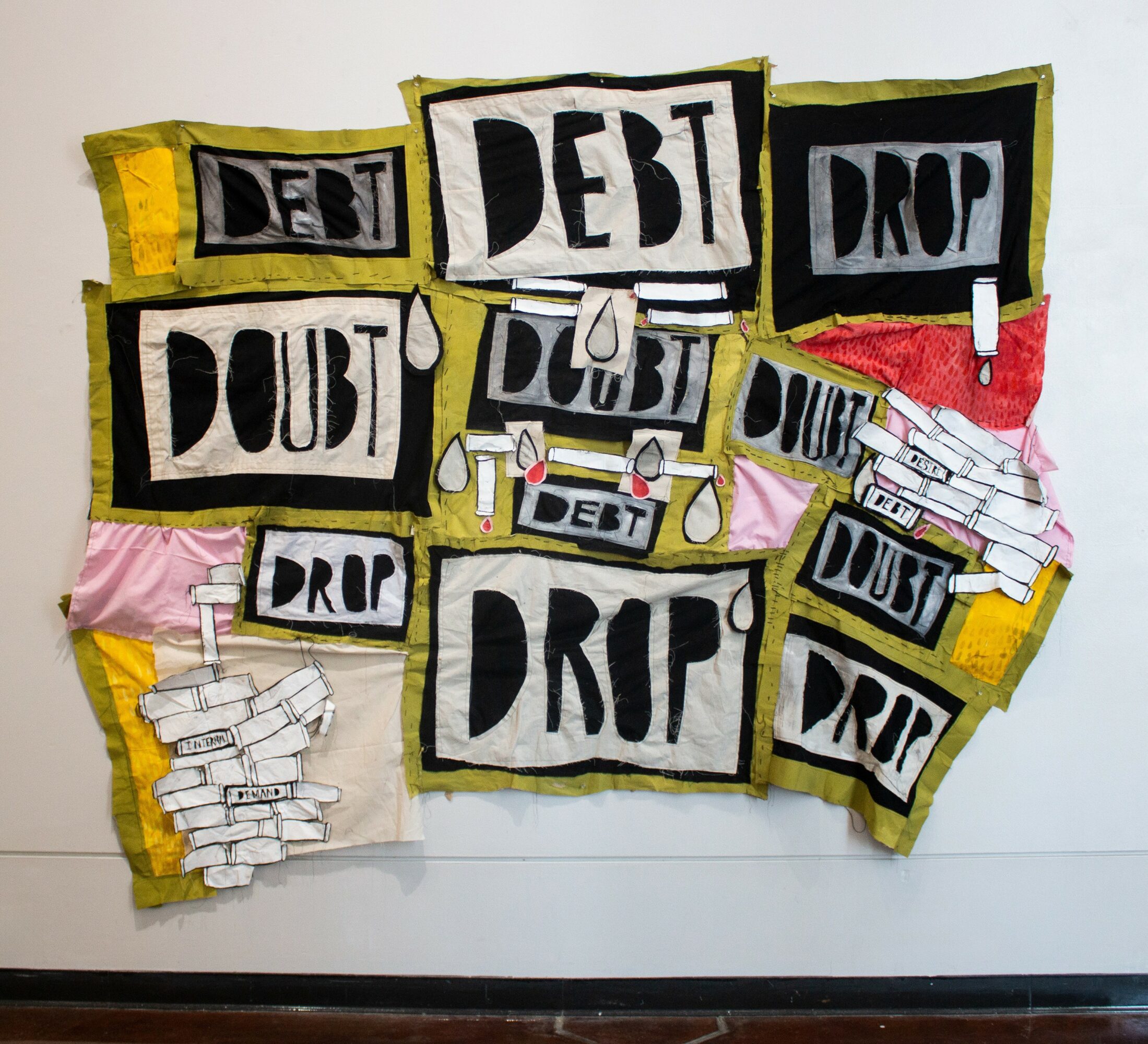
Alongside all the moving and adjusting to different universities and positions, I also had to keep up with producing and showing artwork on a consistent basis. I’ve lost tools and materials over the years from moving, which has led me to work more in 2D formats—drawing, painting, and fabric work—simply because of my current studio setup. I hope that eventually things will settle down and I’ll be able to feel a stronger sense of stability.
Thanks for sharing that. So, maybe next you can tell us a bit more about your work?
Within my sculpture work, I use a wide range of media—from traditional materials like ceramics and wood to more unconventional ones like paper pulp and even bubble gum. I often move between disciplines, sometimes because an idea makes more sense in a particular form or dimension, and other times simply because of what I have available at the moment. I have been loving drawing and painting recently- and working that into fabric pieces. My studio practice is very flexible in that way.
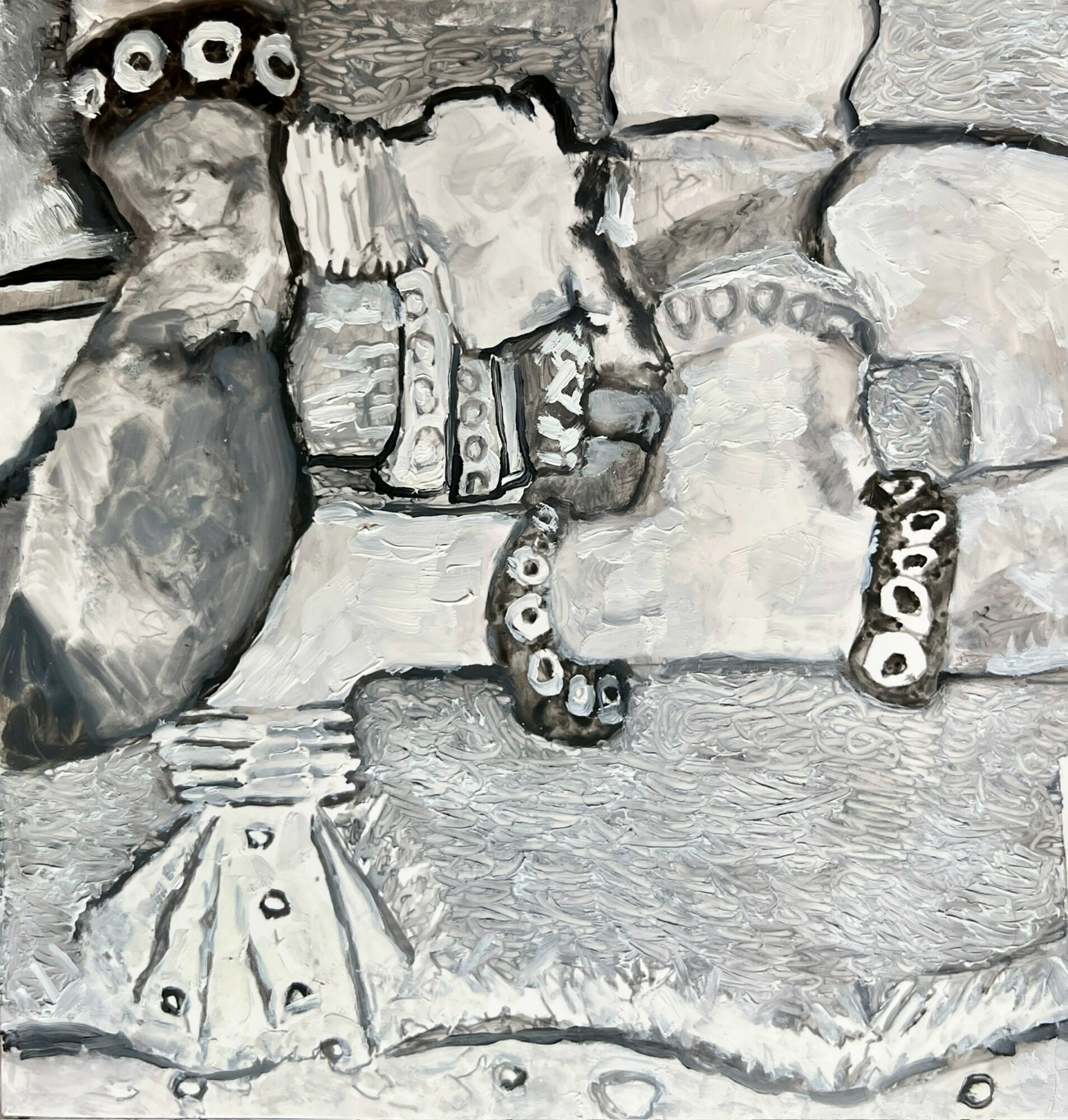
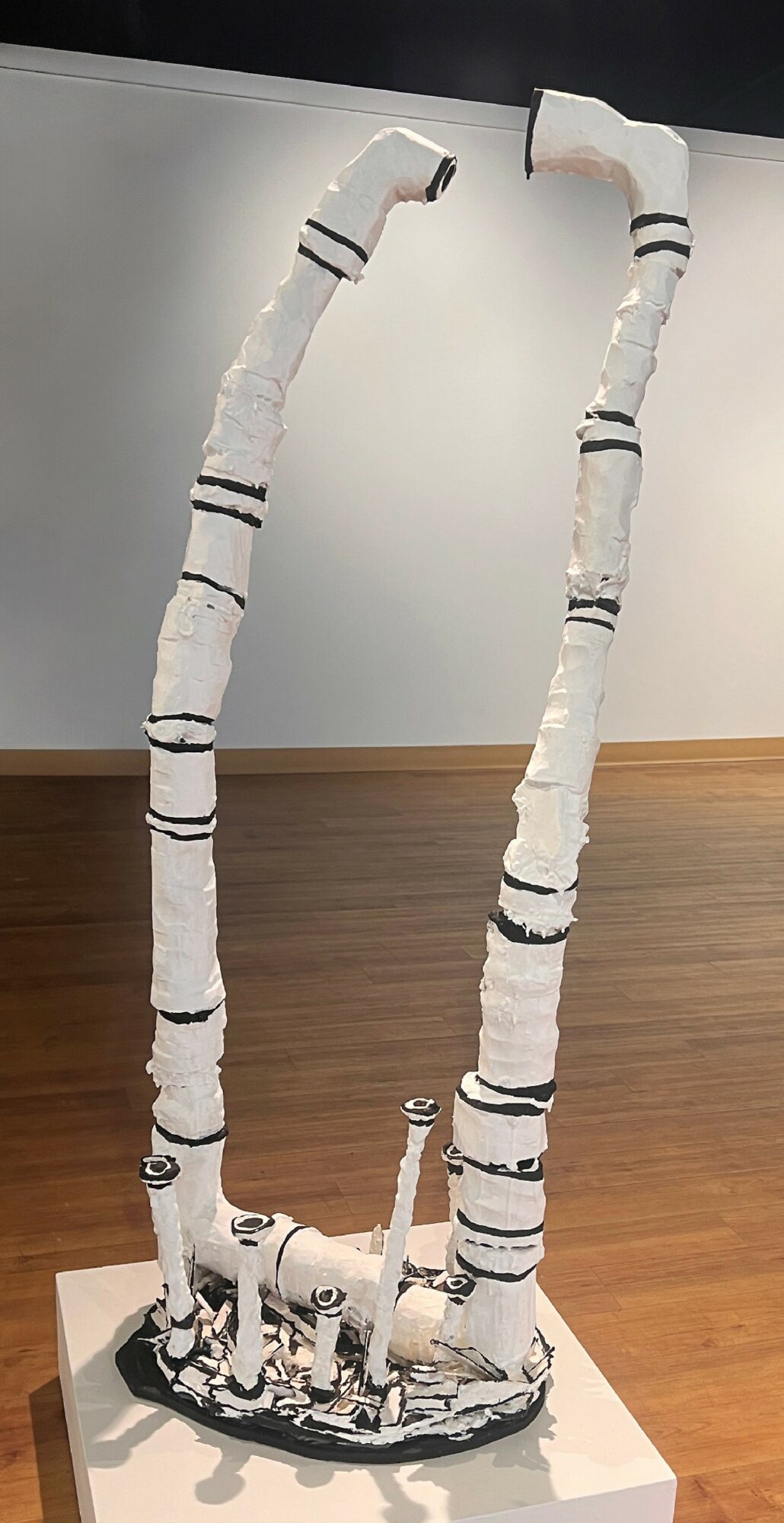
The subject matter of my work is often figurative in one way or another. In literal terms, the gestures of the figures convey a sense of discomfort, inner restlessness, and sometimes even pain. When the work is not literally figurative, I use piping systems as a way to think through the internal network or structure of the body. The piping allows me to abstract away from literal anatomical forms and to play with familiar components: pressure, gaskets, shutoff valves, that respond to and regulate internal pressure and stress. These become a way to illustrate a system that is disrupted and unable to function properly.
The small figures represent the external—what the world sees—while the piping represents the internal, the unseen workings that explain why the figures are in a state of discomfort. The pipes are wilted, with gaps that should connect but don’t, and splattered goop clogging the insides and building up pressure. The system encounters obstacles it has to work around, forcing it to reroute. Sometimes the solution makes sense, and sometimes it doesn’t. Sometimes the body heals, and sometimes it doesn’t. It is not meant to be an absolute.
I want my work to resonate with others through its honesty—I’m not trying to present anything divisive or outside of what I know. I know my body, and I know the frustration, fear, and uncertainty that come with feeling it falter, whether physically or psychologically. To me, they are deeply intertwined; the mind and body echo each other more than we often admit. My hope is that this honesty creates a point of connection that others can relate to.
Are there any books, apps, podcasts or blogs that help you do your best?
Honestly, I spend a lot of time listening to stand-up comedians in very loose formats like open mics or podcasts. I love listening to all of it even the bad or offensive sets. I’m not entirely sure why I enjoy it so much, but it feels like such a relief. I especially love playing into absurdity or when a punchline comes out of left field and is completely unexpected.I’m not sure if this influences my work directly, but I listen so often that I would be surprised if it wasn’t shaping it in one way or another.
I also spend a lot of time researching diseases in the body and this is definitely apparent in my work. I think the body is fascinating, especially how much of who we are is interwoven in our DNA. I’m interested in how disease moves from parent to child, or even arises spontaneously. We’re born with a code that unfolds over time, revealing its strengths and faults throughout our lives. In my work, I often think about the internal workings of the body like plumbing or electrical systems that fail to communicate. What was once connected and functioning properly now has to find new ways of reconnecting—sometimes in ways that don’t make sense, the body works in mysterious ways.
Contact Info:
- Website: https://www.emilygracepotts.com
- Instagram: https://www.instagram.com/freespiral_/
- Other: https://www.etsy.com/shop/farmmousestudio/?dd_referrer=https%3A%2F%2Fwww.google.com%2F