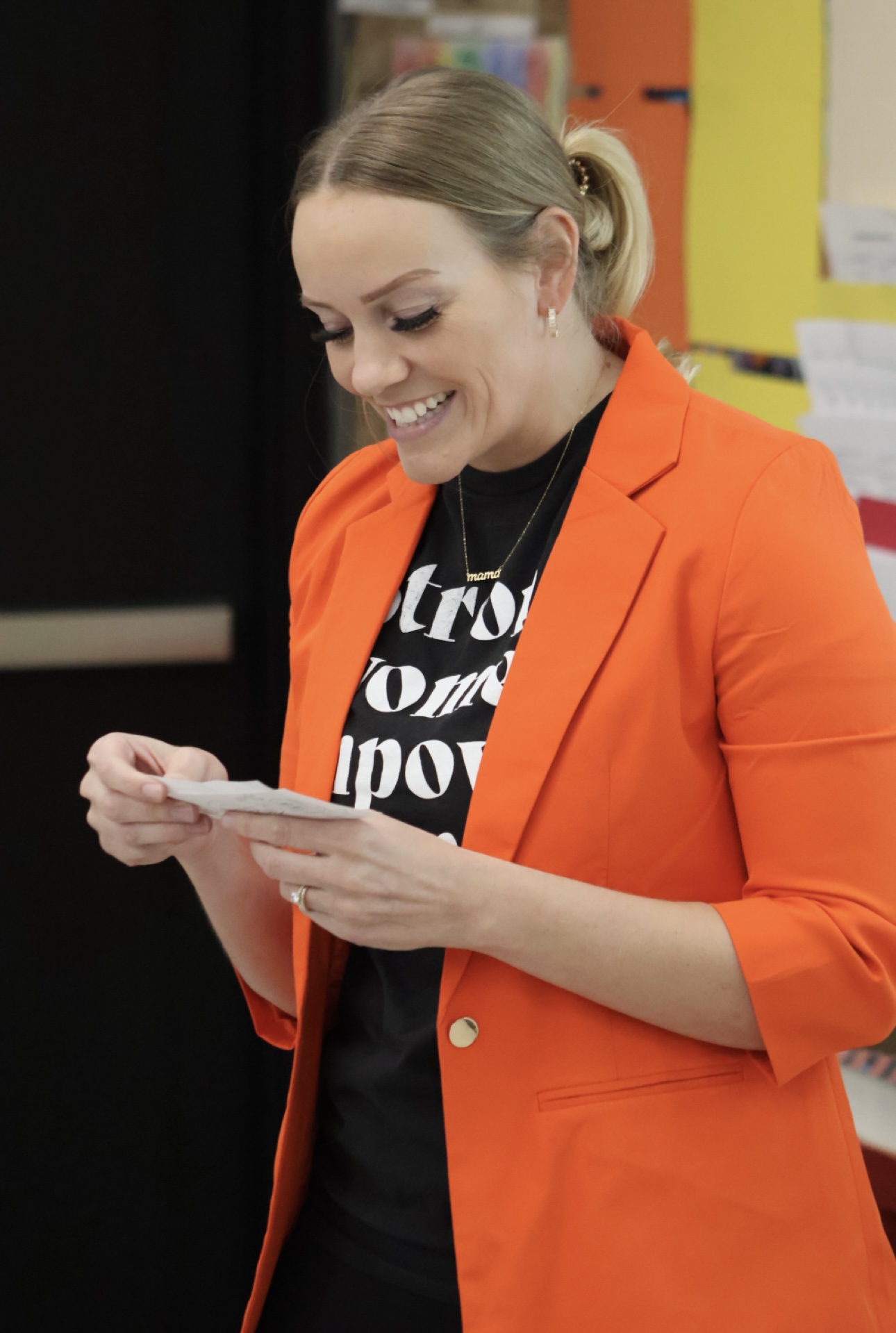





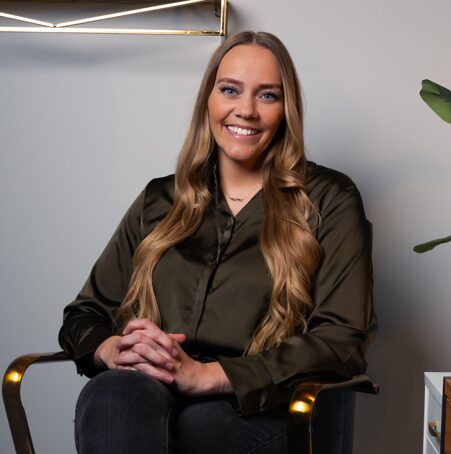
Today we’d like to introduce you to Cassie Lawler.
Alright, so thank you so much for sharing your story and insight with our readers. To kick things off, can you tell us a bit about how you got started?
I grew up in Battle Creek, MI, where I lived until I was 28. As a kid, my parents called me “tender-hearted Cassie”—a nickname that fit long before I ever knew what the word empath meant. Looking back, that’s exactly who I was then and who I still am today.
In high school, I remember the pressure to choose a lifelong career before graduation. I knew I wanted to help people, but committing to one path felt overwhelming. I initially considered physical therapy or nursing, but neither felt like the right fit, and I wasn’t confident those fields aligned with my strengths or passions. I just knew my purpose was somewhere in the “helping professions,” even if I didn’t yet know what that looked like.
Everything clicked during my junior year. My mom was working at our local community college at the time and suggested I consider their Human Services associate degree program. She arranged a meeting with the program director, and the moment I walked out of that conversation, I felt a sense of clarity I had never experienced before. I knew exactly what I wanted to do with my life: to one day own and operate a mental health private practice.
Fast forward to my first two years of college, I played on the women’s basketball team while studying human services and completing internships at an elementary school and a nonprofit serving inner-city youth. Both environments felt like home to me. I’ve always had a heart for working with young people, especially those who are underserved, and these experiences confirmed that I was exactly where I needed to be. I graduated from Kellogg Community College in 2010 with my Associate’s in Human Services and later earned my Bachelor’s in Human Services in 2012.
Before I completed my bachelor’s degree, I landed my first “big girl” job at age 21 with the State of Michigan as an Eligibility Specialist. I spent five years determining eligibility for programs like SNAP, Medicaid, and cash assistance. I loved the impact I was making in my community, yet I never lost sight of my long-term dream of owning a private practice. In 2014, I took the next step by starting my Master’s in Social Work. For two years, I balanced full-time state work, full-time evening coursework, and two internships—one in a residential treatment program for sexually reactive youth, and another with children’s protective services.
I completed my Master’s degree in 2016 and continued my work with the State of Michigan, spending several years in both Children’s Protective Services and later with Michigan Rehabilitation Services. Altogether, I dedicated nine years to serving the state.
Just before COVID, a coworker reached out and asked if I would consider going into private practice with her. The idea immediately sparked something in me, even though it felt overwhelming and I had no idea where to begin. Thankfully, she had connections with experienced practice owners and helped open the doors that eventually set us on our path. In October 2020, I made the decision to leave my state employment to fully pursue private practice work. By 2022, I stepped away from the group practice I had been contracting with to launch my own solo practice. That year was filled with learning, growth, and valuable lessons as a business owner. I started small, renting the most affordable one-room office I could find, doubting my ability to succeed and wanting to keep overhead low.
Over time, I realized the work I was doing with my clients was meaningful and impactful; most, if not all, continued seeing me weekly, even with the office in a less-than-ideal location. When my lease ended, I decided to take a leap of faith and upgrade to a larger suite with three offices and a waiting room, marking a new chapter in the growth of my practice. With a much larger space and a better location, I decided to start hiring contractors. This led to my solo practice becoming a group. To this day, I am still renting the same space. I’m considering expanding to a larger space when my lease is up next year. I’ve also considered opening a second location back in my hometown.
We all face challenges, but looking back would you describe it as a relatively smooth road?
Obtaining my full license:
After completing my MSW in 2016, I promptly applied for my limited social work license and began the rigorous two-year supervision period required for full licensure. Another major requirement for obtaining a full license is passing the licensing exam. Knowing that standardized testing has never been a strength of mine, I approached my first attempt with realistic expectations—and ultimately did not pass. I went on to take the exam two more times before finally succeeding on my fourth attempt.
By that point, I had invested hundreds, if not thousands, of dollars in exam fees, study guides, tutoring, and practice tests. Although the journey was long and challenging, the effort and financial sacrifice eventually paid off. Currently, new legislation is being considered regarding the exam, as many individuals like myself experience it as a significant barrier to full licensure; one that does not necessarily reflect a social worker’s competence or readiness to practice.
I often wish I had known earlier how profoundly therapy could have supported me during my testing journey. Now, as a clinician trained in EMDR and IFS, I recognize how effective these modalities would have been in reducing my test anxiety, shame, and fear of failure before each exam attempt. Many of the clients I work with today are college students, and I’ve witnessed remarkable progress in their ability to manage and overcome similar fears; whether they’re preparing for comprehensive PhD exams, mid-terms, or their own licensing tests. This work has shown me firsthand just how transformative these therapeutic approaches can be.
Personal story of recurrent pregnancy loss:
In 2021, I married my husband, Charles. We had known each other for years as acquaintances before we eventually began dating, and one of the first things we connected over was our shared love of basketball—both of us played at the collegiate level. Charles is the one who came up with the name for my business. We wanted something that carried an athletic tone, especially in case we decided to incorporate athlete coaching or mentoring in the future. One day, he suggested the name “Elevate,” explaining that it represented helping clients rise above their challenges while also being a familiar term in sports. The moment he said it, I knew it was the perfect name.
Shortly after our wedding in 2021, we learned we were expecting our first child. The joy we felt in that moment was indescribable. Becoming parents was something we had both dreamed of for years, especially given our shared passion for helping and mentoring children.
However, at my first ultrasound, we received heartbreaking news: the pregnancy was not viable. It was a blighted ovum, the most common form of miscarriage, where a fertilized egg implants and a placenta begins to form, but no embryo develops. We took several months to allow my body and our hearts to heal from the loss.
About seven months later, we discovered we were pregnant again. This time, the excitement was mixed with fear. We wanted so badly to celebrate, but we also knew the reality of what we had already endured. At our first ultrasound, our fears became reality when we were told it was an ectopic pregnancy, one that could have become very dangerous for me without immediate medical intervention. I was overwhelmed with sadness, anger, and so many moments of wondering, Why me? With no medical explanation, the doctors labeled both losses as “two cases of bad luck.”
Even with the emotional scars these experiences left behind, we knew we weren’t ready to give up. In October 2022, we learned we were expecting once more. This time, every ultrasound brought relief instead of grief, and the pregnancy was beautifully uneventful. In June 2023, our daughter was born. I will never forget the immense sense of relief Charles and I felt when we finally held her in our arms, we had weathered a storm that felt endless.
Then, in fall 2024, we found out we were pregnant with baby number two. As a new mom, I was already anxious about caring for our daughter, and the thought of enduring another loss weighed heavily on my mind. Thankfully, this pregnancy was also healthy, and in June 2025, our son was born. Our little family is now complete, and we are profoundly grateful.
I participated in my own therapy throughout this entire experience. Without that support, I don’t believe I could have managed my emotional well-being while also running a private practice, being a wife, transitioning into motherhood, and balancing everything in between. My lived experience with recurrent pregnancy loss has deeply shaped me as a mental health therapist. It has ignited a passion in me for supporting new and expectant moms—because now, in a way I never could have before, I truly understand their fears, their hopes, and their strength.
Great, so let’s talk business. Can you tell our readers more about what you do and what you think sets you apart from others?
Elevate Counseling and Community Services is an outpatient mental health private practice dedicated to providing compassionate, high-quality care. We are a small group of social workers with diverse backgrounds and specialized training, united by a shared commitment to supporting individuals from all walks of life. At Elevate, we deeply value diversity, acceptance, and inclusivity—both within our team and in the clients we serve. Our clinicians bring a wide range of perspectives, skills, and specialties, creating a collaborative environment that strengthens our ability to meet clients’ unique needs.
Our therapists work with children, teens, college students, and adults. Among our team, one clinician specializes in neurodivergence and intellectual disabilities, while others focus on serving the LGBTQ+ and BIPOC communities, perinatal mental health, spirituality, and more. Trauma-informed care is a unifying thread across our practice, and each clinician has specialized training in trauma-focused approaches. Our team includes providers trained in Cognitive Processing Therapy (CPT), Dialectical Behavior Therapy (DBT), Eye Movement Desensitization and Reprocessing (EMDR), and Internal Family Systems (IFS). When I founded Elevate, my vision was to build a practice where any referral could be matched with a therapist who meets their unique needs. Though we are still a small practice, we are steadily moving toward that goal.
What I am most proud of is the community we serve. Elevate has had the privilege of supporting clients from a wide range of backgrounds, including international clients, BIPOC, members of the LGBTQ+ community, retirees, athletes, first responders, and many others. We accept Medicaid in addition to many commercial insurance plans because we firmly believe that everyone deserves access to quality mental health care, regardless of income or circumstance.
What were you like growing up?
Sports were a huge part of my life growing up. Basketball was my greatest passion, but I also played softball and volleyball throughout high school. Leadership came naturally to me, even though I often doubted myself along the way. I served as captain of my high school teams and was later voted captain of my college basketball team by my teammates, something that meant a great deal to me.
In high school, I was nominated for homecoming court and was voted as Winter Carnival Queen during my senior year. Sharing these things feels a little uncomfortable, because it feels like I’m bragging, but they’re simply factual parts of my story. I believe these experiences reflect the positive impact I had on those around me and the respect and trust my peers placed in me.
One part of me that has always been present is my passion for accepting for others for exactly who they are. For me, learning about people from different cultural or racial backgrounds has been one of the most meaningful parts of my life. It has opened my eyes to experiences I might never have understood on my own and has helped me grow into someone who listens more deeply and cares more intentionally. Every conversation, every story, and every shared moment has taught me something valuable about resilience, about identity, and what truly matters to people. Connecting with others in this way reminds me that we are all shaped by different histories and perspectives, and taking the time to understand those differences makes me a better friend, therapist, and human being.
It’s no surprise that I married outside my race and am happily raising two beautiful bi-racial children with my husband. We want our children to see the beauty, history, and strength in each part of who they are. It’s important to us that they grow up proud of their heritage, confident in their identity, and able to navigate the world with a strong sense of belonging. My hope is that they too, will take on the value we have instilled in them to be accepting of others no matter their differences. This further reinforces why valuing diversity, equity, and inclusion is at the heart of my practice.
Contact Info:
- Website: https://www.elevateccs.com
- Instagram: @elevate.ccs.llc
- Facebook: @Elevate Counseling