





Today we’d like to introduce you to Marion Wiggins.
Alright, so thank you so much for sharing your story and insight with our readers. To kick things off, can you tell us a bit about how you got started?
When Covid hit in 2020 like many other families, we found ourselves a little bit bored and we took a lot of drives. Every time we drove by the Huff Corner’s Schoolhouse I would say, “if that ever comes on the market, I wanna go look at it!” Sure enough the end of the year it did and we did and we bought it. We had zero plans.
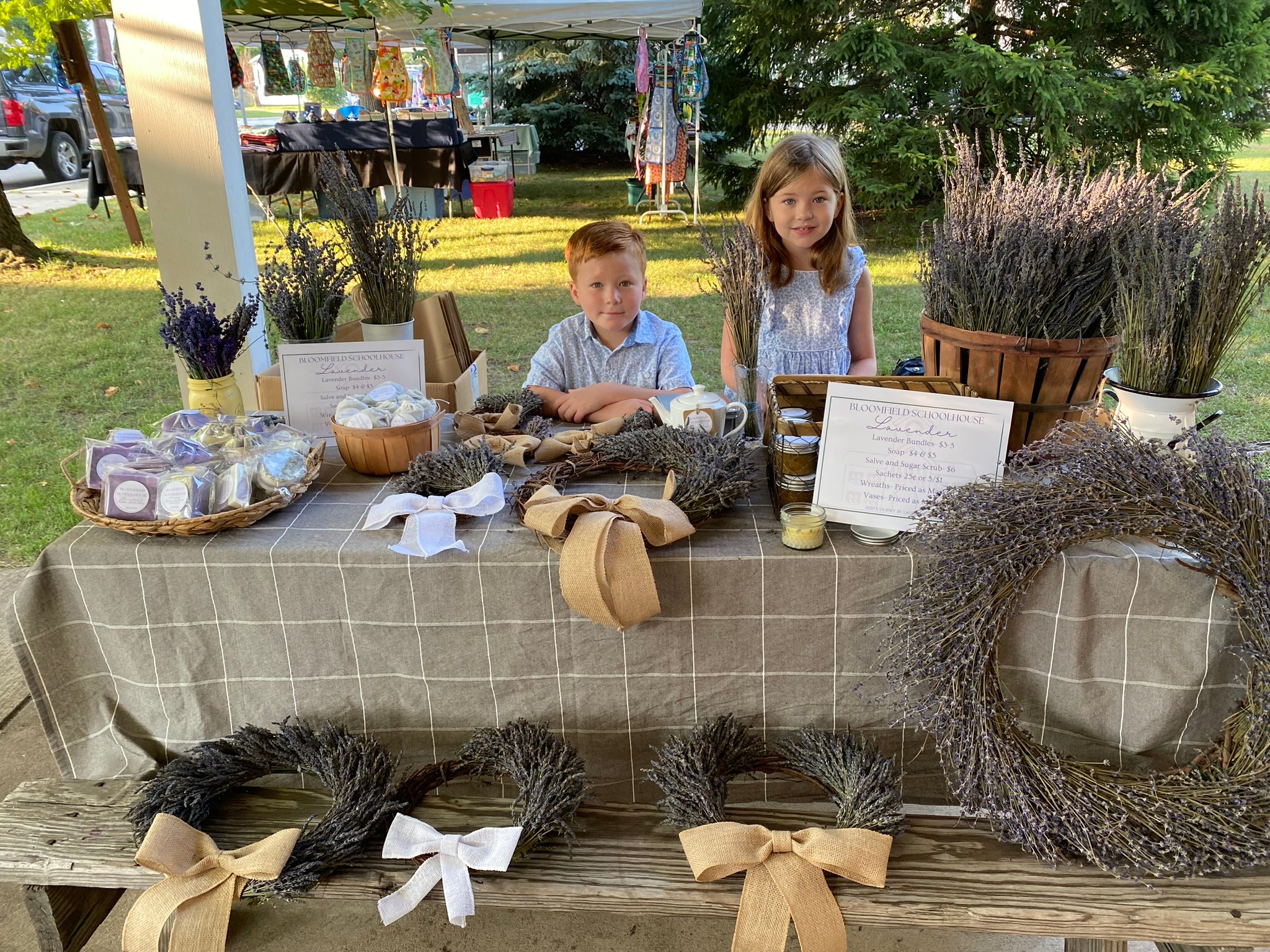
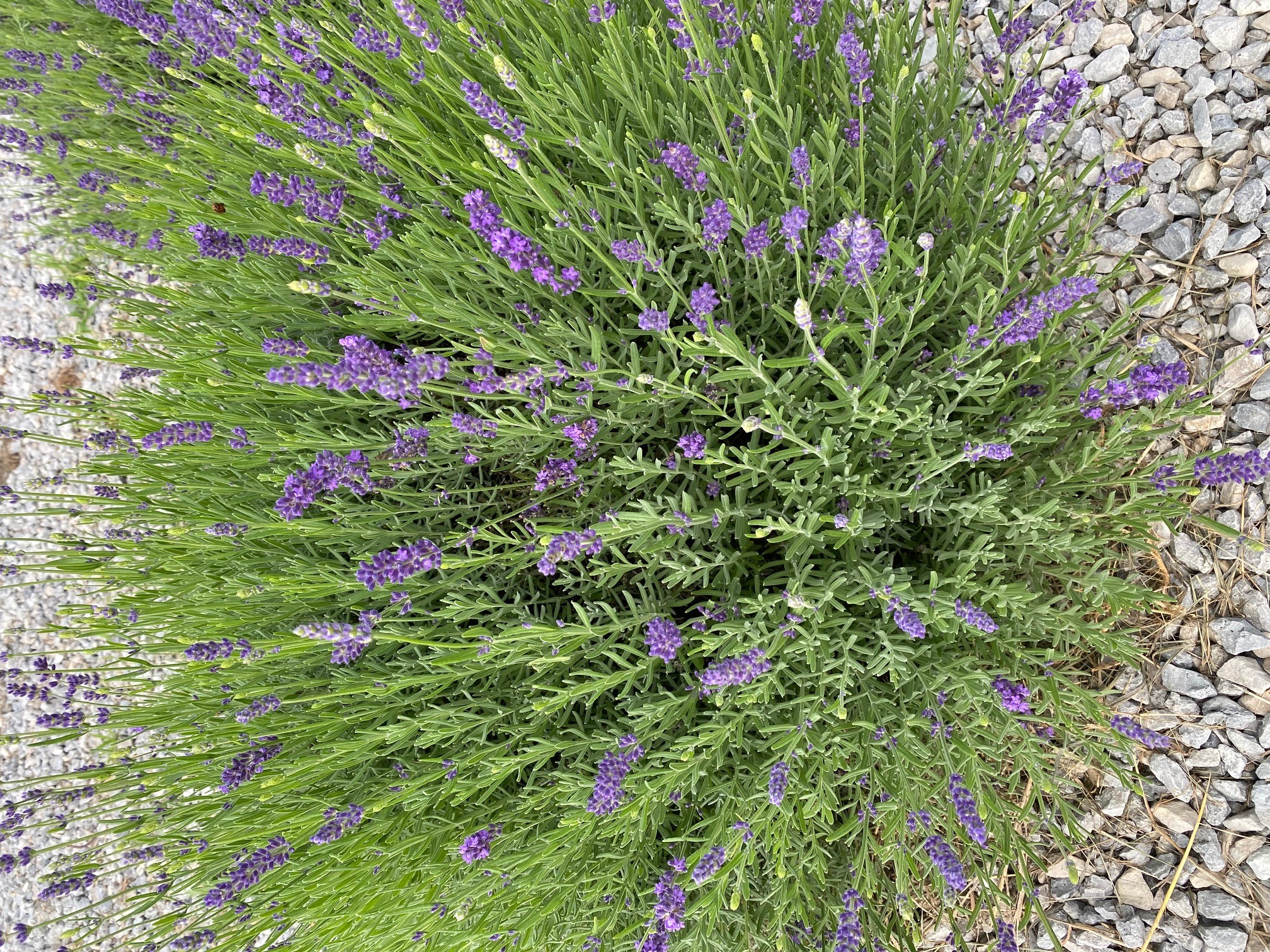
We threw around a lot of ideas- some better than others- and eventually decided on event space. We decided to plant some lavender in the front while doing interior demo work and getting it on the National register. We researched varieties that were supposed to do well in our area, figured out how we need to amend the soil, and planted nine different varieties to see what worked best. The first year we didn’t cut much; we just kind of figured out what worked and what didn’t and made some changes like adding rock around the plants and adding a field at our house. By the summer of 2023 we had an abundant crop of lavender. We were truly lavender farmers! We shifted focus of the schoolhouse to be a lavender farm that could host events. With the abundant crop, we started selling at the Howe Farmer’s Market and we sold out every week. We sold dried, fresh, and wreaths, but people started asking for value added product- soap, lotion, candles. We decided to jump all in. Reseach and development took up our entire winter, and by spring of 2024 we were ready to roll out our lines of bath and body, culinary, and home value-added product. We also planted an additional 3500 plants offsite. We continued to do well at markets, and my house was overrun with lavender. Completely filled.
Now while all this was going on, we had still been moving forward with the schoolhouse, working with architects, engineers, InDOT, county and state. And of course ARCH out of Fort Wayne, who advised us on historic preservation and restoration. We learned about brick repointing, bee removal, the history of rural schoolhouses, septic system design, and more preservation vocabulary than I could imagine.
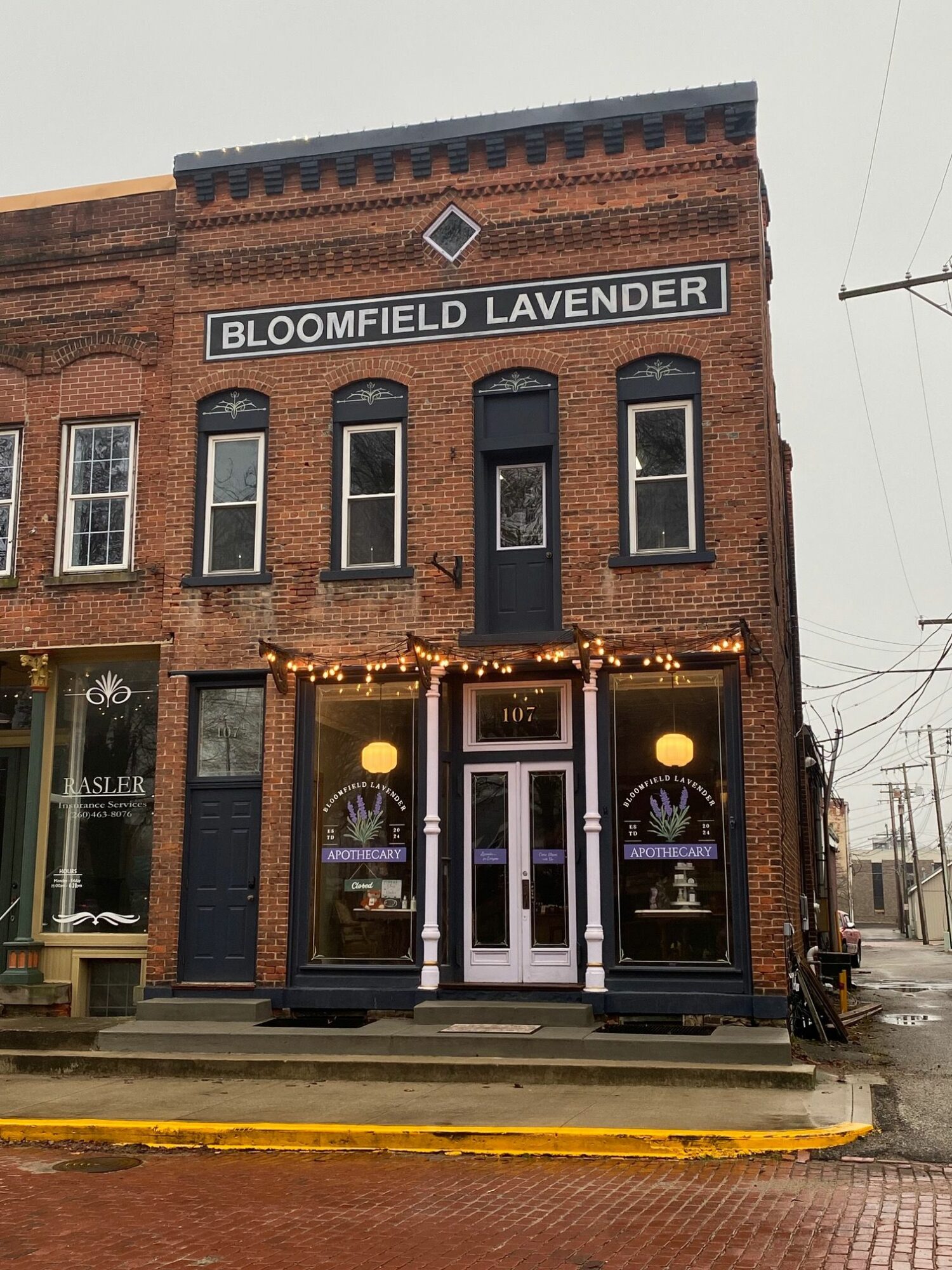
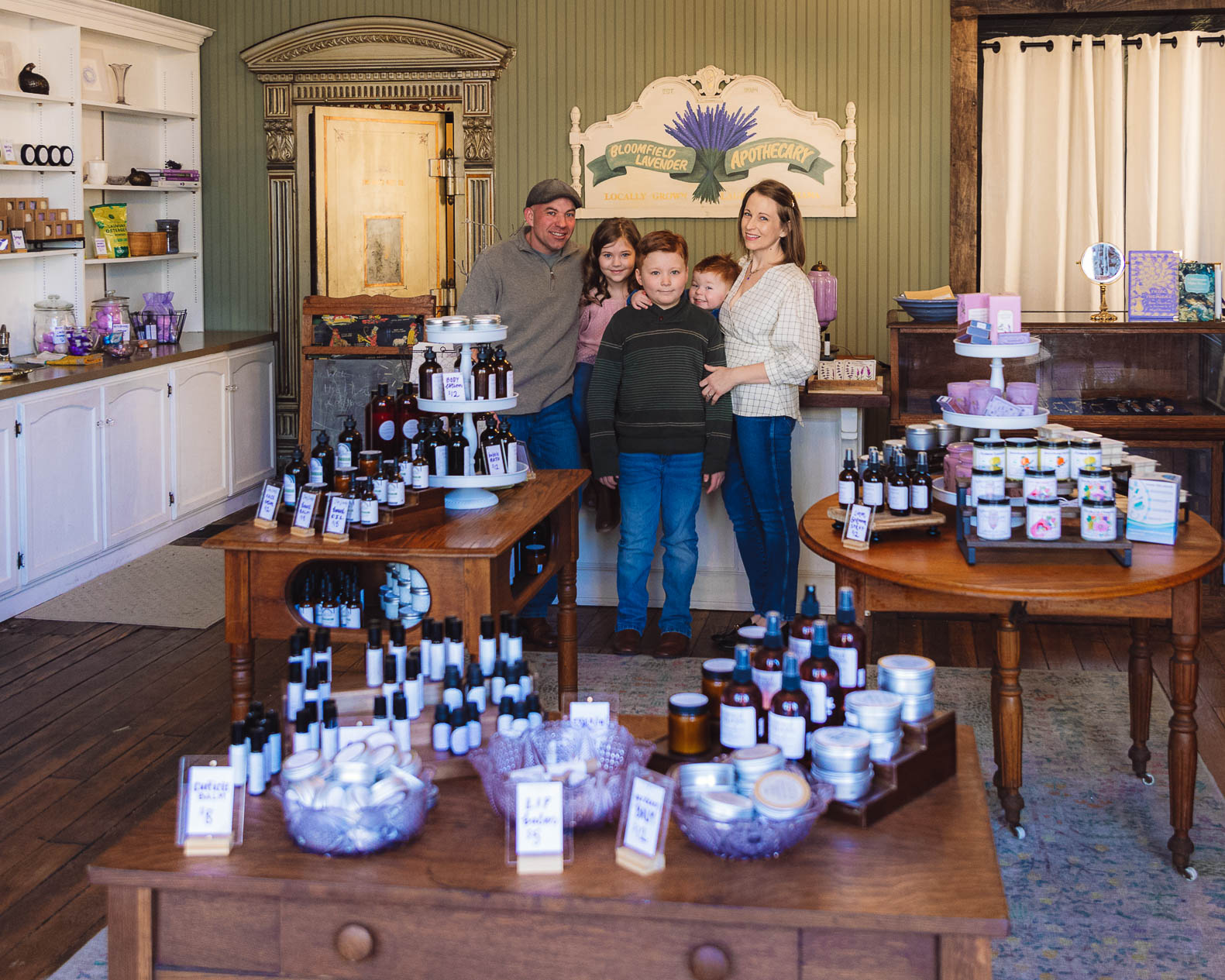
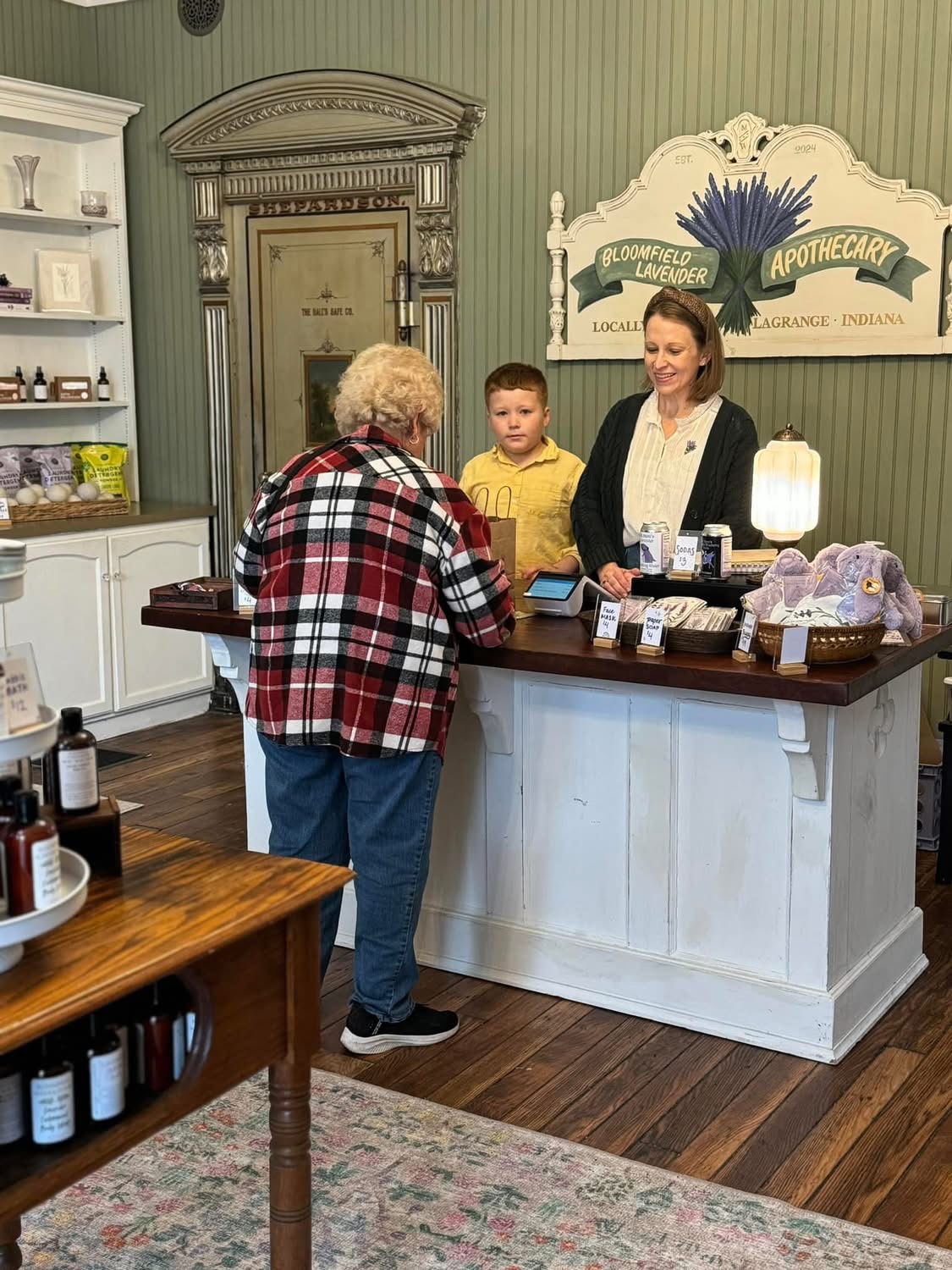
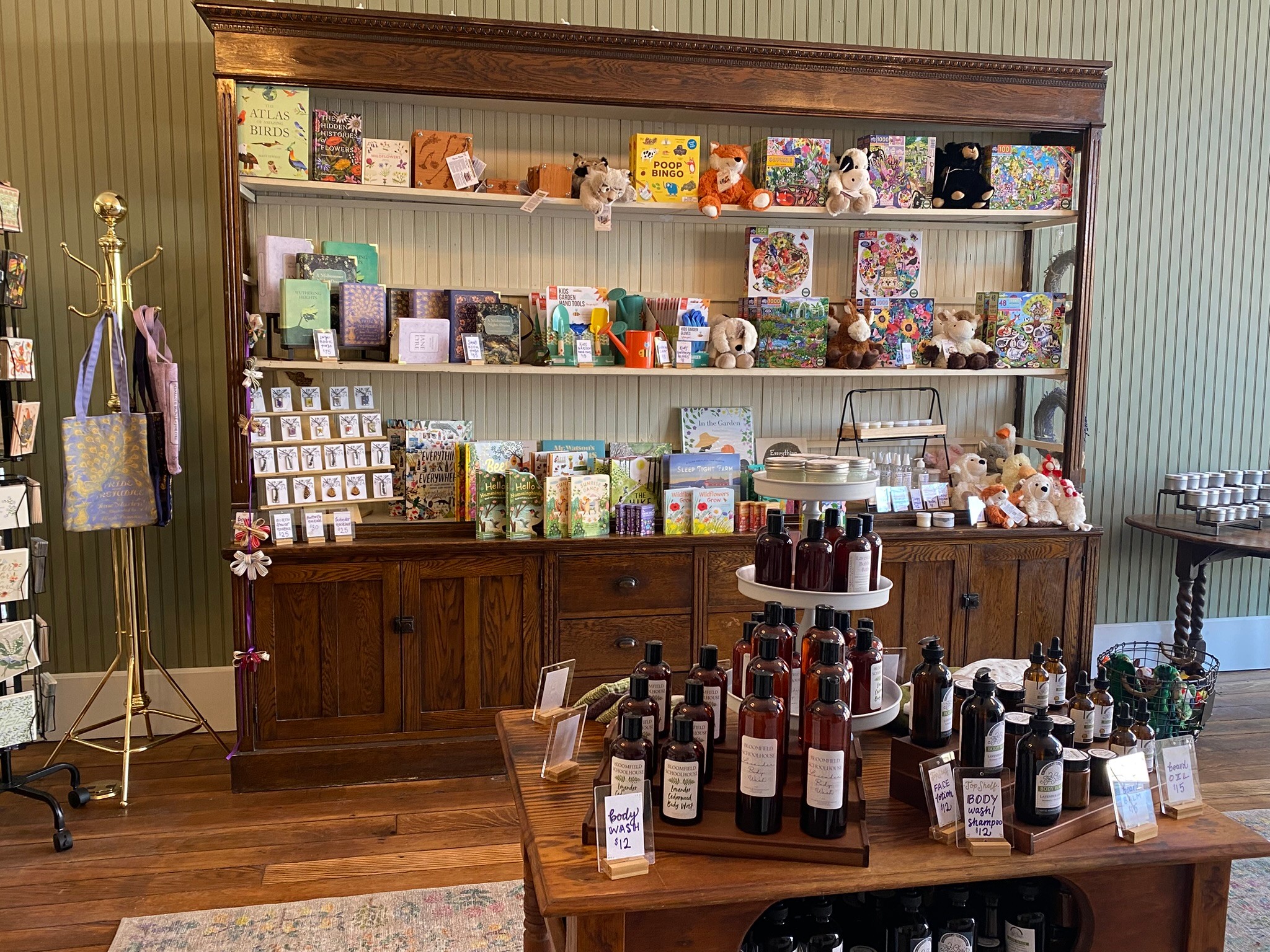
Ok so back to the lavender and our lavender filled house. We needed more space! We purchased what is now Bloomfield Lavender Apothecary in a rough state from the county. But it was all cosmetic work! My husband and two handymen worked tirelessly and we opened the shop less than 3 months after closing.
So that put us at two buildings- the schoolhouse taking forever and the apothecary, which we finished rather quickly.
But then my husband fell in love with a third building- the former Lagrange Standard publishing building. And our plans for that? Still up in the air, but we know we’ll get it cleaned out and put it on the National Register of Historic Places.
Alright, so let’s dig a little deeper into the story – has it been an easy path overall and if not, what were the challenges you’ve had to overcome?
Trying to navigate the world of historic preservation and renovation has been a struggle! We don’t know what we don’t know, but we’re learning a lot in the process.
Great, so let’s talk business. Can you tell our readers more about what you do and what you think sets you apart from others?
We run the farm out of a historic schoolhouse and between three fields, we have over 4400 lavender plants. We create products using our lavender, and also collaborate with other local makers on products, all of which we sell at our store in downtown LaGrange.
Can you talk to us a bit about the role of luck?
My husband’s job (he does anesthesia for Parkview LaGrange) allows us the flexibility to grow at our own pace. We’ve been extremely privileged and acknowledge that we are very fortunate.
Contact Info:
- Website: https://bloomfieldschoolhouselavender.com/
- Instagram: https://www.instagram.com/bloomfieldschoolhouselavender/
- Facebook: https://www.facebook.com/bloomfieldschoolhouselavender/